






Kostel svatého Ducha (Opava) Church
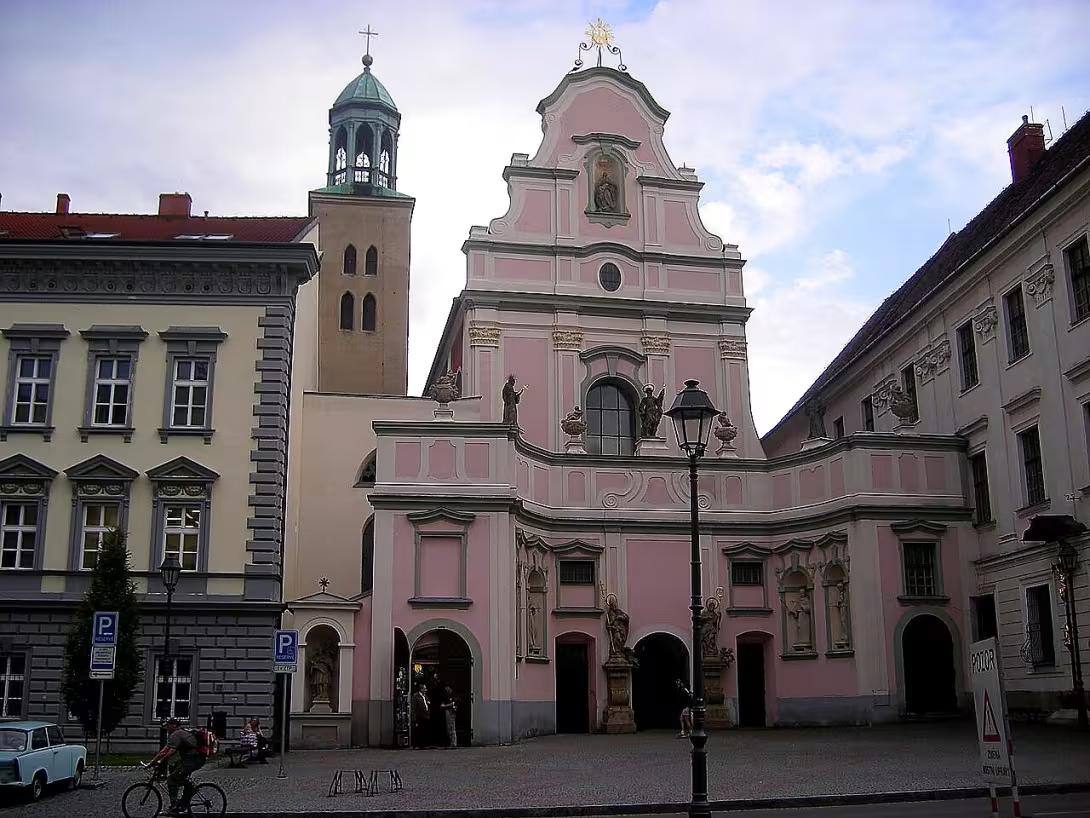
Although the Church of the Holy Spirit undoubtedly attaches itself to the arrival of a minority order in Opava, the exact date of its creation remains hidden in the depths of time. While later written monastery chronicles date it to the 1930s of the 13th century and associate it with Prince Mechislav II, medieval documents do not support such claims. It is only certain that the Minorite monastery with the church was founded in the second half of the 1940s and that it was first mentioned in the papers on 3 April 1250, when the Convention was accepted among the monasteries of the Czech-Polish Minoit province. As a possible founder, the literature considerates the Moravian Margrave Přemysla.
The construction progressed gradually. The presbytery was probably completed until 1269 - it was in 1265, when the provincial capital took place in the monastery. The church ship grew up in the following decades, in the 1970s and 1980s of the 13th century. The turn of the 13th and 14th centuries brought a remarkable change: in 1336-1347 a new presbytery was built as a massive Gothic choir over twenty meters tall, which served as the tomb of the Opava Přemysl. On its north side, it was supplemented by a powerful prism tower.
But the history of the church was not peaceful. A catastrophic fire on 31 July 1431, affecting Opava, did not save even the Minorite monastery with its temple - partly the vaults of the presbytery collapsed. It took a long decade for real reconstruction to take place; It was only in the 1960s that the Minorites could afford a late Gothic reconstruction of the presbytery, which was somewhat reduced and newly encapsulated by an elegant net arch.
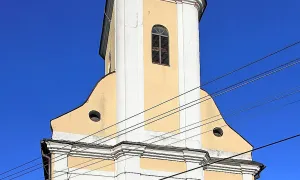
With the coming of the Reformation, new tests came. In the early 17th century, the Protestant church was looted. In 1610-1611 the nobleman Pertold Tvorkovský z Kravař tore down the Gothic crown of the tower and replaced it with a prism extension with pairs and triples of broken windows. A worse fate awaited the church in 1689, when it was struck by another great fire of Opava (May 24) - again destroyed by late Gothic vaults of presbytery. This time, however, the recovery was faster and decisive. Already in 1690, the minorites joined the repairs, during which the masonry presbytery was reduced by at least four metres and the whole church was resealed. The brick gothic windows were replaced by new baroque holes. The modifications continued in the following 18th century: in 1712 they built a new main altar decorated with a painting by Gottfried Herbert, and in 1714 they expanded the interior by three chapel.
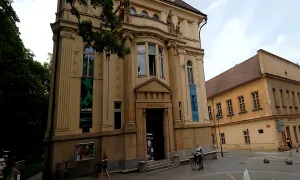
Today, the Church of the Holy Spirit, together with the neighbouring Minorite monastery, presents a unique witness to medieval goth transformed by baroque руками. Protected as a cultural monument of the Czech Republic, the important silent memory of ages remains in Opava.
Then and now
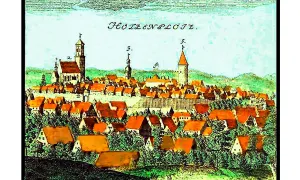
Drag the slider to compare how the landmark may have looked when it was built with the view today.
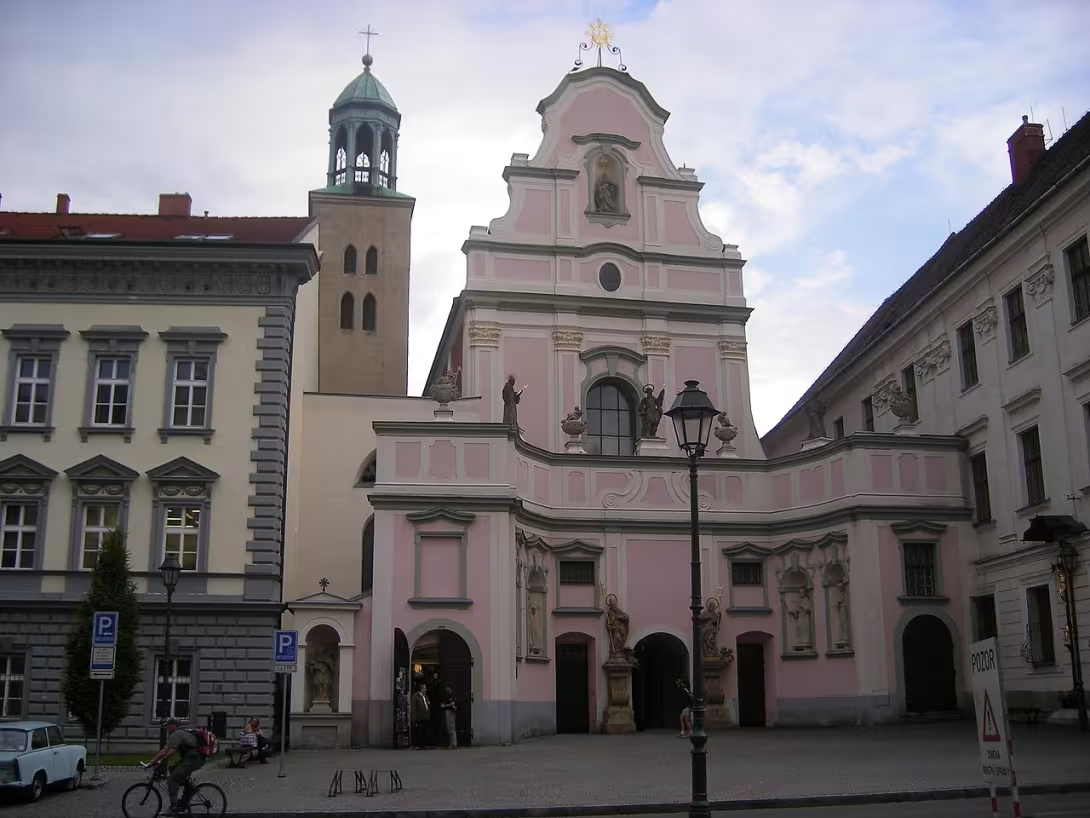

The historical appearance on the left is an AI-generated visualisation and serves as inspiration only.
Historical milestones
- 1250
- First mention of the Opava Minorite Convention in the springs.
- 1265
- Probable completion of temple presbytery.
- 1431
- A fire that destroyed the monastery and the church and caused the vault to collapse.
- 1689
- The Great Fire of Opava will destroy the late Gothic vaults of the presbytery.
- 1690
- The beginning of the Baroque reconstruction of the church.
Architectural development
Originally a Gothic building underwent the construction of a high choir with the tomb of Přemysl. After the fire in 1689, a Baroque reconstruction was carried out in which the masonry of the presbytery was reduced and new Baroque windows were installed.
Historical events
July 31, 1431: Catastrophic fire destroyed the monastery and the church. May 24, 1689: The Great Fire of Opava destroyed the late Gothic vaults. 1690-1767: Extensive Baroque reconstruction of the church.
Points of interest
- The church is first mentioned in the papers on 3 April 1250. - In the years 1336-1347 a Gothic choir was built over twenty metres tall, which served as the tomb of the opevsky Přemysl. - The memorial was hit by two major fires, the first on 31 July 1431 and the second on 24 May 1689. - In 1712 a new main altar was built in the church with a painting by Gottfried Herbert. - The interior was extended by three chapel in 1714.
Guide
This guide is narrated by a synthetic voice generated by artificial intelligence.
Show guide text
This text was created by artificial intelligence and has not been editorially reviewed. It may contain inaccuracies.
Welcome to Opava. You're standing in front of one of the most important cultural and spiritual symbols of this city. Before your eyes is the Church of the Holy Spirit, a building that carries the cramped energy of centuries, countless prayers and tragedies that have visited the city many times. Feel this atmosphere. Although at first glance it may seem to be just a stone structure, you are actually looking at a living organism that has been constantly changing, repairing and reforming along with the people who lived here. Look at his face and try to imagine how this view changed over seven centuries.
Let's go back deep into the past together to understand why this place is so special. The whole history of this place begins at a time when the country of the Opava was just forming. The first paper trail leading us to this place dates back to April 3rd, 1250. At that time, a reference to the Minorite Convention, which was closely and unblatantly linked to this church, first appeared in historical sources. This monastic order was a pillar of the local spiritual life and the church was his heart. Already in 1265 the presbytery was probably completed, which tells us how important and ambitious this place was at the beginning of its existence. The church wasn't just an ordinary building, it was a reserved space for a community that wanted to build its future here.
Now pay attention to the architecture you are currently observing. Although the building may seem like one whole, its structure is a complex landfill of different times. It was originally a one-legged Gothic temple. If you look at its overall form now, feel the strong, vertical energy that is typical of the Gothic style, even if it was later taken over by other shapes. The history of this place was very harsh and the church had to face the devastating forces which at that time were the greatest enemy of any city. We need to talk about fire. The church was built on foundations that had to seek its stability again many times.
In 1431 came the first big test. On 31 July there was a fire that was so devastating that it destroyed not only the monastery but the church itself. There was a collapse of the vaults and the building was in complete chaos at the time. Yet people did not fire and began to rebuild the church. This late Gothic reconstruction has left us traces that we can see in architecture as evidence of human endurance. But history was relentless. Another huge test came in May 24, 1689. The Great Fire of Opava destroyed the late Gothic vaults of the presbytery. This event was a turning point. It was from ashes and debris that a whole new form of church was born.
In 1690, one of the most important stages in the history of this monument began. A large Baroque reconstruction took place, which lasted until 1767. Thanks to this long process, the church has turned into what you see today. The Baroque treatment brought a different feeling, a different rhythm and another aesthetics that intertwined with the original Gothic foundation. Although we do not know the names of the particular architects who proposed these changes, their work is evident in every detail of this reconstruction. It is a fascinating dialogue between two completely different worlds, which are united here in one harmonious whole.
Looking at this memory, we can't forget the people who shaped it. The Church of the Holy Spirit was not just a building, it was a space for powerful and simple mortals. There are names in his history that are of great importance to the history of the region. We can talk about characters like Mečislav II or Přemysl who were part of the early history of this place. The church was also closely associated with power families and their destiny. We see a trail of people like Pertold Tvorkovský z Kravař who have left their history in this environment. In later times, people such as Adam Erdt or Gottfried Herbert worked on the building or its surroundings. Each of these characters, even if it's centuries away from us, left an invisible trail in this place that makes up its depth.
But now I want to invite you to something that may surprise you. Did you know that between 1336 and 1347 there was a Gothic choir built here that was incredibly tall? His height was above 20 meters! Imagine the monumental nature that people perceived at the time. This space was not only a place for divine praise, but it also had a very serious function. He served as the tomb of the Opava Přemysl. Imagine the nobility where there was a monument to the mighty dynasty in such a high, brighter space. It's a fascinating connection between the celestial world and the earthly power that resonates so strongly in this church.
Now when you walk around or decide to enter, try not only to perceive what you see, but also what you feel. Feel the constant transformation. The Church of the Holy Spirit is not a static object. It's a story about destruction and renewal, about fire and water, about gothic vertical ambition and baroque richness. It is the story of the city of Opava, which refused to give up, although the fiery languages tried to knock it down many times.
Thank you for sharing this story with us. We hope that this view of the history of the church has helped you better understand its importance for the whole city. Please continue to explore the surroundings and don't get tired of the beauty of this place. We wish you a pleasant further encounter with the history of Opava. Goodbye.
Tips for visitors
For the best experience, we recommend a visit during the morning hours, when the light in the interior works most calmly and best highlights the Gothic details of architecture.
You can get to the memory by car or use public transport; please check the current connection and parking possibilities in the area in advance in the search engine or on the website of the transport company.
We recommend taking small money with us for any contributions and drinks. The most suitable areas for photography are natural light, which will highlight the structure of the wall, but always be aware of the current rules for taking pictures.
As part of our trip we recommend visiting the nearby Minorite monastery in Opava, which is historically closely connected with this church.
Families with children should follow a silent regime in order not to disturb the peace of the sacral space; for the smallest can be an interesting experience of observing historical details and religious art.
Frequently asked questions
Is Kostel svatého Ducha (Opava) open to the public?
Yes, the church is usually open to visitors. We recommend checking up-to-date information on accessibility on the official site of the monument.
How do I get to the place by car / public transport?
The location is easily accessible by car and public transport. We recommend checking current connections and parking options online.
How much is the entrance fee and is it paid on the spot?
Admission fees are usually paid when visiting. Current prices can be found on the official site of the sights.
Is the tour suitable for children and seniors?
The tour is also accessible to children and seniors. The premises are designed to be comfortable for all visitors.
How long does the tour take?
The tour can take from 30 minutes to an hour, depending on how much time you want to spend and how much time you will be interested in history and architecture.
What are the opening times and booking is required?
Opening hours may vary depending on the period. We recommend checking up-to-date information about opening times and booking options online.
What's interesting in the immediate vicinity?
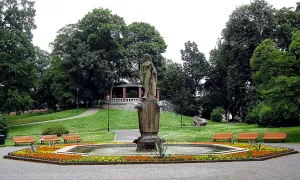
Near the church there is a Minorite monastery, which is part of a cultural historical monument. In addition, you can explore parks and green areas around, providing an opportunity to relax and relax.
For kids
Hello, friends! Today we look at one of the most interesting historical monuments in Opava - Church of the Holy Spirit. Imagine being a time traveler and returning to the 13th century! Where this beautiful building stands today, there was once a large monastery with small pavements and gardens where monks prayed and learned.
Businesses nearby
Do you run a restaurant, accommodation, shop, museum, rental, wellness or other visitor service near this monument? Show yourself directly to the people heading to it — this is how they will see you in the app and on the web:
Events nearby
Zdroj akcí: otevřená data měst a obcí ČR (Národní katalog otevřených dat) a kalendář akcí Národního památkového ústavu.
Nearby
The Minorite monastery in Opava.
Accommodation nearby
Themed route
1. Minorite monastery in Opava (monastery resort) - Historical whole, which forms an important cultural background for the whole site. 2. Church of the Holy Spirit (Church) - The main destination of the trip, which represents the most important sacral monument in the area. 3. The reservoir near the church (the resort) - The immediate space around the monument, ideal for observing its details.
Seasonal recommendations
Spring: In the spring, the Church of the Holy Spirit in Opava is transformed into a shining refuge when the sun's rays break through the tree leaves and illuminate architectural details. Nature wakes up and the surrounding park offers a peaceful view of flowering shrubs and trees. For a visit it is advisable to choose a time when the crowd is not too much - the ideal time is afternoon in the early spring week. Dress according to temperature; better will be mild clothes with the possibility to add leather or jacket because spring weather can suddenly be cold.
Summer: The Church of the Holy Spirit in the summer season offers a beautiful view of the green surrounding landscape, which is illuminated by long days. Sun rays highlight medieval architectural elements and create an attractive atmosphere for relaxation on outdoor platforms. In the main summer season it is recommended to visit the memory early in the morning or late in the evening to avoid large crowds. Don't forget the protective sunglasses and cream and put on a light but comfortable dress.
Autumn: In autumn months the Church of the Holy Spirit in Opava offers a unique atmosphere with colorful leaves and warm sunlight. This time of year is ideal for a quiet viewing of the sights where there are fewer visitors than in the summer months. For comfort choose the period before winter and dress warmer - batch shirts, jackets and thermal pants are suitable. Shortly after sunrise is the best time to visit when the atmosphere is calm and nature offers a beautiful view.
Winter: The Winter Church of the Holy Spirit in Opava is transformed into a refuge from freezing days, where medieval architecture is decorated with snow and lit with warm lamps. The atmosphere is calm and intimate, making it an ideal place to relax in peace. Opening hours may be shorter, so remember to time your visit properly and dress warmer - batch shirts, thermal jackets and hats are essential. Visiting a memorial in the early afternoon is ideal because the evening can be colder and the monument will close soon.
Visualizations and artistic views


The visualisations are generated by artificial intelligence and serve as inspiration.
Photos from the area
Real photos taken near the monument


Zdroj a licence jsou uvedeny u každého snímku.
Tips from visitors
No tips yet. Be the first!
Log in and add your tip.
Sources and literature
Photos: Oslm / CC BY 3.0 — Wikimedia Commons. The author and licence also appear when you hover over the image.
Faktickým podkladem tohoto textu byl článek na Wikipedii, jehož autory jsou přispěvatelé Wikipedie. Článek je dostupný pod licencí CC BY-SA 4.0.
Location on the map
Příběhy a pověsti
Legendy, pověsti a příběhy spjaté s touto památkou
Fotografie návštěvníků
Zatím žádné fotografie. Buďte první, kdo přidá fotografii z návštěvy!
Log in a přidejte svou fotografii nebo hodnoťte.
Za ověřenou návštěvu v aplikaci získáte víc bodů — poznáme podle GPS, že jste na místě.
Reviews and comments