



Hrádek (Porta Bohemica) Hillfort
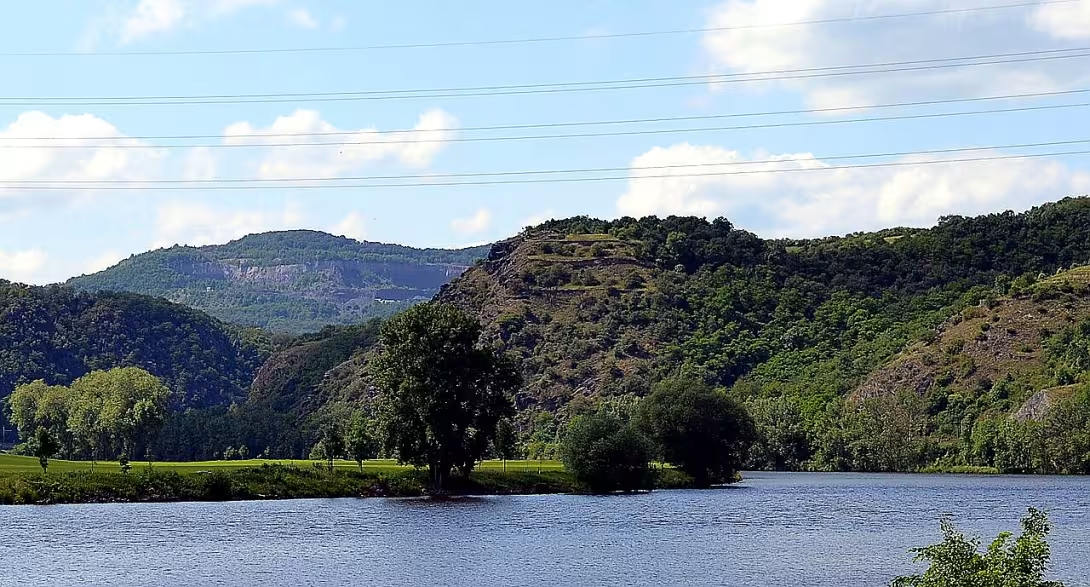
The castle is an ancient and early medieval castle on the rock edge of Calvary above the right bank of the Elbe between Libochovany and the Great Joznosecky in the district of Litoměřice. The monument is an important archaeological witness to the settlement of the area from neolithic to early Middle Ages.
The place was inhabited in several waves. Less finding comes from neolithic, eneolite and the Latin era. In the younger Bronze period there were representatives of the Lužice culture, later the location was used in the late Halštat period and in the early Middle Ages. Slavan ceramics findings date this period between the 9th and 12th centuries.
Archaeological sites of 21 hectares use natural terrain; The south and west sides protect the steep slopes of the Lake Valley. The eastern part partially separates the deep ravine. The main fortifications lie in the north where two lines of ditches and valleys were formed. This system was originally 650 meters, which today remained 550 meters. Waves were created by designing clay and stones; the elevation of the inner wall over the trench floor is still 13 metres. The 12-metre-wide trenches divided the transverse walls at regular intervals, preventing the free movement of the attackers. Behind the acropolis is the rocky top of Calvary.
The historical sources, namely Chronicle Moissacense, link this site to Canburg Castle. The current state of the fortifications affected a later activity in which the eastern part of the valleys was distributed by a bulldozer. The remains of the fortification at the top of Calvary have not been preserved, probably due to the creation of large vineyards. Since 1964, the entire building has been protected as a cultural monument.
The fort is well accessible. It is accompanied by a yellow-marked tourist route to Calvary and Cycling route No. 3057 from Libochen to Kamýk, where the green-marked route continues.
The castle offers unique insight into fortifications from various ages of prehistoric and medieval times. Visiting this place allows the field to observe the scale and technology of ancient defense systems.
Historical milestones
- 1964
- protection as a cultural monument
Architectural development
The fortification consists of two lines of ditches and bays of clay and rocks which are 550 metres long. The trenches were 12 metres wide and divided by transverse walls which prevented the free movement of the attackers. The inner wall still reaches an altitude of 13 meters above the bottom of the ditch.
Points of interest
- The castle is an ancient and early medieval fort on the rock edge of Calvary above the right bank of the Elbe between Libochovany and the Great Joznosecky in the district of Litoměřice. - The place was inhabited in several waves, from neolithic to early Middle Ages, with findings of Slavan ceramics dating from the 9th to 12th century. - Archaeological sites of 21 hectares use natural terrain; The northern part has two lines of ditches and valleys, which were originally 650 metres. - Historical sources connect this location with the Canburg Castle according to Chronicle Moissacense. Since 1964, the entire building has been protected as a cultural monument.
Guide
Show guide text
This text was created by artificial intelligence and has not been editorially reviewed. It may contain inaccuracies.
Welcome to one of the most interesting historical sites in the Czech Republic, Porta Bohemica Castle, which boasts rich past and surprising findings. You are standing right in front of Calvary's rocky edge, where this primordial castle is spread over the right bank of the Elbe River. If you notice the mighty fortifications of the north, you will see the remnants of the waves and ditches that once protected the inhabitants of this place.
The fort of Porta Bohemica has its roots in neolithic. This rock island was inhabited by the people of the Lužice culture and later by the Slavan communities, which is evidenced by ceramic findings dating back to the 9th to 12th century. This history reveals a long line of settlements that took place here. Imagine how new citizens and new traditions, technology and art came over the millennium.
Now notice the mighty fortifications of the north. This line of bays and ditches was designed to protect access to the settlement from the most exposed direction. Even though the mighty fortifications now appear to be mere relics, this place was once a strategic defensive height. Visions of architectural solutions and art of construction remain fascinating even today.
Although we know little about the specific personalities or events associated with Porta Bohemica, local legends and history remind us of the importance of this place in regional development. You can imagine how the life scene of early communities took place here - from business to defense.
The interesting thing is that the castle was protected as a cultural monument in 1964. This shows its historical value and importance for the preservation of cultural heritage. Although many of the secrets of Porta Bohemica are still waiting to be discovered, each find brings new knowledge of the lives of the people who once lived here.
Let's move on and explore the next sections of the fort. Every wave of history left a print in this place, which allows us to get closer to ancient times and better understand their lifestyle. I hope this guide inspired you to explore and learn from this unique place. Thank you for your visit to Porta Bohemica and have a nice day!
Tips for visitors
For the best experiences we recommend a visit in late afternoon hours, when the sun at a low angle illuminates the rock field and highlights archaeological shapes in the field. The light thus obtained is ideal for capturing the atmosphere of the historic place.
Prepare for the path to the castle itself to cross rocky terrain.
Take with you comfortable shoes suitable for walking in hilly terrain and plenty of drinking water. For families with children, visiting this rocky island is an interesting opportunity to explore nature and history in an open space.
The most suitable places for photography are at the top of Calvary, where it offers beautiful views of the Elbe River. Within a short walk around you can visit the nearby villages of Libochovany and the Great Jednosaks or explore the rocky top of Calvary.
Frequently asked questions
Can the monument be visited?
This is an archaeological site. Often there is little to see on the ground and the land may be private. We have not verified access.
Where is the monument?
Location: Libochovany, Ústecký kraj. The map on this page shows the exact spot.
Why is the monument protected?
It is listed in the Central List of Cultural Monuments of the Czech Republic as a cultural monument (register no. 1000155293).
Businesses nearby
Do you run a restaurant, accommodation, shop, museum, rental, wellness or other visitor service near this monument? Show yourself directly to the people heading to it — this is how they will see you in the app and on the web:
Events nearby
Zdroj akcí: otevřená data měst a obcí ČR (Národní katalog otevřených dat) a kalendář akcí Národního památkového ústavu.
Nearby
The fort lies above the right bank of the Elbe River between the municipalities of Libochovany and the Grand Urnosecs in the district of Litoměřice. In the immediate vicinity there is a rocky mountain of Calvary.
Accommodation nearby
Trips and activities nearby
Guided tours, tickets and activities nearby from GetYourGuide
Affiliate link: if you buy from the partner, we may receive a commission. The price for you does not change.
Search tours and activities →Themed route
Thematic cruise route around Hrádek (Porta Bohemica) in Libochovany
1. Porta Bohemica Castle * Type: Archaeological site * It is worth a visit by exploring the history and culture of the first Slavs in Bohemia. The castle is one of the oldest famous settlements in the region, offering a view of life in the 8th-9th century.
2. Calvary * Type: Rock top * This rock formation is an ideal place for a short walk and use of the natural environment over the Elbe River. Here you can enjoy the view of the surrounding countryside and the quiet moments in nature.
3. River Elbe * Type: Natural element * Visit the banks of the river for relaxation and understanding its importance for the history of the region. The Elbe was an important route for merchants and soldiers, which contributed to the development of Libochen.
4. Railway station Hradiště * Type: Exposure * Explore the courtyard with its exhibitions and exhibitions that provide further information on the history of the castle. Here you will learn more about archaeological discoveries and lifestyle of the first inhabitants.
5. Tower Hradiště * Type: Historical tower * Climb to the top of the tower offers a wonderful view of the surrounding landscape and river Elbe. This tower is a special proof of the history and architecture of the area.
This route allows you to explore the rich history and natural beauty surrounding Porta Bohemica Castle.
Seasonal recommendations
Spring brings to the archaeological site a sense of renewal, when the first green cuts and blooming trees begin to appear around the ruins. The lighting is soft and pleasant in this period, creating ideal conditions for observing details of historical structures without sharp shadows. For the visit we recommend choosing layered clothes to prepare you for temperature fluctuations between cold morning and warmer afternoon. At this time, there are fewer people here than in the summer months, which allows for peaceful contemplation.
In the summer months the atmosphere is very lively and surrounding vegetation is in full bloom, but intense sun can be challenging. Due to the increased attendance in the high summer season, it is best to reach the ruins early in the morning to ensure peace and avoid the greatest temperature peaks. Don't forget the high-quality headgear, plenty of water and solid footwear that is necessary for movement in uneven terrain.
Autumn turns the site into a landscape full of golden and brown shades, which, thanks to morning fog, has a mysterious and nostalgic atmosphere. The low sun in the afternoon creates dramatic shadows that highlight the outlines of historical remains beautifully. It is advisable to carry a waterproof layer and shoes with good grip because the soil can be wet and slippery.
Zimą makes the ruins of Hrádek rough and majestic in contrast to bare branches of trees and grey sky. If frost comes, snow can give the place a quiet and magical touch, but it also makes orientation difficult. Due to the short days, plan a visit around noon to use the most daylight. The need is very warm and wind-resistant clothing and increased caution when walking on potentially frozen surface.
Visualizations and artistic views


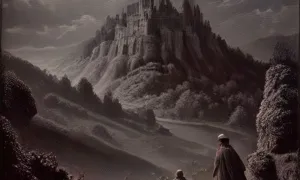
The visualisations are generated by artificial intelligence and serve as inspiration.
Photos from the area
Real photos taken near the monument


Zdroj a licence jsou uvedeny u každého snímku.
Tips from visitors
No tips yet. Be the first!
Log in and add your tip.
Sources and literature
Photos: Sefjo / CC BY-SA 3.0 — Wikimedia Commons. The author and licence also appear when you hover over the image.
Faktickým podkladem tohoto textu byl článek na Wikipedii, jehož autory jsou přispěvatelé Wikipedie. Článek je dostupný pod licencí CC BY-SA 4.0.
Location on the map
Příběhy a pověsti
Legendy, pověsti a příběhy spjaté s touto památkou
Fotografie návštěvníků
Zatím žádné fotografie. Buďte první, kdo přidá fotografii z návštěvy!
Log in a přidejte svou fotografii nebo hodnoťte.
Za ověřenou návštěvu v aplikaci získáte víc bodů — poznáme podle GPS, že jste na místě.
Reviews and comments