



Hrádek (tvrz, Neprobylice) Fortress
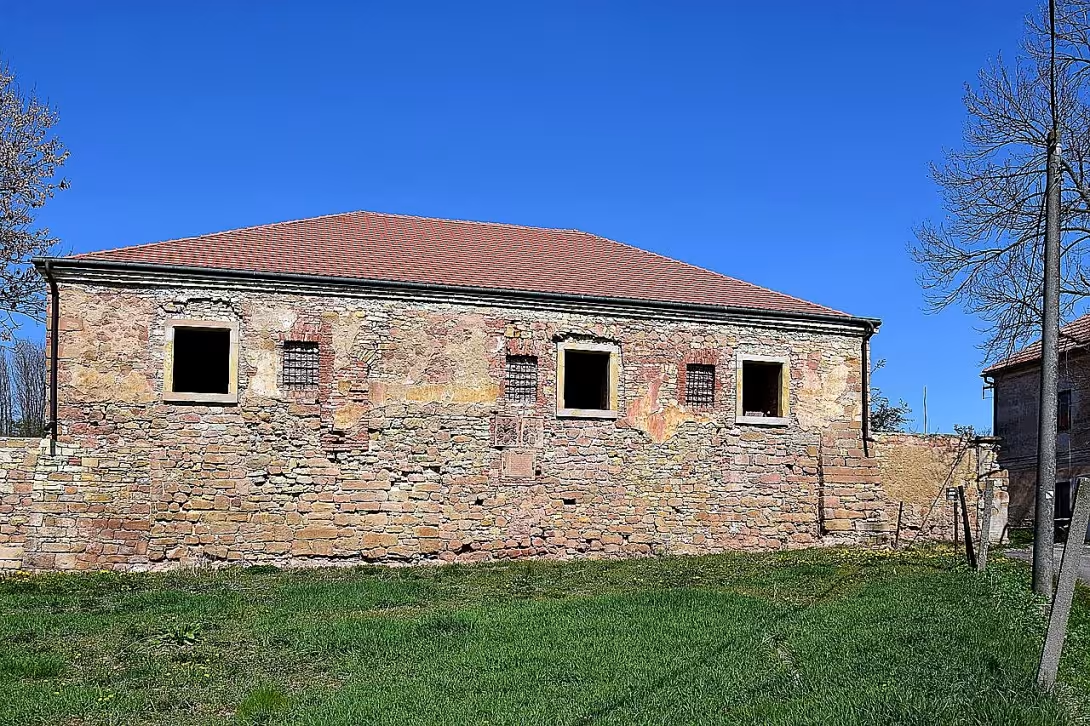
The chateau is a rebuilt Renaissance fortress in the Kladno district. The building is important mainly thanks to reconstruction from the end of the 16th century and preserved architectural details such as coat of arms and portals.
Little is known about the oldest history of the mansion, nothing has been preserved from any predecessor. In the 14th century, Probyllic was divided into two owners. The second fort, just Hrádek, stood at the top of the village; In 1397 it was owned by Zdislav z Neprobylic. During the 15th and 16th centuries the owner gradually changed within local families. In the early 1980s, the construction became part of the wider estate Václav Pétipešský from Chýš and Egerberk.
The current Renaissance form was acquired by the building after the reconstruction in 1587-1588. The dominance is a three-part building with a floor plan approximately 20 × 20 meters. Originally, it was entered from the east side through the hall with a staircase to the cellars. There are still two portals under it. There was a significant change in the 19th century: the first floor was torn down and the interior was divided by new partitions. The southern facade was left with the original details, namely the coat of arms plate Václav Pítipešky and his wife, Izolda Vojkovská from Milhovc and the inscription plate on the completion of the construction.
Václav Pětipeský z Chýš a Egerberka combined the Probylice into one whole when in the eighteenth years of the 16th century he bought the lower fortress. After his death in 1602, the son of Odolen of the Five Pair inherited the property. Due to his participation in the state uprising (1618-1620), the farm was confiscated in 1623. The new owner was Jaroslav Bořita z Martinic, whose family was based in the chateau in Smečno. Since then Hrádek has lost his office as a mansion and served mainly for economic purposes.
The crucial moment for the fate of the building was the end of the Thirty Years' War, after which its function changed permanently. In the 19th century, for example, it served as a sheepskin or apartment with a black kitchen. In the second half of the 20th century, maintenance was neglected. The leaking water and static disturbances subsequently damaged both the roof and wall.
Since 1967, the fortress has been protected as a cultural monument. At the beginning of the 21st century, its comprehensive reconstruction began. A new roof was built in 2008 and the interior was renovated until 2013. These works helped to save historical elements of the building.
The chateau is an interesting example of Renaissance architecture, which has undergone a transformation from the mansion to the economic object. It is a place where you can watch the rotation of historical layers and admire the saved details of the past.
Then and now
Drag the slider to compare how the landmark may have looked when it was built with the view today.
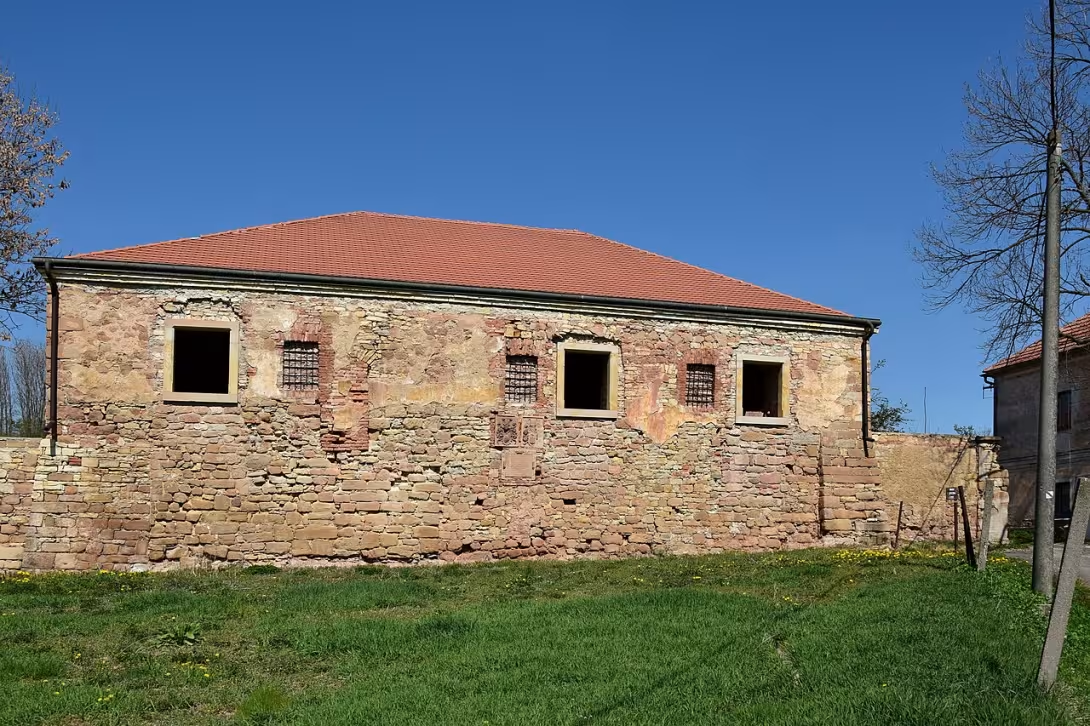
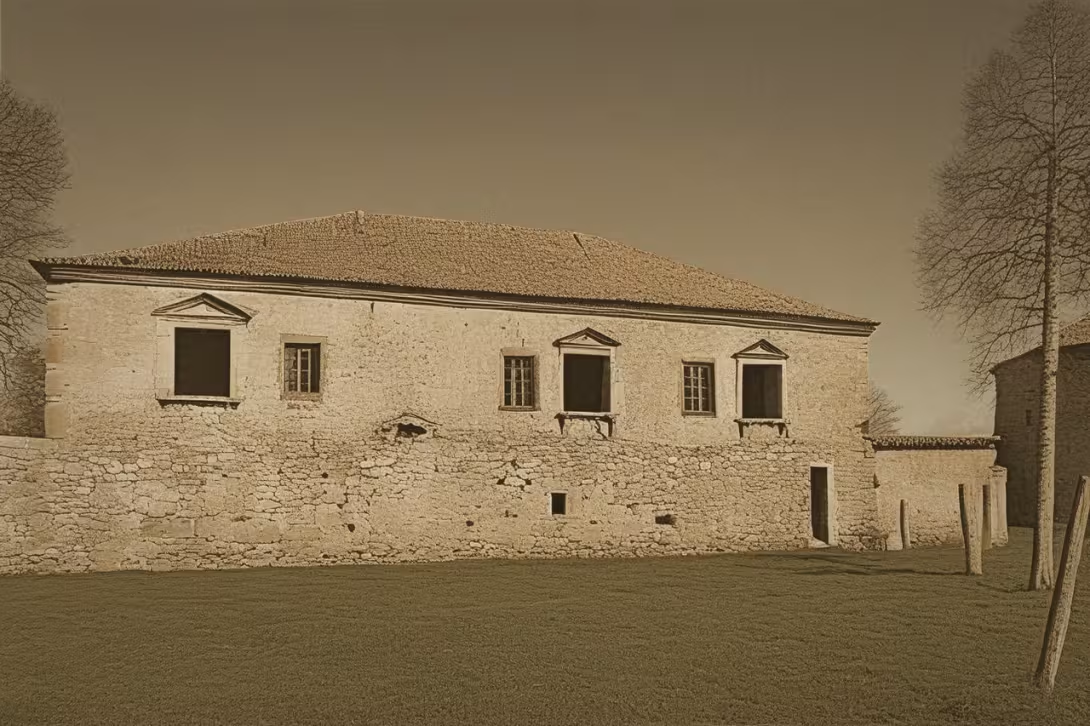
The historical appearance on the left is an AI-generated visualisation and serves as inspiration only.
Historical milestones
- 1397
- The possession of the Chateau by Zdislav of the Probylic.
- 1587
- The beginning of the Renaissance reconstruction of the fortress Václav Pentipešky.
- 1623
- Confiscation of the farm and its purchase by Jaroslav Borita of Martinique.
- 1967
- Declaration of the fortress by cultural monument.
- 2008
- Installing a new roof.
Architectural development
The original 14th fort was rebuilt into Renaissance style after 1587. In the nineteenth century, the building was modified by removing the first floor. At present, Renaissance portals and coat of arms are preserved here.
Historical events
Renaissance reconstruction of the fortress (1587-1588), Confiscation of property after the construction uprising (1623), Protection as a cultural monument (1967).
Owners
Zdislav z Neprobylic (1397), Seagull from Probyllic (1485), Jakub from Probyllic (1534), Jiří from Probylic (1552), Václav Pětipeský z Chýš a Egerberka (cca 1580), Odolen Palipečský (1602), Jaroslav Bořita z Martinic (1623).
Points of interest
- Chateau Hrádek is an interesting example of Renaissance architecture, which has undergone a transformation from the mansion to an economic object. - To this day, the coat of arms of Václav Pítipeski and his wife, Izolda Vojkovská, from Milhovc, have been preserved on the southern front. - There was a significant change in the 19th century when the first floor was torn down and the interior was divided by new partitions. - After the confiscation of the farm in 1623, the fort lost its function as a mansion and served mainly for economic purposes, for example as a sheepskin.
Guide
Show guide text
This text was created by artificial intelligence and has not been editorially reviewed. It may contain inaccuracies.
Welcome to the Probals. You've just stopped in front of a place that carries a quiet rest of centuries. You're standing in front of the Chateau, a building that at first sight acts as a firm, unwavering witness to the past. Even though she looks calm and clear today, her walls have undergone a transformation that we rarely experience today. Feel this atmosphere - it is a place where the nobility of the noble manor meets with the practicality of economic operation. Before your eyes stands the Renaissance fortress, which thanks to recent, complex restoration can once again boast its historical dignity.
But to understand what you're seeing right now, we need to go along with you on the journey of time, all the way to the deep Middle Ages. The roots of this place extend far beyond the Renaissance style, which today dominates its appearance. The first mention of this fortress appears in our chronicles in 1397. In this period, the hardness was already firmly linked to the family of Zdislav of Pronebylic. At the time it was not a representative palace, but a functional, defense-serving mansion to protect the owner and his family.
But the turning point for today's building was much later. Let's move on to the end of the 16th century. In 1587 the fate of Hrádek changed irreversibly. Václav Pětipeský z Chýš a Egerberka decided on a major reconstruction. It was he who brought the spirit of the Renaissance into this medieval object. This means that the building has ceased to be just a rut of fortress and has begun to acquire features of a noble mansion which has its aesthetics, its style and its representative face. This reconstruction was the peak of her rise as a mansion.
But now pay attention to the architecture itself and try to observe the details that are right in front of you. Although the building has undergone many changes, its Renaissance character is still evident. Notice how architecture tries to tell the story of the power and position of the families. If you look at the south facade of the building now, you can see something really rare. This part of the facade has been preserved by coat of arms. It's a quiet, stone trail of Václav Five Pair and his wife, Isolde Vojkovsky of Milhovc. These details are not merely an ornament; These are identity seals that allow us to identify the people who once lived here, decide and rule. Thanks to the recent, meticulous recovery that has taken place in recent years, these historical details have been saved from fitting in in the dust of time. Without this effort, these faces of the past could be lost forever.
But the history of this place is not just a linear story of ascension. It's also a story about how the world changes and how the role of buildings in the landscape changes. After a devastating 30-year war, the owners' situation began to change. In 1623 there was a major shift when the farm was confiscated and subsequently purchased by Jaroslav Bořita z Martinic. Gradually the function of Hrádek itself begins to change during this period. A building that once served as a symbol of noble power and representation began to lose its original, noble role. Over time, it became mainly an economic object. This transformation from the mansion to a useful economic object is very well seen in the architecture of Hradec. It is a fascinating example of how architecture adapts to the needs of the time - from defence, to representation, to purely practical, agricultural use.
Even though the building was changing over the centuries, there were significant changes in the nineteenth century that affected its appearance again. Although some of the original elements had to be sacrificed, the building retained its essence. Today we look at it as a cultural monument, which happened officially in 1967. This meant that its protection became a priority and its historical value was recognised by the whole company.
You may now ask what is the greatest secret of this place. Maybe it's the invisible power of transformation. How is it possible that a building that was only supposed to be a practical economy was able to preserve as many rare details as the aforementioned coat of arms? It's a fascinating contrast between her mission and her spirit. The chateau is like a book that has a different chapter on each side - from medieval savagery to Renaissance elegance to silent work on the farm.
If you look at the building, also notice its stability. Although time is constantly moving forward, thanks to modern interventions, such as the installation of a new roof in 2008, Chateau is once again a safe and well-preserved place. This new roof is not just a technical element, it is a protection for all the inheritance that lies inside.
Now I want to invite you to move on and continue your search of this place. Explore the surroundings, perceive the atmosphere and try to imagine what life here looked like hundreds of years ago. Every stone and every line on the facade has its meaning. Thank you for choosing to dedicate your time to this historic monument and for trying to uncover a piece of the history of Probyllic. We wish you a beautiful and inspiring rest of your visit.
Tips for visitors
For the best experience we recommend a visit in spring or autumn months, where the surrounding atmosphere is quieter and the architecture of Renaissance fortress excels in soft daylight.
For photography we recommend to use the morning or late afternoon light, which best highlights the Renaissance details of the building. Bring drinking water and comfortable shoes suitable for historical surfaces.
For families with children, a tour of this historical residence is an interesting opportunity to know the past.
There are no other sights in the immediate vicinity, so we recommend paying attention to the inspection of the hardness itself.
Frequently asked questions
Can the monument be visited?
Some buildings of this kind are open for guided tours, others serve another purpose or are privately owned. We have not verified whether and when this monument is open – please ask the operator.
What are the opening hours and admission?
We have not verified the opening hours or admission. Current information is published by the operator.
Where is the monument?
Location: Středočeský kraj. The map on this page shows the exact spot.
Why is the monument protected?
It is listed in the Central List of Cultural Monuments of the Czech Republic as a cultural monument (register no. 1000146366).
Businesses nearby
Do you run a restaurant, accommodation, shop, museum, rental, wellness or other visitor service near this monument? Show yourself directly to the people heading to it — this is how they will see you in the app and on the web:
Nearby
🏰 Historic sites (81)
- Pomník Eduarda Bayera 2.3 km
- Václav Beneš - Třebízský 2.7 km
- Železniční muzeum Zlonice 3.7 km Lisovice 7 +420 728 957315 web
- Slánský menhir Tyršův kámen 4.9 km
- menhir Pastýř 5.1 km
- Památník Antonína Dvořáka 5.1 km web
- Zámek Zlonice 5.2 km
- Alžběta Pugnarová 5.4 km
- Antonín Dvořák 5.4 km
- Oběti koncetračních táborů 5.5 km
- Eliška Popperová 5.5 km
- Hugo Popper 5.5 km
- Pamětní deska Jaroslava Vrchlického 5.5 km
- Tomáš Garrigue Masaryk 5.7 km
- Vladimír Miloš 5.7 km
- Artur Beneš 5.7 km
- Josef Beneš 5.7 km
- Vlastivědné muzeum ve Slaném 5.7 km
- Richard Fanta 6.0 km
- Josef Winternitz 6.0 km
🍽️ Restaurants and dining (149)
- Královický dvůr 2.1 km web
- Královická hospůdka 2.1 km
- Na Paloučku 4.1 km +420 241 401 416 web
- Stop Cafe 4.4 km web
- Hospůdka U Jany 4.7 km
- Na Skalkách 4.8 km
- SportBar 4.9 km
- Na Střelnici 5.1 km
- Zlonická jídelna 5.2 km
- Staročeská hospoda Zimák 5.2 km
- Restaurace Zimák 5.2 km
- Hospoda 5.3 km
- Hospoda 5.3 km
- Dělnický dům 5.3 km
- Anna Bar 5.3 km
- Továrna 5.3 km Wilsonova 689 +420 312 522 822 web
- GRAND 5.4 km web
- Restaurace U zlatého kapra 5.4 km
- Kebab 5.4 km
- Hugo Bagel Café 5.4 km
🏨 Accommodation (22)
- Hotel Pod Sluncem 2.6 km Třebíz 25 +420312521898 web
- Atlas 5.4 km
- Ungelt 5.4 km
- Hejtmanský dvůr 5.6 km web
- Ubytovna Slaný Trilorn 6.6 km Pražská 804 +420 605 080 064 web
- U Bartoušků 6.9 km
- Kemp Peruc 10.7 km
- Červená stráň 12.0 km
- Penzion 68 13.4 km
- Penzion Iris 13.8 km
- Hoffmann 14.1 km
- U Admirála 14.1 km web
- Astra 14.2 km
- Hotel Merkur 14.2 km
- Turistická ubytovna Centrum 14.2 km Váňova 322 +420603816906 web
- Ubytovna Racanda 14.3 km
- U Zlatého selátka 14.3 km
- Ubytovna Na zvonečku 14.4 km
- Ubytovna U Konvalinků 14.5 km
- Ponte 14.7 km
🚲 Rentals and sport (40)
- Venkovní posilovna 1.1 km
- Sokolovna 4.7 km
- Sportovní hala Háje 4.9 km web
- Hokejbalové hřiště 5.0 km
- Sokolovna 5.0 km
- Sokolovna 5.1 km
- Sokolovna 5.1 km
- Tenisové kurty 5.2 km
- eMsport 5.4 km
- Studio BB 5.5 km
- Plovárna Slaný 5.6 km
- býv. voj. prostor 5.8 km
- Auto - moto areál Ředhošť 9.8 km
- Koupaliště 10.7 km
- Pláž koupaliště Hřivčice 11.0 km
- Střelnice na Haldě Vinařice 11.6 km web
- Nextbike 14.1 km
- SOKOL 14.1 km
- Živé vobrazy 14.2 km
- Kola Jiří Hlubovský 14.2 km
🥾 Hiking and nature (143)
- Řipec 2.4 km
- Pramen - lesni studánka 3.2 km
- Bohouškova skalka 4.2 km
- Hradiště 4.6 km
- Lesopark Háje 5.0 km
- Park Skalka 5.1 km
- Punk park 5.2 km
- Lesopark Háje 5.3 km
- Park Plynárenská 5.5 km
- Louka Vítězná 5.5 km
- U Školky 5.5 km
- Park U křižovatky 5.6 km
- Kumpánova zahrada 5.7 km K. H. Borovského
- U Muzea 5.8 km
- Slánský pramen 5.8 km
- Modletický dům 5.8 km
- U Antoše 5.8 km
- U Autobusového nádraží 5.9 km
- Slánská hora 6.0 km
- Slánská hora 6.1 km
Accommodation nearby
Themed route
Main gate - input element, historical stone gate with original metals. First contact with the atmosphere of the fort and a great opportunity to photograph.
Tanks of the fortress - open space surrounded by walls, where the original stone roads are preserved. It offers a view of the whole structure and a chance to relax in the shade of old trees.
Central tower - highest point of the fort, accessible by stairs. The panoramic view of the surrounding landscape and the chateau complex are spread from the top.
The exhibition of medieval equipment - an interactive exhibition located in one of the towers, represents weapons, armor and everyday objects from the time of the greatest bloom of the fortress. It brings deep insight into the life of defensemen.
View and park - a small exit behind the walls, where a wooden lookout tower and a modified park with benches are built. An ideal place to relax and watch the sunset over historical territory.
Seasonal recommendations
Spring: In the spring season, the fort of Probylice is decorated with flowers and young tree leaves, creating an attractive green atmosphere. The sun illuminates historical buildings with its fine beam, which highlights their architectural details. It is advisable for a visit to travel in the middle of the day when the temperature is pleasant and there are not so many rainfall seizures. It is recommended to wear clothes with layers because the morning can be cold, but at noon the temperature can increase rapidly.
Summer: In summer, the Fortress of Probylice is a popular destination for visitors seeking escape from urban life. Sunny days and warm evenings offer ideal conditions for tours, but you need to go early in the morning or later in the afternoon to avoid strong sunlight and crowds. Watch out for UV protection and wearing light clothes with ties are well prepared to visit in the main summer season.
Autumn: In autumn, the fortress of the Melancholic charm grows when tree leaves turn into hot colors and the sun lights up the golden atmosphere. This time of year is ideal for photography and quiet walks without too many crowds. It is advisable to set out between lunch and dinner, when the temperature is the most beautiful and the sunlight illuminates the golden autumn landscape. Wearing clothes suitable for mild cold and ties for wind protection is a good idea.
Winter: In winter, the fortress of Probylice offers a unique atmosphere where historical buildings appear to be alone in a snow blanket. Short sun days and cold temperatures create comfortable conditions for a peaceful visit, and it is advisable to leave early in the morning when the doors are open and the sun's rays illuminate the snow covered terrain. Wearing warm clothes with cold tie is essential because winter visitors must be prepared for a freezing condition and the possibility of shorter opening times.
Visualizations and artistic views


The visualisations are generated by artificial intelligence and serve as inspiration.
Photos from the area
Real photos taken near the monument

Zdroj a licence jsou uvedeny u každého snímku.
Tips from visitors
No tips yet. Be the first!
Log in and add your tip.
Sources and literature
Photos: Petr Kinšt / CC BY-SA 4.0 — Wikimedia Commons. The author and licence also appear when you hover over the image.
Faktickým podkladem tohoto textu byl článek na Wikipedii, jehož autory jsou přispěvatelé Wikipedie. Článek je dostupný pod licencí CC BY-SA 4.0.
Location on the map






Příběhy a pověsti
Legendy, pověsti a příběhy spjaté s touto památkou
Fotografie návštěvníků
Zatím žádné fotografie. Buďte první, kdo přidá fotografii z návštěvy!
Log in a přidejte svou fotografii nebo hodnoťte.
Za ověřenou návštěvu v aplikaci získáte víc bodů — poznáme podle GPS, že jste na místě.
Reviews and comments