






Hradiště Na Farkách Hillfort
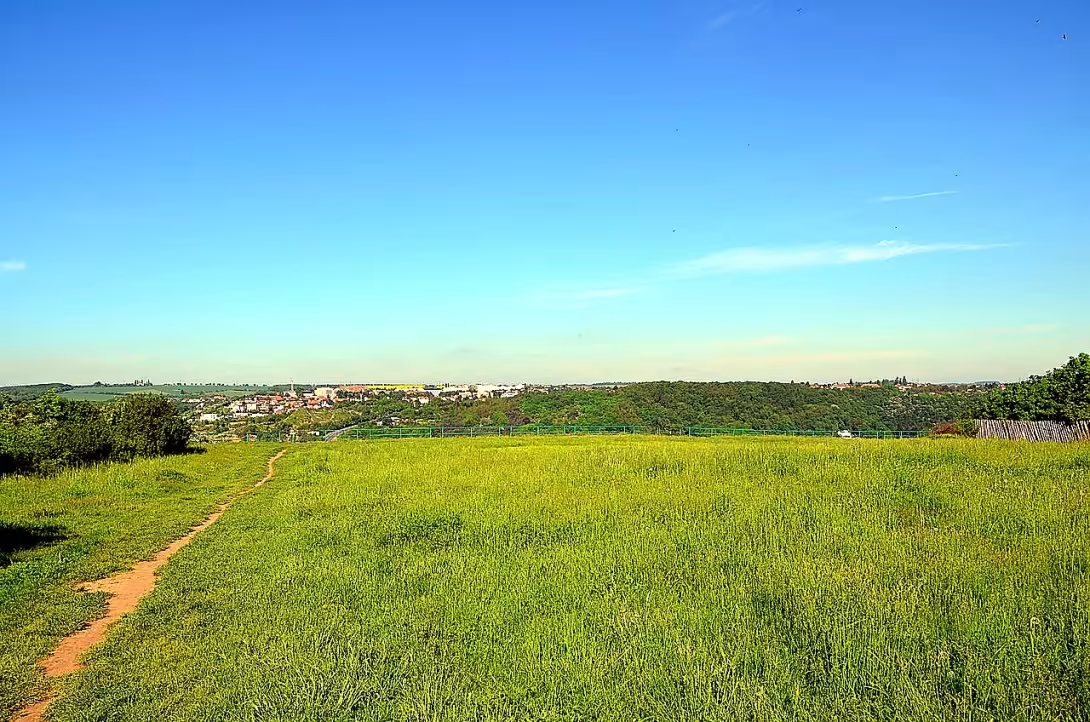
Hradiště Na Farkách, also known under the names above Pohoří or Na Vitrak, is an archaeological site in Prague-Troy. This prehistoric fortified settlement lies on the island over the right bank of the Vltava. It was inhabited in eneolithic and bronze age. In the late period of Halštátský, there is likely to be a significant residence for the then elite class of inhabitants.
The oldest documented settlement of the site comes from eneolite, specifically from Baden culture. The first fortification was created here in the end of the older Bronze Age during the period of the fan culture and formed a moat along with a wall of dry laid stones. In the late period of Halštatian culture, a new fortified mansion was established on the island. The unfortified settlement of this place lasted until the period of Latin culture.
The settlement was located on a sharpness, whose steep western slope exceeds the bottom of the Vltava valley by 90 metres. The fortified area in the late period of the Halštats occupied an area of approximately one hectare and contained residential, economic and production facilities. Protection was provided by palisades. There was a palisade on the west side where archaeological research revealed a base trough of up to 1.25 metres wide and a depth of 0.7 metres. On the east side, it was doubled, with its base gutters running between 4.5 and 5 meters apart. The third, arches-led structure, protected the passage of the island into the surrounding terrain.
The description of the castle dates back to the first half of the twentieth century, when Eduard Štorch recorded two lines of fortification on the site. In the subsequent decades, agricultural activity has disrupted the surface of the site. In the 1960s, archaeological research was conducted by Miloslav Slabina (1966- 1967) and subsequently by Marie Fridrich in 1968- 1974. Another damage to the site caused the construction of the Bohemian estate.
Currently, the remains of this building are protected as a cultural monument. The location is important evidence of the social stratification of the company and the development of complex fortified settlements during the period of transition from stone to metal processing of materials. Visiting this place offers insight into ancient history near the Vltava Valley.
Then and now
Drag the slider to compare how the landmark may have looked when it was built with the view today.
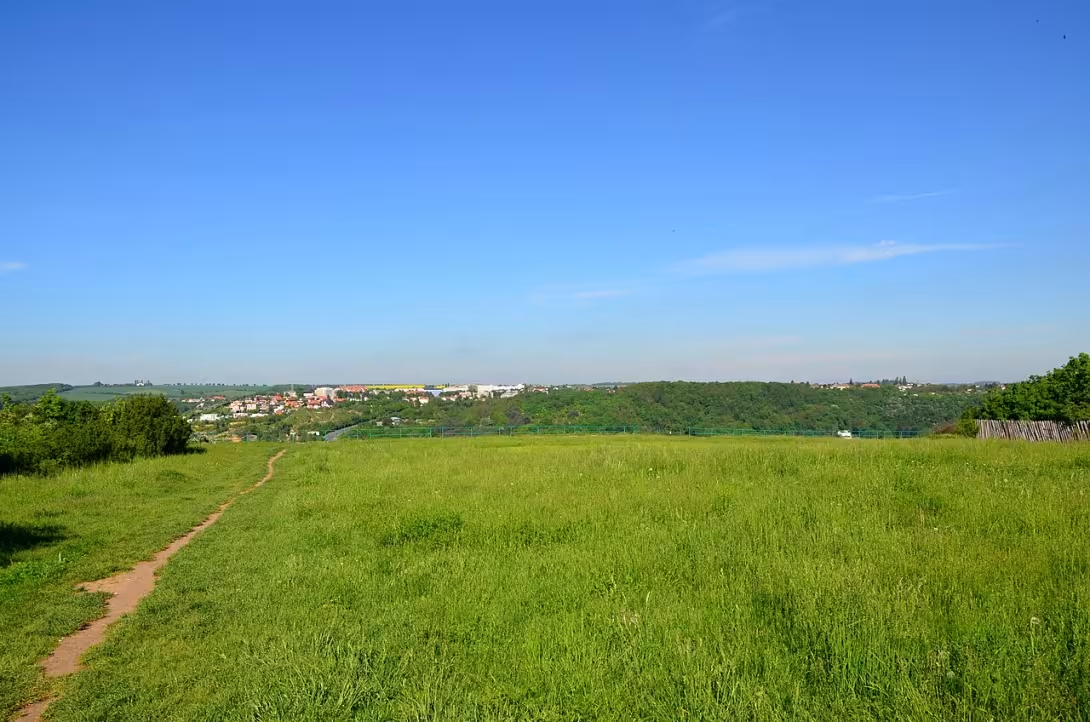
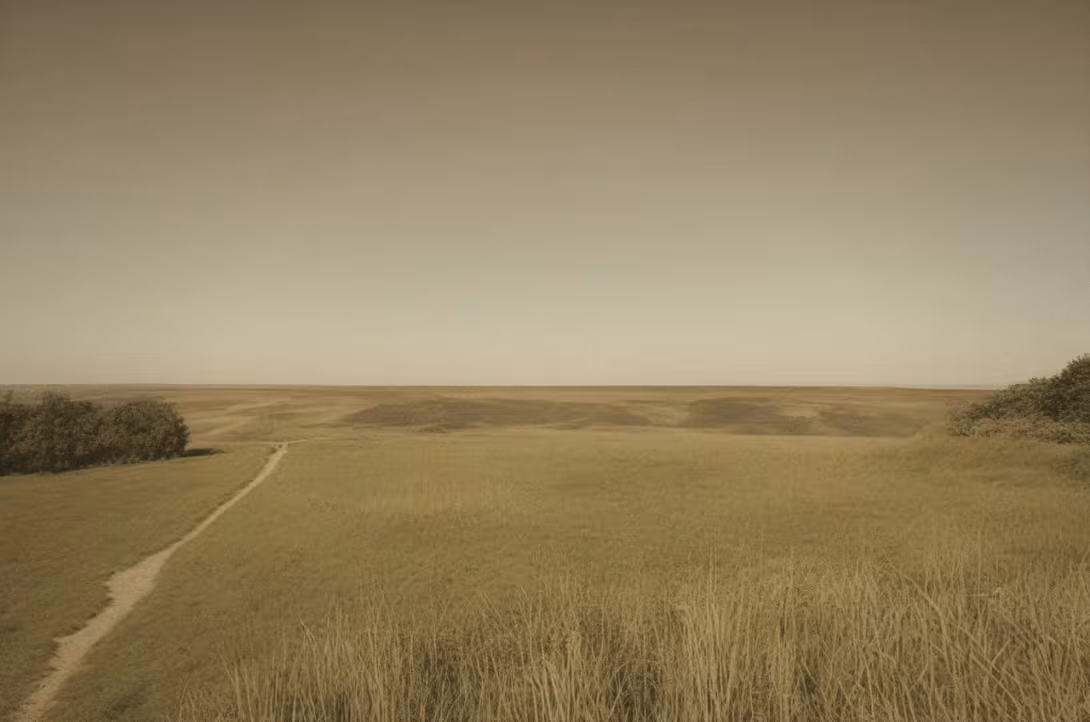
The historical appearance on the left is an AI-generated visualisation and serves as inspiration only.
Historical milestones
- eneolit
- Resettlement of the Baden culture site
- End of older Bronze Age
- The creation of the first fortification with a moat and a stone wall
- late period
- The emergence of a significant fortified seat of the Bylandic culture
- The first half of the 20th century
- Eduard Štorch recorded lines of fortification
- 1966-1967
- Archaeological research led by Miloslav Slabina
- 1968-1974
- Archaeological research led by Maria Fridrich
Architectural development
At the time of bronze, the fortifications of the moat and the wall formed from dry laid stones. At the time of the Halštats, a one-hectare area was protected by palisades with deep base gills. On the east side, the palisade was duplicated and the third arc line protected access from the surrounding terrain.
Points of interest
- The fort is also known under the names nad Pohoří or Na Vitrak. - In the late period of Halštátský, there is likely to be an important seat for the then elite class of inhabitants. The first fortification formed a moat along with a wall of dry laid stones. - The steep west slope of the island exceeds the bottom of the Vltava Valley by 90 metres. - Protection was provided by palisades, duplicated on the east side.
Guide
Show guide text
This text was created by artificial intelligence and has not been editorially reviewed. It may contain inaccuracies.
Welcome to the place where one of the most interesting archaeological treasures of Prague - Castle Na Farky is situated in front of you. You are standing on the edge of the island, which is situated over the right bank of the Vltava, and before you there is a slightly wavy surface on which it is difficult to distinguish the remains of ancient buildings. Even though you can't see the stone walls or the towers here today, you can feel that this place was once vibrating with life and meaning. The air carries the light smell of forests and rivers, and when you look around, you notice a steep west slope that exceeds the bottom of the Vltava Valley. This slope is a natural defense that has been supplemented in the past by human activity.
Let's move forward in time and see how this place evolved. The first settlement here comes from the eneolite, where the area was inhabited by Baden culture. At the time, people used fertile soil and a strategic location on the high rise that provided a view of the river and the surrounding landscape. A few thousand years later, at the end of the older Bronze Age, the first strength element - a moat accompanied by a stone wall, built by a dry stone method. This fortified complex was probably designed to protect the people from their enemies and to ensure control over important trade routes along the Vltava.
The following periods, the late period of the Hallatians, have brought a new dimension to the island. A significant seat belonging to the Bylanese culture was established here, which probably served the then elite layer of the population. The fortification was extended and strengthened, so the fort became the center of power and social life. At this stage, not only defence but also administrative and ceremonial activities were concentrated on the ground. Later, during the period of Latin culture, the settlement collapsed into unfortified villages, suggesting a change in social structure and perhaps a decline in the importance of this place.
Now pay attention to what you can directly observe. Although stone remains are rather fragmental today, you can imagine what the original moat was - deep and wide, dug into the ground to make it difficult for the enemy to access. On its edges was a stone wall, composed of carefully stacked stones which formed a solid barrier. This wall was built without painting, indicating the high skills of builders at the time. If you look at the western slope, perceive its steeple, which naturally supplemented human defense - the attackers would have to climb this slope before they could reach the fortification itself.
Although the names of architects and residents remain unknown, the site is linked to several important personalities involved in its detection. At the beginning of the twentieth century there worked writer and historian Eduard Štorch, who recorded lines of old fortifications to help maintain awareness of their existence. Between 1966 and 1967 he led archeological research by Miloslav Slabina, whose work brought new knowledge of the structure and layout of the wall. Subsequently, between 1968 and 1974, she continued to explore Marie Fridrich, whose systematic excavations revealed other layers of settlement and extended our understanding of the development of this place. Thanks to their efforts, we can now monitor the gradual development of the fort from the eneolithic settlements to the Latin villages.
The interesting thing, which often attracts visitors, is that the castle Na Farky also bears other names - above Pohoří and Na Vitrak. These alternative names reflect not only the geographical location, but also the local traditions and legends that bind to this place. Another fascinating fact is that during the late period of the Hallatians, there is probably a significant residence for the then elite class of inhabitants. This suggests that the fort was not only a defensive camp, but also a centre of power and culture, where leaders, traders and craftsmen met. Although only traces are present today, imagine what life was like at that time - a busy marketplace, festivities, craft workshops and perhaps even rituals that took place in the open air.
And now for one mystery that gives the place a mysterious touch. Although archaeologists have discovered many layers of settlement, the exact function of some parts of the wall and trench remains unclear. Some sections of the ditch are deeper and wider than others, suggesting that they could serve different purposes - from defensive to symbolic. Moreover, there have been traces in some places that could be associated with ritual activities, but their nature is not yet clearly defined. This unclarified part encourages us to further research and to imagine that there are even more stories beneath the surface that are waiting to be discovered.
In conclusion, I invite you to stop by this place and get carried away by its atmosphere. Look at the terrain, see the height differences, imagine what life was like a thousand years ago, and think about how human destinies intersect with natural shapes. If you are interested in a more detailed view of the different layers of settlement, you can look at the information boards near the entrance, where the results of the research by Eduardo Štorch, Miloslav Slabina and Marie Fridrich are briefly summarised. Whether you are here for the first time or coming back, Na Farky Castle will always offer you a new perspective on the rich history of Prague and its surroundings. Thank you for joining this audio guide, and I wish you a pleasant continuation in discovering the other historical gems that this country hides. Let us part with this place with respect for the past and joy of what we can discover together.
Tips for visitors
The best time to visit Hradiště Na Farkách is in summer months when the weather is favourable and you can enjoy a beautiful view of the Vltava Valley. A day without dust or rain offers ideal conditions for exploring the ruins.
Parking is possible nearby, but due to limited capacity we recommend using public transport. For access to the place, buses or trams may be used; verify the current connection and times at the time of planning the visit.
When visiting, have your protective shoes taken with you because the terrain is natural and can be untouched. Also remember the sun cream and plenty of drinking, especially in warmer days.
Photography offers wonderful views from different angles. The best light is usually in the evening or in the morning when the sun is not directly above your head. Look for places overlooking the Vltava and surrounding landscape for impressive images.
The surrounding area offers an interesting history and culture of the area. For families with children this place is suitable for a short walk or visit the local museum.
Businesses nearby
Events nearby

Zdroj akcí: otevřená data měst a obcí ČR (Národní katalog otevřených dat) a kalendář akcí Národního památkového ústavu.
Nearby
The right bank of the Vltava in Prague-Troy, the Vltava Valley, the Bohemian settlement.
Accommodation nearby
Trips and activities nearby
Guided tours, tickets and activities nearby from GetYourGuide
Affiliate link: if you buy from the partner, we may receive a commission. The price for you does not change.
Search tours and activities →Themed route
Thematic cruise route to Prague-Three
1. Hradiště Na Farkách (archaeological site) Type: Archaeological site Why is it worth a visit: Hradiště Na Farkách is one of the most important Bohemian settlements in the Czech Republic. Here you can see the remains of the Old Bohemian settlement, which opened the door to the life of people from the 9th to 11th century.
2. Vltava Valley Type: Natural body Why is worth a visit: Vltava Valley offers beautiful views and a calm atmosphere, ideal for relaxing after visiting an archaeological site. This natural unit is part of the history of the region and provides a suitable environment to walk and reflect.
3. Rich estate Type: Historical site Why is it worth a visit: The Bohemian settlement in Prague-Troy is a key place to understand the life of the first Czech settlers. Here you can imagine how the ancient Bohemian people settled down and lived near the Vltava.
This route offers an interesting view of the history and culture of the Prague-Troje region, focused mainly on the Bohemian era.
Seasonal recommendations
Spring: On the Hradiště A new life comes to Farky in the spring, where green grass and flowers appear on the landscape. Sun rays illuminate the ruins with pink shades, creating an attractive atmosphere for visitors. The views of the castle are especially beautiful when flowering shrubs and trees begin to open. It is advisable to visit a cruise place early in the afternoon to prevent the beginning of crowds. It is recommended to wear comfortable shoes and a short sleeve shirt because the temperature may be sober.
Summer: In the summer period Hradiště Na Farkách is full of life. Sunshine days bring bright light, which emphasizes historical architecture and creates ideal conditions for photography. Nature is in peak bloom, which increases the attractiveness of the place. Visiting may increase significantly during the main summer season, so it is good to come in early morning or late afternoon. It is important to wear a light and light shirt as well as protective sunglasses and drinking water boxes.
Autumn: In the autumn period Hradiště Na Farkách offers a different atmosphere. The colours of leaves add richness to the landscape panorama and sunlight becomes warmer, creating a romantic mood. It is advisable to visit the place on the middle of the day when lighting is best explored by ruins and surrounding landscapes. In addition, fewer people may appear here compared to the summer season. It is recommended to wear warmer clothes such as a long shirt or sweater, and suitable shoes for walking on dry and wet conditions.
Winter: In winter months Hradiště Na Farkách gets a quiet look. Freezing light and snow sheets add unique beauty to the landscape panorama, while cold air can sometimes be disturbed by winds. The opening of the monument is often limited to a shorter period and the attendance decreases. It is advisable to come early in the morning to be able to fully explore the site without unnecessary disruption. It is recommended to wear warm clothes such as leather couches and thick shoes, and bring your protection against moisture.
Visualizations and artistic views


The visualisations are generated by artificial intelligence and serve as inspiration.
Photos from the area
Real photos taken near the monument


Zdroj a licence jsou uvedeny u každého snímku.
Tips from visitors
No tips yet. Be the first!
Log in and add your tip.
Sources and literature
Fotografie: Stehule / CC BY-SA 3.0 — Wikimedia Commons. The author and licence also appear when you hover over the image.
Faktickým podkladem tohoto textu byl článek na Wikipedii, jehož autory jsou přispěvatelé Wikipedie. Článek je dostupný pod licencí CC BY-SA 4.0.
Location on the map
More monuments – Praha-Troja
Show all in the municipality

Příběhy a pověsti
Legendy, pověsti a příběhy spjaté s touto památkou
Fotografie návštěvníků
Zatím žádné fotografie. Buďte první, kdo přidá fotografii z návštěvy!
Přihlaste se a přidejte svou fotografii nebo hodnoťte.
Za ověřenou návštěvu v aplikaci získáte víc bodů — poznáme podle GPS, že jste na místě.
Reviews and comments