






Popelářka Homestead
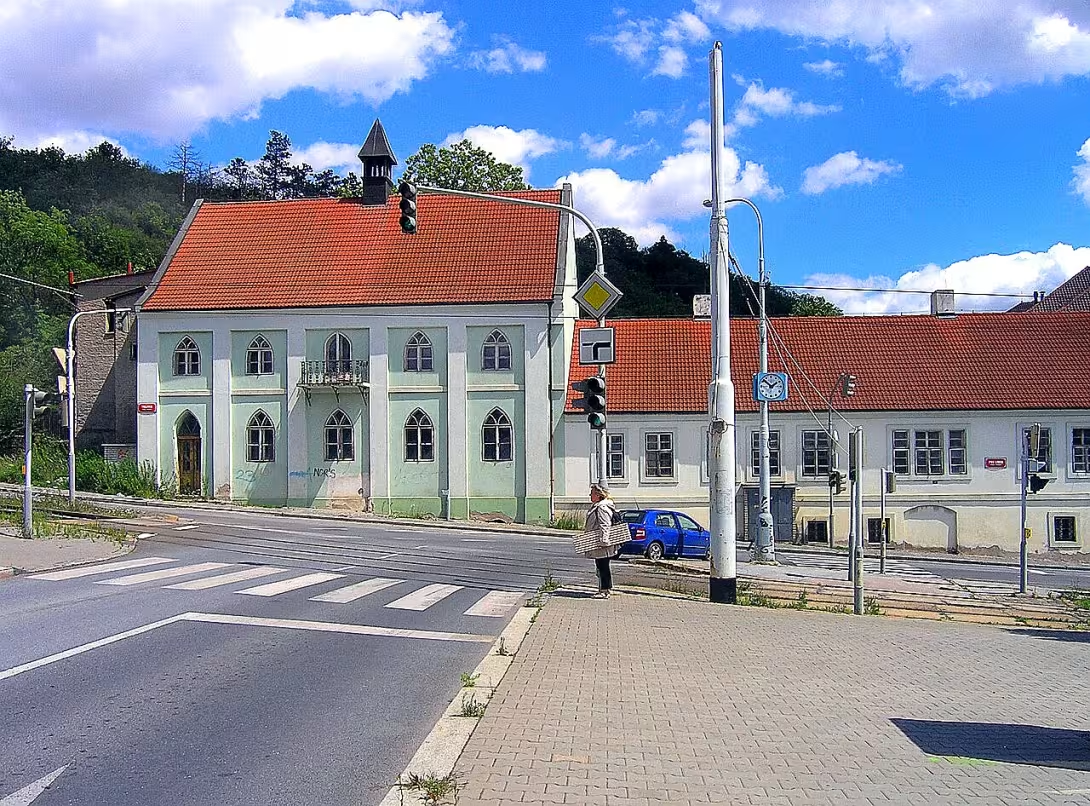
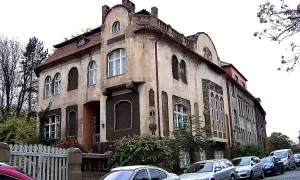
Popelářka is a historic vineyard estate located in the Troja district of Prague 7, recognized as a protected cultural monument of the Czech Republic. Its origins trace back to the reign of Charles IV, with documented ownership beginning in the 16th century under Jakub Popelář. Over time, it evolved from an agricultural site featuring a wine press into a residential manor and later served as a scientific institution. In the 19th century, it became the seat of the Pomological Institute and a specialized school for viticulture and pomology.
The estate's history is deeply rooted in its function as a vineyard since the 14th century under Charles IV. Initially, Popelářka was part of the extensive vineyards that characterized the Troja area. By the 16th century, Jakub Popelář became the first documented owner, marking the beginning of its recorded history. The estate featured a wine press by the 17th century, indicating its agricultural significance. In 1755, a small manor house was constructed on the site, owned by Marie Klára Hummová, who resided there year-round with her vineyard manager.
Throughout the centuries, Popelářka underwent several ownership changes and transformations. By 1816, it had been sold to the Jireček family, and in 1825, Anna Kubová became its owner. The estate was notable for its residential and agricultural buildings, which by then included a stone structure with shingle roofing. In 1860, Prince Windischgrätz acquired Popelářka, marking another significant change in ownership.
The late 19th century saw the establishment of the Pomological Institute at Popelářka, under the leadership of Karel Němec, son of the renowned writer Božena Němcová. This period marked a shift from agricultural use to scientific and educational purposes, with the creation of a specialized school for viticulture and pomology. The estate's northern building was rebuilt in the Classicist style during this time, reflecting its evolving architectural significance.
Following the dissolution of the Vlastenecká hospodářská společnost in 1874, the Provincial Committee in Bohemia became the owner of Popelářka. The estate continued to serve as a center for pomological research until the early 20th century when it transitioned to other uses, including housing an electrotechnical testing institute from 1947.
Today, Popelářka stands as a testament to its rich history and cultural significance. Visitors can explore its historical architecture and learn about its role in the development of agricultural science in Bohemia. The estate's transformation over centuries—from a vineyard to a scientific institution—makes it a fascinating site for those interested in both history and horticulture. Its preservation as a cultural monument ensures that this unique piece of Prague's heritage remains accessible for future generations to appreciate.
Historical milestones
- 1755
- A small manor house was documented on the site, owned by Marie Klára Hummová.
- 1816
- The estate was sold to the Jireček family.
- 1825
- Anna Kubová became the owner of the estate.
- 1860
- The estate was sold to Prince Windischgrätz.
- 1874
- The Provincial Committee in Bohemia became the owner of Popelářka.
Architectural development
The estate evolved from a 17th-century wine press and a small 1755 manor house into a larger stone complex. By 1825, it featured a stone residential and farm building with shingle roofing. In the 1860s, the northern building was rebuilt in the Classicist style.
Historical events
1860: Sale to Prince Windischgrätz. Late 19th century: Establishment of the Pomological Institute and a school of viticulture and pomology. 1947: Establishment of the Electrotechnical Testing Institute.
Owners
Jakub Popelář (16th century), Marie Klára Hummová (1755), Jireček family (1816), Anna Kubová (1825), Prince Windischgrätz (1860), Vlastenecká hospodářská společnost, Provincial Committee in Bohemia (1874).
Points of interest
- Popelářka is a historic vineyard estate located in the Troja district of Prague 7 and recognized as a protected cultural monument of the Czech Republic. - Its origins trace back to the reign of Charles IV, with documented ownership beginning in the 16th century under Jakub Popelář. - In the late 19th century, it became the seat of the Pomological Institute and housed a specialized school for viticulture and pomology. - The estate's northern building was rebuilt in the Classicist style during this period, reflecting its evolving architectural significance. - Following the dissolution of th
Guide
Show guide text
This text was created by artificial intelligence and has not been editorially reviewed. It may contain inaccuracies.
Welcome to Popelářka. As you stand here in the heart of the Troja district of Praha-Troja, take a moment to simply breathe in the atmosphere of this place. You are looking at a site that is far more than just a building; it is a living chronicle of the landscape and the lifestyle of Prague over many centuries. While it may seem like a quiet corner of the city today, you are actually standing before a historic vineyard estate that has witnessed the evolution of the city from a medieval center to a modern metropolis.
As you look around, try to imagine this location not as it is now, but as it was hundreds of years ago. The story of Popelářka begins in a time of great ambition and growth for the city, tracing its origins all the way back to the reign of Charles IV. While the early days are shrouded in the mists of time, the records become clearer by the 16th century. It was during this period that the estate became associated with a man named Jakub Popelář, whose name still echoes in the title of the estate today. In those early years, this was a place of hard work and agricultural productivity. It wasn't a place of leisure, but a functional site centered around the cultivation of grapes and the production of wine. If you can, try to visualize the bustle of the harvest and the presence of a wine press, which was the beating heart of the estate during its early agricultural life.
Now, let us consider the physical presence of the site before you. While the architects who shaped this estate remain unknown to history, the buildings tell a story of transition. As you observe the facade and the general layout of the manor, notice how the site has evolved. It shifted from a purely functional agricultural hub into a residential manor, reflecting the changing social status of its owners. I invite you to look closely at the exterior and imagine the layers of history built into these walls. There are no grand monuments or towering spires here to distract you; instead, there is a grounded, authentic sense of a manor house that served as a home and a place of business. The beauty of Popelářka lies in its understated elegance and its ability to blend into the natural beauty of the Troja valley.
The history of who lived and worked here is a fascinating journey through the social strata of Bohemia. Let us step forward in time to the year 1755. At that time, documentation shows that a small manor house stood on this very spot, owned by a woman named Marie Klára Hummová. It is interesting to think about the daily life of the estate under her care during the mid-18th century. As the decades passed, the estate continued to change hands, reflecting the economic shifts of the era. In 1816, the Jireček family took ownership, followed by Anna Kubová in 1825. These transitions show us that for a long time, Popelářka was a prized possession among the local bourgeoisie and landowners.
However, the 19th century brought a shift toward higher nobility. In 1860, the estate was sold to Prince Windischgrätz, a name that carried immense weight and power in the Austrian Empire. Imagine the change in atmosphere when a prince took residence here, bringing with him the prestige and the resources of one of the most influential families of the time. But the story of private ownership eventually gave way to a more public purpose. By 1874, the Provincial Committee in Bohemia became the owner of Popelářka, marking the beginning of a new chapter where the estate would serve a broader societal role.
This transition led to one of the most intriguing aspects of the estate's history: its transformation into a scientific institution. This was no longer just a place for growing grapes or a residence for the wealthy; it became a center for study and discovery. This era brought several key personalities to the site, individuals who dedicated their lives to knowledge and the improvement of the land. Among them were Karel Němec, Jan Baptista Lambl, and Karel Milan Lambl. These men helped shift the identity of Popelářka from a private manor to a place of intellectual pursuit. When you look at the buildings now, think of the quiet intensity of scientific research that once took place within these walls, where the traditions of the vineyard met the rigor of 19th-century science.
One of the most compelling things about Popelářka is its resilience. It has survived the transition from the medieval era of Charles IV, through the agricultural focus of Jakub Popelář, through the hands of private citizens and high nobility, and finally into the realm of science. Today, it is recognized as a protected cultural monument of the Czech Republic, which ensures that its story will not be forgotten. There is a certain mystery in how a simple vineyard estate can mirror the entire history of the region, adapting its purpose to fit the needs of each passing century. It stands as a testament to the enduring relationship between the people of Prague and the fertile lands of Troja.
As you prepare to move on, I encourage you to take one last look at the estate. Notice the way the light hits the manor and think about the generations of people—from the laborers of the 16th century to the scientists of the 19th century—who walked the same ground you are standing on right now. The silence of the site today belies the centuries of activity, laughter, labor, and discovery that have occurred here.
Thank you for joining me on this brief journey through the history of Popelářka. I invite you now to explore the surrounding area of Troja, perhaps visiting the nearby vineyards or the riverbank, to see how this historic estate fits into the wider, beautiful landscape of the city. Enjoy your walk and the discoveries that await you.
Tips for visitors
The ideal time to visit Popelářka is from late spring through early autumn, when the vines are in full leaf and the weather is mild. Early morning in May or September offers pleasant temperatures and soft light, while the harvest period in late September provides a chance to see the vines being worked and sometimes special tasting events.
The estate is reachable by car and has a small parking area near the entrance; it fills up quickly in peak season, so arriving early is advisable. Public transport also serves the area – a tram line stops at the Troja stop within walking distance, and several bus routes pass nearby. Check the current schedules online before you travel.
Bring comfortable walking shoes, a bottle of water, and sun protection, as you will spend time outdoors among the vines. A hat and sunscreen are useful, especially in summer. If you plan to taste wine, consider bringing a small bag for any purchases, and a lightweight jacket for cooler evenings.
Photographers will find several rewarding spots: the rows of vines framed by historic stone walls create leading lines, the cellar entrance offers atmospheric contrast, and the view of the Vltava river from the higher terrace catches the golden hour light beautifully. Early morning or late afternoon provides the softest shadows.
Within a short 30‑minute walk you can explore the nearby 'U lisu' estate, which shares a similar historic character, and enjoy a stroll along the Vltava river promenade. Families with children will appreciate the open vineyard paths that are stroller‑friendly, and the chance to let kids run safely in the grassy areas while parents relax with a glass of local wine.
Businesses nearby
Events nearby

Zdroj akcí: otevřená data měst a obcí ČR (Národní katalog otevřených dat) a kalendář akcí Národního památkového ústavu.
Nearby
Located in the Troja district of Prague near the Vltava river, in close proximity to the 'U lisu' estate.
Accommodation nearby
Trips and activities nearby
Guided tours, tickets and activities nearby from GetYourGuide
Affiliate link: if you buy from the partner, we may receive a commission. The price for you does not change.
Search tours and activities →Themed route
Thematic Walking Tour: Discovering Popelářka and the Surroundings
1. Popelářka - *Type:* Historic Site - *Why Visit:* Begin your journey at Popelářka, a charming historic site located in Praha-Troja. This area offers a glimpse into the past with its well-preserved architecture and tranquil atmosphere, making it an ideal starting point for exploring the rich history of Troja.
2. U Lisu Estate - *Type:* Historic Garden - *Why Visit:* A short walk from Popelářka will take you to the U Lisu estate, known for its beautifully maintained gardens and historic structures. The estate provides a serene environment perfect for leisurely strolls or simply enjoying the lush greenery along the Vltava river.
3. Troja Bridge - *Type:* Architectural Landmark - *Why Visit:* Nearby is the iconic Troja Bridge, an architectural marvel that offers stunning views of the Vltava river and surrounding landscapes. This bridge not only serves as a functional crossing but also stands as a testament to modern engineering and design.
4. Trojský Park - *Type:* Urban Park - *Why Visit:* Conclude your tour at Trojský Park, an expansive urban park that provides ample space for relaxation and recreation. With its scenic paths, playgrounds, and sports facilities, the park is a perfect spot to unwind after exploring the historic sites of Praha-Troja.
This thematic walking tour offers a blend of history, architecture, and nature, allowing you to fully immerse yourself in the unique charm of the Troja district.
Seasonal recommendations
In spring, Popelářka in Praha-Troja comes alive with the first signs of greenery and the gentle awakening of nature. The lighting is soft and refreshing, making it an ideal time for photography as the landscape begins to bloom. Visitors should prepare for unpredictable weather by wearing layers, such as a light jacket or a sweater, to stay comfortable during sudden temperature shifts. It is best to visit in the mid-morning when the air is fresh and the crowds are still minimal.
During the main summer season, the area is bathed in intense sunlight and surrounded by dense, lush vegetation. The atmosphere is vibrant and energetic, though the heat can be quite pronounced. To avoid both the largest crowds and the midday sun, aim to arrive as early as possible in the morning. Light, breathable clothing and plenty of water are essential for a pleasant experience in the warmth of Praha-Troja.
Autumn transforms the landscape around Popelářka into a palette of gold and amber. The atmosphere becomes more tranquil and slightly melancholic as the leaves begin to fall and a light mist often settles over the surroundings. This season offers beautiful, low-angled light that is perfect for contemplative walks. Wear sturdy walking shoes and bring a warm coat to protect yourself against the cooling autumn breeze.
In winter, the site takes on a quiet, almost desolate character. With the trees bare and the air crisp, the atmosphere is one of profound stillness. Since daylight hours are significantly shorter, it is important to plan your visit during the middle of the day to make the most of the limited light. Dress heavily in warm, windproof clothing, as the open areas in Praha-Troja can feel quite chilly during the colder months.
Visualizations and artistic views


The visualisations are generated by artificial intelligence and serve as inspiration.
Photos from the area
Real photos taken near the monument


Zdroj a licence jsou uvedeny u každého snímku.
Tips from visitors
No tips yet. Be the first!
Log in and add your tip.
Sources and literature
Fotografie: Czech Wikipedia user Packa / CC BY-SA 2.5 — Wikimedia Commons. The author and licence also appear when you hover over the image.
Faktickým podkladem tohoto textu byl článek na Wikipedii, jehož autory jsou přispěvatelé Wikipedie. Článek je dostupný pod licencí CC BY-SA 4.0.
Location on the map
More monuments – Praha-Troja
Show all in the municipality
Příběhy a pověsti
Legendy, pověsti a příběhy spjaté s touto památkou
Fotografie návštěvníků
Zatím žádné fotografie. Buďte první, kdo přidá fotografii z návštěvy!
Přihlaste se a přidejte svou fotografii nebo hodnoťte.
Za ověřenou návštěvu v aplikaci získáte víc bodů — poznáme podle GPS, že jste na místě.
Reviews and comments