






zámek Jabloňka Chateau
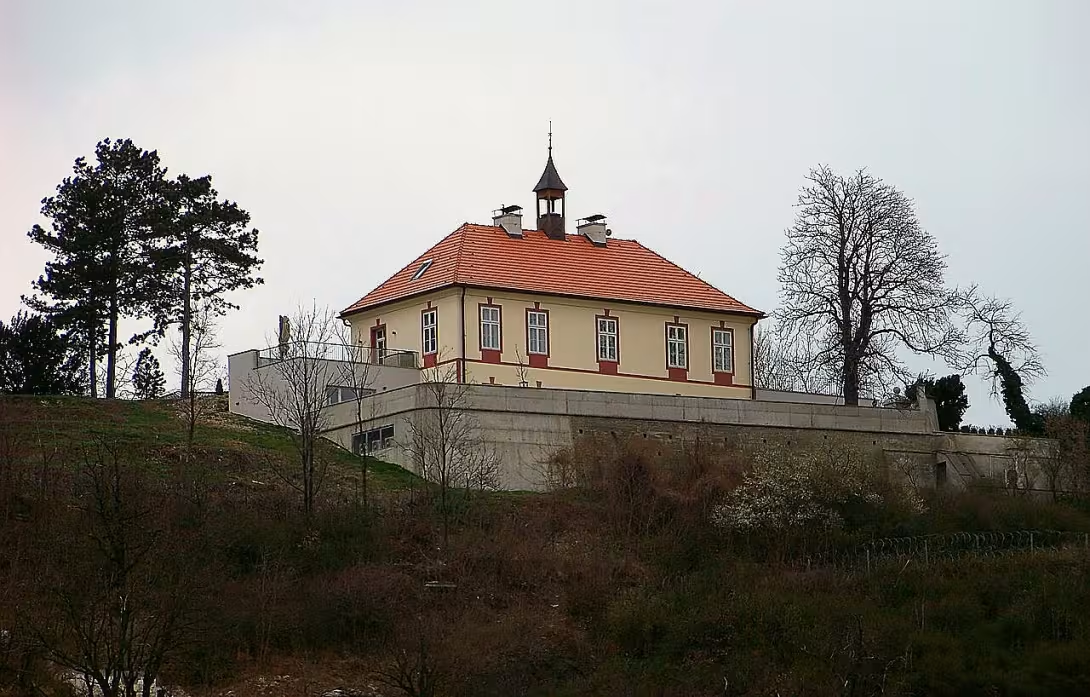
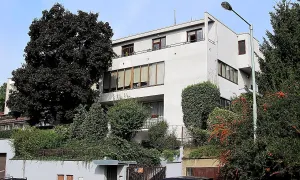
Jabloňka Castle is a charming classical castle located in the Troja quarter of Prague, offering a stunning view of the valley. This two-story building with a classical design is a notable example of Bohemia's cultural evolution at the beginning of the 19th century. Its history and architecture reflect the significant changes that took place in the region during this time.
The original owner of Jabloňka is unknown, but it is believed to have been built on the site of an older structure, possibly a wine press, dating back to the 15th century. The castle's design is characteristic of the classical style, with a two-story main facade and a single-story rear facade. The surrounding garden slopes down to the protected area of Jabloňka, part of the Libeň district.
The castle underwent a major renovation in the mid-19th century, giving it its current form. A second story was added in the late 18th century. The castle features a chapel in its second story and a room with a wooden ceiling on the ground floor. The garden offers a stunning view of the valley and the Holešovice district.
Throughout its history, the castle has had several owners. At the end of World War I, it was owned by hejtman Šafránek, who gave it its final form. In 2007, the castle was purchased by Czech-American businessman Mark Vydra, who restored the vineyard and planted a vineyard on the adjacent stone terraces with his wife Lenka Šmídová.
Jabloňka was designated as a protected monument in 1964. In 2012, the castle underwent a major restoration. Today, it is privately owned and not open to the public. Its rich history and stunning architecture make it a notable landmark in the Troja quarter of Prague.
Jabloňka is a unique example of Bohemia's cultural evolution at the beginning of the 19th century. Its classical design, combined with its rich history and stunning views, make it a must-see destination for anyone interested in history and architecture.
Then and now
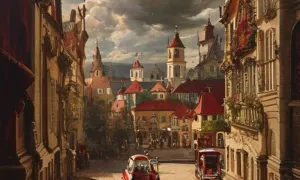
Drag the slider to compare how the landmark may have looked when it was built with the view today.
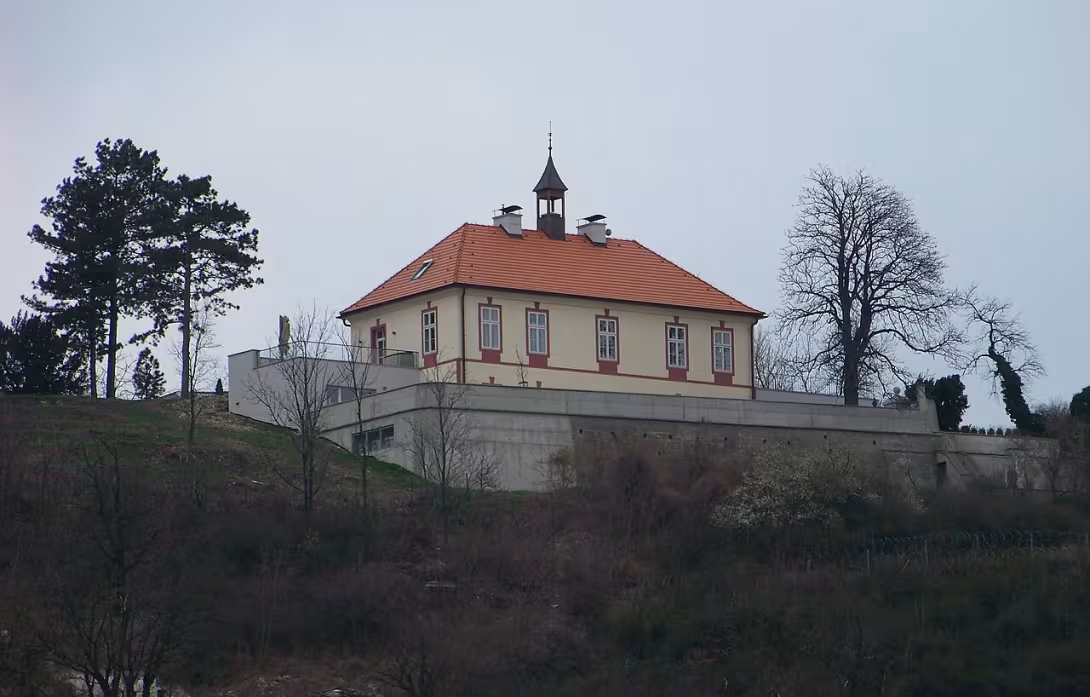

The historical appearance on the left is an AI-generated visualisation and serves as inspiration only.
Historical milestones
- 15th century
- The castle was likely built on the site of an older structure, possibly a wine press.
- 18th century
- A second story was added to the castle.
- 19th century
- The castle underwent a major renovation.
- 1964
- The castle was designated as a protected monument.
- 2007
- The castle was purchased by Mark Vydra.
- 2012
- The castle underwent a major restoration.
Architectural development
The original building was likely a single-story structure, with a second story added in the late 18th century. The castle underwent a major renovation in the mid-19th century, which gave it its current form.
Historical events
The castle was likely built on the site of an older structure, possibly a wine press, dating back to the 15th century.
In the mid-19th century, the castle underwent a major renovation.
In 1964, the castle was designated as a protected monument.
Owners
The original owner is unknown, but a hejtman named Šafránek owned it at the end of World War I and gave it its final form. In 2007, the castle was purchased by Czech-American businessman Mark Vydra, who restored the vineyard and planted a vineyard on the adjacent stone terraces with his wife Lenka Šmídová.
Points of interest
– The castle's original owner is unknown, but it's believed to have been built on the site of an older structure, possibly a wine press, dating back to the 15th century.
– The castle's design is characteristic of the classical style, with a two-story main facade and a single-story rear facade, which is a unique feature among other castles in the region.
– The castle underwent a major renovation in the mid-19th century, giving it its current form, and was owned by hejtman Šafránek at the end of World War I.
– The castle features a chapel in its second story and a room with a wooden ceiling on the ground floor, which is a rare architectural feature in the region.
– The castle was purchased by Czech-American businessman Mark Vydra in 2007, who restored the vineyard and planted a vineyard on the adjacent stone terraces with his wife Lenka Šmídová.
Guide
This guide is narrated by a synthetic voice generated by artificial intelligence.
Show guide text
This text was created by artificial intelligence and has not been editorially reviewed. It may contain inaccuracies.
Jabloňka, sometimes also called Jablůňka, is a classicist small castle in Prague's Troja. The two-storey building offers views over the Troja basin and Holešovice.
The small castle stands on a slope, which is why its main façade is two storeys, while the rear side has only a ground floor. The garden descends all the way down to the protected area of Jabloňka, which according to the cadastre already belongs to Libeň.
When and how the small castle was built is not known. However, coins from the fifteenth century were allegedly found in its vicinity. So some older building probably stood on the site, most likely a wine press. The upper storey was apparently added to the present building only in the last third of the eighteenth century, and in the mid-nineteenth century the building underwent reconstruction.
Captain Šafránek, who owned it at the end of the First World War, gave Jabloňka its final appearance. There used to be a chapel on the upper floor, and on the ground floor a room with a wooden ceiling has survived to this day.
Since nineteen sixty-four, the small castle has been a cultural monument. It belongs to a private owner, is inhabited, and is not accessible to the public. In two thousand and seven it was purchased by Czech-American businessman Mark Vydra. The reconstruction was completed in two thousand and twelve. A year later, Mark Vydra and his wife Lenka Šmídová established a vineyard on the adjoining stone terraces and thus revived the local wine-making tradition.
Frequently asked questions
Can the monument be visited?
Some buildings of this kind are open for guided tours, others serve another purpose or are privately owned. We have not verified whether and when this monument is open – please ask the operator.
What are the opening hours and admission?
We have not verified the opening hours or admission. Current information is published by the operator.
Where is the monument?
Location: Na Jabloňce 90/1, Troja, Praha, Praha-Troja, Hlavní město Praha. The map on this page shows the exact spot.
Why is the monument protected?
It is listed in the Central List of Cultural Monuments of the Czech Republic as a cultural monument (register no. 40615/1-1577).
Businesses nearby
Do you run a restaurant, accommodation, shop, museum, rental, wellness or other visitor service near this monument? Show yourself directly to the people heading to it — this is how they will see you in the app and on the web:
Events nearby

Zdroj akcí: otevřená data měst a obcí ČR (Národní katalog otevřených dat) a kalendář akcí Národního památkového ústavu.
Nearby
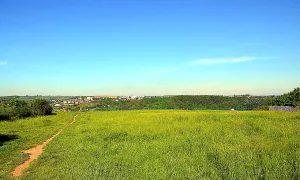
The castle is located in the Troja quarter of Prague, offering a stunning view of the valley and the Holešovice district.
Accommodation nearby
Trips and activities nearby
Guided tours, tickets and activities nearby from GetYourGuide
Affiliate link: if you buy from the partner, we may receive a commission. The price for you does not change.
Search tours and activities →Themed route
Troja Castle Hike
1. Troja Castle (zámek Jabloňka) * This 18th-century Baroque castle is a must-visit for its stunning architecture and beautiful gardens. Explore the castle's interior, which features an impressive collection of art and antiques. 2. Troja Park (park) * Stroll through the beautiful park surrounding the castle, which offers a peaceful escape from the city. Take in the scenic views of the Vltava River and the surrounding landscape. 3. Slavín (pomník) * Visit the Slavín monument, a memorial dedicated to the Soviet soldiers who died during World War II. The monument offers a panoramic view of the city and the castle. 4. Troja Embankment (nábřeží) * Take a leisurely walk along the Vltava River on the Troja Embankment, which offers a unique perspective on the city and the castle.
Seasonal recommendations
Jaro
In the spring season, Chateau Jablonka is surrounded by blooming trees and flowers that create a pleasant atmosphere. Practical tips: The best time to visit the chateau is in the morning or late afternoon to avoid ladies coming for lunch or dinner. It's advisable to bring warm clothing as it can still be chilly during spring days.
Summer
In the summer season, Chateau Jablonka is very popular, so it's a good idea to arrive early to avoid crowds. It’s wise to bring an umbrella or sunglasses for sun protection.
Autumn
In autumn, Chateau Jablonka is surrounded by beautiful fall foliage that creates a pleasant atmosphere. Practical tips: The best time to visit the chateau is in the late afternoon when there are fewer crowds and you can enjoy a more relaxed tour. It's advisable to bring warm clothing as it can still be chilly during autumn days.
Winter
In winter, Chateau Jablonka is open only for limited hours, so it’s best to avoid visiting at night. Bring warm clothing and boots with good grip to protect against the cold. During Advent time, Chateau Jablonka is beautifully illuminated, but it's better to avoid visiting at night to steer clear of crowds.
Visualizations and artistic views


The visualisations are generated by artificial intelligence and serve as inspiration.
Photos from the area
Real photos taken near the monument


Zdroj a licence jsou uvedeny u každého snímku.
Tips from visitors
No tips yet. Be the first!
Log in and add your tip.
Sources and literature
Photos: ŠJů / CC BY-SA 3.0 — Wikimedia Commons. The author and licence also appear when you hover over the image.
Faktickým podkladem tohoto textu byl článek na Wikipedii, jehož autory jsou přispěvatelé Wikipedie. Článek je dostupný pod licencí CC BY-SA 4.0.
Location on the map
More monuments – Praha-Troja
Show all in the municipality


Příběhy a pověsti
Legendy, pověsti a příběhy spjaté s touto památkou
Fotografie návštěvníků
Zatím žádné fotografie. Buďte první, kdo přidá fotografii z návštěvy!
Log in a přidejte svou fotografii nebo hodnoťte.
Za ověřenou návštěvu v aplikaci získáte víc bodů — poznáme podle GPS, že jste na místě.
Reviews and comments