






zámek Troja Chateau
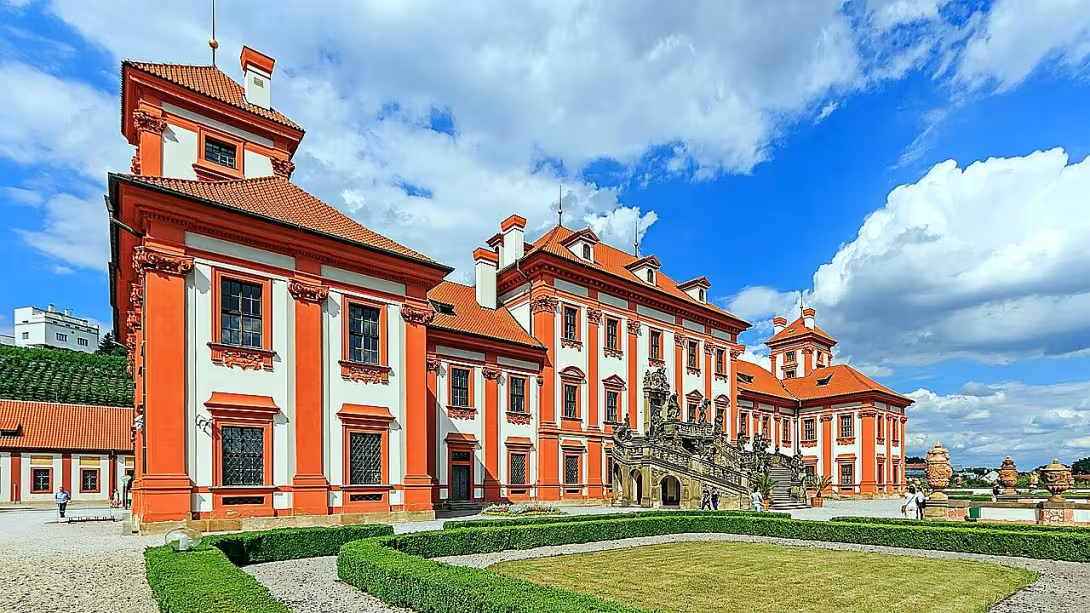
The castle Troja is a Baroque building in the Prague area of Troja on the right bank of the river Vltava, in the immediate vicinity of the Prague Zoological Garden. There are economic buildings and horticulture in its premises. The property once belonged to the vineyards and chapel of St. Clara, which is now part of the Botanical Garden. The whole area is surrounded by an extensive garden with trees, natural maze, fountains, terracotta vases and stucco leaflets. In the interior visitors can admire the unique fresco paintings of the halls.
The castle was built between 1679 and 1685 to order Count Václav Vojtěv from Šternberk as a summer residence. Here he stayed with his wife Clara and daughter. The project was taken by Giovanni Domenico Orsi and Jean-Baptiste Mathey, the builder was Silvestro Carlos. The garden was founded in 1685, twelve years later, in 1697, the terrace and surrounding economic buildings were built.
During the following centuries, the castle was adopted by several owners. In 1763 it was purchased by Marie Terezie for the Institute of Nobility, which was here alone. In 1776 he was taken over by Alsterled of Astfeld and Vydří, in 1832 he was bequeathed to monasteries of Elizabeth and merciful brothers. In 1842 Alfred kníže Windischgrätz bought the castle and founded vineyards in it. In 1873 his descendants sold him to the family of Židlický. The last private owner, the landowner Alois Svoboda, gave the Czechoslovak State the occasion of the 70th birthday of T. G. Masaryka and the 250th anniversary of the death of J. A. Komenský, subject to the establishment of an educational and social-humanitarian facility for young people of Czechoslovak origin. In the following year 1923-1924, the Ministerial Council established the Kuratorium of Trojan real estate. Part of the land was later used to establish a Prague Zoological and Botanical Garden.
Architecturally, Mathey was inspired by a typical Roman suburban villa he met during his Italian stay. The original concept was adjusted to regular availability with a central hall occupying two floors as a dominant building. There are passageways from the hall with adjacent lounges. From the main hall on the first floor, there is a monumental exterior two-arm staircase decorated with George and Paul Heermann's paintings from Dresden, dating from 1685 to 1708.
The castle underwent extensive reconstruction between 1977 and 1989. The floods in 2002 and 2013 meant destruction of gardens and cellar. Today the castle with the garden is part of the property of the capital city of Prague and is open to the public. Every year, from April to October, the capital gallery hosts seasonal exhibitions in its premises. Visitors can purchase a common ticket - Trojan card - allowing a visit to the castle, Prague Zoos and Botanical Gardens.
Then and now
Drag the slider to compare how the landmark may have looked when it was built with the view today.
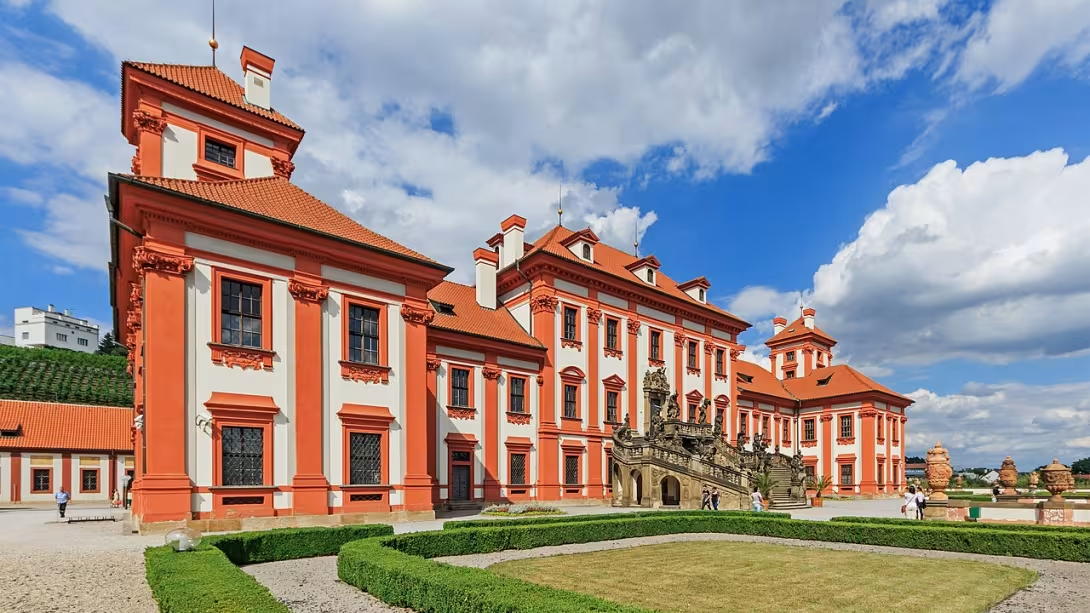
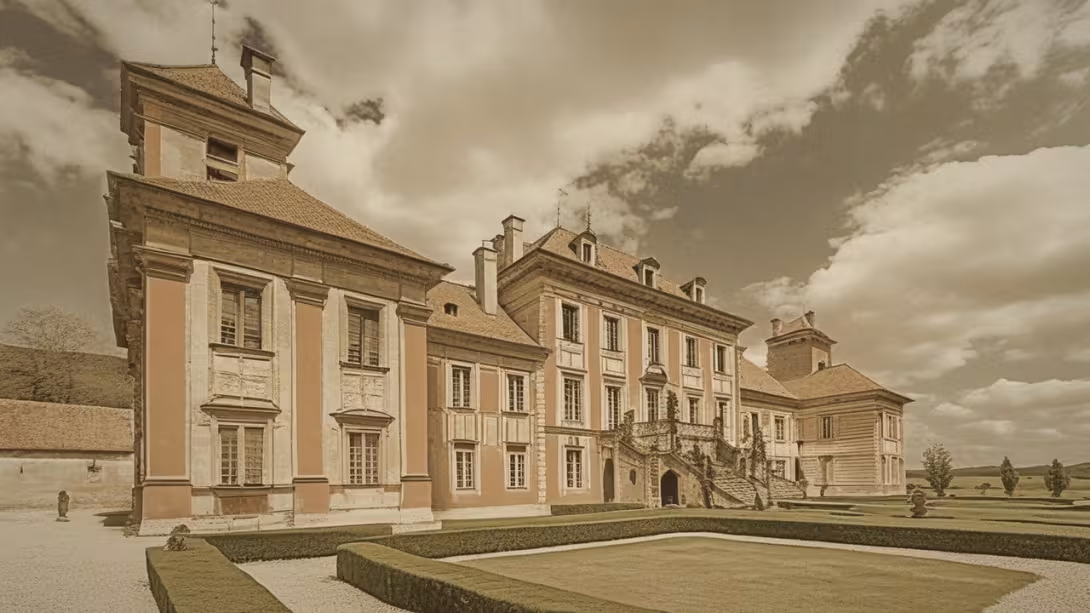
The historical appearance on the left is an AI-generated visualisation and serves as inspiration only.
Historical milestones
- 1679
- Start of castle construction
- 1685
- Completion of castle construction and establishment of adjacent garden
Architectural development
The original project of the castle was designed by Giovanni Domenico Orsi, which was later modified by Jean Baptiste Mathey. The building used the Baroque style with regular disposition and central lounge as a dominant. In the years 1977-1989 a extensive reconstruction of the castle took place.
Historical events
- 1679
- Start of castle construction
- 1922
- Donation of the castle and land by the State of Alois Freedom
Owners
- 1679
- 1763
- 1776
- 1832
- 1842
- 1873
- 1922
Points of interest
- The castle Troja was built between 1679 and 1685 as a summer residence for Count Václav Vojtěk of Šternberk.
- The castle project was designed by Giovanni Domenico Orsi and Jean-Baptiste Mathey, the builder was Silvestro Carlos.
- The castle contains unique fresco paintings of halls and is surrounded by an extensive garden with trees, natural maze, fountains and terracotta vases.
- The monumental outer two-arm staircase in the castle is decorated by the sculptures of George and Paul Heermann of Dresden, dated 1685 to 1708.
- The castle was reconstructed between 1977 and 1989 and is now part of the property of the capital city of Prague.
Guide
This guide is narrated by a synthetic voice generated by artificial intelligence.
Show guide text
This text was created by artificial intelligence and has not been editorially reviewed. It may contain inaccuracies.
Troja Castle, also called Trojský zámek, is a baroque building on the right bank of the Vltava River in Prague's Troja. It is adjacent to the Prague Zoo. It includes several farm buildings, including a stable. The castle was previously accompanied by a vineyard and a chapel of Saint Klára, which is now part of the botanical garden.
The castle was built between 1679 and 1685 by Count Václav Vojtěch ze Šternberka as his summer residence. He lived there with his wife Klára and his daughter. The project was started by Giovanni Domenico Orsi and later taken over by Jean-Baptiste Mathey, with the construction led by Silvestro Carlone. The Burgundian architect Mathey was inspired by a Roman country villa he had seen during his stay in Italy. He changed the original concept to a regular layout. Its center is a central hall over two stories high. From the hall, corridors with small rooms lead on both sides. From the level of the first floor, a monumental double-flight staircase leads outside. It is decorated with sculptures created by Georg and Paul Heermannovi from Dresden. The halls inside have unique fresco decorations.
In 1685, the castle garden was created, and in 1697, a terrace and farm buildings were added. The garden today is decorated with ornamental and fruit trees, a small natural maze, fountains, terracotta vases, and an orangery with busts of emperors.
The Šternberks sold the castle in 1763 for the Institute for Noblewomen founded by Maria Theresa. The sovereign herself stayed here several times. The subsequent owners were Jan Václav Alsterle ze Astfeldu a Vydří and later monasteries of the Elizabethan Sisters and the Brothers of Mercy. In 1842, Prince Alfred Windischgrätz bought the castle and established vineyards there. His descendants sold the castle in 1873 to the Židlických family.
The last private owner, large estate owner Alois Svoboda, donated the castle and extensive grounds in Troja to the Czechoslovak state on October 7, 1922. He gave the donation for Masaryk's seventieth birthday, in memory of the founding of Czechoslovakia, and to commemorate the anniversary of Komenský's death. The condition was that educational and social facilities for youth be established here. The planned schools and educational settlement were ultimately not built. However, some of the land served the zoo and botanical garden.
Between 1977 and 1989, the castle underwent extensive reconstruction. During the flood in 2002, water flooded the cellar and garden, and in 2013 it again damaged the lower part of the garden. The castle today belongs to the city of Prague, and the Gallery of the City of Prague holds exhibitions in it.
Tips for visitors
Best time to visit the castle Troja is in the spring or autumn season when the weather is pleasant and the park is not crowded. Baroque architecture in these months is characterized by beautiful greenery and sunlight.
Parking can be found near the sights, but due to limited capacity we recommend using public transport. The best way to get to Prague-Three is by tram or bus; the current connection can be verified in the online search engine.
When visiting, bring protective clothing and footrests for comfortable walks around the castle. It is also important to have an umbrella with you, especially in summer when the light is strong.
For photography are the best places on the west side of the castle, where the sun illuminates Baroque architecture in moments before dusk. This time of day offers ideal lighting conditions to capture the beauty of the building.
In the vicinity of the castle there is a Prague Zoological Garden and Botanical Garden of the capital of Prague, which are ideal goals for the trip. These attractions offer diverse natural spaces and attractions for the whole family.
Frequently asked questions
Can the monument be visited?
Yes. We verified the opening hours or admission on the official website (28. 9. 2026); you will find them in the visitor information on this page. Please double-check with the operator before you travel.
What are the opening hours and admission?
Details verified on the official website (28. 9. 2026) are listed in the visitor information on this page. Official website: https://www.ghmp.cz/
Where is the monument?
Location: U trojského zámku 1/4, Troja, Praha, Praha-Troja, Hlavní město Praha. The map on this page shows the exact spot.
Why is the monument protected?
It is listed in the Central List of Cultural Monuments of the Czech Republic as a cultural monument (register no. 44544/1-1534).
For kids
Imagine going back 347 years to when zámek Troja was still young and full of life. Who lived here? Who was his master?
Life in the castle of Troy was like a game. The nobles and their families lived here, managed their land and organized beautiful dances. However, to learn more about this life, we need to look into the past.
There are also several economic buildings around the castle, including the horticulture plant. It was like a shelter for horses and other animals. In addition, there were fields, forests and rivers that supplied food and energy for life in the castle.
Businesses nearby
Do you run a restaurant, accommodation, shop, museum, rental, wellness or other visitor service near this monument? Show yourself directly to the people heading to it — this is how they will see you in the app and on the web:
Natáčelo se zde
- Deváté srdce (1979) film
Zdroj: Wikidata (vlastnost „místo natáčení“) · Všechna filmová místa
Events nearby

Zdroj akcí: otevřená data měst a obcí ČR (Národní katalog otevřených dat) a kalendář akcí Národního památkového ústavu.
Nearby
Prague Zoological Garden
Botanical Garden of the City of Prague
Accommodation nearby
Trips and activities nearby
Guided tours, tickets and activities nearby from GetYourGuide
Affiliate link: if you buy from the partner, we may receive a commission. The price for you does not change.
Search tours and activities →Themed route
Thematic cruise route zámek Troja
1. Castle Troja * Type: * Historical lock * Why is it worth a visit: * Castle Troja, located in the wedding of a romantic environment on the banks of Vltava, is one of the oldest and most famous castles in Prague. Its history dates back to the 13th century and today hosts various cultural events and exhibitions. It is an ideal place for those who like history and architecture.
2. Prague Zoological Garden * Type: * Zoos * Why is it worth a visit: * Located approximately 1 km from Troy and is one of the oldest zoos in the world. It offers a wide range of animal fauna and is an ideal place for families and nature lovers who want to enjoy a peaceful trip between diverse species of animals.
3. Botanical Garden of the City of Prague * Type: * Botanical Garden * Why is it worth a visit: * This garden is located about 1.5 km from Troy and is one of the oldest botanical gardens in Europe. It offers diverse collections of plants from around the world and is a great place for those who like botany or want to enjoy the beauty of nature in a quiet atmosphere.
4. Castle Troja - Tanks * Type: * Historical courtyard * Why is it worth a visit: * The castle tank is an ideal place to relax and enjoy beautiful outdoor space. There are various events, such as markets and cultural events, which turn the courtyard into a living centre for local and tourist alike.
5. Castle Troja - Park * Type: * Historical park * Why is worth a visit: * Park Castle is a beautiful opportunity for walking and relaxing in a quiet, green atmosphere. With its ancient trees and cosy pavements, it offers an ideal place to relax after visiting other attractions.
This route combines history, nature and culture in one comfortable place, making it a perfect experience for the whole family.
Seasonal recommendations
Spring: During the spring season zámek Troja receives a gentle dazzling new green, which provides the ground for a diverse flora and fauna. This time of year is ideal for walking with the use of sunlight, which illuminates the architectural details of the castle breathlessly. Visitors can expect mild visitor numbers, which allows a calmer examination of the monument. We recommend wearing comfortable and reasonably warm clothes because the weather can still be cold in the early south. The best time to visit is usually the afternoon when the sun provides ideal lighting for photos.
Summer: The zámek Troja takes on life and attraction thanks to long days and warm weather. Sunshine creates a perfect atmosphere for visiting the park, which is full of green and the smell of flowering plants. The main summer season may increase the number of visitors, so we recommend coming early in the morning or later in the afternoon to avoid the crowd. Do not forget sun protection and water supply; short clothes and hat are key for comfort during the visit.
Autumn: In autumn zámek Troja becomes melancholy but impressive atmosphere. Leaves turn into hot colors and park trees provide a breathtaking landscape for photography. This season the traffic is generally lower, which means a quieter environment for exploring historical rooms and garden areas. We recommend wearing warmer clothes with the ability to approach the top component because autumn weather can suddenly be cold and wet. The best times for visiting are usually afternoons when lighting is ideal for photography.
Winter: The winter visit to the castle Troja offers a unique view of historic buildings under the cover of snow and glaciers, creating a calm and quiet atmosphere. Winter weather may limit the opening times of the sights, so it is important to check the current operation before visiting. Visitors should wear warm clothes and suitable shoes for cold surfaces; hat and gloves are also recommended. The best time to visit is usually the afternoon when the sun rays can illuminate the castle with a breathtaking light, which adds to the historical walls of romantic color.
Visualizations and artistic views


The visualisations are generated by artificial intelligence and serve as inspiration.
Photos from the area
Real photos taken near the monument


Zdroj a licence jsou uvedeny u každého snímku.
Atmosphere of the place
This atmospheric visualisation of the place and period was generated by artificial intelligence. It is not real footage of the location.
Tips from visitors
No tips yet. Be the first!
Log in and add your tip.
Sources and literature
Photos: A.Savin / FAL — Wikimedia Commons. The author and licence also appear when you hover over the image.
Faktickým podkladem tohoto textu byl článek na Wikipedii, jehož autory jsou přispěvatelé Wikipedie. Článek je dostupný pod licencí CC BY-SA 4.0.
Location on the map
More monuments – Praha-Troja
Show all in the municipality

Příběhy a pověsti
Legendy, pověsti a příběhy spjaté s touto památkou

Fotografie návštěvníků
Zatím žádné fotografie. Buďte první, kdo přidá fotografii z návštěvy!
Log in a přidejte svou fotografii nebo hodnoťte.
Za ověřenou návštěvu v aplikaci získáte víc bodů — poznáme podle GPS, že jste na místě.
Reviews and comments