



Hradiště na Sedle Hillfort
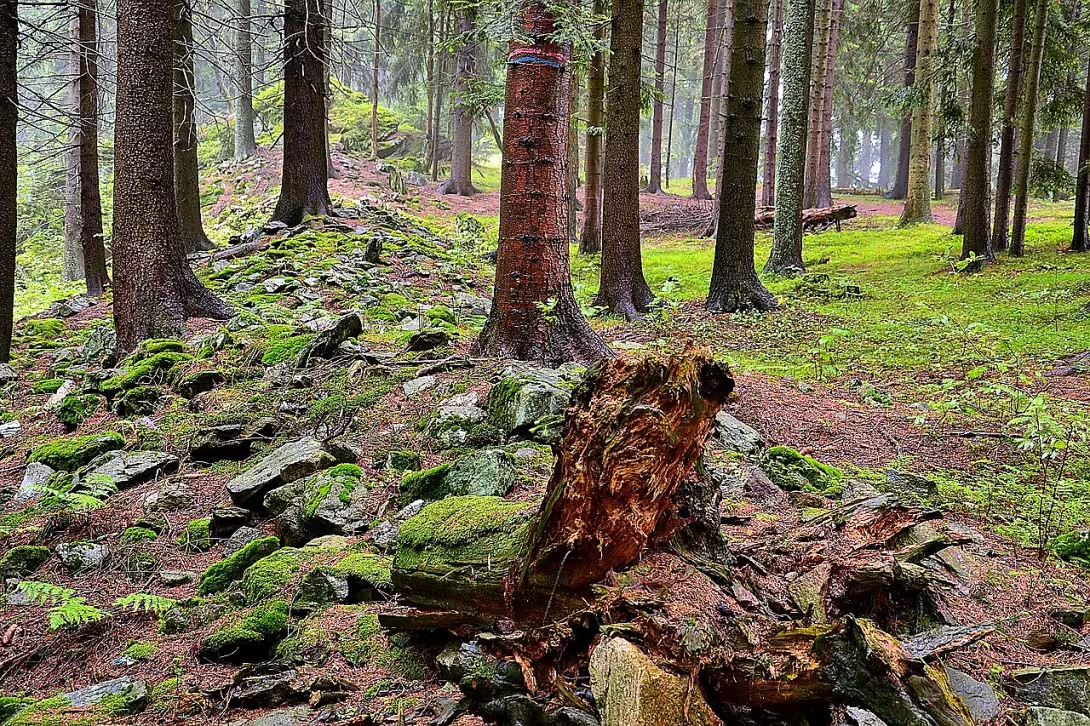
Hradiště na Sedle is an archaeological site in Šumava foothills, about one kilometer from Albrechtic near Sušice. This primordial castle was inhabited in the sixth to fifth century B.C. during the Halštat and Latin times, later in the Roman and Middle Ages. It's protected as a cultural monument. It probably had a defensive function, served as a refuge for the population, and thanks to its altitude it allowed a good view of the surrounding countryside.
The formation of the castle dates from the sixth to fifth centuries B.C., which corresponds to the break between the period of the Hallatians and the Latin period. It was probably built with a defensive function, providing shelter to the population at time of threat. Thanks to its altitude, it also allowed good visibility and could be an important orientation point. In its character, it is partly similar to the ramparts of the Hradišt'any or the Plešivec, which performed the function of cult centres. Unlike them, there are traces of ordinary settlement on the Seat.
Architecturally, the castle is built on a rocky mountain top The seat with an altitude of 905 metres, which makes it the second highest-placed pass of this type in the Czech Republic. The fortification consists of natural rock formations connected by stony walls and was built throughout the perimeter. The original wall was probably built from dry laid stones around the inner wooden structure. The inner space could be divided into three to four parts, but only one in the eastern half of the castle is visible from the inner valleys of unclear age. The fort was accessible by two gates: one made up of bilge walls and the other protected by a massive rock.
Hradiště na Sedle has been repeatedly studied by minor archaeological research. In 1930-1932 Bedřich led the Dubský survey, in 1934 L. Franc and C. Streit, and in 1953- 1955 Jiří Breň. A bronze arc handle imported from northern Italy is considered to be a significant finding.
Today, the top of Sedla with the remains of the castle is freely accessible after the red marked tourist route from Albrechtic to Žlíbek. On top is a lookout tower that offers a view of the surrounding landscapes. The castle is an important cultural monument and represents an important part of the history of the region.
Sedlo Castle is not only an archaeological monument, but also a witness to the rich cultures of the past. Visiting this place offers a unique insight into the life of prehistoric people and their way of life. It is an opportunity to explore the history of the region and appreciate its cultural heritage.
Historical milestones
- Archaeological research carried out by Bedřich Dubský (1930-1932), L. Franco and C. Streit (1934) and Jiří Bření (1953- 1955).
- A bronze arch handle found imported from northern Italy.
Architectural development
The fort was built on a rocky mountain top A saddle with a fortification consisting of natural rock formations and stony valleys. The original wall was probably built from dry laid stones around the wooden structure. The inner space of the castle could be divided into three to four parts.
Historical events
- The position of the fort in the sixth to fifth century B.C.
- Residency during Roman times
- Use of the fort in the Middle Ages
Points of interest
- Hradiště na Sedle is an archaeological site in Šumava foothills, about one kilometer from Albrechtic near Sušice. - This primordial castle was inhabited in the sixth to fifth century B.C. during the Halštat and Latin times, later in the Roman and Middle Ages. - The castle is protected as a cultural monument and probably had a defensive function, served as a sanctuary for the population. - The fortification consists of natural rock formations connected by stony walls and was built throughout the perimeter. - A bronze arc handle imported from northern Italy is considered a significant finding.
Guide
Show guide text
This text was created by artificial intelligence and has not been editorially reviewed. It may contain inaccuracies.
Welcome to the place where time has stopped and where the earth seems closer to heaven. You are standing at the castle on Sedle, in a place that has been watching over the surrounding region of Šumava foothills for thousands of years. In front of you is a view that immediately consumes you with its breadth and tranquility. Feel this air, this openness and this strange atmosphere of a place that is not just an ordinary hill, but a monumental monument to human efforts and security. Look around you at these shapes of earth, these slopes that surround you now. Even if you don't see tall walls or built towers that might seem like fairy tales to you, believe what you're feeling. This landscape itself is architecture. It's a natural architecture that people used centuries ago to create an impenetrable fortress. Feel the strategic advantage this place offers. This altitude was not random. Every look you can take to the distance has been the key to survival for the ancient people. They saw the enemy before they could get close enough to prepare their defenses.
Let us now return together deep into the past to understand why people chose this very place for their home and sanctuary. This history didn't start a few centuries ago, but it goes much further, to a deep prehistoric age. Imagine the sixth and fifth century BC. This was the time of the Halštats and then the Latin era, when the foundations of European culture and trade were formed in these neighborhoods. That's when the fort began its journey. It wasn't just a place to live, it was a place to live. At a time of greatest danger, when the surrounding landscape became unstable, people gathered here. The fort served as a sanctuary, as a safe haven for the entire community, for their families and livestock. And that wasn't the end. This place was so strategically important that people took care of them in Roman times, and later, even in the Middle Ages, there were again events that left their mark in this country. Every other era here was just adding another layer, as if this castle were a book leaf, on which the chapters of human settlement were gradually written.
Now pay attention to what you can see right under your feet and around you. Even though the fort now appears to be part of the natural landscape, you must try to see through this present appearance. Feel the shape of the terrain, the sudden changes in inclination that indicate where the defense elements once ended. Archaeological research tells us that what you see is the result of the long work of nature and man. Imagine the enormous effort that people had to make to make this place look like protection. Even if you can't see the massive wooden palisades or stone walls today, you see their presence in the very structure of this place. This high position, which now allows you to see so widely, was their greatest ally. Every peak you see in the distance was part of their observation system. You're standing at the center of a huge, invisible warning system that worked thousands of years before the first modern houses started building here.
But in order to tell these ancient stories, the people who decided to find answers hidden in the depths of the earth had to enter the game. The history of this place would remain a secret if there were no scientists who, with patience and great passion, explored every inch of this terrain. Let us remember the work of Bedřich Dubský, who laid the foundations for modern understanding of this castle between 1930 and 1932. There were other pioneers, such as L. Franc and C. Streit, who brought more valuable knowledge in 1934. And we must not forget Jiří Bøená, who returned to this place from 1953 to 1955 to complete the puzzle of ancient history. It is because of their efforts, their patient removal of the layers of the earth and their careful search for small objects that we now know that this place was not just an empty high, but a living center of the old world. Their work allowed us to hear echoes of the voices of the people who lived here, worked and fought.
And it is in these findings that one of the greatest mysteries and most interesting facts of this place is hidden. Imagine the moment when an archaeologist digs into something that clearly doesn't belong there. Something that tells a story about travel, business and the connection of distant worlds. In fact, an object was found on this castle that carries an echo of distant cultures - a bronze arc handle. But that's not the most important thing. The most important thing is his origin. This handle was brought from northern Italy. Consider the idea. A thousand-year-old object that went through mountains, rivers and unknown paths to end up here, on this hill in the Bohemian foothills. What does it say about people back then? That even in primeval times, they weren't isolated. That there were networks of connections that linked the centre of Europe to the warm Mediterranean areas. This little bronze handle is proof that this fort was part of a much wider world than we can imagine at first sight. It was a place where different worlds met and different cultures met.
Now that you know the secrets this place holds, I want to invite you to further explore. Let the atmosphere of this place drift. Take a walk around, see every step on this historic ground. Look again at the horizon and try to imagine the people who stood before you in other times, in different conditions, but with a similar need to seek security and home. This castle is a cultural monument that reminds us how deep our roots are. Enjoy the peace this place offers and be inspired by its quiet size. Thank you for choosing to visit this extraordinary archaeological site. We wish you a wonderful journey and many other interesting discoveries on your next trip through the countryside.
Tips for visitors
The best time to visit Hradiště na Sedle is in the spring or autumn season when nature is around in its most beautiful form. The sunny days provide ideal conditions for walking and exploring historical shards.
When you visit, remember quality shoes because the terrain can be irregular. Complete your equipment with protective sunglasses and enough drinking connection, especially during the summer months.
Photography is especially charming at noon on the Hradiště on the Seat, when the sun lights the area brightest. The best places for photos are natural spots with beautiful views of the surrounding landscape.
In the vicinity of the Hradiště you can visit the historical Sušice, famous for its Baroque monuments. For families with children, Rabbi offers interesting natural spaces and the opportunity to explore local animals in the zoo.
Frequently asked questions
Can the monument be visited?
This is an archaeological site. Often there is little to see on the ground and the land may be private. We have not verified access.
Where is the monument?
Location: Sušice, Plzeňský kraj. The map on this page shows the exact spot.
Why is the monument protected?
It is listed in the Central List of Cultural Monuments of the Czech Republic as a cultural monument (register no. 1000126161).
Businesses nearby
Do you run a restaurant, accommodation, shop, museum, rental, wellness or other visitor service near this monument? Show yourself directly to the people heading to it — this is how they will see you in the app and on the web:
Events nearby
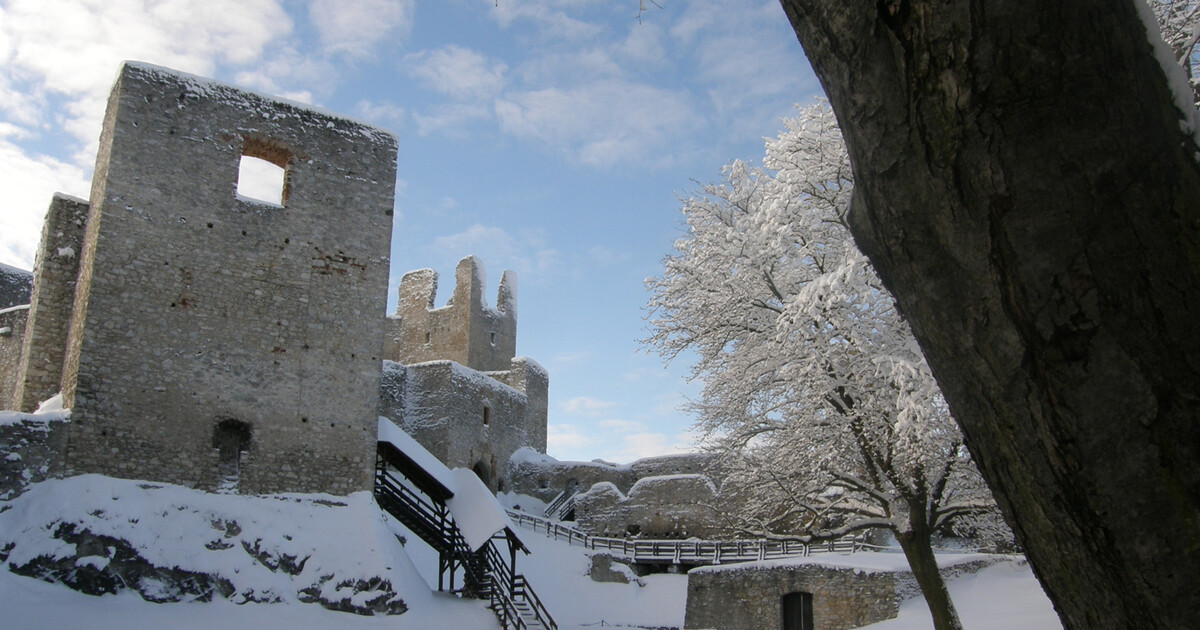
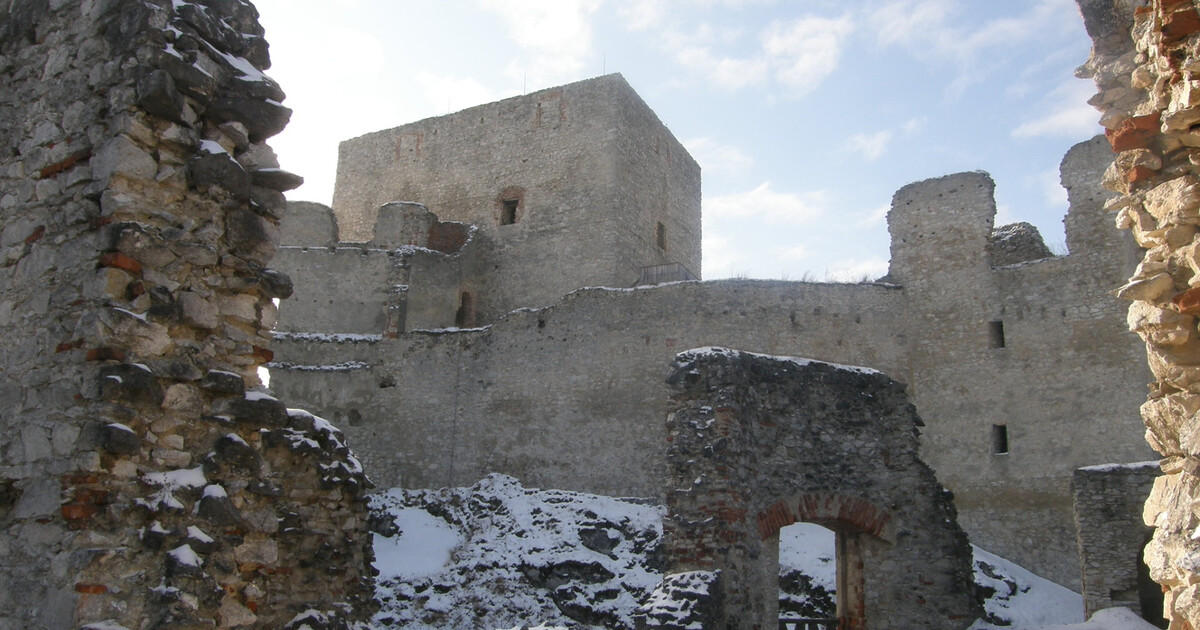
Zdroj akcí: otevřená data měst a obcí ČR (Národní katalog otevřených dat) a kalendář akcí Národního památkového ústavu.
Nearby
The castle is located in the Bohemian foothills, which is an area known for its natural beauty. The nearest settlement was in Susici and around Rabi and Volyn.
Accommodation nearby
Themed route
1. Volynes (settlement): A historic place in the surroundings that serves as a suitable starting point of the journey. 2. Hradiště na Sedle (archaeological site): The main destination of the trip located in the nature of the Šumava foothills. 3. Sušice (municipality): The nearest settlement to the castle, which is closely connected to it. 4. Rabbi (settlement): Another important place in the surroundings that complements the overall picture of the region.
Seasonal recommendations
Spring brings the awakening of nature and the lush greenery that surrounds the remains of ancient fortification. The atmosphere is full of hope and optimism, while the first flowers complete the painting of the site. We recommend moisture-resistant shoes because roads can be muddy after the snow melts. An ideal visit in the morning is when the air is the cleanest.
Summer months are a period of dense foliage and intense sun, which warms the stone setting. In the high season there is a playful mood and the landscape around Sušice is in full bloom. Due to the increased traffic and heat, come first thing in the morning. Remember light clothing, hat and plenty of fluids for a long walk.
Autumn here creates a melancholy mood thanks to the golden colours of the leaves and morning fog, which mysteriously covers the ruins. Lighting is softer and very suitable for catching terrain details. Due to the variable weather, choose layered clothes and waterproof jacket. The best time to walk is late afternoon when the sun paints the surrounding area into orange.
In winter, the landscape calms down and snow often covers the terrain details, which paradoxically highlights the overall silhouette of the castle. The absence of foliage on trees allows a better view of the surrounding landscape. It is necessary to have warm thermo-suspension and high-quality winter shoes with anti-slip sole. Count on a shorter day and plan to visit by noon.
Visualizations and artistic views


The visualisations are generated by artificial intelligence and serve as inspiration.
Photos from the area
Real photos taken near the monument


Zdroj a licence jsou uvedeny u každého snímku.
Tips from visitors
No tips yet. Be the first!
Log in and add your tip.
Sources and literature
Photos: Petr Kinšt / CC BY-SA 4.0 — Wikimedia Commons. The author and licence also appear when you hover over the image.
Faktickým podkladem tohoto textu byl článek na Wikipedii, jehož autory jsou přispěvatelé Wikipedie. Článek je dostupný pod licencí CC BY-SA 4.0.
Location on the map

Příběhy a pověsti
Legendy, pověsti a příběhy spjaté s touto památkou
Fotografie návštěvníků
Zatím žádné fotografie. Buďte první, kdo přidá fotografii z návštěvy!
Log in a přidejte svou fotografii nebo hodnoťte.
Za ověřenou návštěvu v aplikaci získáte víc bodů — poznáme podle GPS, že jste na místě.
Reviews and comments