






Hradiště V obůrkách Hillfort
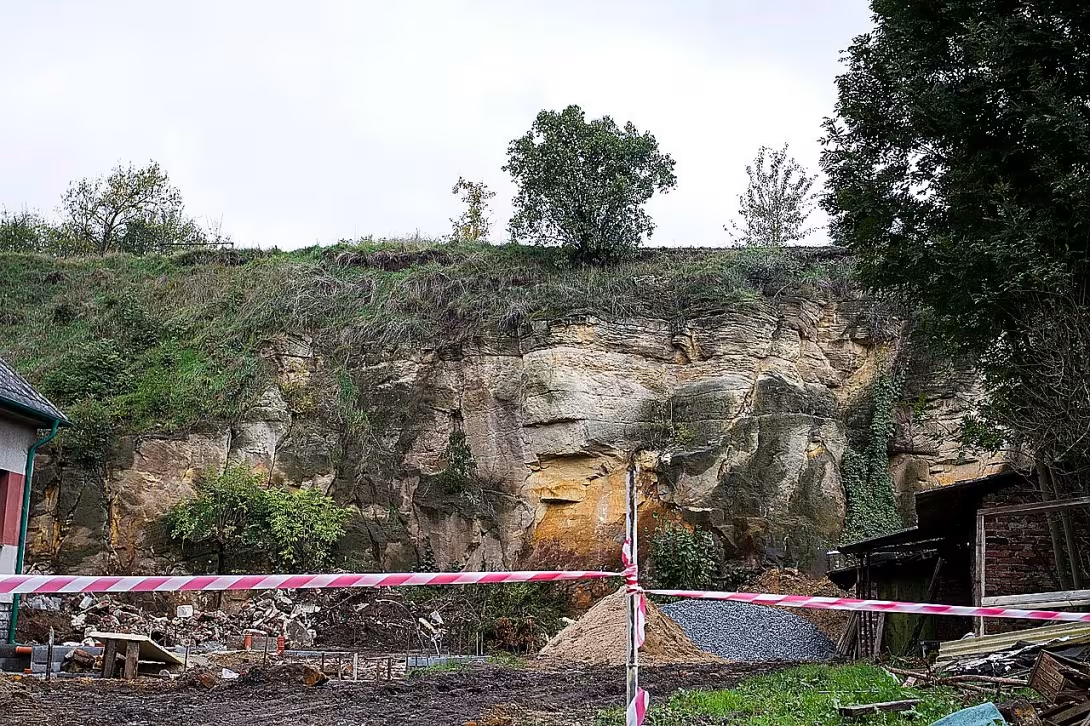
Hradiště V obůrkách is a extinct prehistoric settlement located on the eastern edge of the village Vinoř. The locality has been inhabited in several periods from the eneolithic to the Halštat period and is protected as a cultural monument.
This archaeological site is a key point for understanding the prehistoric settlement of the region. Its importance lies in the continuity of living and in the traces of fortifications that reveal the social and migration of Europe's primacy.
The settlement phase took place in several waves. The first traces come from the eneolithic. Later, at the turn of the older and younger Bronze Age, the settlement was fortified. The next stages of space use date back to the Hallatians time.
The site is located at a height of 255 metres above sea level and occupies an area of one hectare. It used the natural terrain structure, where the steep slopes of the island were protected by three sides. The adjacent east side was surrounded by a steep moat with inclined walls, the original width of which was about 2.5 metres and the depth was 1.5 metres.
In 1959 and 1960, archaeological research under the direction of Maria Zapopocká was conducted on the site. In the filling of the trench were found artifacts from the period of the utenistic and wind culture, namely lubrications, stone pads, part of clay weights, animal bones and chipped industry. In the younger layers of fillers appeared objects dating back to the musculature of the Bronze Age. Fragments of ceramics and animal bones were also found in other residential structures of the fan culture.
There is a disagreement among the experts about the importance of the stake holes which led in parallel to the moat. Marie Zápotocká interpreted them as the remains of a residential house, while Miloš Vávra thought they were torzo walls or palisades.
Today is the castle A significantly extinct location. Yet it remains a valuable testimony about ancient history within the landscape of Vinoře. Visiting this place allows you to understand the natural strategic positions that prehistoric people used to protect their settlements.
Then and now
Drag the slider to compare how the landmark may have looked when it was built with the view today.
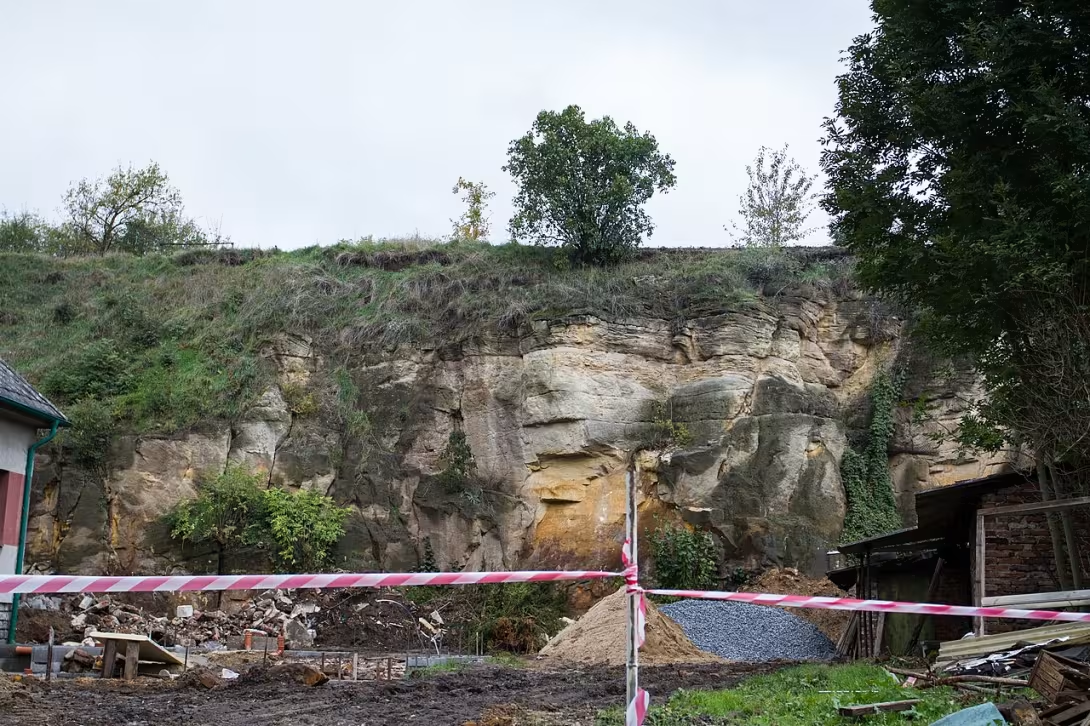
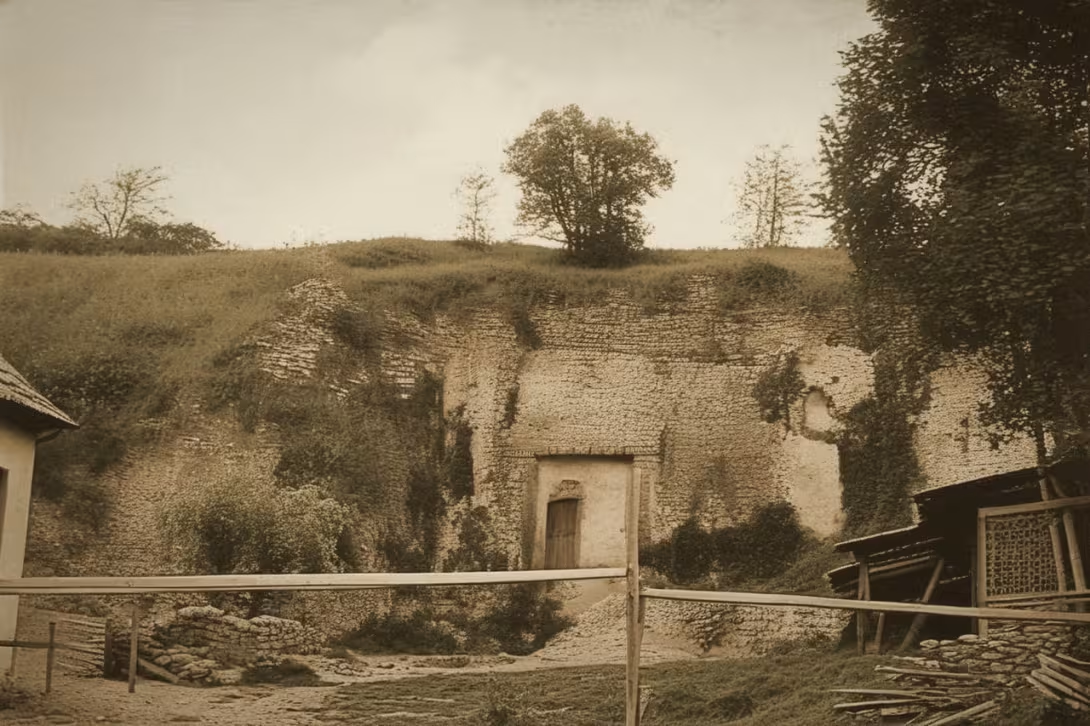
The historical appearance on the left is an AI-generated visualisation and serves as inspiration only.
Historical milestones
- 1959
- Archaeological research site
- 1960
- Archaeological research site
Architectural development
The defensive measure consisted of a sharp moat of 2,5 metres wide and a depth of 1,5 metres. The estate was situated on a sharp slope protected on three sides.
Historical events
In 1959 and 1960, archaeological research led by Maria Zapopocká was conducted on the site.
Points of interest
- The locality was settled in several periods from the eneolithic to the Hallatin period. - The site occupies an area of one hectare at a height of 255 metres above sea level. - Three sides protected steep slopes, and the east side covered a steep moat. - In research in 1959 and 1960, artifacts were found from utenistic, windward and moth cultures. - Experts don't agree on whether the stake holes next to the ditch represent the remains of the house or walls or palisades.
Guide
Show guide text
This text was created by artificial intelligence and has not been editorially reviewed. It may contain inaccuracies.
Welcome to the place where time has stopped and where the earth under your footsteps becomes a living book of history. You are standing at the castle in obužky, on the eastern edge of Vinoře. This may seem like just another quiet piece of landscape to you right now, but please stop for a moment and feel the surrounding space. Look at the terrain around you. Can you feel the height? You are two hundred and fifty-five meters above sea level, which, in ancient times, was not only a prospect, but a strategic point that controlled the surroundings. Feel this space, its extent and the way natural shapes naturally bow to the ground. This fort does not take up endless plains, but forms a compact whole with an area of one hectare which has been carefully used and defended in the past.
To understand why this place is so special, we need to move deep into the past. It's not just an ordinary estate that was created at one particular time. This place has been home to human communities for many centuries, in several different periods that intersect like layers in sediment. From the time of eneolite, the time of copper, to the time of bronze, to the time of the Hallatians, people have been searching for security and stability. Imagine the first groups of people to choose this place because of its natural advantages. They were looking for a place to protect them from enemies and adversity, and this castle offered them.
Now pay attention to what you see around you, even if it seems to you that you only see grass and steep slopes. It was this landscape architecture that was the main part of the defense system. If you look at the steep slope of the surrounding slopes, remember that the three sides of this fort were naturally protected by this very balanced terrain. No one is going to crawl up a steep hill if there's danger on the other side. However, the people who lived here didn't just settle for what nature gave them. On the east side, where the terrain wasn't so relentless, they had to create their own protection. This is where the trench was built. Even if you don't see him today as a deep pit, the Earth itself tells you where this artificial obstacle was placed. This combination of natural terrain and human effort has created a solid fortified location that has been able to resist both time and enemies.
However, in order to learn about this place at all today, we need to remember the work of people who have decided to re-enter this country and seek the truth hidden beneath the surface. Archaeological research took place here in key years of a thousand nine hundred fifty nine and a thousand nine hundred sixty. It was at that time that traces of residential buildings and defence elements that had been hidden in the country for thousands of years began to be revealed. The names such as Marie Zápotocká and Miloš Vávra are closely associated with this place. These were researchers who, with patience and expertise, examined every layer of the earth so that they could tell us today a story about how they lived here. Their work allowed us to understand that this fort was not just a random campsite, but an organised settlement with a clear purpose and structure.
In these studies, we have managed to discover the things that serve as the most important evidence today. Various artifacts have been found, especially those belonging to an alien culture. Imagine the tiny objects, tools or ceramics that people used in everyday life. These findings are like pieces of a puzzle that help us build an image of an ancient society. Every item found tells us something about their art, their technology, and how much they were connected to their environment.
You may now wonder how people felt in such a castle. Imagine the atmosphere when the cloud began to pull over the slopes in the evening and the people withdrew to their residential buildings. It was safe here because the steep slopes and the steep moat formed an impenetrable barrier. But there is also a mystery that makes us think. How did this place stay operational for so long, from the eneolite to the Hallatin period? What must have happened that people kept coming back here to this one hectare of land, even though the world around them was changing? Was it just for safety, or was there something else that made this place sacred or irreplaceable? This question remains alive in the silence of this place.
Now I beg you to continue your search and let the atmosphere of this place drift. Walk along the edges, perceive the steep slopes and try to imagine what the horizon was like thousands of years ago. Every step along this terrain is a connection to the people who once sought home here. Thank you for choosing to visit the castle in obužky and pay attention to this forgotten but still fascinating part of our history. Consider what you saw today and enjoy the rest of your wandering around. Goodbye.
Tips for visitors
The best time to visit Hradiště in obužky is early spring or late autumn when the weather is quiet and pleasant. This time of year offers ideal conditions for exploring archaeological reliefs without heat of summer months or humidity of winter.
Parking is possible in the nearby area, and you can find a specific parking lot along the roads leading to Vinoři. For those travelling by public transport, the place is also available by bus or tram; Check the current connection in the previous search engine.
When you visit, wear a suitable suit because the climate can be variable. It is also important to carry protective sunglasses and plenty of drinking water. In addition, we recommend that visitors bring a hat or scarf for sun protection.
The afternoon is a good time for photography, when light becomes softer and offers better conditions to capture details of archaeological reliefs. The best places for photography are areas with good visibility for the remains of the castle.
In the vicinity of Hradiště in obužky there is Vinoř landscape, which offers beautiful walks and views. For families with children it is an ideal place for a fun and educational visit where children can enjoy nature and learn more about the history of the area.
Businesses nearby
Do you run a restaurant, accommodation, shop, museum, rental, wellness or other visitor service near this monument? Show yourself directly to the people heading to it — this is how they will see you in the app and on the web:
Nearby
Vinoř Landscape
Accommodation nearby
Trips and activities nearby
Guided tours, tickets and activities nearby from GetYourGuide
Affiliate link: if you buy from the partner, we may receive a commission. The price for you does not change.
Search tours and activities →Themed route
Hradiště V obůrkách Archaeological sites This place is a key point for understanding the medieval settlement around today's Vinoře. Visitors can imagine how they lived here and what strategic meanings these fortified structures had for the region.
Vinoř Landscape Natural and cultural landscape The surrounding area of the castle consists of a typical wine and agricultural landscape, which illustrates long-term human activity in this area. A walk along local roads allows to combine the archaeological context with today's view of the territory and its agricultural use.
Village Vinoř Regional territory The village itself serves as a base for the trip and offers a view of how the original castle sites have turned into contemporary housing and public space. Here you can find other traces of history and context for visiting the archaeological area.
Vinoř Landscape Natural and cultural landscape Again, we return to the characteristic nature of the surrounding area, where the fields, vineyards and forests intersect. This landscape is not just a background, but an active element that has influenced the development of settlements and economies in the past.
Hradiště V obůrkách Archaeological sites The final stop at the site itself allows deeper reflection on the findings and their importance to the history of the region. It is an ideal place for a final summary of impressions from the whole trip and linking theory to practice.
Seasonal recommendations
Spring brings awakening nature and fresh greenery that surrounds the remains of ancient fortifications. The soft spring light highlights the relief of the terrain and creates an optimistic atmosphere. We recommend moisture-resistant shoes, because the roads can be muddy on the ground. An ideal visit in the morning is when the air is the cleanest.
In the hot summer months the monument is covered with thick leaves, which gives the place a sense of mystery and peace. The sun shines the light of space, but the shade of trees offers a pleasant shelter. Due to the high season and high temperatures, come first thing in the morning to avoid the greatest heat and potential visitors. Don't forget light clothing and sun protection.
Autumn season is characterized by golden leaves and frequent fog, which give the castle a melancholy and mystical touch. The contrast of the colors surrounding vegetation with grey ruins is the most striking at this time. Because of the weather, choose layered clothes. The best time for a walk is late afternoon, when the low sun beautifully shaded the archeological structures.
In winter, when trees are without leaves, from other seasons it is best to see the structure of the castle itself and its extent. There is a deep silence and a frosty, clean atmosphere. It is necessary to wear warm and waterproof clothes and solid shoes in case of snow or ice. We recommend planning the trip in the morning because the days are short and the twilight occurs very quickly.
Visualizations and artistic views


The visualisations are generated by artificial intelligence and serve as inspiration.
Photos from the area
Real photos taken near the monument


Zdroj a licence jsou uvedeny u každého snímku.
Tips from visitors
No tips yet. Be the first!
Log in and add your tip.
Sources and literature
Fotografie: Ondřej Kořínek / CC BY-SA 4.0 — Wikimedia Commons. The author and licence also appear when you hover over the image.
Faktickým podkladem tohoto textu byl článek na Wikipedii, jehož autory jsou přispěvatelé Wikipedie. Článek je dostupný pod licencí CC BY-SA 4.0.
Location on the map
More monuments – Vinoř
Show all in the municipality
Příběhy a pověsti
Legendy, pověsti a příběhy spjaté s touto památkou

Fotografie návštěvníků
Zatím žádné fotografie. Buďte první, kdo přidá fotografii z návštěvy!
Přihlaste se a přidejte svou fotografii nebo hodnoťte.
Za ověřenou návštěvu v aplikaci získáte víc bodů — poznáme podle GPS, že jste na místě.
Reviews and comments