






Hradsko Hillfort
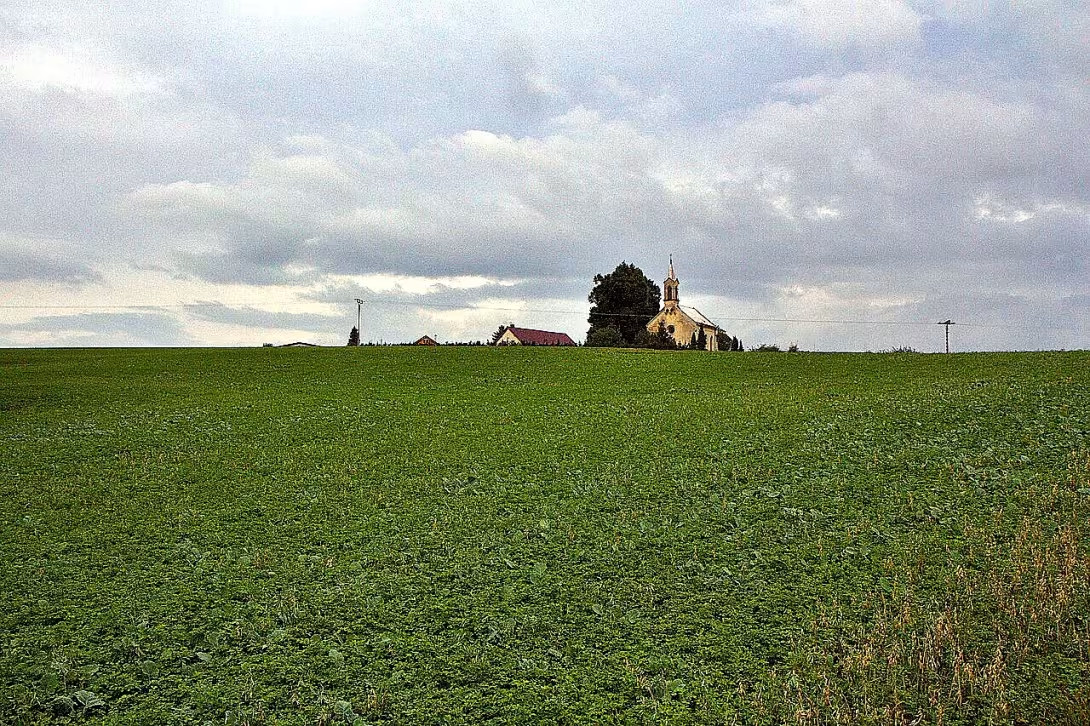
The castle Hradsko is an archaeological site located on the plateau above the valley of the river Pšovka in the village Hradsko, which belongs to the town of Mšen in the district of Mělík. This place is remarkable by its history ranging from the younger and late Bronze period to the early medieval Slavic period when the Slavs settled here. The castle is known for its strategic location and extensive fortifications, which were built in the 8th century and later expanded.
The formation of the castle can date back to a period of stone age when the first settlement took place 25,000 years ago. Evidence of this is found in the form of split stone industry, mainly flint from basalt and quartz. At the time of bronze to Latin, the castle was again inhabited, as evidenced by the findings of shards of ceramics and holes along the posts of the building, which are associated with the utenistic culture between 1600 and 500 B.C. The presence of Celts is evidenced by the finding of a bracelet made of blue cobalt glass with ribs, suggesting their activity in the 2nd and 1st centuries B.C.
The Slavic settlement of the castle began around the 7th century, but the fortified settlement was built only in the 8th century. The Slavic tribe of the Pšovans built a stone fortification, a pagan jest and a fortified Grand Court. In the following century, the main headquarters of the Pšovans became Měník. The fort was strategically important, as evidenced by its mention in French chronicles as Canburg during the campaign of Karel the Great to Bohemia in 805.
The architecture of the castle included walls 7 metres wide, which were later extended up to 14 metres. The inner structure contained the courtyard at the highest point of the plateau and the church of St. George, which shows the complexity of its structure. The fort served as a defensive settlement with a significant strategic position.
The key event was the campaign of Karel the Great to Bohemia in 805, when the Franks plundered the area around the castle. Despite attempts to conquer the castle itself, they failed to do so, which underlines its defensive power.
Today the castle Hradsko is an important archaeological site and attraction for visitors and researchers. It is located close to the natural reserve of Kokořín Mine, which gives the area additional attractiveness. The castle is a witness to the rich history and culture that can be explored thanks to archaeological findings and the remains of the fortifications.
The castle Hradsko represents an important part of Czech history and is an important place for understanding Slavic settlements and defence strategies. Visiting this site offers a unique opportunity to explore history and culture at close range, which is a valuable experience for every inquest.
Then and now
Drag the slider to compare how the landmark may have looked when it was built with the view today.
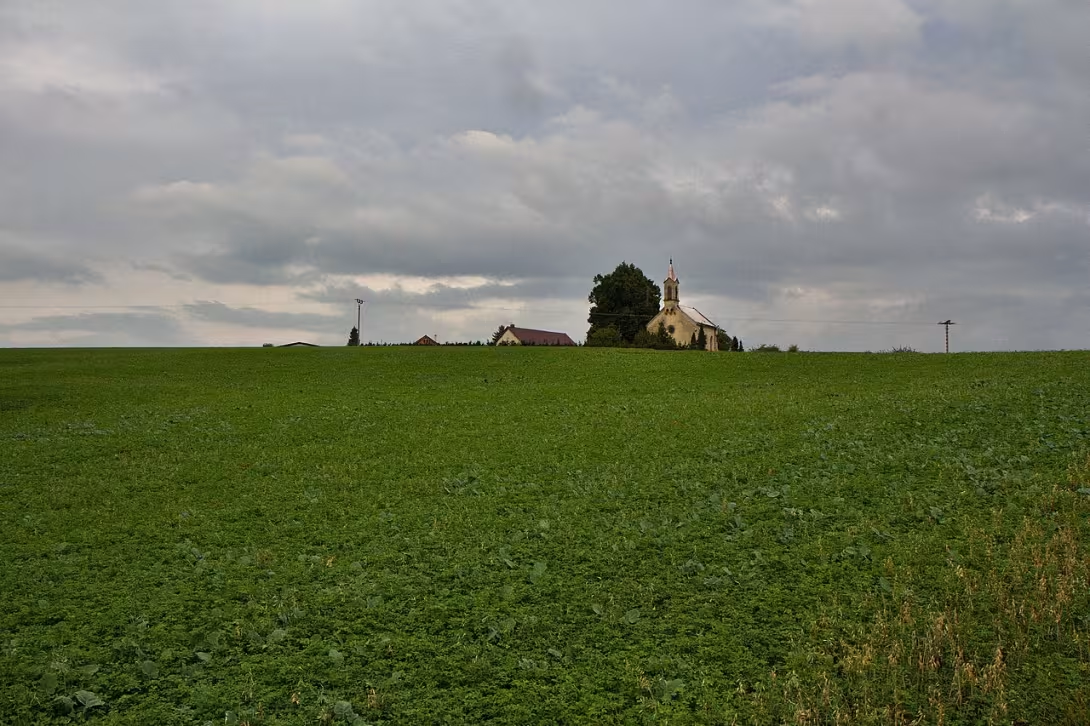
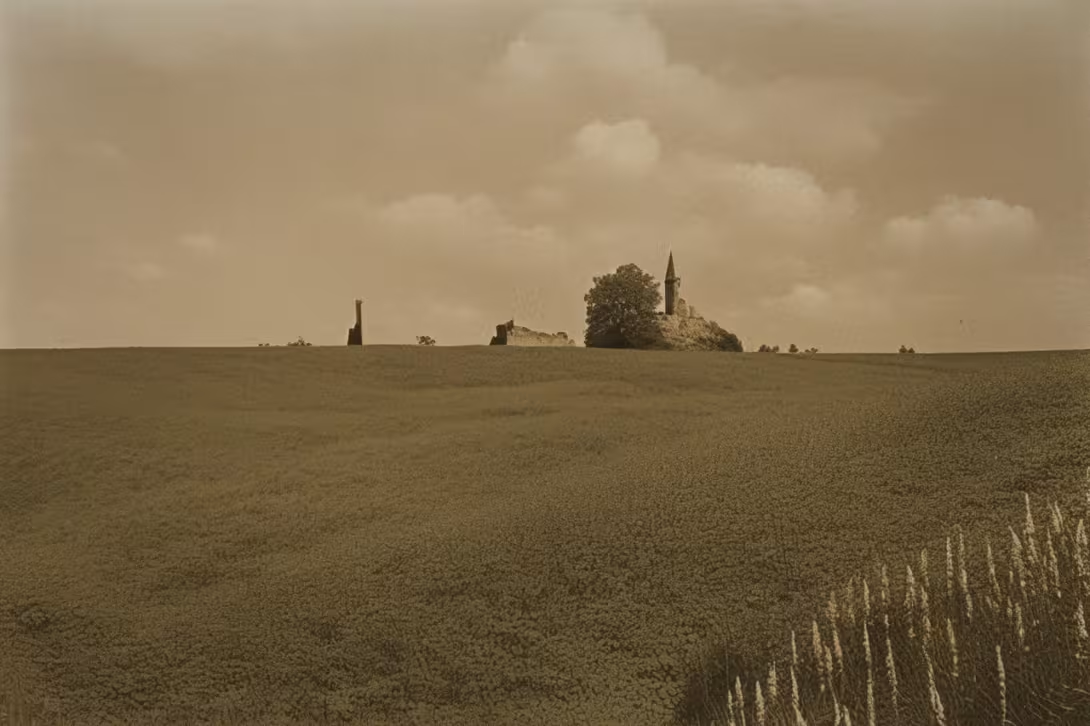
The historical appearance on the left is an AI-generated visualisation and serves as inspiration only.
Historical milestones
- The finding of a blue cobalt glass bracelet with ribs is evidenced by the presence of Celts.
- The castle is identified with the settlement Canburg mentioned in the French chronicles.
Architectural development
The fort began as a stone fortification with walls 7 metres wide, which were later extended up to 14 metres. The inner structure contained the courtyard and church of St. George, which shows the complexity of its structure.
Historical events
- 805
- The area around the castle was plundered by Franks during the campaign of Karel the Great to Bohemia.
- The Slavic tribe of the Pšovans built a fortifications and pranks here in the 8th century.
Points of interest
- The castle Hradsko is an archaeological site located on the plateau above the valley of the river Pšovka. - The history of the castle dates from the younger and late Bronze period to the early medieval Slavic period when Slavs settled here. - The fortification was built in the 8th century and later expanded. - The fort is mentioned in French chronicles as Canburg during the campaign of Karel the Great to Bohemia in 805. - The architecture included walls 7 metres wide, later expanded to 14 metres wide.
Guide
Show guide text
This text was created by artificial intelligence and has not been editorially reviewed. It may contain inaccuracies.
Welcome to the place where time has stopped and where every layer of the country touches thousands of years of history. You are standing on the edge of a plateau that has been watching over the valley of the Pšovka River for centuries. Before you go any further, stop for a moment and look around you. Feel this space, feel this openness, and at the same time the strange, invisible force that radiates from this place. This elevated position you're standing on right now was not chosen by chance. It is a strategic place that offers a perfect overview of the surrounding landscape while providing natural protection. Ever since ancient times, people have known that whoever controls these designs also controls the entire landscape and its paths.
Let us now look together deeper beneath the surface of the earth, at what we see here only in contours, but what archaeologists have revealed thanks to their patient work. The history of this castle is not just one story, it is a chain of many ages that have been taking turns here over the millennia. The first traces of human presence here go back to the younger and late Bronze era. Imagine the first groups of people here looking for shelter and safety. This platform was a key point for them in a constantly changing world.
Over time, however, the character of this place changed. If you look at the extent of this plateau, you can easily imagine how the Slavs settled here in the early Middle Ages. Since the seventh century, Hradsko has become an important centre. It was not just an ordinary settlement, but a truly fortified place that served as a defensive base for the people at the time. The Slavs have built structures here that have enabled them not only to survive, but also to prosper in this strategically important area.
Now pay attention to how this platform has been modified in the past to provide maximum protection. Even if you see the natural shapes and archaeological footprints today, note how this landscape was transformed by the human hand. The main pillar of defense was extensive fortifications. These protective systems were built in the eighth century and continuously expanded and strengthened over the next years. Imagine the enormous effort, the thousands of years of work that people had to do to build these dykes and protective lines. Each meter of these fortifications was the result of a joint effort by the entire community, seeking safety for their families. This architecture of defense was not just about stone or land, it was about survival and the stability of the entire region.
Although we do not know the names of the particular leaders or personalities who were here, we can recognize the people who lived here through the small objects that remain hidden. This country was much more connected to the world than it might seem at first sight. One of the most amazing evidence of this connection is a finding that gives great consideration in archaeological circles. They found blue cobalt glass bracelets with fine ribs. This tiny object is like the key to an unknown world. Its colour, its processing and its very existence clearly show us that there was another human culture here - people we now know as Celts. This finding tells us that Hradsko was not an isolated enclave, but part of the wider commercial and cultural networks that connected the distant ends of the world back then.
And this is where we come to one of the greatest mysteries that follows this place. There is a fascinating theory that links this castle to the history of ancient chronicles. Some researchers believe that it is this very place that the legendary estate of Canburg was mentioned in ancient times by the French chronicles. Imagine the possibility - that it was here, on this platform above the Pšovka River, that events took place that were so important that the chroniclers in France themselves wrote about them. It is a fascinating idea that this place had its reflection in European records and that it could have been part of much broader political and historical events. It's a mystery that gives this place an unwieldy depth and mystery.
Now I want to invite you to move on to this platform. Go through this landscape, see its shapes and try to reconstruct the life that took place here hundreds and thousands of years ago. Every piece of land, every impact of wind in the grass, and every look at the flow of the Shea River can help you better understand the importance of this place. Let yourself be carried away by the atmosphere of this archaeological site, and remember, it is here, under your footsteps, that thousands of years of human stories rest, efforts for safety and efforts to connect with the world.
Thank you for choosing to take this journey in time and for taking the time to explore this space. We will brighten you with another pleasant discovery and hope that the impressions of this place will leave an unforgettable mark on you.
Tips for visitors
The best time to visit is the late spring season or autumn when the surroundings of the Pšovka River are the most beautiful. For photography we recommend early morning hours or late afternoon, when the sun creates interesting shadows on archaeological structures on the plateau.
You can reach the castle by car or use public transport; please check the current connection and parking possibilities in the internet search engine.
Take with you comfortable shoes suitable for uneven terrain and enough drinking water to enjoy the tour in maximum comfort.
For families with children, a tour of the ruins is an interesting opportunity to discover history in nature, but it is necessary to take care of increased caution when moving in challenging terrain.
In the surroundings you can visit the natural reserve of Kokořín Mine, which offers beautiful natural scenery.
Businesses nearby
Do you run a restaurant, accommodation, shop, museum, rental, wellness or other visitor service near this monument? Show yourself directly to the people heading to it — this is how they will see you in the app and on the web:
Nearby
The fort lies close to the natural reserve of Kokořín Mine, which adds an attractive area for visitors and researchers.
Accommodation nearby
Themed route
1. Hradsko, archaeological site: Explore historical layers and learn the history of this place. 2. Hradsko, an immediate area: The tour of the castle itself offers a better idea of its area. 3. Kokorovské Dýl, nature reservation: Discover the beauty of nature in close proximity to the site.
Seasonal recommendations
Spring in Hradsk brings out the awakening of nature, when the surrounding meadows and forests become fresh green colours and flowering trees create a picturesque framework for ruins. Light is usually soft and diffuse at this time, which is ideal for photographic images of archaeological findings without sharp shadows. The atmosphere is calm and quiet because the main tourist season has not yet begun. Practically this period is suitable for peace lovers who want to enjoy a walk without larger crowds. Clothes should be layered because spring weather can be variable and rainy, so it is necessary to carry a waterproof jacket and solid shoes that can handle mud. The best time to visit is in the morning when visibility is best and temperatures are already pleasant.
Summer in Hradsk means full sun and intense light, which reveals every detail of stone remains and archaeological excavations. Nature is in full bloom, but at the same time it can be hot, which can be difficult when walking on open terrain. The atmosphere is more lively due to the presence of more visitors heading here in the main summer season. Practical advice includes an early arrival, ideally in the morning to avoid the biggest crowds and burned. Clothes must be light, airy and light, with emphasis on sun protection, i.e. hat, sunglasses and plenty of drinking mode. The afternoon can be too hot, so save your tour experiences for cooler morning hours.
Autumn in Hradsk offers a unique atmosphere thanks to colorful leaves that contrasts with grey ruins and countries. Light is lower and warmer, which creates dramatic shadows and highlights the texture of old stones. Nature prepares for sleep, making the surroundings quieter and quieter than summer. This season is suitable for those looking for romance and historical melancholy associated with disappearing light. It is virtually important to take into account the faster falling twilight, therefore it is better to plan a visit to the afternoon hours. Clothes should be warmer, with emphasis on layering, because evening cold is rapidly occurring. The footwear must be dry and anti-slip because autumn rain and wet leaves can form a slippery layer.
Winter in Hradsk brings sharp, cold light, which often reveals details hidden behind vegetation, which is now bare. Nature is resting, often covered with snow or ice, which creates a surreal and quiet impression. The atmosphere is cold and fresh, which is ideal for those who seek solitude and deep contact with history without disturbing influences. Practical advice focuses on safety and comfort in the cold. Clothing must be extremely warm, including gloves, scarf and winter cap to prevent hypothermia. The footwear shall be waterproof and with a good heel for slippery surfaces. Due to the shorter day and possible closure of part of the terrain due to danger, it is best to visit the monument in the noon hours when it is the hottest and safest.
Visualizations and artistic views


The visualisations are generated by artificial intelligence and serve as inspiration.
Photos from the area
Real photos taken near the monument

Zdroj a licence jsou uvedeny u každého snímku.
Tips from visitors
No tips yet. Be the first!
Log in and add your tip.
Sources and literature
Fotografie: This photograph was taken by Roman Zázvorka and released under the license(s) stated below. You are free to use it as lo / CC BY-SA 4.0 — Wikimedia Commons. The author and licence also appear when you hover over the image.
Faktickým podkladem tohoto textu byl článek na Wikipedii, jehož autory jsou přispěvatelé Wikipedie. Článek je dostupný pod licencí CC BY-SA 4.0.
Location on the map
More monuments – Hradsko
Show all in the municipality
Příběhy a pověsti
Legendy, pověsti a příběhy spjaté s touto památkou
Fotografie návštěvníků
Zatím žádné fotografie. Buďte první, kdo přidá fotografii z návštěvy!
Přihlaste se a přidejte svou fotografii nebo hodnoťte.
Za ověřenou návštěvu v aplikaci získáte víc bodů — poznáme podle GPS, že jste na místě.
Reviews and comments