






Hřbitovní kaple s hrobkou Thun-Hohensteinů Chapel
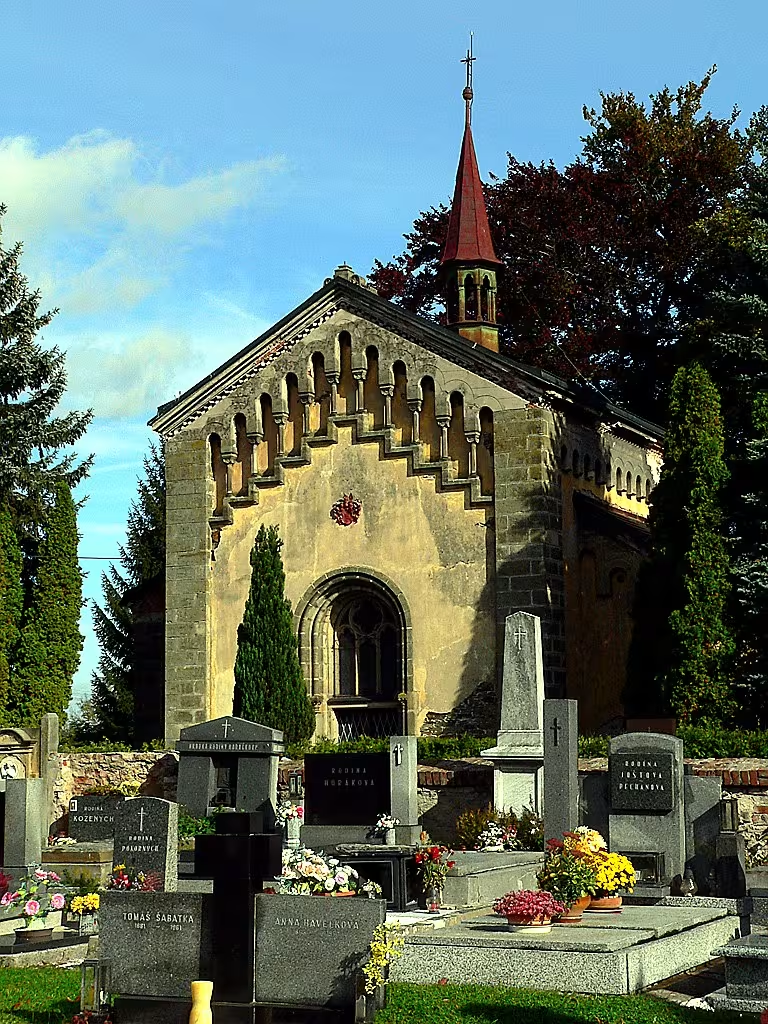
The Thun-Hohenstein tomb is a funeral chapel in the northeast part of the Choltice cemetery. The construction was initiated by Theodor z Thun-Hohensteinu, owner of the Choltic Grand Property, and the architect became František Schmoranz starší, builder and creator of many important buildings of his time including the Chotkov tomb in Valtířov, reconstruction of the castle Žlebí or reconstruction of the Cathedral of the Holy Spirit in Hradec Králové. The chapel was built in the New Romanesque style between 1872 and 1873 with costs of 20 878 gold and 19 tailors.
The House of Thun-Hohensteins has ruled the Choltics of the теритorii since 1623, when Kryštof Šimon Thun acquired confiscated property and then, after being promoted to the state of the Reichsdam in 1629, wrote with a home from Hohenstein. At the turn of the 17th and 18th centuries, the family rebuilt the Choltic Chateau itself. By building the tomb, the family responded to the Josephine reforms of 1787, which prohibited burial in churches and city cemeteries. That is why the cemetery was founded northeast of the village in that year and the original family tomb died there, replaced by a marble cross from 1875.
Architecturally, it is a brick, rectangular structure of the basilical type, 14.3 times 13.3 meters, where the middle ship exceeds the side boats. The Neo-Romanesque character is underlined by corner rustic lizens that divide the walls and the arches that circulate under the main ledge. The southwest facade dominates a large portal, which consists of a rectangular entrance set in a semi-rounded, double-spaced portal with columns carrying decorated archivolts. In the tympanone there is a window with a circular pitch in three leaf fields, and above the entrance there is a plastically developed family coat of arms. Vertical elements of the facade close the shield with a blind gallery of columns with decorated headers. The right-hand conclusion is illuminated by a large rectangular window with a sieve and stained glass with plant motifs and the figure of Jesus Christ. The dominance of the roof is in the middle of a standing sandbox with an octave lantern. The roof originally covered with shale is now of a metal saddle type.
The chapel hosted the remains of 21 members of the genus. The first to be buried here in 1874 was Theresa of Thun-Hohenstein, among the last Leopold Thun-Hohenstein, which was 1944. The tomb included the remains transferred from the original cemetery tomb. Around 2006, the original portal posts were removed from poor condition and temporarily stored in the chapel interior. Today, the monument, which is part of the cemetery chapel and is protected by the state, is located in the property of the city Choltice and is not accessible to the public.
Then and now
Drag the slider to compare how the landmark may have looked when it was built with the view today.
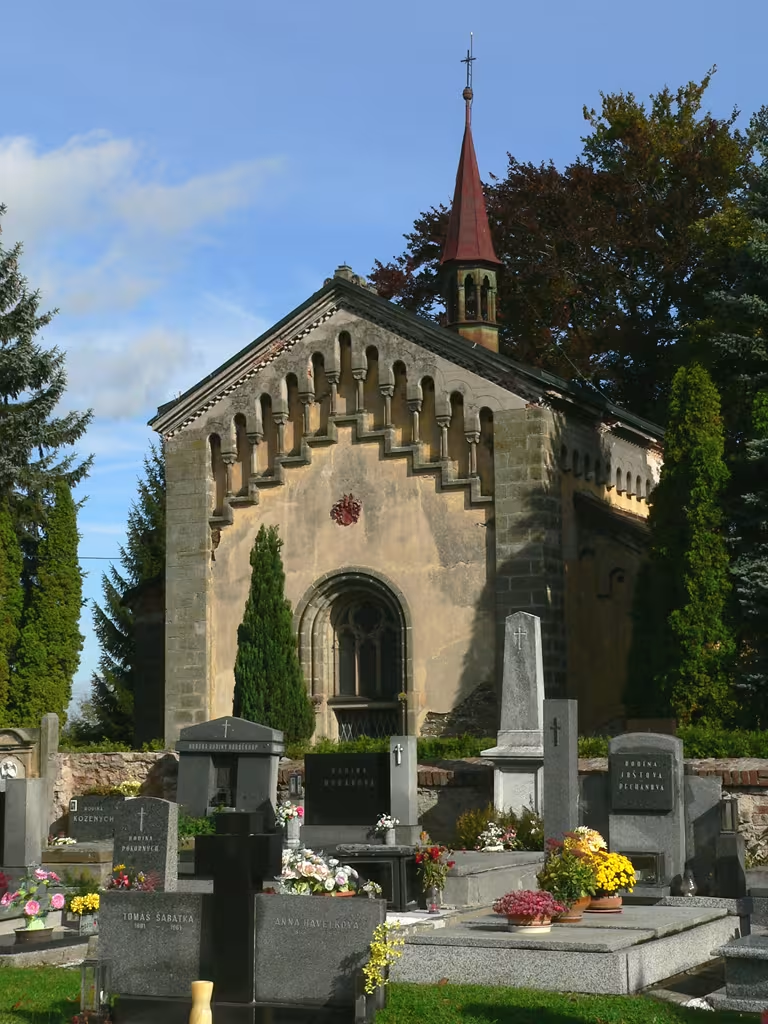
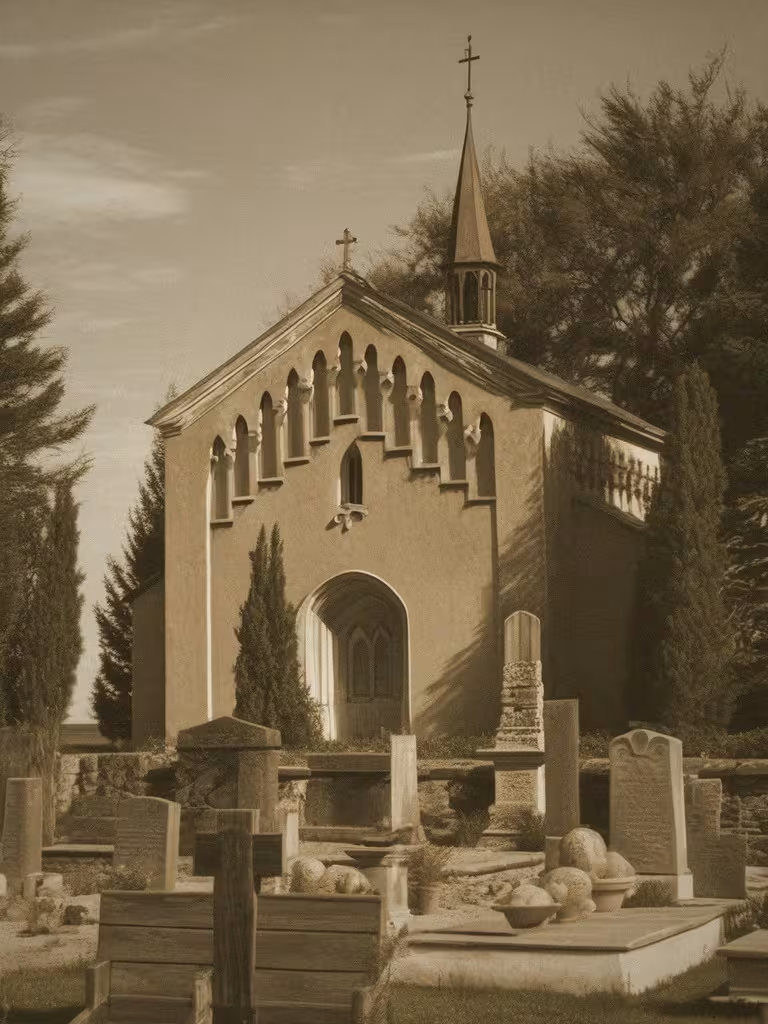
The historical appearance on the left is an AI-generated visualisation and serves as inspiration only.
Historical milestones
- 1872
- Opening of the cemetery chapel with tomb.
- 1874
- The first burial in the new tomb, the remains of Theresa from Thun-Hohenstein.
- 1944
- Last funeral of a member of the family, Leopold Thun-Hohenstein.
Architectural development
The construction is walled, basilical type with higher middle boat and lower side boats. It is characterized by new Romanesque elements, such as rustic lizens, arch molds and a semi-circle arched portal. The original shale roof was later replaced by a tin cover.
Historical events
1623: Obtaining the choltic manor of the Thun-Hohenstein family. 1872- 1873: Construction of a new tomb. 1945: Confiscation of the property of the genus on the basis of the Beneš Decrees.
Owners
Rod Thun-Hohenstein (1623-1945), then state, now town with Choltice.
Points of interest
- The building of the chapel was initiated by the owner of the choltic large estate Theodor z Thun-Hohensteinu and its architect was František Schmoranz starší. - The construction of the chapel in the New Romanesque style took place between 1872 and 1873 and cost 20 878 gold and 19 tailors. The family built the tomb in response to the 1787 Yosefin reforms that banned burial in churches and city cemeteries. - A total of 21 members of the family were buried in the chapel, and the first funeral took place in 1874 and the last in 1944. - The monument is in the property of the city Choltice and is not accessible to the public.
Guide
This guide is narrated by a synthetic voice generated by artificial intelligence.
Show guide text
This text was created by artificial intelligence and has not been editorially reviewed. It may contain inaccuracies.
Welcome to Choltice. Stop for a moment, take a breath and feel the silence of this place. Right now, you're standing in the northeast part of the local cemetery, and before you, there's a cemetery chapel with a tomb of the Thun-Hohenstein family. It's a building that tells the story of power, tradition and fleeting time by its very presence. Look at its silhouette and perceive the atmosphere that radiates from it. This chapel is not just a simple religious building, but a deeply personal resting place for one of the distinguished noble families, which has been linked to the surroundings of Choltic for centuries.
Let us now return together in time more than 150 years ago. At the time, in 1872, this building was basically a novelty. The whole project was initiated by the owner of the Choltic Great Estate, Theodor z Thun-Hohensteinu. The Thun-Hohenstein family had owned the estate since 1623, so their bond with this country was very strong and deep. Theodore wanted to create a dignified family burial ground that would serve as a place of eternal sleep for generations of his ancestors and followers. In order to implement this project he invited the renowned architect František Schmoranz the elder. Construction work was very rapid, between 1872 and 1873, and the result was this impressive object that you see before you.
Now pay attention to the architecture itself. If you look at the facade and the overall design of the construction, you will notice that architect Schmoranz has chosen the novel style. It's a style that at that time returned admiration to the monumental forms of the early Middle Ages. The chapel is designed as a walled basilical building. Note the rich New Romanesque curds that decorate the walls and details of the building. It is these elements that give the construction its specific character and sense of stability and timeliness. Look at the line of the roof and the rhythm of the windows that are typical of this architectural direction. The whole object seems sparsely but at the same time very noble, which exactly matched the status of the family for which the chapel was built.
When you're standing in front of this tomb, think about the people associated with it. The Thun-Hohenstein family has left a deep mark in the history of the region. Among the names that bind this place and the manor, we will find, for example, Christopher Simon Thun or Berchthold Adam Thun-Hohenstein. They were people who formed the landscape, the administration, and the culture of this region. The chapel itself became a silent witness to family tragedies and celebrations. The first funeral in this new tomb took place shortly after the construction was completed, in 1874, when the remains of Theresa from Thun-Hohenstein were stored here. Since then, members of the family have rested here until the last funeral of the family member, Leopold Thun-Hohenstein, took place in 1944. It is fascinating to think that this chapel accompanied the family during a period of massive social change, from the peaks of the Austrian-Hungarian monarchy to the dramatic events of World War II.
Perhaps you are now wondering why the chapel was built in this very form and at this time. There is one very interesting detail that brings us into a broader historical context. The construction of the chapel was in some sense a response to the reforms of the emperor Joseph. Josefinism has brought strict rules about funerals, especially for sanitary reasons, and has prohibited funerals within churches or city centres. The nobility, which was used to representative tombs in the sacral spaces, had to seek new solutions. The Thun-Hohenstein family thus decided to build their own private and dignified burial ground right here in the cemetery, retaining the tradition of the birthplace in accordance with the new laws.
And if you're interested in numbers, I've prepared a curiosity for you. At the time, the construction was not as we know today. Everything was carefully calculated. The whole building of the chapel cost exactly 20 878 gold and 19 tailors. When you realize the value of the gold back then, you will find that it was a huge investment to ensure that the tomb served for centuries and remained a symbol of family pride. There's something fascinating about it that even after so long, we know the exact amount except for the last tailor.
Now that you know the story of the creation, the architecture and the fate of the people who rest here, I suggest you forget the facts and just go around the building. Feel how light breaks on the new-Romanesque details and how the chapel fits into the landscape of the Choltic Cemetery. It's a place where history meets silence and where we can feel the continuity of time.
Thank you for accompanying me to this brief interpretation. I hope this visit to Thun-Hohenstein's tomb has brought you new views of the history of this place. Now invited to further explore the cemetery and around Choltic, where you will have many other hidden stories. I wish you a peaceful and inspiring continuation of your journey. Goodbye.
Tips for visitors
To visit, choose a sunny morning when the light highlights the new Romanesque details of the facade and surrounding cemetery greenery. Parking is possible near the cemetery, you can easily reach the village by car and public transport; Check the exact connection in the traffic search engine. Take with you comfortable shoes to move on the premises and the camera, with the best pictures of the chapel taken from the streets between the graves, which offer interesting compositions with the surrounding buildings of the morgue and the tomb house. In the immediate vicinity of the monument, do not miss the tour of the Choltic Chateau, which was the historical residence of the genus. For families with children the location is suitable as a quiet walk with an educational overlap into the history of the region, but we recommend taking care of the piety character of the place.
Frequently asked questions
Is Hřbitovní kaple s hrobkou Thun-Hohensteinů open to the public?
Yes, the chapel is generally open to the public. However, we recommend checking the current information on the official website or local information stations.
How do I get to the place by car / public transport?
Parking is available near Choltic, where you can continue on foot. For public transport check the current connections by bus from neighbouring municipalities.
How much is the entrance fee and is it paid on the spot?
Admission fee is payable on site. The current price list can be found on the official site of the sights or when visiting.
Is the tour suitable for children and seniors?
The tour is also suitable for children and seniors if they are able to move around the cemetery terrain. A quiet environment offers an opportunity to learn and relax.
How long does the tour take?
A tour of the chapel can take from 30 minutes to an hour, depending on how thoroughly you view the site and the number of other attractions you want to visit.
What are the opening times and booking is required?
Opening hours may vary depending on the period. We recommend checking the current information on the official website or before visiting. Reservation is not usually necessary.
What's interesting in the immediate vicinity?
There is a chateau in the surroundings, which offers historical excursions and the opportunity to see rural architecture. Short trips around are also suitable for relaxing walks.
For kids
Imagine trees filled with green leaves, which wave under a rainy cloud, and before us, an ancient cemetery with one very special chapel. This chapel is like a mysterious den full of historical stories and stands in Choltice, where more than 154 years ago the first stone entered the country.
Businesses nearby
Do you run a restaurant, accommodation, shop, museum, rental, wellness or other visitor service near this monument? Show yourself directly to the people heading to it — this is how they will see you in the app and on the web:
Nearby
The cemetery area is complemented by two stylishly identical small buildings of the morgue and the tomb house. In the vicinity there is a Choltic chateau, which in the past was a family seat.
Accommodation nearby
Trips and activities nearby
Guided tours, tickets and activities nearby from GetYourGuide
Affiliate link: if you buy from the partner, we may receive a commission. The price for you does not change.
Search tours and activities →Themed route
Choltic chateau Type: Historical building, mansion This building is a key context for visiting the cemetery, as the Thun-Hohenstein nobility, whose tomb is the main destination of the route, was housed here. The tour of the chateau allows you to understand the social and historical position of the family, which affected the development of the whole village and its surroundings.
Hřbitovní kaple s hrobkou Thun-Hohensteinů Type: Memorial-protected building, tomb This is the main point of your journey where you can learn about the architectural processing of the family tomb. The chapel serves as a dignified resting place for members of the noble family and offers a view of the specific elements of the funeral architecture of the era.
Marnice Type: Small sacral or utility construction This stylishly identical building complements the overall appearance of the cemetery area and demonstrates a unified architectural intention. Visitors will appreciate the harmony between the various elements, which together form a coherent whole with the chapel and the tomb house.
House tombstone Type: Small residential building It completes a trio of stylishly unified objects in the cemetery and provides an interesting view of the daily background of the care of the burial grounds in the past. Together with the morgue and the chapel, it creates a unique file that is rare in its preservation and stylistic consistency.
The route is designed so that the visitor first gets a historical context in the chateau, then switches to the main destination of the chapel with the tomb, and finally looks at the additional buildings of the morgue and the tomb house in the immediate vicinity. All points lie in a close neighbourhood, allowing comfortable walking to explore the premises without the need for longer movements.
Seasonal recommendations
Spring brings a sense of renewal around the chapel, when fresh green and flowering flowers create a fresh contrast to the historic stone piece. The morning light is delicate and ideal for observing details of the tomb in a quiet atmosphere. For visiting it is best to choose the morning hours when the air is the cleanest. Prepare layered clothes to protect you from changing spring temperatures.
In the summer months the atmosphere of the tomb is famous and alive, while the shadows of surrounding vegetation offer a pleasant shelter from the heat. For longer days, you can visit the memory later, but in the main summer season I recommend arriving early in the morning to avoid any crowds. Dress lightly and do not forget to protect yourself from direct sun.
Autumn is a period of melancholy and calm for this location, where golden leaves and morning fog give the place a deep, nostalgic touch. The low sun in the afternoon beautifully highlights the architecture structure. It is advisable to wear firmer shoes because of the moist surface of the earth and a warmer jacket to prepare you for cooler wind waves.
Winter in Chotlice is very steep and monumental in the chapel, especially in the period of frost or snow, when there is an unbridled silence. Due to short days and possible shorter opening times, it is best to plan a visit around noon to use the maximum amount of daylight. The need is very warm and wind-resistant clothes to make the tour pleasant.
Visualizations and artistic views


The visualisations are generated by artificial intelligence and serve as inspiration.
Photos from the area
Real photos taken near the monument

Zdroj a licence jsou uvedeny u každého snímku.
Atmosphere of the place
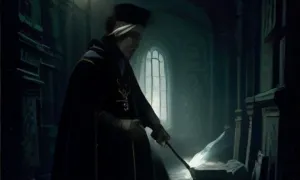
This atmospheric visualisation of the place and period was generated by artificial intelligence. It is not real footage of the location.
Tips from visitors
No tips yet. Be the first!
Log in and add your tip.
Sources and literature
Fotografie: Ing.Jan Mann / CC BY-SA 4.0 — Wikimedia Commons. The author and licence also appear when you hover over the image.
Faktickým podkladem tohoto textu byl článek na Wikipedii, jehož autory jsou přispěvatelé Wikipedie. Článek je dostupný pod licencí CC BY-SA 4.0.
Location on the map

Příběhy a pověsti
Legendy, pověsti a příběhy spjaté s touto památkou
Fotografie návštěvníků
Zatím žádné fotografie. Buďte první, kdo přidá fotografii z návštěvy!
Přihlaste se a přidejte svou fotografii nebo hodnoťte.
Za ověřenou návštěvu v aplikaci získáte víc bodů — poznáme podle GPS, že jste na místě.
Reviews and comments