



Hungerberg Ruin
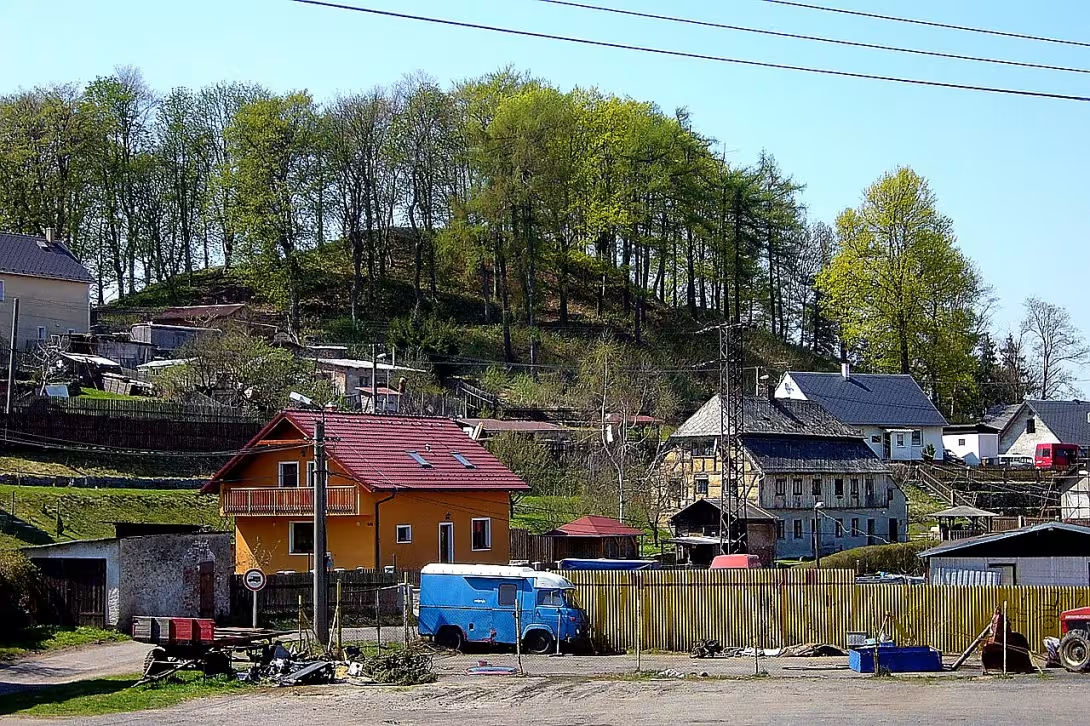
Hungerberg Castle, also known as Bochov, is a historical ruin located on Hladový vrch near Bochov in the Karlovarský kraj region of the Czech Republic. Constructed in the mid-14th century, it served both as a defensive stronghold and an administrative center for the Rýzmburk estates. Its strategic position on a hill with access from the southeast highlights its historical significance, despite the absence of visible remains today.
The origins of Hungerberg Castle trace back to the mid-14th century during a period marked by political and religious upheaval in Bohemia. The initial owners were Slavek and Boreš z Rýzmburka, who held control until 1406. This era saw tensions between noble factions and the rise of the Hussite movement, influencing regional power dynamics within the Holy Roman Empire.
Architecturally, Hungerberg Castle featured an oval layout with defensive structures such as a moat and rampart designed to protect it from potential threats. Although no traces of these fortifications or any internal buildings remain today, historical records mention additional elements like a parkán and bašta on the southwest side, which have also not survived.
Ownership changed hands in 1412 when it was seized by the Plavens of Plauen. The new owners opposed the Hussites and aligned with the Zelenohorská jednota against King Jiří of Poděbrady. This shift marked a significant change in the castle's fortunes, reflecting broader regional conflicts.
A pivotal event occurred in 1469 when Hungerberg Castle was captured and destroyed by royal forces. Its destruction led to its replacement with a new structure named Hartenštejn, marking an end to its historical role as a stronghold.
Today, Hungerberg Castle stands as a ruin, offering visitors a glimpse into the region's medieval past. Although no visible remains of the castle's structures exist, the site itself is significant for understanding the historical context and events that shaped this area. Its location near Bochovský potok and amidst natural features like hills adds to its appeal as a destination for those interested in history.
Visiting Hungerberg Castle provides an opportunity to reflect on Bohemia's turbulent 14th-century history and appreciate the enduring legacy of medieval fortifications, even in their absence. The site invites exploration and contemplation, offering insights into the past that continue to resonate today.
Then and now
Drag the slider to compare how the landmark may have looked when it was built with the view today.
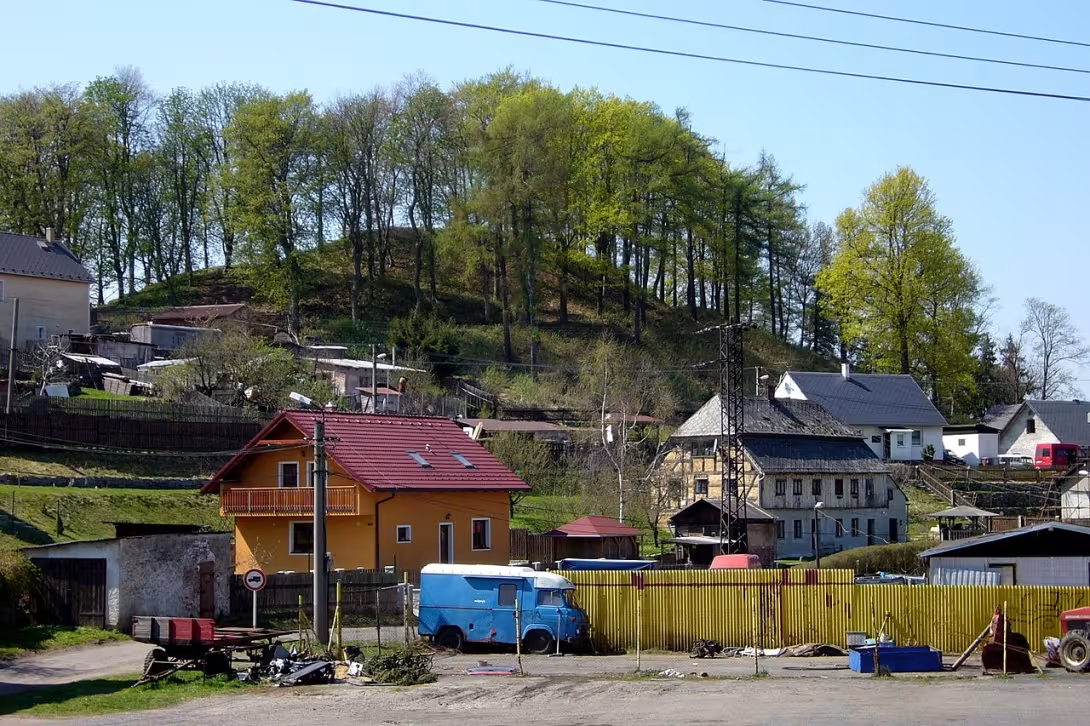

The historical appearance on the left is an AI-generated visualisation and serves as inspiration only.
Historical milestones
- c. 1350
- Establishment of Hladová hora as a fortress and administrative center.
- 1406
- Transfer of ownership from Slavek and Boreš of Rýzmburk.
- 1412
- Hladová hora subdued by the Plavensy of Plavno, who opposed the Hussites.
- 1469
- The castle was captured and destroyed by royal forces.
Architectural development
Hungerberg Castle was built in the mid-14th century with an oval layout. It featured defensive structures such as a moat and rampart, although no traces of these or any internal buildings remain today.
Historical events
In 1469, Hungerberg Castle was captured and destroyed by royal forces, leading to its replacement by a new castle named Hartenštejn.
Owners
Initially owned by Slavek and Boreš z Rýzmburka in 1349, the castle remained under their control until 1406. It was then seized by the Plavens of Plauen in 1412, who opposed the Hussites and aligned with the Zelenohorská jednota against King Jiří of Poděbrady.
Points of interest
- Hungerberg Castle's strategic location on Hladový vrch allowed it to control access from the southeast, making it a crucial defensive point during regional conflicts.
- The castle was originally owned by Slavek and Boreš z Rýzmburka until 1406, during a time of significant political and religious upheaval in Bohemia due to the rise of the Hussite movement.
- In 1412, ownership shifted to the Plavens of Plauen, who opposed the Hussites and aligned with the Zelenohorská jednota against King Jiří of Poděbrady, reflecting broader regional power struggles.
- The castle was captured and destroyed by royal forces in 1469, leading to its replacement with a new structure named Hartenštejn, marking an end to its historical role as a stronghold.
- Despite the absence of visible remains today, historical records mention unique defensive features like a parkán and bašta on the southwest side, which have not survived but highlight the castle's architectural significance.
Guide
This guide is narrated by a synthetic voice generated by artificial intelligence.
Show guide text
This text was created by artificial intelligence and has not been editorially reviewed. It may contain inaccuracies.
Welcome to the historic site of Hungerberg, a captivating ruin perched on Hladový vrch near Bochov in the Karlovarský kraj region of the Czech Republic. As you stand here, take a moment to absorb the sweeping views and imagine the past life that once thrived within these walls.
Constructed in the mid-14th century, Hungerberg served as both a defensive stronghold and an administrative center for the Rýzmburk estates. Its strategic location on this hill allowed it to control access from the southeast, making it a pivotal point during regional conflicts. The castle's oval layout was designed with defense in mind, ensuring that those within could withstand sieges while maintaining oversight of their surroundings.
Originally owned by Slavek and Boreš z Rýzmburka until 1406, Hungerberg Castle played host to significant historical events. In 1412, it found itself under the control of Plavensy z Plavna, who opposed the Hussites—a testament to its importance in regional power struggles. By 1469, the castle had been besieged and destroyed by royal forces, marking the end of an era for this once formidable fortress.
As you wander through the remnants, notice how nature has begun to reclaim these stones, weaving a tapestry of greenery over centuries-old architecture. The absence of certain structures invites your imagination to fill in the gaps—envision the bustling life that once echoed within these walls.
Several key figures are intertwined with Hungerberg's history. Slavek and Boreš z Rýzmburka were among its early custodians, while Jindřich II. z Plavna played a role in its later conflicts. These individuals shaped the castle's destiny during turbulent times, leaving behind stories etched into the very stones.
One intriguing aspect of Hungerberg is its resilience as a symbol of history despite being reduced to ruins. Its ability to endure through centuries of change speaks volumes about the era it represents and the people who once called it home.
As you conclude your visit, I invite you to explore further around this historic site. Each step offers new insights into the past, allowing you to connect with the stories that Hungerberg has safeguarded for generations. Thank you for joining me on this journey through time, and may your curiosity continue to guide you in discovering more hidden treasures of history.
Farewell from Hungerberg, where every stone tells a story waiting to be uncovered.
Tips for visitors
The best time to visit Hungerberg Castle is during late spring or early autumn when the weather is mild, making it ideal for exploring the ruins without extreme heat or cold. These seasons also offer beautiful natural scenery around Hladový vrch, enhancing your experience with vibrant foliage in the fall and blooming flowers in the spring.
Always check current routes online for the most accurate information.
When visiting Hungerberg Castle, consider bringing comfortable walking shoes as you'll be traversing uneven terrain around the ruins. A hat and sunscreen are advisable due to exposure to sunlight, especially in summer months. Don't forget water, snacks, and perhaps a camera or smartphone for capturing the picturesque views of the castle and surrounding hills.
For photography enthusiasts, early morning or late afternoon is when the light is most favorable at Hungerberg Castle. The soft golden hues during these times can create stunning images of the ruins against the backdrop of Hladový vrch. Explore different angles around the castle for unique shots, capturing both the grandeur and decay of this historical site.
Nearby attractions within a 30-minute drive include the town of Bochov itself, which offers local shops and dining options to explore after your visit to the castle. For families with children, consider visiting the nearby streams where they can enjoy some outdoor playtime in nature. Always ensure safety while exploring these natural areas.
Frequently asked questions
Can the monument be visited?
This is a ruin. Such sites are often freely accessible, but some can only be visited with a guide or are closed for safety reasons. We have not verified the current situation – take care and respect any restrictions.
Where is the monument?
Location: Bochov, Karlovarský kraj. The map on this page shows the exact spot.
Why is the monument protected?
It is listed in the Central List of Cultural Monuments of the Czech Republic as a cultural monument (register no. 24399/4-742).
Businesses nearby
Do you run a restaurant, accommodation, shop, museum, rental, wellness or other visitor service near this monument? Show yourself directly to the people heading to it — this is how they will see you in the app and on the web:
Nearby
Hungerberg Castle is situated on Hladový vrch near Bochovský potok, close to the town of Bochov. The area around the castle includes natural features such as hills and streams.
Accommodation nearby
Trips and activities nearby
Guided tours, tickets and activities nearby from GetYourGuide
Affiliate link: if you buy from the partner, we may receive a commission. The price for you does not change.
Search tours and activities →Themed route
Tematická výletní trasa kolem zříceniny Hungerberg
1. Hladový vrch (Zřícenina)
Typ: Historické místo
Proč stojí za návštěvu: Zajímavostí této trasy je Hladový vrch, kde se nachází zřícenina Hungerberg. Tato historická lokalita nabízí jedinečný pohled na minulé období a přírodní krásy okolního terénu. Navštěvující mohou prozkoumat zříceniny a si užít klidné chvilky v malebném prostředí.
2. Bochovský potok
Typ: Přírodní prvek
Proč stojí za návštěvu: Po prozkoumání zříceniny se doporučuje krátké procházky podél Bochovského potoka. Tento přítok nabízí klidné a pitoreskní krajiny, které jsou ideální pro relaxaci a pozorování místní fauny a flóry.
3. Hills around Hungerberg
Typ: Přírodní terén
Proč stojí za návštěvu: Pro ty, kteří hledají aktivnější zábavu, nabízí okolní kopce možnost prozkoumat horské stezky. Tyto cesty poskytují vynikající příležitosti ke sportovním aktivitám a krásnému pohledu na oblast Bochova.
Tato trasa nabízí kombinaci historických i přírodních zážitků, což ji činí ideální pro různé typy návštěvníků.
Seasonal recommendations
Spring: The arrival of spring at Hungerberg brings a rejuvenating atmosphere as the surrounding landscape awakens with vibrant colors and fresh blooms. This season is marked by the gentle interplay of light filtering through budding trees, casting dynamic shadows across the ruins. Visitors can enjoy the subtle fragrance of wildflowers that carpet the area, enhancing the historical ambiance. It's advisable to visit in the early morning or late afternoon to avoid larger crowds that gather as the day warms up. Comfortable walking shoes and a light jacket are recommended due to fluctuating temperatures.
Summer: During summer, Hungerberg is bathed in warm sunlight, highlighting the textures of the ancient stones with dramatic effect. The long days offer extended visiting hours, making it ideal for those who wish to explore at a leisurely pace. However, this period also sees an increase in visitors, so arriving early can help avoid the peak crowds. Sun protection, such as hats and sunscreen, is essential due to the strong sun exposure, and staying hydrated is crucial during your visit.
Autumn: Autumn transforms Hungerberg into a picturesque scene with rich hues of reds, oranges, and yellows enveloping the ruins. The cooler temperatures create a serene atmosphere perfect for contemplation amidst nature's changing palette. This season often sees fewer visitors, allowing for a more peaceful exploration of the site. Layered clothing is recommended to adapt to the cooler weather, and carrying an umbrella might be wise due to unpredictable autumn showers.
Winter: In winter, Hungerberg presents a stark yet enchanting beauty as snow blankets the ruins, creating a mystical atmosphere that enhances their historical allure. The shorter days mean visiting hours are limited, so planning your visit in advance is crucial. Winter conditions can also lead to slippery paths, necessitating sturdy footwear and warm clothing. Despite fewer visitors during this time, it's essential to check for any seasonal closures or restrictions due to weather conditions.
Visualizations and artistic views


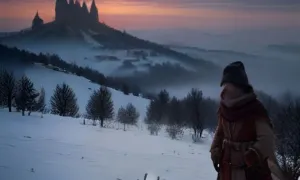
The visualisations are generated by artificial intelligence and serve as inspiration.
Photos from the area
Real photos taken near the monument


Zdroj a licence jsou uvedeny u každého snímku.
Tips from visitors
No tips yet. Be the first!
Log in and add your tip.
Sources and literature
Photos: Petr Kinšt / CC BY-SA 3.0 — Wikimedia Commons. The author and licence also appear when you hover over the image.
Faktickým podkladem tohoto textu byl článek na Wikipedii, jehož autory jsou přispěvatelé Wikipedie. Článek je dostupný pod licencí CC BY-SA 4.0.
Location on the map


Příběhy a pověsti
Legendy, pověsti a příběhy spjaté s touto památkou
Fotografie návštěvníků
Zatím žádné fotografie. Buďte první, kdo přidá fotografii z návštěvy!
Log in a přidejte svou fotografii nebo hodnoťte.
Za ověřenou návštěvu v aplikaci získáte víc bodů — poznáme podle GPS, že jste na místě.
Reviews and comments