



Kozlov Castle
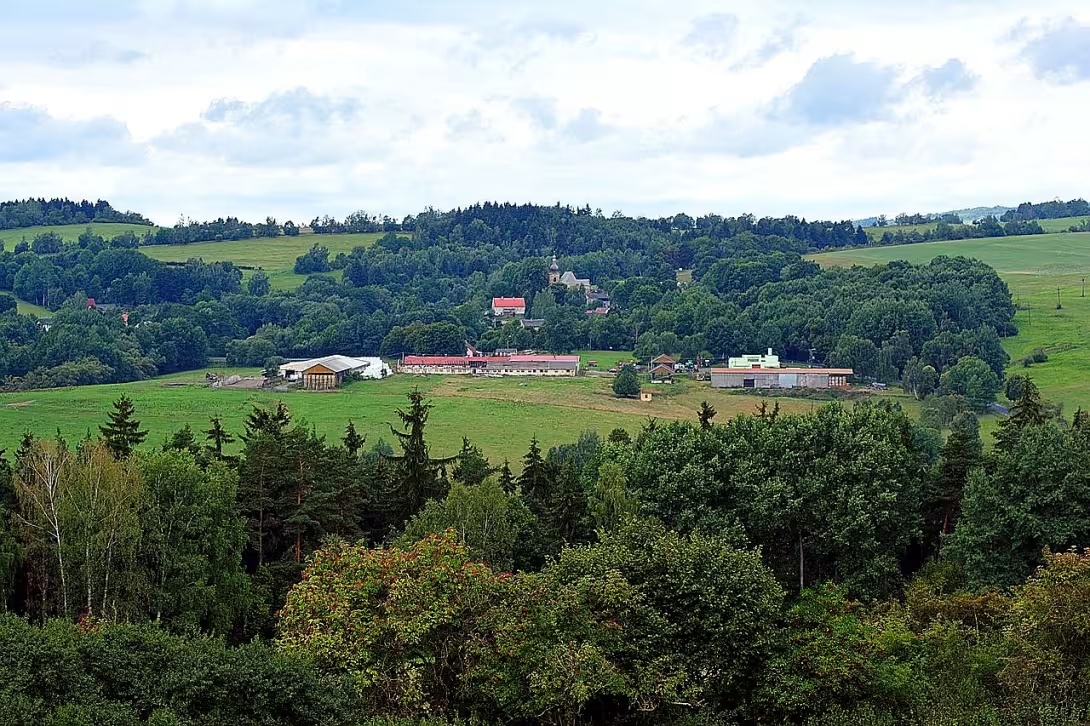
Objekt se nedochoval — na místě dnes nestojí. Následující text popisuje jeho historii, ne současnou návštěvu.
In Kozlov, a village in the district of Karlovy Vary, there was a building whose roots were first mentioned in 1365. However, nothing is known about the original form of this oldest building.
The first registered owners were Němota, Přech and Ješek between 1365 and 1370, who were also entitled to patronage the Kozlov church. During the sixteenth century, Kozlov became the manhood of the masters of the Flovna who rented it to their vassals. The last of these vassals, Jan Ratibořský ze Chcebuze, sold it to George Utenhofer from Utenhof. That year in 1567 he reached the release of the manhood - he gained independence and independent property rights.
The Utenhofers have settled in Kozlov. Sometime in the 16th century, they had the old fort rebuilt in the Renaissance style. Their sons sold the construction in 1588 to Uncle Henry the elder of Utenhof. After Henry's death in 1594, Adam Utenhofer inherited it, but he attended the state uprising and in 1623 his property was confiscated. The estate bought Jan Hegner z Röesselfeldu. Other owners became Štampachové (1669 or 1667 to 1687) and then Pikharti z Grünthalu.
Sometime between the second half of the 17th and the beginning of the eighteenth century, the Renaissance castle underwent a Baroque reconstruction. Later owned by Trautenbergové (1744-1775), knight František Kager ze Štampachu (1775-1792) and many other owners including Hoyers from Blumenou.
The core of the building was a storey building with dimensions of 24 × 19 metres, two polygonal two-story towers in the corners of the southeast facade. It was from these towers that led the entrance to the castle. Ground floor rooms had arched ceilings - clove or rolled vaults, stellar in towers. During the Baroque reconstruction, both towers were added onion roofs.
In the first half of the twentieth century, the castle was used to store grain, but already in the 1930s it showed serious damage to the roofs. In 1939 he was partially demolished and burned four years later. The ruin was demolished in 1949 or 1950, and the locals took its remains from the building material.
When the lock was locked in 1984, it only had fragments of the perimeter walls about 50 centimeters high. They were removed later and the terrain aligned. Only part of the original economic buildings were preserved from the entire area.
Then and now
Drag the slider to compare how the landmark may have looked when it was built with the view today.
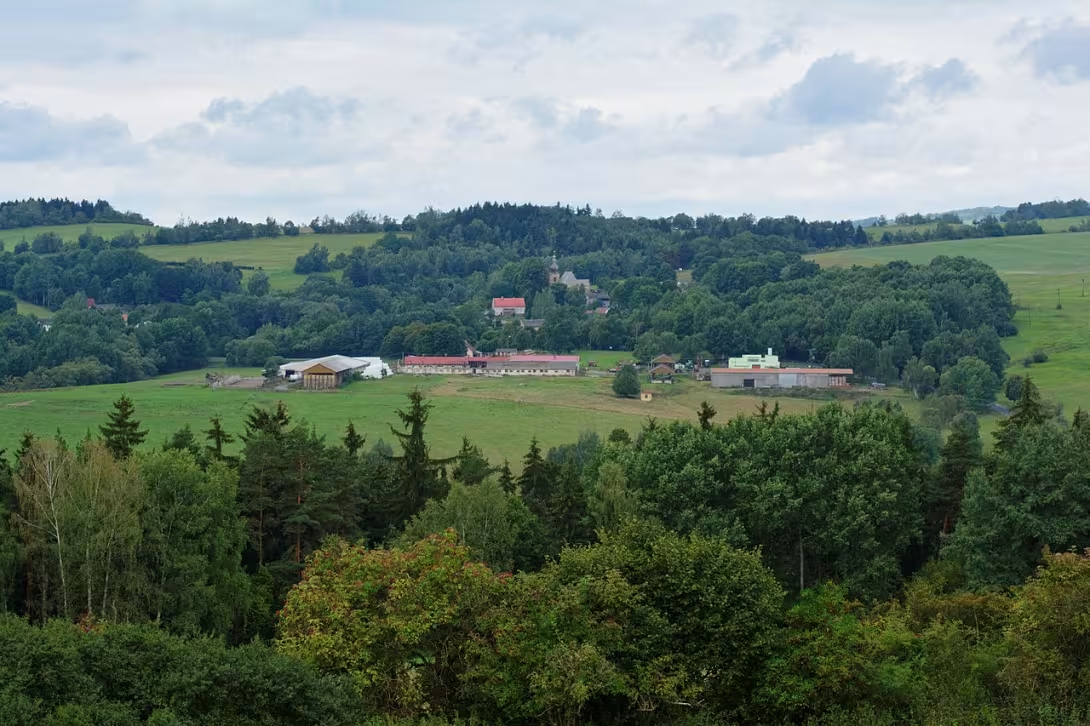

The historical appearance on the left is an AI-generated visualisation and serves as inspiration only.
Architectural development
Kozlov evolved from the late medieval fortress to the Renaissance castle, which was later rebuilt baroque. The basic structure included a storey building with towers and various types of vaults. During his existence he went through several architectural changes that reflected the styles of the time.
Historical events
- 1420
- Castle Kozlov was built as a seat of the noble family
Points of interest
- In Kozlov there was a building with roots reaching into the fortress first mentioned in 1365. - The first registered owners were Němota, Přech and Ješek, who had the right patronage over the church. - In the sixteenth century, Kozlov became the manhood of the masters of the Swim, who rented to their vassals. - Sometime in the 16th century, the old fort was rebuilt into the Renaissance style. - An onion roof was added during the Baroque reconstruction of both castle towers.
Guide
This guide is narrated by a synthetic voice generated by artificial intelligence.
Show guide text
This text was created by artificial intelligence and has not been editorially reviewed. It may contain inaccuracies.
Welcome to Kozlov, a unique historical monument located in Bochov, Karlovy Vary Region. You stand before the ruins of the former castle, which once stood as a testament to the rich and complex history of this place. If you look around, you can see the crumbling glances that bear the fingerprints of the past and remind you of the days when this fort was full of life.
Kozlov has roots dating back to the late Middle Ages. The first mention of it appears in 1365 as a fortress, which grew into a castle over time. In the fourteenth century, this site was already known and served various purposes, especially defence. The following several centuries meant constant changes for Kozlov - since the medieval fortress it was remodeled in the sixteenth century and later endowed with baroque elements. Note how masonry varies in its structure and style - these differences are traces of these historical changes.
The interesting thing is that the first known owners of Kozlov were Němota, Přech and Ješek. They had the right to patronage the church, which suggests a significant role of the fortress not only as a defensive nest, but also as a centre of social life. In the sixteenth century, Kozlov became the manhood of the masters of the Plavno, which was another chapter in its history.
Several personalities are inextricably linked to this location. Among them were Jan Ratibořský ze Chcebuze and Jiří Utenhofer z Utenhofu, who influenced his fates during the Renaissance. Later they took control of Adam Utenhofer z Utenhofu and Jan Hegner z Röesselfeldu, who contributed to changes in the Baroque era. Other significant owners were Štampachové, Pikharti z Grünthalu, Trautenbergové and František Kager ze Štampachu. Each of these personalities has brought their share of the history of this place.
Also interesting is the fact that during the twentieth century Kozlov lost its function and gradually collapsed. Today, the ruins tell us a story about the festive past life that was inevitably given time.
So let's move forward and notice the atmosphere that this ruin radiates. Every stone has a story, every masonry carries traces of the past. Whether you look at broken walls or notice the position that once had a castle in village life - Kozlov is a great example of how history and nature can form a fascinating composition together.
Allow me to invite you for further examination. Whether you look at the surrounding landscape or notice the details of the masonry - each step brings new knowledge of how life once was on Kozlov. I hope your visit inspired you and moved on to deeper reflections about the past of this place. Thank you for your time with us and have a nice day!
For kids
Imagine going back to the past, when Kozlov was still a young castle. Crazy awesome! Imagine being a little princess or a prince at the time, and just coming home from a long journey.
How did it look here? Kozlov stood at the foot of the Iron Mountain, like the king of his throne. The noble families, like those men from Kozlova, lived here in luxury settlements and ruled this area. The castle was their headquarters, where they controlled the area and protected their property.
Businesses nearby
Do you run a restaurant, accommodation, shop, museum, rental, wellness or other visitor service near this monument? Show yourself directly to the people heading to it — this is how they will see you in the app and on the web:
Nearby
The surrounding area of the castle consists of the forests of the Iron Mountains and the nearby village Kozlov
Visualizations and artistic views


The visualisations are generated by artificial intelligence and serve as inspiration.
Photos from the area
Real photos taken near the monument

Zdroj a licence jsou uvedeny u každého snímku.
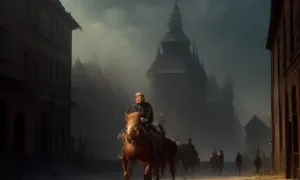
Atmosphere of the place
This atmospheric visualisation of the place and period was generated by artificial intelligence. It is not real footage of the location.
Tips from visitors
No tips yet. Be the first!
Log in and add your tip.
Sources and literature
Faktickým podkladem tohoto textu byl článek na Wikipedii, jehož autory jsou přispěvatelé Wikipedie. Článek je dostupný pod licencí CC BY-SA 4.0.
Location on the map


Příběhy a pověsti
Legendy, pověsti a příběhy spjaté s touto památkou
Fotografie návštěvníků
Zatím žádné fotografie. Buďte první, kdo přidá fotografii z návštěvy!
Log in a přidejte svou fotografii nebo hodnoťte.
Za ověřenou návštěvu v aplikaci získáte víc bodů — poznáme podle GPS, že jste na místě.
Reviews and comments