






husitský kostel v Ledči nad Sázavou Church
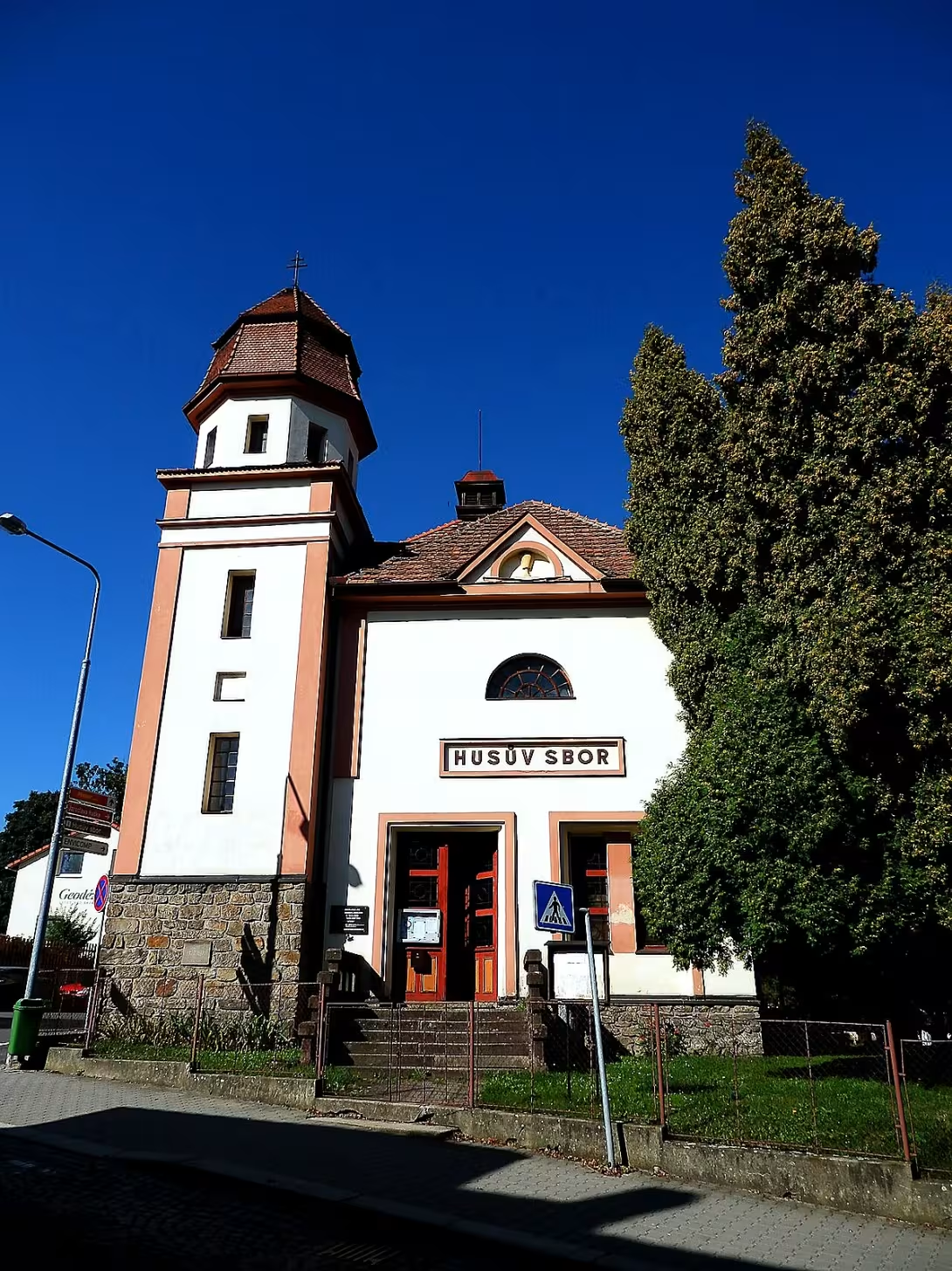
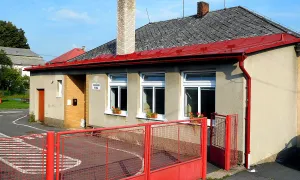
The Hussite Church in Ledč nad Sázavou is a small but significant church building in a style of historical modernity. It was built in 1927-1928 as a replacement for a rented cemetery church. Located in the cadastral territory of the village and since 1994 it has been protected as a cultural monument.
This is a unique example of rural architecture of the Czechoslovak Hussite Church, which in the interwar period sought its own space outside Catholic churches. The construction was built on the land from the municipality, which was donated under the condition that the construction started within two years. The financing was difficult - the church received a state contribution, but the construction resulted in a ten-year debt which was repaid only in 1944.
Architect Jaroslav Svoboda designed a rectangular building with a rectangular closure and a prism tower on the east corner. The opening ceremony took place in August 1928, when Bishop Stanislav Kordule served the first service.
The construction is symmetrical, with a risalite and a massive corner bell tower with a Mansard roof and a Orthodox cross. The entrance facade is decorated with a plastic inscription * Hus Choir * and a combined window above the door. The roof has a valbic structure with a lantern shaped like a Hussite helmet and three small semi-circular skylights.
The interior retains original equipment - wooden floor, window lunnets with plant motifs and a massive Baroque chandelier from the local hotel. The priestess separates the victory arch, behind which stands the altar with the image of Jesus with disciples from Karl Rock (revealed 1954). The original painting of the ice painter was moved into the interior.
Since the founding of the religious community in 1920, the church has been owned and administered by the Czechoslovak Hussite Church. The building still serves as an active religious centre, with the interior preserved almost in its original state.
Significant events include the laying of the base stone in May 1927 with the participation of Havlíčkobrod vicar and the unveiling of a new altar painting in 1954. The construction reflects the effort to combine traditions with modern architectural elements, typical of rural ecclesiastical structures of the interwar period.
Today the church is open to the public and represents a rare example of the church architecture of the 20th century. His visit offers a view of the specific capacity of CČSH in the region as well as a demonstration of rural construction which sought its own identity outside Catholic churches. For lovers of ecclesiastical history and architecture, this is an interesting document of the interwar period.
Then and now
Drag the slider to compare how the landmark may have looked when it was built with the view today.
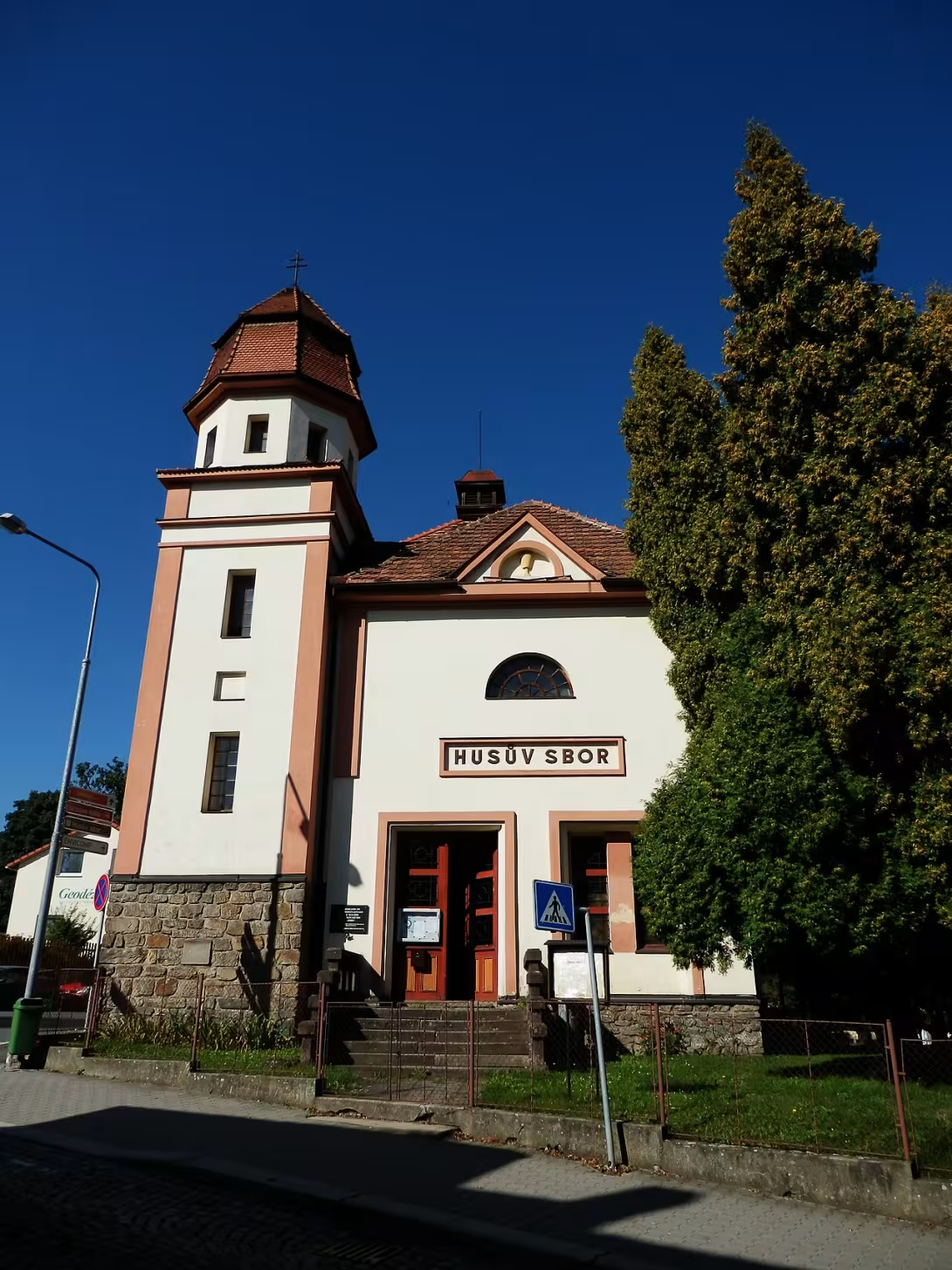
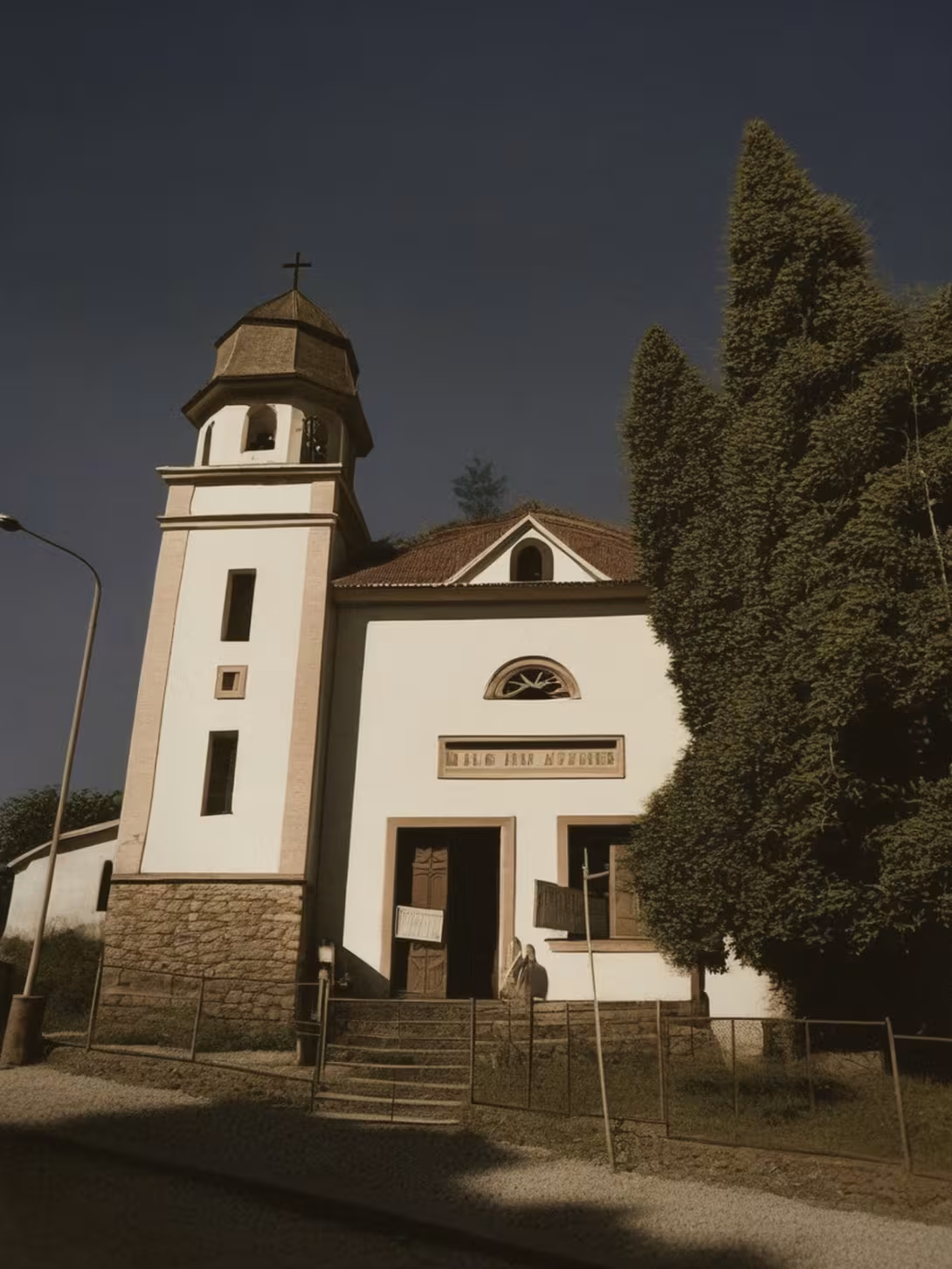
The historical appearance on the left is an AI-generated visualisation and serves as inspiration only.
Historical milestones
- 1920
- The establishment of the Church of Czechoslovak Hussite Church in Ledč nad Sazavou.
- 1927
- The laying of the foundation stone and the beginning of the construction of the Hussite congregation.
- 1928
- The opening ceremony and the first service served by Bishop Stanislav Cordul.
- 1944
- The Central Council of the CCH has defaulted on the church community after a decade of debt.
- 1954
- The unveiling of a new altar painting by Karel Rock's
Architectural development
One-storey rectangular building with rectangular closure and prism tower on the east corner. The roof of the valba with lantern in the shape of Hussite helmet, facade decorated with risalite and corner bell tower. Interior with wooden floor, windows with plant motifs and preserved original equipment. Materials: walled construction, wood, stone.
Historical events
The establishment of a religious community in July 1920; the start of the construction in 1927; opening ceremony on 19 August 1928; The debt of the Church in 1944.
Owners
Czechoslovak Hussite Church (since the founding of the religious community in 1920)
Points of interest
- The church was built in the years 1927-1928 as a substitute for the rented cemetery church and serves the Church of Czechoslovak Hussite since the founding of the religious village in 1920.
- The building was financed by the church with the help of a state contribution, but a ten-year debt was created, which was only paid in 1944.
- Architect Jaroslav Svoboda designed a building with a rectangular finish and a prism tower ended with a Orthodox cross.
Guide
This guide is narrated by a synthetic voice generated by artificial intelligence.
Show guide text
This text was created by artificial intelligence and has not been editorially reviewed. It may contain inaccuracies.
Welcome to the picturesque region of Vysočina, right in the heart of Ledče nad Sazavou. You're standing in front of a remarkable sacral structure, which is the local Husa Corps. Raise your head and let yourself breathe the atmosphere of a place that, by its appearance, faithfully reflects the time of its creation and efforts of the then society for its own spiritual face. In front of you there is a building whose overall composition is perfectly symmetrical, with a distinctive centre risalite and an invisible prism tower, which provides the whole building with dignity and strength. If you look to the very top of the tower, you will see an Orthodox cross that brings in an extraordinary element and symbolism.
Let us now slowly move forward in time and reveal the story behind these walls. The year is one thousand nine hundred twenty and new hope is born in Ledč nad Sazavou and the new religious community of the Czechoslovak Hussite Church. In the early years of their existence, however, believers did not have their own sanctuary and had to settle for a rented cemetery church. But the desire for a spiritual home was strong. All took real contours in the years of a thousand nine hundred twenty-seven to a thousand nine hundred twenty-eight, when the base stone was laid and the actual structure of the congregation grew rapidly on the land which generously provided the town.
When you look carefully at the architectural solution designed by the talented builder Jaroslav Svoboda, you will find that the building is a wonderful and clean example of the ecclesiastical architecture of the Czech countryside. There is a manuscript of so-called historic modern, a direction that sensitively linked modern building processes with respect for traditional shapes. The architecture of the building is thoughtful and balanced. The central part with the risalite and the tower forms a harmonious unit, which makes the bystanders feel calm and firm.
Now pay attention to what's inside. The interior of this choir still retains its original equipment, thanks to which history breathes every step of the way. You can admire the wonderful baroque chandelier, which gives the space nobility, as well as the fine folk-designed painting details, which demonstrate the skill and respect of the masters of the time to craft. Each corner carries traces of human creativity and deep faith.
This success and the whole history are supported by a number of important personalities whose names are firmly linked to the Czechoslovak Hussite movement and directly to this Ice Club. The spiritual dimension and the ceremonial opening in the year one thousand nine hundred twenty-eight were sanctified by Bishop Stanislav Kordule, who served here the first service ever and gave the local community a blessing on its way. The key figures of the church led by Dr. Karl Farsky were due to develop spiritual and mental directions. And many years later, in the year one thousand nine hundred fifty-four, the inner space of the congregation also enriched a new altar painting, the author of which was the academic painter Karel Skála.
There is also a very interesting story associated with this place, which shows how difficult and admirable it was to build new sanctuaries in interwar Czechoslovakia. The financing of the whole building was based on the combined powers of the Church itself and the state contribution, but money was not enough. The believers had to face great financial commitments at the time, and there was a shadow of debt hanging over the choir. It was not an easy period, but people's resolve was stronger than economic difficulties. In the end, this ten-year debt burdensome the church community managed to fully pay off and debt the congregation only in the year one thousand nine hundred forty-four, which meant a great relief and a fresh start for local believers.
You stand in a place that carries the story of tenacity, art and the unbreakable faith of ordinary people. We hope you were interested in the story of the Ice Club Husus. We now cordially invite you to further explore the beauty of this city, to perceive its peaceful atmosphere and to discover the other corners that await you around. Thank you for listening to our audio guide, and wish you a beautiful day full of discoveries. Goodbye.
Tips for visitors
{'paragraph': 'The best time to visit Hussite church in Ledč nad Sázavou is in spring or autumn, when the weather is pleasant outside and nature around is in full glory. It can be hot in the summer, so wear light clothes. In spring you can experience the blooming surroundings and in autumn you can experience beautiful shades of leaves. In winter the church is open, but some outdoor areas can be limited due to weather.'}
{'paragraph': 'Parking is available around the church, but it is recommended to come by car and find a parking space nearby. The location is also accessible by public transport; the current connection can be found in the traffic search engine. If you arrive by bus, it is recommended to find a stop in the centre of the village Ledeč nad Sázavou, from where the church is only a short walk away.'}
{'paragraph': 'When visiting, take comfortable shoes because the church is located in the historical part of the village and the journey may be a little uneven. Next, prepare your laptop or mobile phone to record the attractions that the guide or information will give you in the church. If you are interested in photography, take a battery or charger with you, as the interior may be limited.'}
{'paragraph': 'The best places for photography are mainly the interior of the church with its historic modern architecture and windows that release interesting light effects. Outside is beautiful surrounding nature, especially in sunny weather. It is recommended to take pictures in the morning or afternoon light, when the shadows are softer and the photos look more pleasant.'}
{'paragraph': 'Around the church is worth visiting Ledčice Chateau, which is located about three kilometers west. It is a ruin with a rich history that offers a fascinating view of the past. Another interesting thing is Ledčice Chateau, which is protected by monuments and offers a tour of its interiors. The nature park of the Sázavská Valley and the river Sázava are also suitable for a short walk or picnic.'}
{'paragraph': 'For families with children, a visit to the church in Ledč nad Sázavou is very interesting because children can be intrigued by its historical significance and architecture. In the surroundings it is also possible to play in nature, for example in the Sázák Valley. It may be interesting for children to visit Ledčice Chateau, where they can explore the ruins and imagine what life in the past looked like. It is also recommended to visit the town monument centre where children can learn more about the history of the village.'}
Frequently asked questions
Is husitský kostel v Ledči nad Sázavou open to the public?
Yes, the church is open to the public. The tour is suitable for all people interested in history and architecture.
How do I get to the place by car / public transport?
The location is available by car and by public transport. Check the current connection in the search engine or local transport services.
How much is the entrance fee and is it paid on the spot?
Admission is paid on site, the current price list can be found on the official site of the sights.
Is the tour suitable for children and seniors?
Yes, the church is accessible to all ages. The tour is also suitable for families with children who will be able to understand the historical value of the place.
How long does the tour take?
The length of the tour depends on the individual error and interest of visitors. On average, however, the tour takes about 30-60 minutes.
What are the opening times and booking is required?
The opening hours of the church vary according to the season. Check the current opening times on the official site of the monuments or at local information centres. Reservation is not required, but we recommend prior verification of opening hours and possible restrictions.
For kids
That was like 98 years ago, when the House of Hus began to build in Ledč nad Sazavou. It was a beautiful day at the end of 1928 when the first stone of the church was laid. Today this church is the only building of its kind in the Republic and its history is full of mysteries and adventures.
Who lived here? Who came? At that time, there were people who wanted to preserve the traditions of the Hussite movement. They were people who believed in freedom of speech and mind, who sought to reform the Church. Those people were like heroes fighting for their thoughts.
Businesses nearby
Do you run a restaurant, accommodation, shop, museum, rental, wellness or other visitor service near this monument? Show yourself directly to the people heading to it — this is how they will see you in the app and on the web:
Nearby
In the vicinity there is Ledčice Chateau (ruin) and Ledčice Chateau (monument protected) about 3 km west. The nature park of the Sázak Valley and the river Sázava are nearby. The village Ledeč nad Sázavou is located in a cadastral area with a rich cultural history, including a conservation centre.
Accommodation nearby
Trips and activities nearby
Guided tours, tickets and activities nearby from GetYourGuide
Affiliate link: if you buy from the partner, we may receive a commission. The price for you does not change.
Search tours and activities →Themed route
Explore the historical and cultural wealth of the village Ledeč nad Sázavou with this cruise route which includes the main destination husitský kostel v Ledči nad Sázavou.
1. Hussite Church in Ledč nad Sazavou Type: Religious monument Why is it worth a visit: This church is an example of Gothic architecture with Hussite elements that reflect the rich history of the region. Its inner space and architectural details offer a view of the past.
2. Memorial Centre Ledeč nad Sázavou Type: Historical Center Why is it worth a visit: The city centre is full of historic buildings and streets that carry the atmosphere of an ancient dwelling. It is an ideal place to walk and discover local culture.
3. Ledčice Chateau (ruins) Type: Historical ruins Why is worth a visit: This ruin is a witness of past times and offers a view of the history of the region. Its location in the nature park of the Sázavská Valley provides a romantic way.
4. Château Ledèice Type: Memorial protected lock Why is worth a visit: The chateau is an excellent example of Baroque architecture and its beautiful gardens are ideal for relaxation. It's a place where history and nature coexist harmoniously.
5. Sazava River Type: Natural attractions Why is worth a visit: The river offers beautiful views and is an ideal place for relaxation or picnic. Its surroundings in the Sázavská Valley natural park provide the opportunity to explore nature.
This route offers a combination of historical and natural attractions that together form a rich and engaging experience.
Seasonal recommendations
Spring During spring, husitský kostel v Ledči nad Sázavou surrounds the awakening nature - green meadows and the first flowers in the surrounding fields create a calm and meditative atmosphere. The light of the sun, which is prolonged at this time, illuminates the church from the angles that remain in the shade in winter, and its stone walls gain a finer, almost golden touch. The air is fresh and slightly damp, ideal for walking around where summer crowds have not yet arrived. Practically it is advisable to visit the church early in the morning or in the afternoon when there are fewer visitors and photography is without disturbing groups. Clothes should be layered - spring weather changes rapidly, and even when the sun welcomes, evenings can be cold. It is also recommended to take advantage of moments when not only the church but also the surrounding landscape shine after the rain, which gives the whole place a magical impression.
Summer In the summer months, the church becomes a centre of lively, but also quiet atmosphere - the sun shines so intensively that the shadows on the walls of the church create dramatic contrasts that highlight its Gothic details. The surrounding area is in full bloom, and if the visit coincides with the main summer season, the surrounding fields with crops or visitors resting on park benches can be noticed. Practically, it is best to come early in the morning to avoid the biggest crowds that often appear in the afternoon. Clothes should be light, but given the possibility of a sudden transition of sunlight into the shade, it is advisable to carry a hat or scarf. In the summer months, the church is open longer, but in hot days it is advisable to relax inside where there is pleasant cooling.
Autumn Autumn brings a unique atmosphere to Ledče nad Sázavou - the church is surrounded by golden and red colours of leaves that are reflected in windows and create fine, variable light effects on the church wall. The air is colder but still fresh, and the sun, which is already bowing down below, illuminates the church from the angles that remained hidden in summer. At this time the visit is calmer, as tourists start to return home, and the church offers space for reflection. It is practically appropriate to visit it in the morning, when light still gives color intensity, and clothes should be warm but not too massive - autumn weather can change quickly. If the visit coincides with advent time, you can also enjoy the quiet atmosphere of pre-Christmas preparations in the surroundings.
Winter Winter Ledč nad Sazavou offers a church in a completely different light - the snow cover softens its shapes and reflects the light so that it appears to be coated with a white coat. The freezing air and calm atmosphere, when the surroundings sink into silence, provide a mysterious and almost fairy-tale atmosphere. The church in winter acts as a cozy shelter, and its interior, lit with candles or Christmas decorations (if the period is closer to Christmas), offers pleasant warmth. It is practically advisable to visit it in the afternoon, when the light is still sufficient, but the crowds are minimal. Clothes should be warm, laminated and waterproof with regard to the possibility of snow. The opening hours of the church are shorter in winter, so it is good to check in advance whether it is accessible to the public.
Visualizations and artistic views


The visualisations are generated by artificial intelligence and serve as inspiration.
Photos from the area
Real photos taken near the monument


Zdroj a licence jsou uvedeny u každého snímku.
Tips from visitors
No tips yet. Be the first!
Log in and add your tip.
Sources and literature
Fotografie: Isolda11 / CC BY-SA 3.0 — Wikimedia Commons. The author and licence also appear when you hover over the image.
Faktickým podkladem tohoto textu byl článek na Wikipedii, jehož autory jsou přispěvatelé Wikipedie. Článek je dostupný pod licencí CC BY-SA 4.0.
Location on the map

Příběhy a pověsti
Legendy, pověsti a příběhy spjaté s touto památkou
Fotografie návštěvníků
Zatím žádné fotografie. Buďte první, kdo přidá fotografii z návštěvy!
Přihlaste se a přidejte svou fotografii nebo hodnoťte.
Za ověřenou návštěvu v aplikaci získáte víc bodů — poznáme podle GPS, že jste na místě.
Reviews and comments