






Hrad Ledeč nad Sázavou Castle
This page was machine-translated from Czech. The translation has not been language-checked and may contain errors.
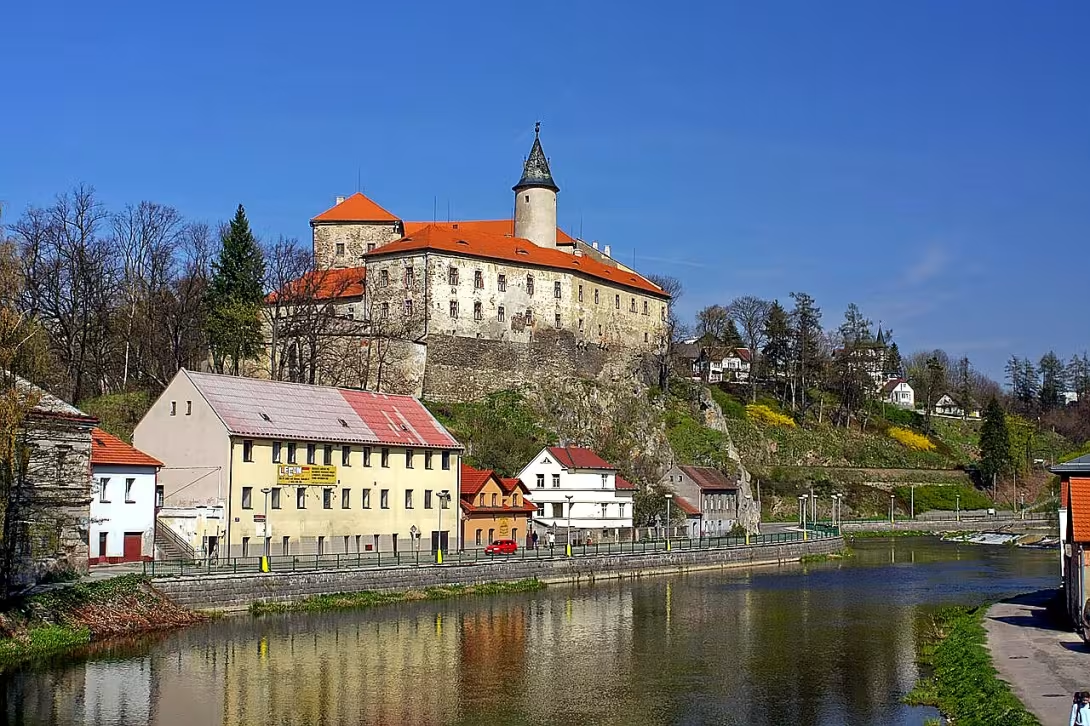
Ledeč nad Sázavou Castle rises on a limestone rock promontory above the Sázava River in the Havlíčkův Brod district of the Vysočina Region. The extensive castle complex evolved from early Gothic through the Renaissance to its Baroque character, and the whole site is dominated by a tall Gothic round tower of the bergfried type. The castle administration describes it as the only surviving castle in the central Sázava valley (Posázaví). The site is protected as a cultural monument.
The castle was most likely founded in the first half of the 13th century. Its founder may have been the knight Slavek of Ledeč, whom King Ottokar II of Bohemia confirmed in 1262 the right to hold a market in nearby Hněvkovice. The first certain holders of the castle were the Ledečský family of Říčany – the brothers Petr, Diviš and Václav are recorded in 1367. In the second half of the 15th century the castle underwent a major reconstruction: new outer fortifications with a pair of semicircular bastions were built, and at the beginning of the 16th century the so-called small palace was added.
The most tragic event in the castle's history came in December 1509, when the floor gave way beneath Lady Žofie ze Sovince, wife of Burian Ledecký z Říčan, and she died together with two of her children. After Burian's death in 1541 the estate passed to his only daughter Markéta, who was married to the Moravian nobleman Zdeněk Meziříčský z Lomnice. During Zdeněk's lifetime the castle was converted into a Renaissance chateau, and in 1562 Zdeněk obtained from Emperor Ferdinand I the elevation of Ledeč to the status of a town. Also dating from the 16th century is a sgraffito ceiling with figural and plant motifs, which can be seen on the guided tour.
From 1569 Ledeč belonged to the Trčka z Lípy family, briefly to the Lobkowicz family, and after the death of Jan Rudolf Trčka the property was confiscated. In 1636 it was acquired by Baron Adrian z Enkenfurtu, during whose ownership the estate was repeatedly plundered by the Swedes in the Thirty Years' War. Count Michael Osvald of Thun-Hohenstein, who bought the estate in 1677, had the Chapel of the Assumption of the Virgin Mary built at the chateau. In 1753 Ledeč was bought by Empress Maria Theresa, and after 1763 it passed to the Theresian Institute for Noblewomen, which held it until the first land reform.
The chateau suffered a heavy blow in a fire on 8 March 1879, which spread from a town house to the chateau roofs and burned for several days. The chateau was only partly repaired, and in the 20th century it housed offices and flats of the state forestry administration, with part used by the town museum. In 1999 the town of Ledeč nad Sázavou bought most of the complex, and gradual restoration has been under way ever since – during the renovation of the southern plasterwork in 2015 a sundial was discovered beneath one of the layers and successfully restored.
Today the castle is open to the public. The operator offers a guided castle tour with a museum of historical clocks, the Jaroslav Foglar Museum, the Medvídkové království (Teddy Bear Kingdom) tour for children, and a climb up the tower, which offers views of the town and the Sázava valley. The castle courtyards and interiors are also popular with filmmakers – productions shot here include The Brothers Grimm, Faust, Micimutr, Anděl Páně 2 and Čertí brko.
Then and now
Drag the slider to compare how the landmark may have looked when it was built with the view today.
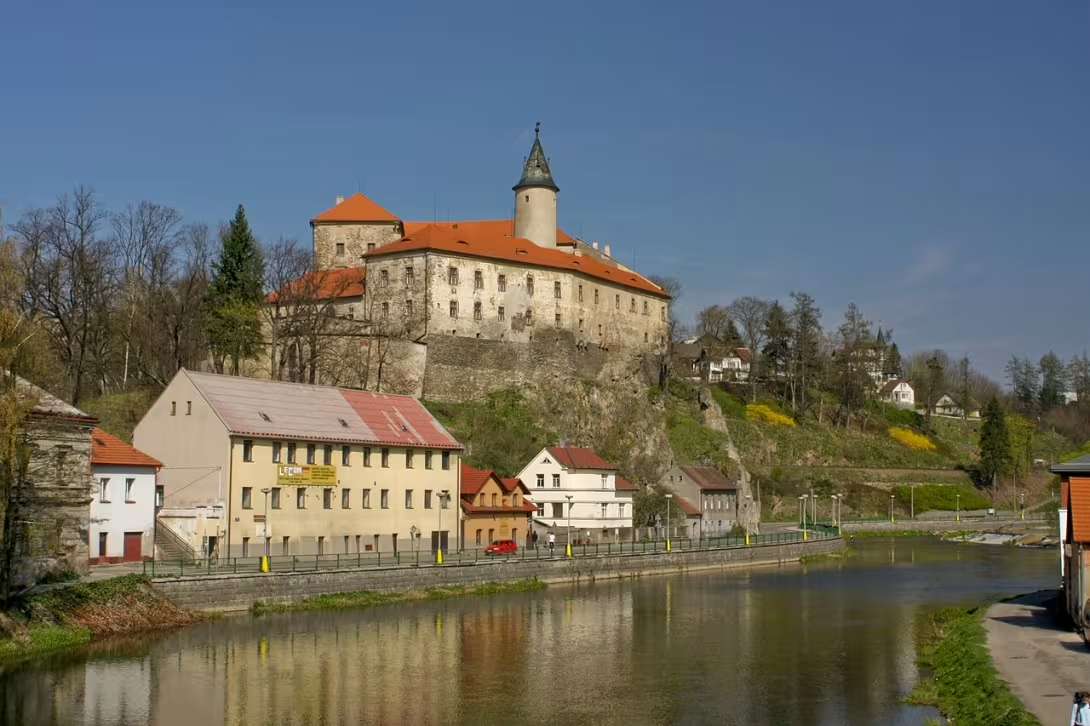
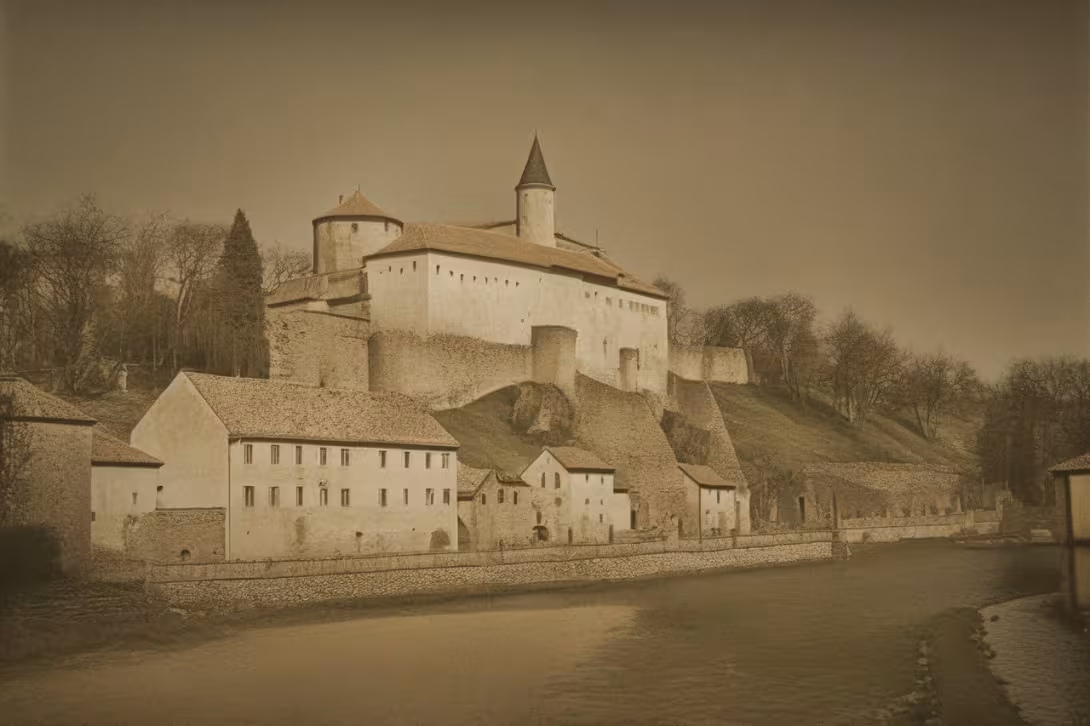
The historical appearance on the left is an AI-generated visualisation and serves as inspiration only.
Historical milestones
- First half of the 13th century
- The castle is probably founded; its founder may have been the knight Slavek of Ledeč.
- 1262
- King Ottokar II of Bohemia confirms Slavek of Ledeč's right to hold a market in Hněvkovice.
- 1367
- The first certain holders of the castle – the brothers Petr, Diviš and Václav of the Ledečský family of Říčany.
- Second half of the 15th century
- Major reconstruction: new outer fortifications with bastions; the castle gains a through passage.
- 1509
- Žofie ze Sovince, wife of Burian Ledecký, dies with two of her children when a floor in the castle collapses.
- 16th century
- Under Zdeněk Meziříčský z Lomnice the castle is converted into a Renaissance chateau.
- 1636
- After the confiscation of the Trčka z Lípy family's property, the estate is acquired by Baron Adrian z Enkenfurtu.
- 1677
- Count Michael Osvald of Thun-Hohenstein buys the estate and has the chateau chapel built.
- 1753
- Empress Maria Theresa buys Ledeč; after 1763 it passes to the Theresian Institute for Noblewomen.
- 1879
- A fire lasting several days damages the chateau; it is only partly repaired.
- 1999
- The town of Ledeč nad Sázavou buys most of the complex and restoration begins.
- 2015
- A sundial is discovered and restored during the renovation of the southern plasterwork.
Architectural development
In its first building phase Ledeč was a castle of the bergfried type. From that period survive the slender round bergfried and a three-room palace whose outer wall bows outwards in an arc on the east side. The original approach led from the west along the south side of the palace to the first, bailey-like courtyard, and through a second gate at the foot of the bergfried into the castle core.
Historical events
Ledeč Castle was most likely built in the first half of the 13th century. In the second half of the 15th century, under the Ledečský family of Říčany, it received new outer fortifications. In December 1509 Lady Žofie ze Sovince and two of her children were killed when the floor collapsed beneath them. In the 16th century the castle was converted into a Renaissance chateau. In 1618, at the start of the Bohemian Estates' Revolt, the imperial garrison fled the castle and Jan Rudolf Trčka occupied it with his own soldiers.
Owners
The Ledečský family of Říčany (recorded from 1367 until 1541)
Mikuláš Trčka z Lípy (guardian of the underage Burian, 1488–1501)
Markéta z Říčan and Zdeněk Meziříčský z Lomnice (from 1541)
Jaroslav Trčka z Lípy of Větrný Jeníkov (from 1569)
Burian Trčka z Lípy of Světlá and Veliš and his sons (from 1590)
Magdalena of Lobkowicz, née Salm, and the Popel of Lobkowicz family (from 1598)
Jan Rudolf Trčka z Lípy (after 1614, until the confiscation)
Adrian and Jan Ferdinand z Enkenfurtu (from 1636)
Points of interest
- The disaster of December 1509 was also recorded by a contemporary chronicler: "Lady Ledecká, dancing at her castle in Ledeč as one of five, was killed falling down through the floors, for the house split in two".
- The castle is home to the Jaroslav Foglar Museum. The Ledeč area is closely linked with the writer – Foglar ran his scout camps at Sluneční zátoka (Sunny Bay), and ideas for his books were born here.
- The castle's museum of historical clocks holds around 250 exhibits, from pocket watches with painted dials to chateau column clocks with music boxes.
- 111 spiral steps lead up the tower. The reward is a view of the town and the countryside around the Sázava.
- The castle is a popular film location. Productions shot here include Les Misérables, Terry Gilliam's The Brothers Grimm, Sokurov's Faust, A Royal Affair, Anděl Páně 2 and Čertí brko.
- In 1753 Empress Maria Theresa bought the Ledeč estate for 240,000 guilders. Shortly afterwards, during the Seven Years' War, the chateau served as cavalry barracks.
Guide
Show guide text
This text was created by artificial intelligence and has not been editorially reviewed. It may contain inaccuracies.
Welcome to Ledeč nad Sázavou Castle. You are standing on a limestone promontory that rises directly above the Sázava River. The castle was most likely built here in the first half of the 13th century, and it is still dominated by a slender round tower – the bergfried, the oldest part of the whole complex. Towers like this served the defenders as a last refuge.
The first certain lords of the castle were the Ledečský family of Říčany, recorded in 1367. In the second half of the 15th century they strengthened the castle with new outer fortifications, with gates on the west and north-east and a pair of semicircular bastions. As you walk through the courtyards, notice how the individual building phases are layered on top of one another.
The castle is also linked to a tragic story. In December 1509 the floor gave way here beneath Lady Žofie ze Sovince, and she died together with two of her children. A contemporary chronicler recorded that Lady Ledecká fell through the floors while dancing, because the house had "split in two".
In the 16th century, under Zdeněk Meziříčský z Lomnice, the medieval castle became a Renaissance chateau. The sgraffito ceiling with figural and plant motifs also dates from the 16th century. Later owners included the Trčka z Lípy family, the Lobkowicz, Thun-Hohenstein and Liechtenstein families, and even Empress Maria Theresa. Count Thun-Hohenstein had the chateau chapel built here.
In 1879 the chateau was hit by a fire that spread here from the town and burned for several days. Repairs were only partial, and real restoration began only after the town bought the complex in 1999. During the repair of the southern plasterwork in 2015 a sundial appeared beneath the old layers – look out for it on the south façade.
If you have the energy, climb the 111 steps up the tower. From there you can see the whole town and the Sázava valley. Markéta and Zdeněk Meziříčský, by the way, are buried in the church in Ledeč – and it was Zdeněk who in 1562 obtained from Emperor Ferdinand I the elevation of Ledeč to the status of a town. Thank you for your visit.
Tips for visitors
A visit to the castle combines well with a walk around Ledeč – below the castle stands the late Gothic Church of St Peter and St Paul, and a short distance away the Baroque synagogue from 1739. If you want to enjoy the view, don't skip the tower. Opening hours vary through the year and outside the main season the castle is often open only at weekends, so check them on the castle's website before you set off.
Frequently asked questions
Can the castle be visited?
Yes. The castle is open to the public during visiting hours. The operator offers a guided castle tour with a museum of historical clocks, the Medvídkové království (Teddy Bear Kingdom) tour for children and, without a guide, the Jaroslav Foglar Museum and the climb up the tower.
What are the opening hours and admission prices?
Opening hours vary through the year; outside the main season the castle is often open only at weekends. Current information and prices are published by the operator on the official website: https://www.hrad-ledec.cz/
Where is the castle located?
On a rock promontory above the Sázava River in the town of Ledeč nad Sázavou (Hradní 701), Havlíčkův Brod district, Vysočina Region. The exact location is shown on the map on this page.
Can I bring my dog to the castle?
According to the operator, animals are not allowed in the castle interiors or in the tower.
Why is the castle protected?
It is listed in the Central List of Cultural Monuments of the Czech Republic as a cultural monument (registration number 19808/6-255).
For kids
Imagine a rocky promontory above the Sázava River. More than seven hundred years ago someone built a castle on it – and it is still standing today. The oldest part is the tall round tower, called a bergfried. It was the last line of rescue: if the enemy captured the whole castle, the defenders could hide inside it.
Today 111 spiral steps lead up the tower. Try counting them on your way up! From the top you will see the whole town and the river winding between the hills.
Businesses nearby
Do you run a restaurant, accommodation, shop, museum, rental, wellness or other visitor service near this monument? Show yourself directly to the people heading to it — this is how they will see you in the app and on the web:
Events nearby
Zdroj akcí: otevřená data měst a obcí ČR (Národní katalog otevřených dat) a kalendář akcí Národního památkového ústavu.
Nearby
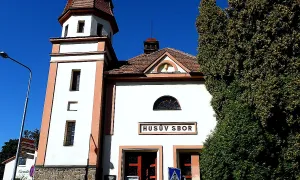
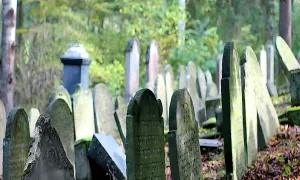
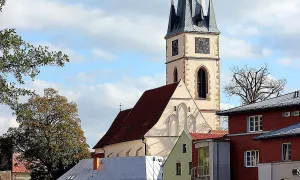
The castle stands above the historic centre of Ledeč nad Sázavou. Directly below it is the Church of St Peter and St Paul, a little further on the Baroque synagogue from 1739 and the Hussite church, and less than a kilometre from the castle the Jewish cemetery. Places worth a stop in the surroundings include Vilémovice Chateau, the ruins of Chřenovice Castle above the Sázava, which already belonged to the Ledeč estate as a deserted castle in the 16th century, and the ruins of Melechov fort. The Ledeč area is also linked with Jaroslav Foglar, who ran his scout camps here at Sluneční zátoka (Sunny Bay).
Accommodation nearby
Trips and activities nearby
Guided tours, tickets and activities nearby from GetYourGuide
Affiliate link: if you buy from the partner, we may receive a commission. The price for you does not change.
Search tours and activities →Themed route
Route: The castle and historic Ledeč nad Sázavou (on foot, about 2 km)
1. Ledeč nad Sázavou Castle – Gothic bergfried, Renaissance palaces, museums and the view from the tower.
2. Church of St Peter and St Paul – a late Gothic church right below the castle, with a 16th-century tower.
3. Synagogue in Ledeč nad Sázavou – a Baroque synagogue from 1739, today a cultural venue.
4. Hussite church – a congregation of the Czechoslovak Hussite Church.
5. Jewish cemetery – less than a kilometre from the castle, a reminder of the local Jewish community.
Seasonal recommendations
Spring: The Sázava valley turns green, and the castle tower offers a good view of the landscape before the foliage gets dense.
Summer: The main season, when the castle is open most often. A visit can be combined with a trip to the river – the Ledeč area is linked with Jaroslav Foglar, who ran his scout camps here at Sluneční zátoka (Sunny Bay).
Autumn: The coloured slopes above the Sázava are among the most beautiful sights from the tower. In autumn the castle also holds evening events – check the programme on its website.
Winter: Check the winter opening hours on the castle's website in advance. Even so, the view of the castle above the river is worth a stop on a walk through the town.
Visualizations and artistic views


The visualisations are generated by artificial intelligence and serve as inspiration.
Photos from the area
Real photos taken near the monument


Zdroj a licence jsou uvedeny u každého snímku.
Tips from visitors
No tips yet. Be the first!
Log in and add your tip.
Sources and literature
Photos: This image is a work by Mercy. When reusing, please credit me as: Mercy from Wikimedia Commons. I would appreciate being / CC BY-SA 3.0 — Wikimedia Commons. The author and licence also appear when you hover over the image.
Faktickým podkladem tohoto textu byl článek na Wikipedii, jehož autory jsou přispěvatelé Wikipedie. Článek je dostupný pod licencí CC BY-SA 4.0.
Location on the map

Fotografie návštěvníků
Zatím žádné fotografie. Buďte první, kdo přidá fotografii z návštěvy!
Log in a přidejte svou fotografii nebo hodnoťte.
Za ověřenou návštěvu v aplikaci získáte víc bodů — poznáme podle GPS, že jste na místě.
Reviews and comments