






Husův sbor v Čáslavi Church
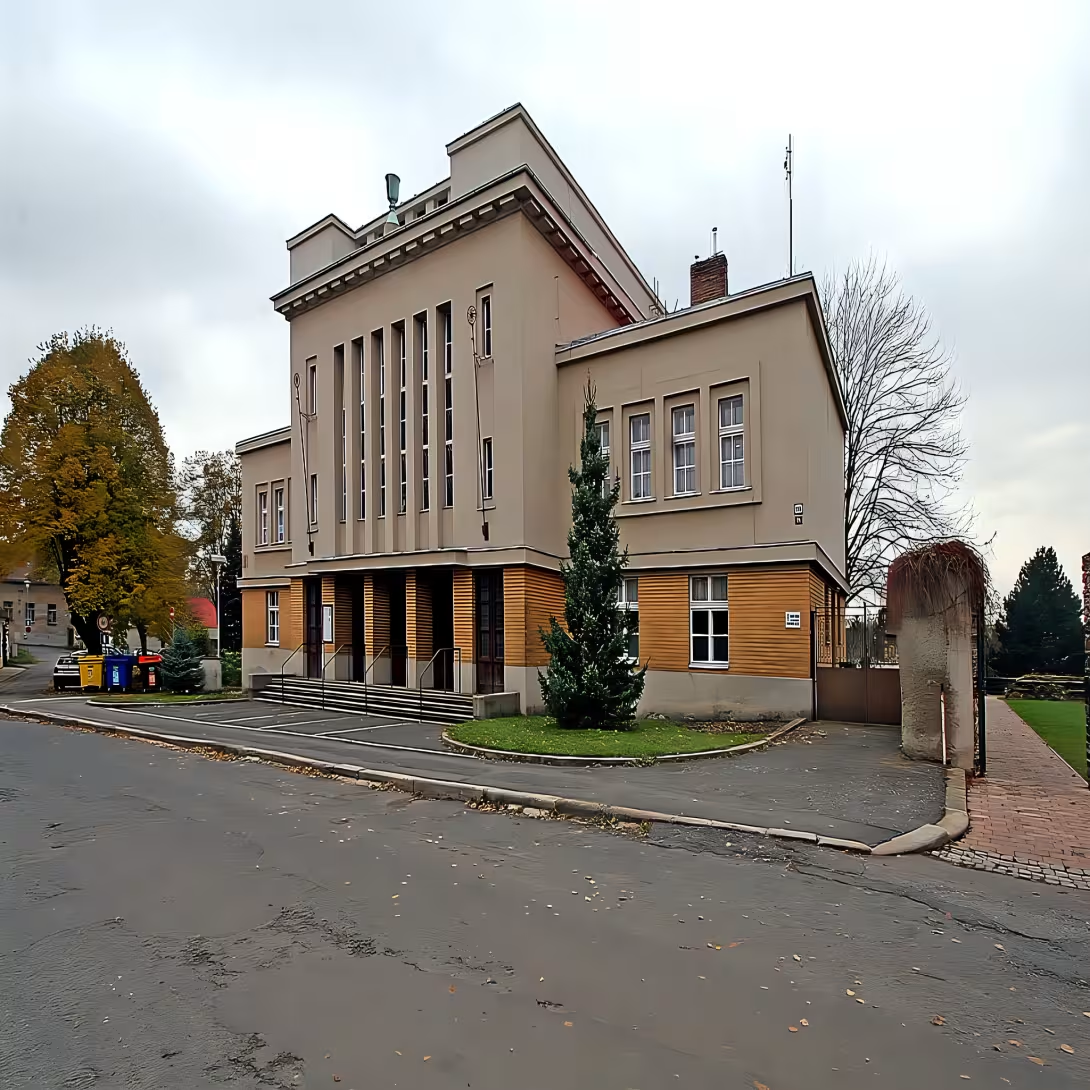
Husův sbor in Čáslav is a notable church built in 1925. It reflects the architectural style of classicizing modernism with elements of rationalism and art deco. Located at ulice Jana Karafiáta čp. 119/24 in Čáslav-Staré Město, this building serves as an important religious site for the Czechoslovak Hussite Church. It stands out not only for its architectural design but also for its historical significance as a symbol of spiritual autonomy following World War I.
The origins of Husův sbor are deeply rooted in the early 20th-century movement towards national identity and cultural independence in Czechoslovakia. The first service by the newly formed church was held on June 20, 1920, led by priest Bohumil Snížka. This event marked a pivotal moment for the local community as they sought to establish their own place of worship after being denied access to the unused Church of St. Alžběta. The cornerstone of Husův sbor was laid on March 15, 1925, by ThDr. Karol Farský, embedding a commemorative plaque within its foundation.
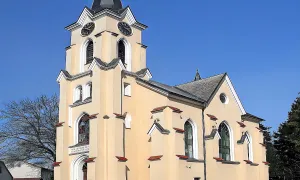
Architecturally, Husův sbor is a testament to Bohumil Kozák's vision and skill. Designed in the style of classicizing modernism, the church features a symmetrical layout with a prominent central section for worship and side upper floors. The building incorporates elements of rationalism and art deco, evident in its flat roof—a novel feature at the time—and its facade dominated by six tall rectangular windows. Inside, the church boasts art deco stained glass windows and a mural depicting The Last Supper, painted by František Skála in 1954.
The construction and administration of Husův sbor involved several key figures. Bohumil Kozák, an architect who grew up in Čáslav, was instrumental in its design. His father, a local evangelical pastor, influenced his architectural style. The church's inauguration on May 23, 1926, coincided with Pentecost Sunday and was marked by a grand celebration that included a procession, theatrical performances, and readings of a congratulatory letter from President T. G. Masaryk.
Today, Husův sbor remains an important cultural and historical landmark in Čáslav. It is protected as a heritage site since 1958 and continues to serve its religious community while attracting visitors interested in early 20th-century architecture and Czechoslovak history. The church's unique design and rich history make it a worthwhile destination for those exploring the region.
Visitors to Husův sbor can appreciate not only its architectural beauty but also its role as a symbol of cultural resilience and identity. Its preservation allows future generations to connect with a significant period in Czechoslovakia's past, making it an essential stop for anyone interested in history and architecture.
Then and now
Drag the slider to compare how the landmark may have looked when it was built with the view today.
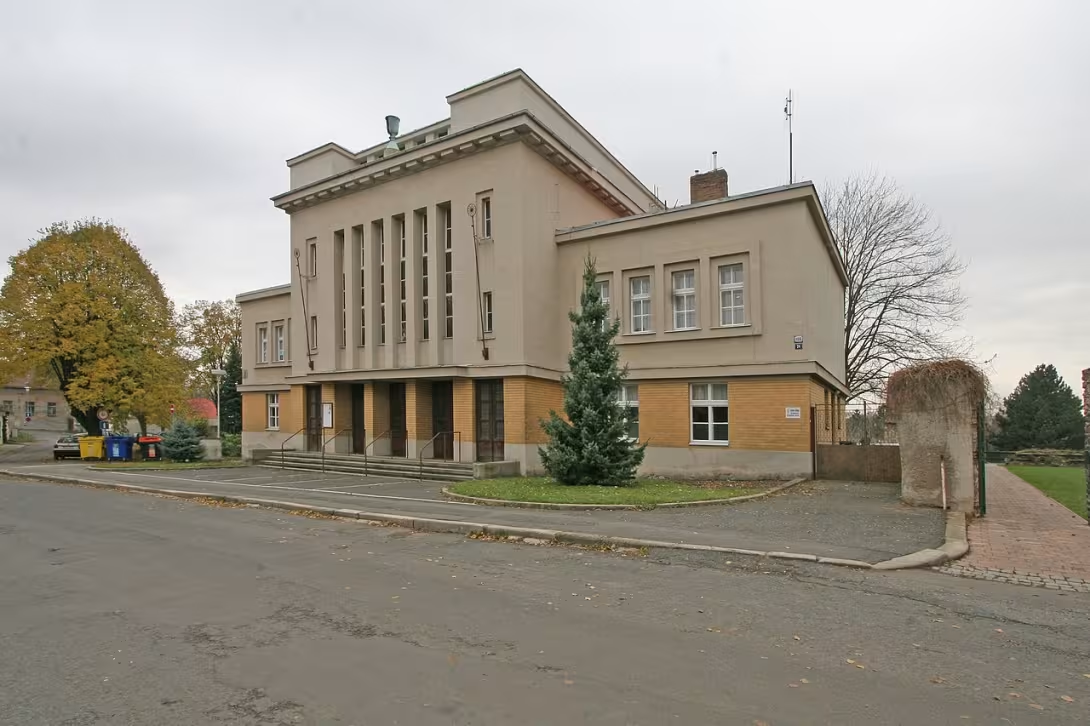
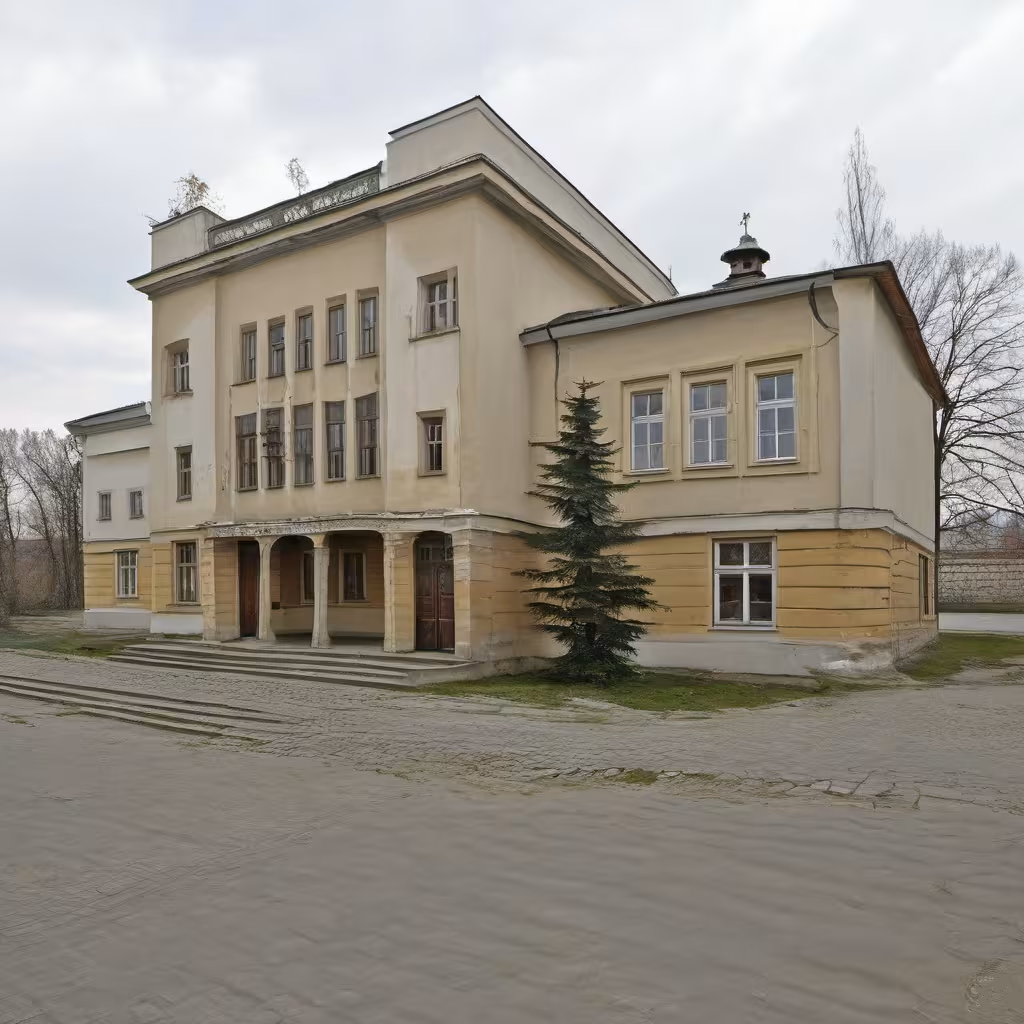
The historical appearance on the left is an AI-generated visualisation and serves as inspiration only.
Historical milestones
- 1925
- Cornerstone of Husův sbor laid with a commemorative plaque.
- 1926
- Inauguration of the new building on Pentecost Sunday.
Architectural development
Husův sbor was designed by Bohumil Kozák in the style of classicizing modernism. The church features a symmetrical layout with a raised central worship space and side upper floors. It has a flat roof, which was innovative for Čáslav at the time. The facade is dominated by six tall rectangular windows.
Historical events
The first service by the newly formed church was held on June 20, 1920, led by priest Bohumil Snížka.
The cornerstone of Husův sbor was laid on March 15, 1925, with a commemorative plaque included.
The new building was inaugurated on May 23, 1926, coinciding with Pentecost Sunday.
Points of interest
- The cornerstone of Husův sbor was laid by ThDr. Karol Farský, who embedded a commemorative plaque within its foundation, symbolizing the church's dedication to spiritual independence and national identity.
- Architect Bohumil Kozák, responsible for designing Husův sbor, drew significant influence from his father, a local evangelical pastor, which is reflected in the building’s unique blend of classicizing modernism with elements of rationalism and art deco.
- The church's inauguration on May 23, 1926, was marked by a grand celebration that included theatrical performances and a congratulatory letter read aloud from President T. G. Masaryk, highlighting its importance as a symbol of cultural resilience in the newly formed Czechoslovakia.
- Inside Husův sbor, visitors can admire art deco stained glass windows and a mural depicting The Last Supper, painted by František Skála in 1954, showcasing the artistic influences that permeated the church's design during its construction period.
- Despite being denied access to the unused Church of St. Alžběta, the local community successfully established Husův sbor as their own place of worship, marking a pivotal moment for religious and cultural autonomy in Čáslav following World War I.
Guide
This guide is narrated by a synthetic voice generated by artificial intelligence.
Show guide text
This text was created by artificial intelligence and has not been editorially reviewed. It may contain inaccuracies.
Welcome to Husův sbor in Čáslav, a remarkable testament to the spiritual and architectural heritage of this region. As you stand here at Staré Město, take a moment to absorb the modern lines and serene presence of this church, which has become a symbol of the Czechoslovak Hussite Church's dedication to spiritual autonomy.
Constructed in 1925, Husův sbor was born out of a desire for religious independence and national identity. Its inception is deeply rooted in the cultural renaissance of post-World War I Czechoslovakia. Architect Bohumil Kozák masterfully designed this church, blending classicizing modernism with elements of rationalism and art deco—a style that resonates with both tradition and innovation.
As you explore the structure, notice its symmetrical design, which harmoniously balances form and function. The central section is particularly striking; it serves as a focal point for worship while the side upper floors add depth and dimension to the building's profile. This symmetry reflects not just architectural precision but also the balanced approach of the Czechoslovak Hussite Church.
Key historical figures are intertwined with this site, adding layers to its story. ThDr. Karol Farský laid the cornerstone in 1925, embedding a commemorative plaque that symbolizes the church's dedication to spiritual independence and national identity—a poignant reminder of the values it upholds. The inauguration on Pentecost Sunday of 1926 marked a significant moment for the community, as this new building became a beacon of hope and unity.
A fascinating detail about Husův sbor is its cornerstone ceremony led by ThDr. Karol Farský. This act was not just ceremonial but deeply symbolic, embedding within the church's foundation the aspirations and spirit of a nation striving for spiritual autonomy.
As you continue your visit, I invite you to delve deeper into the history and stories that this place holds. Each corner and crevice has witnessed moments of faith and community, making Husův sbor more than just an architectural marvel—it is a living testament to resilience and identity.
Thank you for joining me on this journey through time and spirit at Husův sbor in Čáslav. I hope your visit here leaves you inspired and curious to explore further the rich tapestry of history that surrounds us. Safe travels as you continue discovering more wonders.
Tips for visitors
The best time to visit Husův sbor v Čáslavi is during the late spring or early autumn months, when the weather is pleasant for walking around the area and exploring its surroundings. These seasons offer mild temperatures and natural beauty that enhances your experience of this historical site. Additionally, visiting outside peak tourist seasons can provide a more tranquil atmosphere, allowing you to appreciate the church's architecture without large crowds.
It's advisable to check current transportation schedules online or through local transit apps to plan your journey efficiently.
When visiting Husův sbor v Čáslavi, it’s a good idea to bring comfortable walking shoes, especially if you plan on exploring the surrounding area of Staré Město in Čáslav. Additionally, carrying a camera or smartphone for photography is recommended, as well as an umbrella or raincoat in case of unexpected weather changes.
For capturing the best photographs at Husův sbor v Čáslavi, consider visiting during the golden hours—shortly after sunrise or before sunset—when natural light enhances the architectural details and creates a warm atmosphere. The church's modern design by Bohumil Kozák offers unique angles for photography, particularly from the front where its distinctive style is most visible.
Nearby attractions within 30 minutes include historical sites in Staré Město, such as the remnants of medieval walls and other cultural landmarks that offer a glimpse into the area's rich history. These sites provide additional context to the significance of Husův sbor v Čáslavi and are worth exploring for those interested in Czech heritage.
For families with children visiting Husův sbor v Čáslavi, consider planning your visit around local events or workshops that may be held at the church, as these can offer engaging activities for young visitors. The surrounding area of Staré Město also provides opportunities for family-friendly walks and exploration, making it a suitable outing for all ages.
Frequently asked questions
Can the monument be visited?
Religious buildings are usually open mainly during services; at other times a visit is normally arranged with the parish or the operator. We have not verified specific times.
Where is the monument?
Location: Jana Karafiáta 199/24, Čáslav-Staré Město, Čáslav, Středočeský kraj. The map on this page shows the exact spot.
Why is the monument protected?
It is listed in the Central List of Cultural Monuments of the Czech Republic as a cultural monument (register no. 47292/2-3330).
Businesses nearby
Do you run a restaurant, accommodation, shop, museum, rental, wellness or other visitor service near this monument? Show yourself directly to the people heading to it — this is how they will see you in the app and on the web:
Events nearby
Zdroj akcí: otevřená data měst a obcí ČR (Národní katalog otevřených dat) a kalendář akcí Národního památkového ústavu.
Accommodation nearby
Trips and activities nearby
Guided tours, tickets and activities nearby from GetYourGuide
Affiliate link: if you buy from the partner, we may receive a commission. The price for you does not change.
Search tours and activities →Themed route
Tematická výletní trasa: Husův sbor v Čáslavi
1. Husův sbor (Kostel svatého Jiří)
Typ: Historický kostel
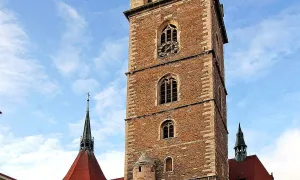
Proč stojí za návštěvu: Tento gotický kostel je důležitou kulturní památkou, známý jako Husův sbor. Je to místo, kde se konaly setkání a kazatelské akce Janáčka Huse v 15. století, což přispělo k rozvoji české reformace.
2. Kostel svatého Mikuláše
Typ: Historický kostel
Proč stojí za návštěvu: Nacházející se ve Starém Městě, tento kostel je příkladem gotické architektury. Jeho historie a umělecké prvky nabízejí pohled do minulosti Čáslavi.
3. Kostel svatého Jakuba
Typ: Historický kostel
Proč stojí za návštěvu: Tento kostel, nacházející se v blízkosti Husova sboru, je dalším představitelem gotické architektury. Jeho interiér a historie jsou fascinující pro milovníky dějin.
4. Náměstí Republiky
Typ: Historické náměstí
Proč stojí za návštěvu: Centrální veřejný prostor v Čáslavi, kde se nachází mnoho historických budov a památek. Náměstí je ideálním místem pro pochopení urbanistické struktury Starého Města.
5. Památník J. A. Komenskému
Typ: Historický památník
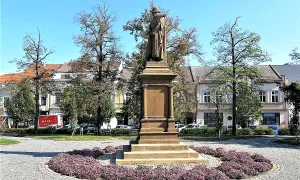
Proč stojí za návštěvu: Tento památník je věnován Janu Amosovi Komenskému, který se narodil v Čáslavi. Je to významná lokalita pro pochopení jeho přínosů k české a světové pedagogice.
Tato trasa nabízí pohled na historickou a kulturní bohatost Čáslavě, zaměřenou na klíčové památky v jejím středu.
Seasonal recommendations
Spring: Visiting Husův sbor v Čáslavi during spring offers a unique experience as the surrounding landscape bursts into life with blooming flowers and lush greenery, creating a picturesque backdrop for the historic church. The gentle warmth of the season is perfect for exploring the area on foot or by bike, allowing visitors to fully appreciate the natural beauty that envelops this historical site. As the days grow longer, you can enjoy extended hours at the church, making it an ideal time for leisurely exploration without the rush. However, be prepared for occasional showers and bring a light waterproof jacket just in case. The spring atmosphere is serene and inviting, with fewer crowds compared to summer, providing a tranquil setting for reflection and appreciation.
Summer: Summer visits to Husův sbor v Čáslavi are characterized by vibrant energy as the church is bathed in warm sunlight, enhancing its architectural details and creating an ideal ambiance for photography. The season attracts more visitors due to favorable weather conditions and longer daylight hours, making it a popular time for tourists exploring Středočeský kraj. To avoid the midday heat and larger crowds, consider arriving early in the morning or later in the afternoon when the atmosphere is cooler and more relaxed. Comfortable walking shoes and light clothing are recommended to navigate the site comfortably, while sunglasses and sunscreen will help protect against the sun's rays.
Autumn: Autumn brings a magical transformation to Husův sbor v Čáslavi with its rich tapestry of warm colors as leaves change from green to shades of red, orange, and yellow. The crisp air and gentle breezes create an enchanting atmosphere that enhances the historical charm of the church. This season offers a quieter experience compared to summer, allowing for more intimate exploration without the hustle and bustle. Visitors should dress in layers to accommodate fluctuating temperatures throughout the day and consider bringing a scarf or light jacket as evenings can be cooler. The golden hour lighting during late afternoon visits provides stunning photo opportunities, capturing the church's beauty against an autumnal backdrop.
Winter: Winter at Husův sbor v Čáslavi offers a serene and contemplative experience as snow blankets the surrounding landscape, transforming the area into a picturesque winter wonderland. The church itself takes on a unique character with its stone façade softened by frost and icicles, creating an enchanting atmosphere that draws visitors despite the colder weather. Winter's quiet charm provides a peaceful setting away from summer crowds, making it an ideal time for those seeking tranquility and reflection amidst historical beauty.
Visualizations and artistic views


The visualisations are generated by artificial intelligence and serve as inspiration.
Photos from the area
Real photos taken near the monument


Zdroj a licence jsou uvedeny u každého snímku.
Tips from visitors
No tips yet. Be the first!
Log in and add your tip.
Sources and literature
Photos: Petr1888 / CC BY-SA 3.0, rozlišení zvýšeno umělou inteligencí — Wikimedia Commons. The author and licence also appear when you hover over the image.
Location on the map
Příběhy a pověsti
Legendy, pověsti a příběhy spjaté s touto památkou
Fotografie návštěvníků
Zatím žádné fotografie. Buďte první, kdo přidá fotografii z návštěvy!
Log in a přidejte svou fotografii nebo hodnoťte.
Za ověřenou návštěvu v aplikaci získáte víc bodů — poznáme podle GPS, že jste na místě.
Reviews and comments