



Pomník Jana Žižky v Čáslavi Statue
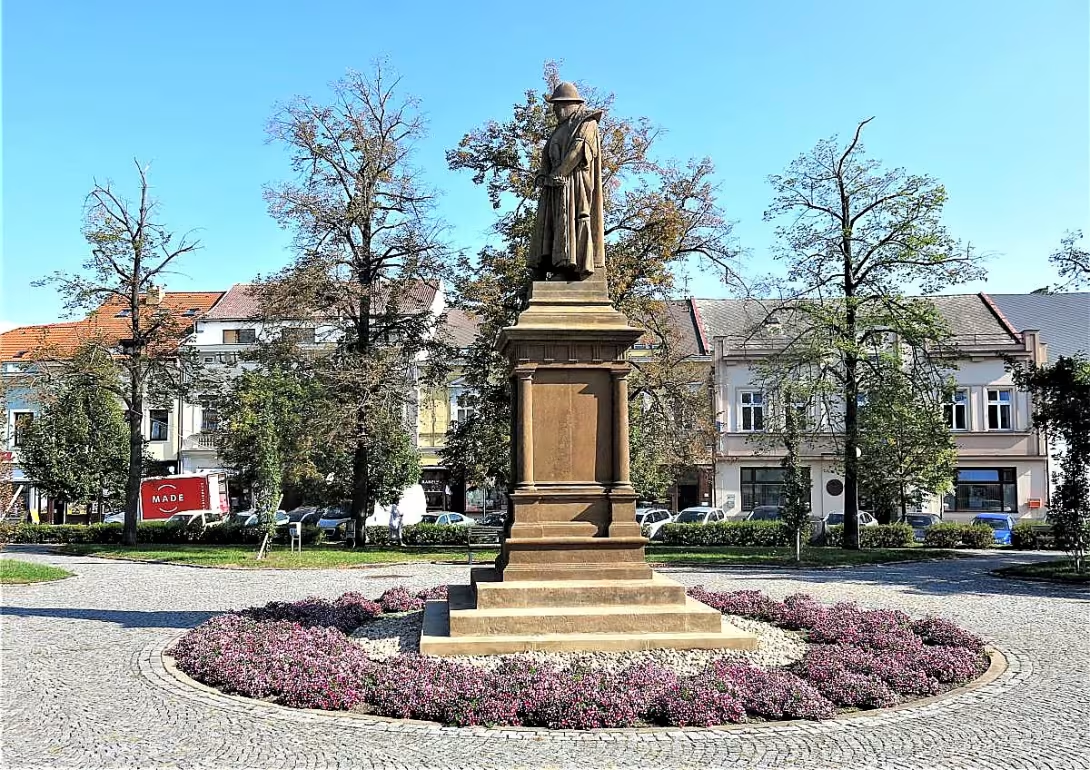
The monument of Jan Žižka, located on the square of Jan Žižka from Trocnova in Káslav, is an important historical monument celebrating the Hussite warlord. It was created in 1880 thanks to sculptor Josef Václav Mysbek. This monument, consisting of a sandstone statue on a prism pedestal designed by architect Antonín Wiehl in a neo-Renaissance style, is listed in the central list of cultural monuments of the Czech Republic and is a key part of Czech history and culture.
The creation of the monument was inspired by a national expansion in the second half of the 19th century, resulting in an increased number of similar monuments in Central European countries. In 1878, there was a competition on his proposal, won by Mysbek. His concept was realized in 1880 by sculptors František Hergessel and Antonín Procházek. The memorial was festively revealed on 29 August 1880 and still occupies a central position on the square in Káslav.
The architecture of the monument reflects historism, style dominant at that time. The sandstone statue of the warlord Zížka standing on the prism pedestal expresses his war courage and leadership. The base was designed by Antonín Wiehl, known for its neo-Renaissance approach. Miroslav Tyrš requested that Žizka be displayed in fur and shell, which added historical authenticity.
Pomník Jana Žižky v Čáslavi is not only a monument to artistic significance but also a testament to historical events and personalities. Jan Žižka, a key figure in Czech history, had a major impact on the course of the Hussite wars. The monument reminds not only of his personality, but also of the time in which he lived and worked.
Today the monument is easily accessible to visitors and is worth visiting. Located at the central location in Káslav, it is a visible monument for the local population as well as tourists from around the world.
The monument represents not only artistic and historical value, but also a symbol of national identity. Its existence is an important reminder of the personalities and events that shaped Czech history. Visiting this monument allows a deeper understanding of the past and appreciation of the wealth of the cultural heritage of Bohemia.
Then and now
Drag the slider to compare how the landmark may have looked when it was built with the view today.
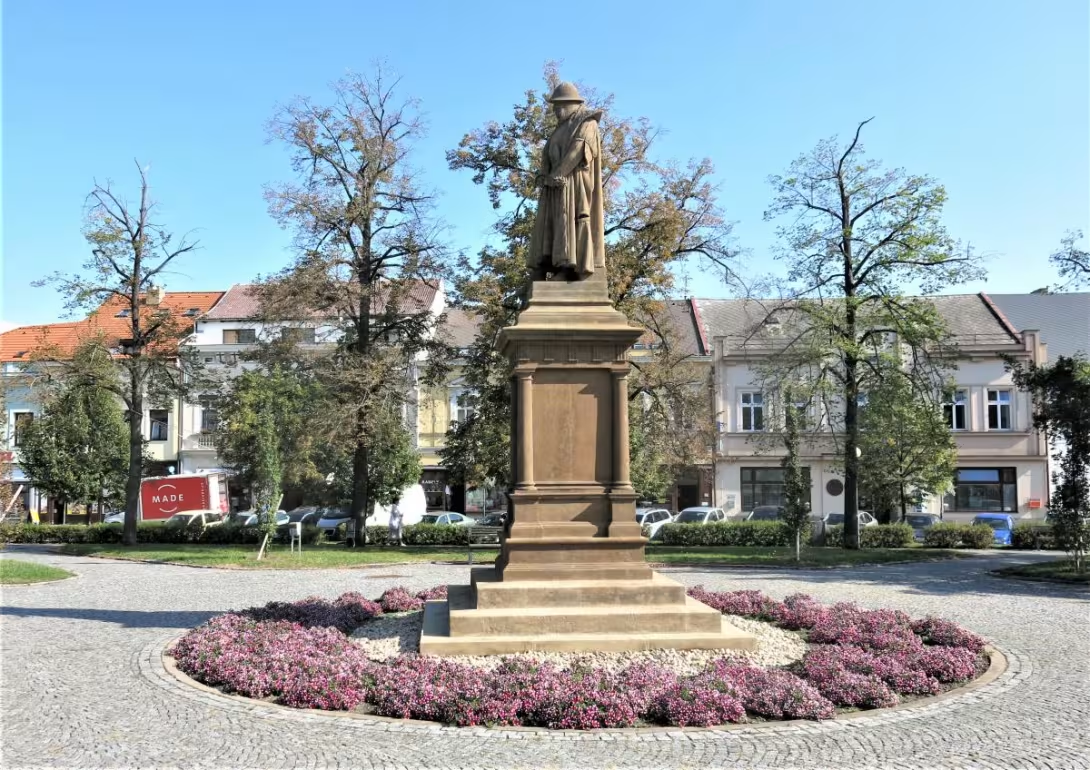
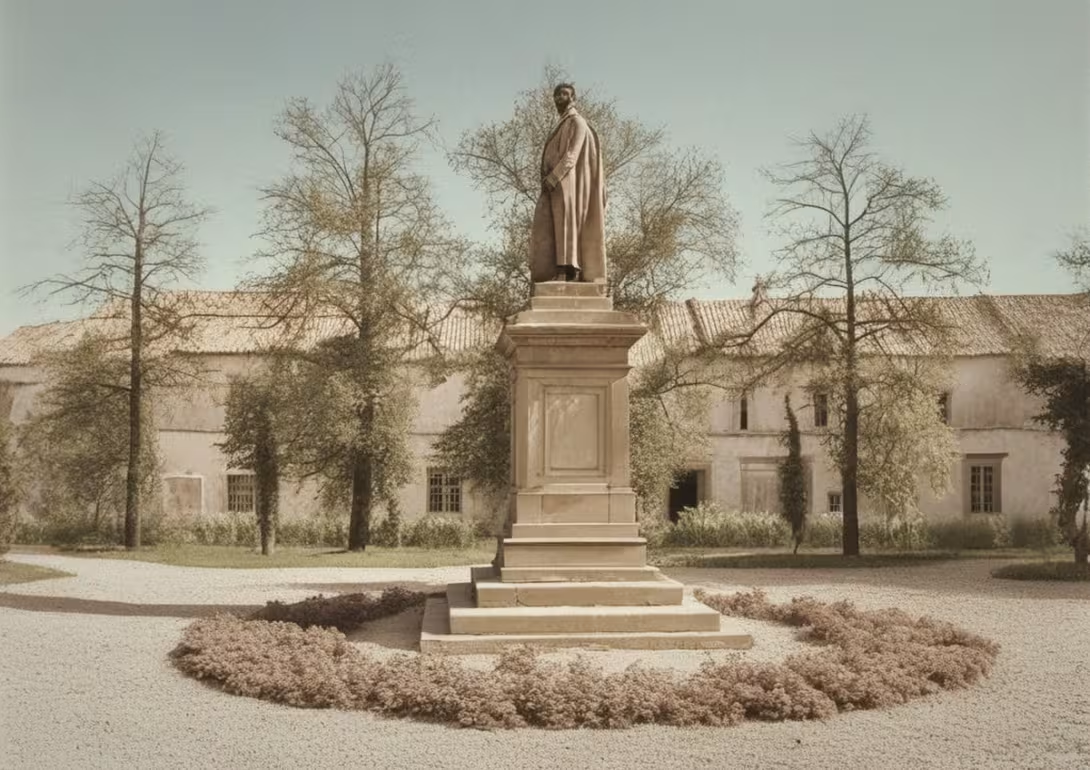
The historical appearance on the left is an AI-generated visualisation and serves as inspiration only.
Historical milestones
- 1878
- The competition on the design of the monument
- 1879
- Design of a pedestal by Antonín Wiehl
- 1880
- The ceremonial revelation of the monument
Architectural development
The statue is removed from the sandstone and placed on the prism pedestal. The base was designed by architect Antonín Wiehl in a neo-Renaissance style. The statue was carved by František Hergessel and Antonín Procházka.
Historical events
There was a competition in 1878 to design a memorial. In 1880, the monument was festively revealed.
Points of interest
- The memorial was built in 1880 thanks to sculptor Josef Václav Mysbek. - It consists of a sandstone statue on a pedestal in a neo-Renaissance style designed by Antonín Wiehl. - The design of the monument was won by Mysbek in the 1878 competition. The work was festively revealed on August 29, 1880. - Miroslav Tyrš requested that Zížka be displayed in fur and shell.
Guide
Show guide text
This text was created by artificial intelligence and has not been editorially reviewed. It may contain inaccuracies.
Welcome, dear visitors, and allow me to welcome you to one of the most important historical statues of our city. You are standing in front of the impressive monument of Jan Zížka, which dominates the green park in the middle of the square of Jan Zížka from Trocnova in Čáslav. As soon as you enter, you will be impressed by the majestic character of the Hussite warlord, carved out of sandstone and firmly resting on a prism pedestal. The air carries a light whisper of the past around you, and when you put on your headphones, prepare to travel through time to reveal the story of this extraordinary work.
Let us now move on to the end of the nineteenth century, when the competition for the design of the monument in honor of Jan Žižka was kindled in Czech countries. In 1878, a call was made for architects and sculptors to seek to create a monument that would resemble a hero who became famous for his winning moves during the Hussite wars. A year later, in 1879, a design of a pedestal was selected from the renowned builder Antonín Wiehl, who decided to take a prism shape that underlines the strength and stability of the statue. In the very heart of the competition was the sculptor Josef Václav Myslbek, who gained his talent and sensitive approach to the historical figure first place and thus the right to implement his design.
Now pay attention to the architecture of the monument itself. The statue of Jan Žižka is carved from a fine sandstone whose light grey colour captures light and throws fine shadows at it. The character stands in a dynamic pose, ready for the next step, and holds in his hands a typical Hussite character - underlining his role as a military leader. The branched base, designed by Antonín Wiehl, is decorated with geometrical motifs that refer to a neo-Renaissance style that was popular at the time for its elegance and symmetry. Notice how the pedestal rises to the statue as if it wanted to support its nobility while at the same time creating a solid foundation on which the entire composition can reliably lean.
On closer examination, you will notice that the base also bears small ornaments that resemble leaf motifs and stylised flowers. These details, designed by František Hergessel's handwriting, provide softness to the whole building while contrasting with the robust silhouette of the sculpture itself. Each element has been carefully thought out to underline the historical significance and aesthetic value of the monument. Also note how the sandstone sparkles slightly under the sun's light, which gives the impression that the statue will almost light up and thus resemble the hot spirit of the Hussite era.
Key stories and personalities associated with this place are an inseparable part of its importance. Jan Žižka, whose name bears the square itself, was one of the greatest leaders of medieval Europe. His tactical art and unwavering belief in Hussite reform have given him a place in history as a legendary figure. Another important figure involved in the creation of the memorial was Miroslav Tyrš, founder of the Sokolsky movement, who actively advocated that the monument should be built in a public space and resemble a national hero. Tyrš demanded that the monument be built so that it was accessible to all citizens and that it serve as an inspiration for future generations.
One of the most interesting mysteries surrounding this monument is why Miroslav Tyrš wanted the monument to be located in this particular place. According to historical records, he wanted the statue to become the center of public life, a meeting point and a reminder of the common heritage. His vision was that people would feel connected to the past in everyday walks through the park and realize that courage and determination could last forever. This intention still resonates today in the atmosphere that exists here, and visitors often feel that they are in a space where the past and the present intersect.
Now that you've looked at the details and devoted yourself to history, let's look at the very moment the monument was festively revealed. On 29 August 1880, representatives of the city, artists and ordinary citizens gathered to celebrate the completion of this important work together. The ceremony was accompanied by musical performances, speeches and thanks to all who participated in its creation. This event has become a milestone in the history of Čáslav and is still remembered as a symbol of pride and unity.
Finally, I invite you not only to look at the statue itself, but to go further down the surrounding streets of the old town and discover the other historical gems that Čáslav has to offer. Walk around the square, listen to the whispers of stone buildings and get carried away by the atmosphere that exists here. Jan Žižka's memorial is just one of many stories waiting to be discovered. Thank you for joining this sound walk, and I wish you a pleasant further discovery of our historic heritage. Let's say goodbye with respect to the past and joy in our hearts that we can be part of this living story.
Tips for visitors
The best time to visit Jan Žížka's memorial in Čáslav is during spring or autumn. In these months the weather is usually pleasant and the place is not as visiting as in the summer. In addition, sunlight illuminates the statue in a special way, which can be ideal for photography.
What to take with you: We recommend you bring basic items such as umbrella, protective clothing and water. If you have an intention to photograph a monument, it is good to have a camera or smart phone with sufficient memory capacity.
Photos: The best places for photo are different angles on the square. The morning and evening offer ideal lighting conditions that highlight the monument in a touching way. The panoramic views of the statue from the side of the streets around the square are also interesting.
What to visit in the area: Near is the historic square of Jan Žižka of Trocnova, which is suitable for a short walk. You can also visit other sights in Káslav-Old town such as ancient houses and churches.
Frequently asked questions
Can the monument be visited?
This is a structure in a public space that can usually be seen from outside free of charge. We have not verified that this particular one is freely accessible.
Where is the monument?
Location: Čáslav-Staré Město, Středočeský kraj. The map on this page shows the exact spot.
Why is the monument protected?
It is listed in the Central List of Cultural Monuments of the Czech Republic as a cultural monument (register no. 1000143386).
Businesses nearby
Do you run a restaurant, accommodation, shop, museum, rental, wellness or other visitor service near this monument? Show yourself directly to the people heading to it — this is how they will see you in the app and on the web:
Events nearby
Zdroj akcí: otevřená data měst a obcí ČR (Národní katalog otevřených dat) a kalendář akcí Národního památkového ústavu.
Nearby
Náměstí Jana Žižky z Trocnova v Čáslavi.
Accommodation nearby
Trips and activities nearby
Guided tours, tickets and activities nearby from GetYourGuide
Affiliate link: if you buy from the partner, we may receive a commission. The price for you does not change.
Search tours and activities →Themed route
1. Jan Žižka Square of Trocnova in Čáslav Type: square Why to visit: Serves as an entry point and offers space for the city's atmosphere.
Pomník Jana Žižky v Čáslavi Type: monument Why to visit: The main destination of the trip, which pays tribute to the important warlord.
3. Memorial Area Type: immediate surroundings Why to visit: Allows you to observe close details of the statue and its base.
Seasonal recommendations
Spring brings fresh greenery and awakening nature to Čáslav, which gives new life to the monument. Soft spring light is ideal for observing details of the statue. I recommend visiting the place in the morning when the air is the cleanest. Put on a light jacket because the wounds can still be cold.
In the summer months the surrounding area is dominated by rich green and sharp sun, which creates significant shadows on the surface of the monument. The atmosphere is full of energy, but there are more visitors. It is best to come very early in the morning to avoid the greatest heat and crowds. Don't forget light clothes and plenty of water.
Autumn paints the surrounding trees into gold and red tones, creating a melancholy and valiant background for the image of the Hussite warlord. The frequent fog gives the place mystery. It is convenient to visit a memory in the afternoon when the sun shines lower. I recommend layered clothes to protect you from changing weather.
Zimą makes the monument strictly and majestically, especially if the landscape is covered by white snow. The silence and the freezing air underscore the seriousness of this place. Due to the short day it is best to plan a visit around noon. Don't forget the warm salary, the gloves and the hat, so the cold doesn't stop you during the tour.
Visualizations and artistic views


The visualisations are generated by artificial intelligence and serve as inspiration.
Photos from the area
Real photos taken near the monument


Zdroj a licence jsou uvedeny u každého snímku.
Tips from visitors
No tips yet. Be the first!
Log in and add your tip.
Sources and literature
Photos: Barocco / CC0 — Wikimedia Commons. The author and licence also appear when you hover over the image.
Faktickým podkladem tohoto textu byl článek na Wikipedii, jehož autory jsou přispěvatelé Wikipedie. Článek je dostupný pod licencí CC BY-SA 4.0.
Location on the map



Příběhy a pověsti
Legendy, pověsti a příběhy spjaté s touto památkou
Fotografie návštěvníků
Zatím žádné fotografie. Buďte první, kdo přidá fotografii z návštěvy!
Log in a přidejte svou fotografii nebo hodnoťte.
Za ověřenou návštěvu v aplikaci získáte víc bodů — poznáme podle GPS, že jste na místě.
Reviews and comments