






Husův sbor v Havlíčkově Brodě Church
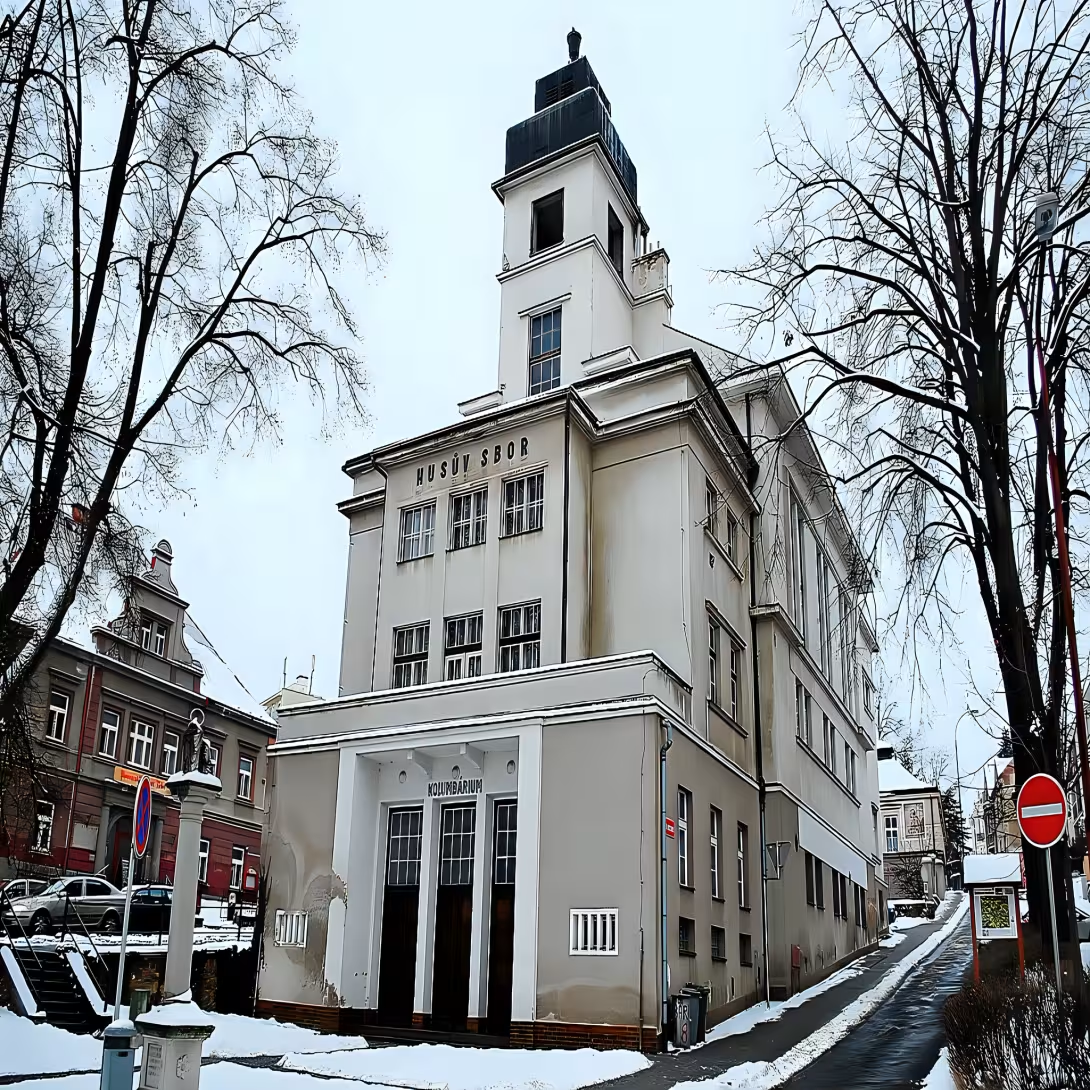
Husův sbor v Havlíčkově Brodě is a functionalist sacral building from 1926-1927, standing on Prague suburb in Dobrovský street. The youngest church in the city serves the Czechoslovak Hussite Church and represents a rare example of modern sacral architecture in a smaller town. Since 2008 it has been protected as a cultural monument, as it is a unique example of the adaptation of functionalist principles to religious space.
The building was built after the separation of the local community from the Roman Catholic Church in 1919-1920. After testifying from the rented monastery church of the Holy Family in February 1926, the elders decided on their own building. Land with house and garden bought from František Zahradnický, and already in June of the same year the base stone was laid. The project was created by architect František Liška, the construction was realized by Brod builder Prokop Štipich. The total cost amounted to CZK 930 000, which was a significant financial performance at the time. The building was completed in September 1927 and the first service took place here at the end of it.
Architecturally dominated by rectangular building with graduated bell tower, which is significantly above the surrounding building. The mass-balanced construction connects the ground floor with the Colombarium and the upper part with the prayer room. The facade is highlighted by three wooden doors with a glass above the ground floor above which is the inscription * KOLUMBATORIUM *. On the first floor there is a balcony and joined windows, while the main facade is heading south. The bell tower is two-stage, covered with copper with copper chalice on top.
In the interior there is a prayer room accessible by a wide granite staircase and the original hall on the ground floor, which served as a space for theatre performances of the church club. The first minister who worked here was František Oliva. Later Pavel Sochr joined, who led the local museum and resistance group Defence of the Nation. In 1939 he was arrested and until 1942 he had to suspend his duty. Another important clergyman was Vojtěch Schück, who came to Havlickov Brod from Hlinsk in 1943. He was a scout leader, poet and painter. In May 1945, in an attempt to calm the situation after the war, he died in the shooting.
The building thus combines religious function with cultural activity - on the ground floor there was an amateur theatre performance of the church club, which was unusual in sacral buildings at the time. The Baroque monastery church of the Holy Family and the popular Štáflova cottage, which complement the historical atmosphere of the area, are in the vicinity.
Today, Hus's choir is in good condition and serves as a place of worship and cultural events. It is open to the public and offers the opportunity to know not only its architectural importance, but also the historical connection with the lives of local people and their resistance activities. For lovers of architecture and history, it's a place worth visiting.
Then and now
Drag the slider to compare how the landmark may have looked when it was built with the view today.
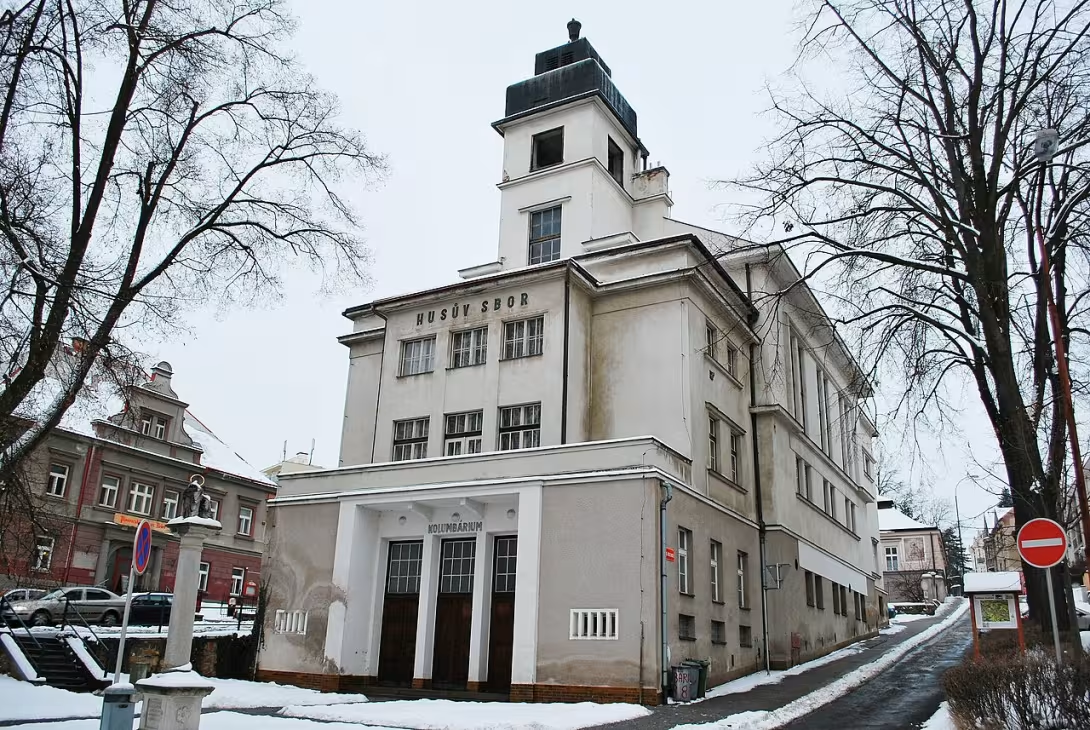

The historical appearance on the left is an AI-generated visualisation and serves as inspiration only.
Historical milestones
- 1920
- The establishment of the local church of Czechoslovak Hussite and the first service in the monastery church of the Holy Family.
- 1926
- The opening of the construction of the Husova congregation after the deposition of the rented church and laying of the foundation stone in June.
- 1927
- Completion of construction and handover in September, first service in the new building at the end of the year.
- 2008
- Registration in the Central List of Cultural Monuments of the Czech Republic.
Architectural development
The building was built in 1926-1927 according to the design of architect František Liška. The concrete building combines the ground floor with the Colombarium and the upper part with the prayer room, covered with valb and saddle roof. The bell tower is two-stage, covered with copper. The hall was originally served on the ground floor for the theatre performance of the church club. Materials include wood, granite and copper elements.
Historical events
1919- 1920: The formation of the local village of the Church of Czechoslovak Hussite to the separation from the Roman Catholic Church.
1926: The purchase of land and the opening of the building of the congregation after the testimony from the monastery church of the Holy Family.
1940: The arrest and subsequent release of the spiritual Pavel Sohr for the resistance activity.
1945: The death of Vojtěv Schück in an attempt to calm the situation after the war
Points of interest
- The building was built between 1926-1927 as the youngest church in Havlíčkov Broda and serves the Church of Czechoslovak Hussite.
- It is a rare example of functionalist sacral architecture in a smaller town, protected since 2008 as a cultural monument.
- It originated after the separation of the village from the Roman Catholic Church in 1919-1920 and the first service took place here in September 1927.
- On the ground floor, the original hall served as a space for theatre performances of the church club, which was unusual in the sacral buildings at the time.
- In the interior there is a prayer room accessible by a wide granite staircase.
Guide
This guide is narrated by a synthetic voice generated by artificial intelligence.
Show guide text
This text was created by artificial intelligence and has not been editorially reviewed. It may contain inaccuracies.
Welcome to the Hus Choir in Havlicka Broda!
You are facing a unique construction that emerged from modern dreams of the first third of the twentieth century. In front of you is a rectangular building with a graduated bell tower that emerged as a symbol of a new religious life in our city. The facade is clean, without unnecessary ornaments - just the inscription * Hus Choir * above the entrance recalls that this place is sanctified and associated with the traditions of Czech Hussites. Notice how the construction was imprinted on Dobrovský Street as a dominant point - as if time had stopped here and left us a memory of courage and faith.
This building was created when a new church - the Czechoslovak Hussite Church was formed in our region. After 1920, the citizens here decided to separate themselves from the Roman Catholic Church and seek their own way to faith. The first services took place in the rented monastery church of the Holy Family, but soon it became clear that the locals needed their own space. In 1926, the foundation stone was laid for a new building, which was supposed to be a modern temple for a new community. The architect František Liška designed a construction that became a model of functionalist sacral architecture - pure, functional and full of symbolism.
Let's take a closer look. Look at the facade - it is clear here that the construction is not only a function but also a challenge. The facade is simple, but with carefully selected elements that resemble tradition and present. The interior of the congregation is equally interesting - in the prayer room you will find quiet rooms for prayer, and in the Colombarium there are places for the last rest of the believers. Notice how modern aesthetics combine with deep religious significance.
Now pay attention to the people involved. In the years 1939-1940 he worked here as a spiritual and defiant Pavel Sochr. His name is associated with a bold resistance to the Nazi occupation, and although his story is not directly linked to the choir, his spirit seems to persist here. A little later, in 1943-1945, Vojtěch Schück served here, another clergyman who was the victim of Nazi terror. Their stories are a reminder that faith and courage often go hand in hand.
The interesting thing is that this building was built as the youngest church in Havlíček Brod. It is a rare example of how modern architecture has reflected into the sacral spaces of smaller cities. Since 2008 it has been protected as a cultural monument, which confirms its importance for the history and culture of our region. Note how functionality and spiritual importance are combined here - as if an architect was planning space not only for prayer, but also for ideas and efforts of future generations.
Before leaving, take another look at the facade and observe the atmosphere radiating from this place. Hus's choir is not only a monument to the past, but also to how faith and the modern world can enrich each other. If you have time, visit the interior - you will find that every corner has its story and its meaning. Thank you for stopping by this place, which is so important to our history and culture. May your visit bring you not only knowledge, but some peace and inspiration.
Frequently asked questions
Is Husův sbor v Havlíčkově Brodě open to the public?
Yes, the Husus Corps is open to the public. The tour is suitable for all people interested in history and culture.
How do I get to the place by car / public transport?
The location is available by car and by public transport. Check the current connection in the search engine or on Havlickov Brod's official website.
How much is the entrance fee and is it paid on the spot?
Admission is paid on site, the current price list can be found on the official site of the sights.
Is the tour suitable for children and seniors?
Yes, the tour is suitable for all age groups. Special activities and materials are available for families with children.
How long does the tour take?
The tour takes approximately 30-45 minutes, but it can also stretch for several hours if visitors want to see the surroundings.
What are the opening times and booking is required?
The opening times of the monuments vary according to the period of the year. The current information can be found on the official site of the sights or on the site before the visit.
What's interesting in the immediate vicinity?
There are other historical monuments such as a museum or a cultural house in the immediate vicinity. You can find current information about the surroundings on Havlickov Brod's official website.
For kids
Husův sbor v Havlíčkově Brodě is like the central hero of our historical fairy tale! It was 100 years ago when this beautiful building began to be built. So imagine you're young people from the late 20th century and you're just getting the chance to learn more about this amazing church.
At the time, people lived in Havlickov Broda and the neighborhood. They were people who loved God and wanted to live by his laws. This is why the Church of the Czechoslovak Hussite, later known as the Hussite Choir, started building here.
Businesses nearby
Do you run a restaurant, accommodation, shop, museum, rental, wellness or other visitor service near this monument? Show yourself directly to the people heading to it — this is how they will see you in the app and on the web:
Nearby
- The Baroque church, originally rented by the Husova Choir, stands in close proximity and forms a historical contrast with modern functionalist construction.
- Cultural monument representing folk architecture, which complements the historical atmosphere of the area.
- Natural park Zdářská mountains with forests and ponds within 5 km, additional landscape context of the city.
Accommodation nearby
Themed route
Thematic cruise route: Hus Choir and Baroque contrasts in Havlickov Brod
1. Hus Choir - * Church * A unique functionalist structure from 1928, symbolizing modern religious life. Inner spaces with simple but distinctive architecture and historical monuments associated with Hussite tradition.
2. Baroque Monastic Church of the Holy Family - * Church * Just next to the baroque church from the 18th century, originally rented by the Husova choir. Beautiful decoration and contrast with modern functionalist construction create interesting historical interplay.
3. Stáflov cottage - * folk architecture * A typical 19th century folk cottage, a demonstration of traditional rural architecture. It represents an authentic example of regional construction and is protected as a cultural monument.
Seasonal recommendations
Spring: In the spring season Husův sbor v Havlíčkově Brodě takes on life thanks to the sunny light and warm air that celebrates the arrival of a new year. Green nature around the church is restored, creating an impressive atmosphere full of hope and beauty. At this time it is advisable to visit the memory early in the morning to enjoy the peace before the arrival of more visitors. Early arrival also guarantees better photos without sunlight. In addition, it is advisable to wear clothes that can be easily adjusted because the temperature can be variable.
Summer: The years of Husův sbor v Havlíčkově Brodě are gaining life and attraction due to the long light today and the warm noon. The atmosphere is full of energy, making the visit an ideal way to enjoy the beauty of the city and its surroundings. Summer attracts the most tourists, so it is good to visit the memory early in the morning or later in the evening to avoid large crowds. It is important to wear light and light clothes as well as sun protection such as a hat or sunglasses.
Autumn: In autumn the Husův sbor v Havlíčkově Brodě gains its attention due to the golden and red colour of leaves, which adds mild melancholy to the atmosphere. This season is an ideal time for a calmer visit because the crowd is decreasing and you can enjoy natural beauty in mild weather. It is advisable to visit the memory in the early afternoon, when the temperature is warmer. Clothes should be multi-ply to adjust to variable weather.
Winter: The winter visit of the Hus Choir in Havlickov Brod is gaining peace and quiet due to snow blanket and cold winter evenings. This season is ideal for those looking for a peaceful visit without large crowds. The monument is open for a shorter time, so it is important to know about the exact times of opening. It is necessary to wear warm clothes and suitable shoes for cold surfaces in order to safely enjoy the beauty of the winter environment.
Visualizations and artistic views


The visualisations are generated by artificial intelligence and serve as inspiration.
Photos from the area
Real photos taken near the monument


Zdroj a licence jsou uvedeny u každého snímku.
Tips from visitors
No tips yet. Be the first!
Log in and add your tip.
Sources and literature
Photos: Wylliama / CC BY-SA 3.0, rozlišení zvýšeno umělou inteligencí — Wikimedia Commons. The author and licence also appear when you hover over the image.
Faktickým podkladem tohoto textu byl článek na Wikipedii, jehož autory jsou přispěvatelé Wikipedie. Článek je dostupný pod licencí CC BY-SA 4.0.
Location on the map

Příběhy a pověsti
Legendy, pověsti a příběhy spjaté s touto památkou
Fotografie návštěvníků
Zatím žádné fotografie. Buďte první, kdo přidá fotografii z návštěvy!
Log in a přidejte svou fotografii nebo hodnoťte.
Za ověřenou návštěvu v aplikaci získáte víc bodů — poznáme podle GPS, že jste na místě.
Reviews and comments