






stará radnice v Havlíčkově Brodě Town hall
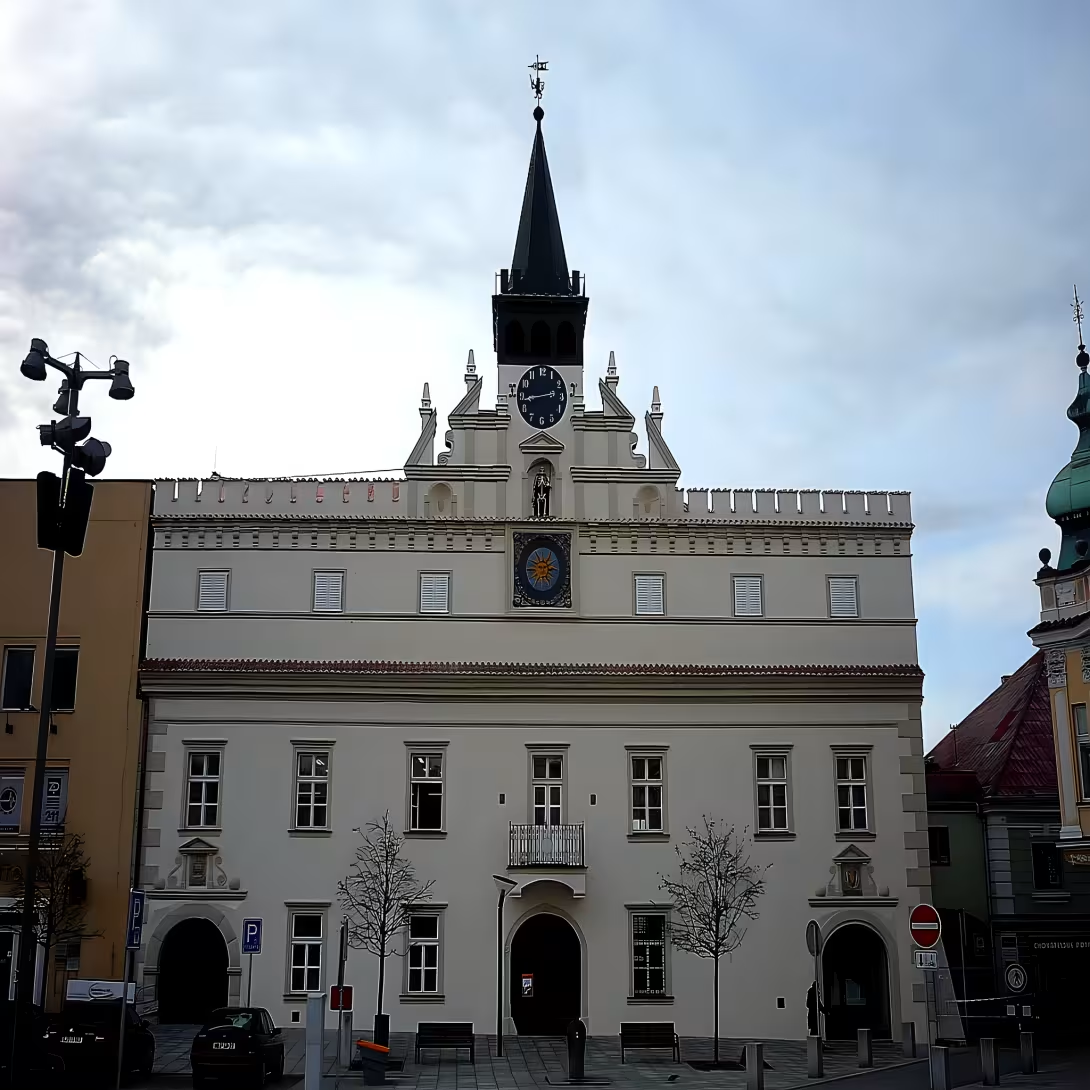
The old town hall was created at the end of the 15th century by rebuilding and connecting three Gothic houses. The oldest part - the western tract - is probably based on the 13th century, where the house was probably built. On the basis of its stand-alone position on the square, historians conclude that it was a building of unusual importance, perhaps the original headquarters of the express or stone residence of Lichtenburg.
Today's appearance of the building is based on a reconstruction after a big fire. On May 25, 1662, City Hall burned down completely. A few years later it was rebuilt into a late Renaissance style - the 1668 sign states that the building was "built from grunt." From this era comes a symmetrically divided facade with atics, cimburia and turret, supplemented by three stone portals of the entrance door. There was a brewery in the rear wing, a common part of the medieval town hall - it is mentioned for the first time in 1662 as one of the objects destroyed by the fire. It was operated here until 1834.
The second big fire on May 8, 1834 hit City Hall again and destroyed nine of its neighboring houses. The reconstruction in 1857 was modified in classical style - a new roof, balcony in the facade and interiors were changed in accordance with the then aesthetics. On the first floor you can still see a rolling vault with stucco decoration of the large hall, which can be dated to this period of reconstruction.
Since Havlíčkův Brod became a district seat in 1850, the Old Town Hall has served as the seat of the district court when the city administration moved to the next old express. After World War II, the People's Library used it briefly. In 1974, the District Library, later renamed the Regional Library of Vysočina, moved here. This use led to extensive building modifications - a passage from the square to the yard was walled up, a new staircase was built and a historic spindle staircase removed. In 2020, the library moved to new premises.
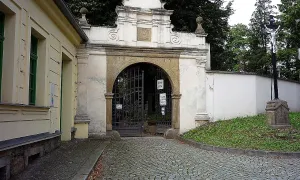
General reconstruction of the building has been ongoing since 2012. The original brewery cellars were restored and interior rehabilitation was completed in 2016. The stone paving from the local yellow lime granite was returned, the passage to the yard was restored and additional spaces were extended. Restored valuable stucco decorations and wall paintings of the main hall as well as historical coats of arms in the facade. In these works, a fragment of the mannerist sun was found under the board with the city's emblem. The court has turned into a resting place with greenery, fountain and benches.
Then and now
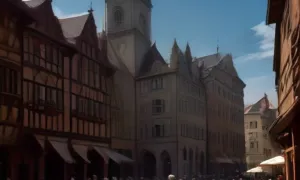
Drag the slider to compare how the landmark may have looked when it was built with the view today.
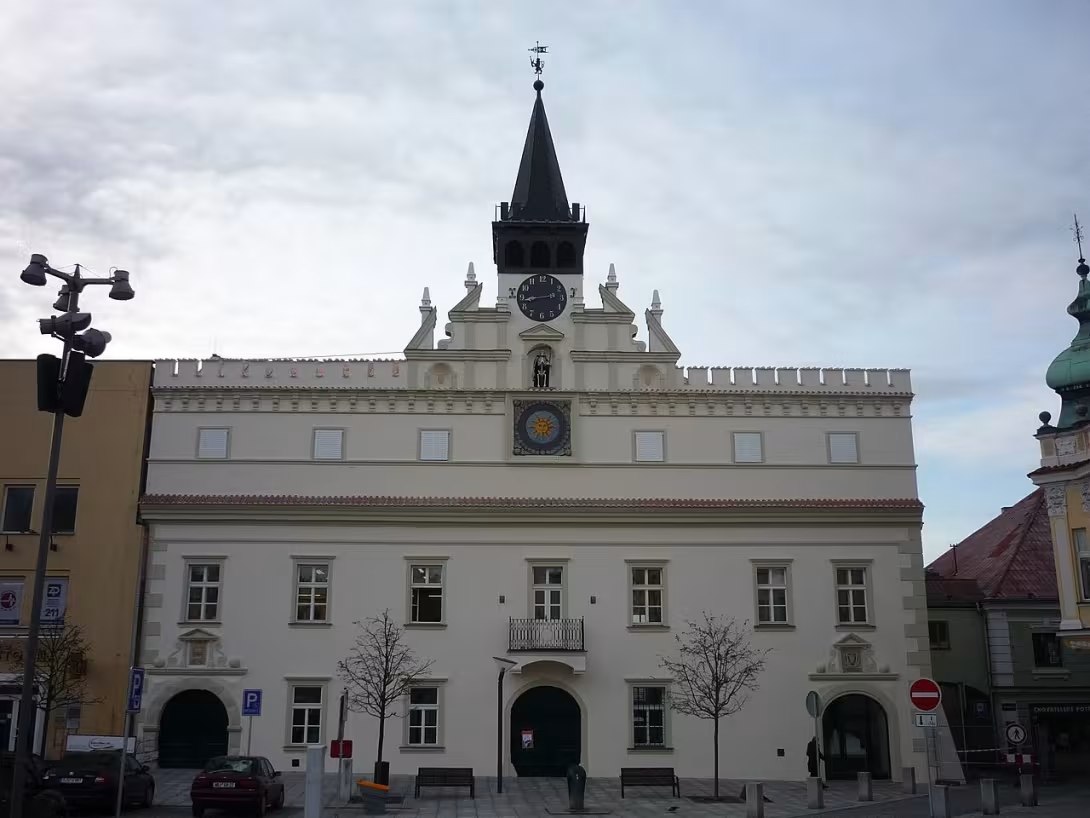

The historical appearance on the left is an AI-generated visualisation and serves as inspiration only.
Historical milestones
- before 1400
- The formation of the western part of the town hall as a Gothic house, probably the seat of the express or Lichtenburg.
- 1662
- The Great Fire destroyed the original structure, then rebuilt in the Renaissance style.
- 1668
- Finishing the city hall reconstruction, it looks like a sign in the front.
- 1850
- City Hall stopped serving as City Hall and became the seat of the District Court.
- 2012
- The beginning of the general reconstruction of the building, which lasted until 2016.
Architectural development
The original Gothic building was created by joining three houses, from which the western part dates back to the 13th century. After the fire in 1662, it was rebuilt in a late Renaissance style with a symmetrical facade, atics and stone portals. In the 19th century it underwent classical modifications, including a new balcony and roof. In the 21st century, a general reconstruction took place in which historical elements were restored, such as passage, paving and stucco decoration.
Historical events
- 1662
- The Great Fire destroyed the original Gothic City Hall, subsequently rebuilt in the Renaissance style.
- 1834
- Another fire damaged a building that was later classicically modified.
- 20
- The library moved to new premises, the town hall was renovated and modified for public use.
Owners
City Council, District Court, Regional Library Vysočina
Points of interest
- The oldest part of the town hall, the western tract, probably dates back to the 13th century and may have been the original seat of the fast or stone residence of Lichtenburg.
- The town hall was destroyed for the first time by a great fire on 25 May 1662, after which it was rebuilt into a late Renaissance style and completed in 1668.
- There was a brewery in the rear wing of the town hall, which was first mentioned in writing in 1662 and operated until 1834.
- The second big fire on May 8, 1834 destroyed city hall and nine neighboring houses, after which it was modified in 1857 in classical style.
- A fragment of a mannerist sun was found under the emblem of the city during the 2016 overhaul.
Guide
This guide is narrated by a synthetic voice generated by artificial intelligence.
Show guide text
This text was created by artificial intelligence and has not been editorially reviewed. It may contain inaccuracies.
Audio Guide - Old Town Hall in Havlíčkov Broda
---
Welcome to this massive and historically rich building that will welcome you from Havlicka Square with its ancient charm. You're standing in front of the old town hall, the dominant city that turned into a stone witness over the centuries. In front of you is a corner building that connects the past to today. Let's take a look together at her secrets and the stories she hides inside her.
Originally, this building was built as a late Gothic complex in the late 15th century. It was created by joining three houses, the oldest of which is the western part - probably from around 1300. It could have been the original headquarters of the express, or the stone residence of the local Lichtenburg masters. The then Havlíčkův Brod was a small town, but even then there was a solid stone building that became the basis of what you see today.
But the Great Fire in 1662 destroyed the original Gothic City Hall. The fire on May 25th that year left nothing but ashes and debris. However, the town did not want to give up its monument, so the building was rebuilt into a late Renaissance style in the years following. The new form was completed in 1668, as it resembles the inscription in the facade. Although the style has changed, some of the Gothic elements have been preserved - and these are the ones that give this building its unique atmosphere.
Now pay attention to the facade. Feel its power and symmetry, which is typical of Renaissance architecture. In front of you is the corner part of the building that was in the past the center of urban life. The town hall lived here until 1850, when its function changed to a new building. It then became the seat of the district court, and only in 2012 began its long general reconstruction, which lasted until 2016.
Look up and observe the facade details. Although there are no statues or paintings that interest you immediately, there is a sense of work by many generations of architects and craftsmen. Every stone, every detail has a story. Note how the Renaissance elements are projected into the stone face of the building - pilasters, mansions, symmetric arrangement of windows. These elements are like traces of past generations' hands trying to preserve the memory of the city.
One of the most interesting aspects of this town hall is its original function. The western part, which is the oldest, may have originally been the seat of the fast - that is, the local administration that took care of the city's management. Or even the stone residence of the local Lichtenburg masters who controlled this area. These assumptions remind us that Havlíčkův Brod already in the 13th century had not only wooden houses but also stone buildings that prove its significance.
Another interesting thing is that this town hall was destroyed for the first time by a fire. That's rare, because most historic buildings only survived through repeated repairs. The fire from 1662 was so powerful that it destroyed the original Gothic City Hall, and the city had to start from the beginning. Although the style has changed, her function has been preserved as a symbol of the city. Today, it is a monument that reminds us of how strong the communities at that time were, trying to preserve their heritage.
Now let's take a look at what happened at City Hall after it was rebuilt. After 1850 she became the seat of the district court, which meant another chapter in her life. The court was based here until the reconstruction started in 2012. It lasted four years and returned the city hall to its original glory. Today it is a place that reminds us of how the functions of buildings change, but how their historical significance is maintained.
One of the most interesting things in this town hall is her ability to connect different epochs. Here you will find traces of Gothic, Renaissance and later modifications. This is like a time capsule that allows you to feel the history of the city. Every stone, every detail is like a page of a book that tells the story of Havlicka Brod.
If you want to get to know this place in more detail, I suggest you look around Havlíček Square. Here you will find other historical buildings and monuments that will help you better understand the soul of this city. The old town hall is like the key to his past, and now that you see it in front of you, you have a chance to meet it.
Thank you for taking a moment to stop by this monument. The old town hall is not only a dominant town, but also a witness to its development. Whether you stand here for just a moment or stop here in more detail, you will surely take the feeling that you have encountered a part of history that is extremely important to Havlíčkův Brod. When you look at other sights, you will feel that you have already become familiar with this beautiful city. Good trip!
Frequently asked questions
Is stará radnice v Havlíčkově Brodě open to the public?
Yes, stará radnice v Havlíčkově Brodě is open to the public. The opening hours are 9:00 to 5:00.
How do I get to the place by car / public transport?
You can reach the place by car or public transport. The nearest public transport stop is Havlíčkův Brod, the square. Parking is available in the vicinity of the town hall.
How much is the entrance fee and is it paid on the spot?
Payment is made directly at the City Hall.
Is the tour suitable for children and seniors?
Yes, a tour of the old town hall is suitable for all age groups. Special guides and activities are available for children.
How long does the tour take?
The tour takes approximately 45 minutes. It can be extended or shortened by your own pace.
What are the opening times and booking is required?
The opening hours are 9:00 to 5:00. Reservation is not necessary, but it is recommended for groups over 10 people.
What's interesting in the immediate vicinity?
In the immediate vicinity is Havlíček Square with many commercial and cultural institutions. It is also possible to visit the local museum or gallery.
For kids
Imagine going back to when Havlicka's Beetle was a small town where everything happened around town hall. That was the most important building in the city and all the residents were meeting there.
How did it look here? The city was full of live markets where fruit, vegetables and other things people needed to survive. City Hall was like the heart of the city because important meetings were held here, where problems were solved and decisions were made about the future.
Businesses nearby
Do you run a restaurant, accommodation, shop, museum, rental, wellness or other visitor service near this monument? Show yourself directly to the people heading to it — this is how they will see you in the app and on the web:
Accommodation nearby
Themed route
Thematic cruise route to Havlíček Broda
1. Old Town Hall * Type: * Historical building with Renaissance elements, seat of city office. It is a symbol of the city, and it hides valuable historical details in the interior, such as the Town Hall with frescoes. Visiting is worth the atmosphere of the ancient city core.
2. Havlicek Square * Type: * Historical centre with dominant structures. Walk around the Old Town Hall and the Hanus House (today's store) will show you the original urban character of the city. The square is ideal for sitting at a cafe and observing urban life.
3. Church of St. James * Type: * Baroque sacral building from the 18th century. Its richly decorated interior and tower overlooking the city are worth a visit. The church is also connected with local history and cultural traditions.
4. Svitava River * Type: * Natural element with historical significance. A walk or a short ride along the river (e.g. on the bike path) will show you how Svitava affected the development of the city. You can relax here by the shore or watch the water flow.
* Recommended order: * Start at the Old Town Hall, continue to Havlíček Square, visit St. James Church and end the stay at the Svitava River. The entire route is compact and can be walked in a few hours.
Seasonal recommendations
Spring In Havlíčkov Broda Town Hall, the lively colour and spirit of the old buildings are displayed at this time. Green leaves and sunlight create a pleasant atmosphere that highlights the beauty of the historic city. The inner spaces are often lit by natural light, which highlights the details of Gothic elements. Visit them between March and May, when the weather is mild but not too wet. It is recommended to come in the morning when there are fewer people, and to dress up in light but warm clothes that allow you to easily adapt to temperature changes.
Summer In the main summer season, from June to August, the town hall is full of life but also crowds. The warm sun and long daily hours create ideal conditions for visiting, but at the same time it is necessary to prepare for noisy groups of tourists. The best time to visit is in the morning or in the evening when the heat is milder. It is recommended to dress in light, airy clothes that allow you to cool easily, and always wear water-resistant shoes to avoid any mess in the corridors.
Autumn In autumn months, from September to October, the city hall has a quiet and friendly atmosphere. November light and mild temperatures create ideal conditions for exploring historical spaces. At this time the town hall is less visited, which allows a deeper examination of every detail. It is recommended to come in late afternoon when the heat is still pleasant and the crowds minimal. Dress in warm but flexible clothes that allow you to adapt to the variable weather.
Winter In the winter months, from November to February, Havlíčkov Brod City Hall is opened only limited, especially between December and January. In advent time you can visit some expositions, but most places are closed. At this time it is advisable to prepare for short opening times and cold weather. It is recommended to come on the eve of the holidays, when there is a chance to visit some local sights, and to dress up in warm, double-sided clothes that will help keep you warm.
Visualizations and artistic views


The visualisations are generated by artificial intelligence and serve as inspiration.
Photos from the area
Real photos taken near the monument

Zdroj a licence jsou uvedeny u každého snímku.
Atmosphere of the place
This atmospheric visualisation of the place and period was generated by artificial intelligence. It is not real footage of the location.
Tips from visitors
No tips yet. Be the first!
Log in and add your tip.
Sources and literature
Photos: Pohled 111 / CC BY-SA 4.0, rozlišení zvýšeno umělou inteligencí — Wikimedia Commons. The author and licence also appear when you hover over the image.
Faktickým podkladem tohoto textu byl článek na Wikipedii, jehož autory jsou přispěvatelé Wikipedie. Článek je dostupný pod licencí CC BY-SA 4.0.
Location on the map


Příběhy a pověsti
Legendy, pověsti a příběhy spjaté s touto památkou
Fotografie návštěvníků
Zatím žádné fotografie. Buďte první, kdo přidá fotografii z návštěvy!
Log in a přidejte svou fotografii nebo hodnoťte.
Za ověřenou návštěvu v aplikaci získáte víc bodů — poznáme podle GPS, že jste na místě.
Reviews and comments