






Jeřeň Motte
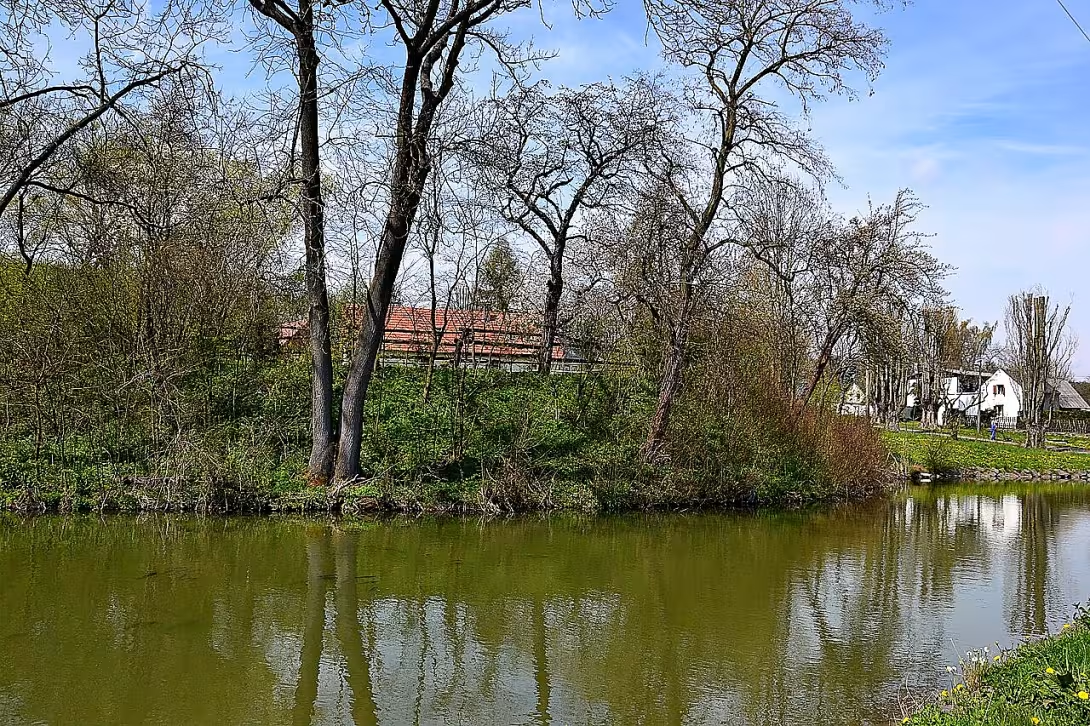
Objekt se nedochoval — na místě dnes nestojí. Následující text popisuje jeho historii, ne současnou návštěvu.
Jeřeň is an extinct medieval fortress in Karlovy Vary. It has preserved a circular fortress, which has been protected as a cultural monument since 1964. This object is an important example of the lower nobility, whose construction and development were evidenced by both written sources and archaeological research.
The foundation of the fort falls into the 14th century. At that time, small castles and harbours were developed in Czech countries as local government centres, which was the result of a wider consolidation of inland areas. The first written mention of the village Jeřeň itself dates back to 1280, when the Purcrabi Konrád Třebovský was based here. 11 years later, Oldřich z Jeřně is listed. The fortress itself appeared in the springs for the first time in 1321, when it belonged to Evan of Jerno from the family of the Nechtin. At the time of its creation and in the subsequent centuries it served as a mansion of local flags.
The preserved fortress has a round plan of 40 metres in diameter. The central hill was surrounded by a moat which was partially preserved on the east side. Inside there was a brick building with probably a square floor plan with dimensions of 10 × 10 meters and a very strong masonry of 280 centimetres. The archaeological research carried out in 1997 on the hill area revealed artifacts from the thirteenth to sixteenth centuries, traces of fire and foundations of the said building. The later half-collapsed cellars probably came from the nineteenth century.
During her history, she replaced the fort with a number of owners. After Evan of Jeøn, his sons Evan and Høman owned the village until 1382 when they sold the manor to the masters of Rýzmburk. In 1407, the poor Boreš z Oseka is reminded of this genus. In 1476 he became master of the fortress Jan Vykart ze Šanova, whose offspring Aleš is still mentioned here in 1558. Followed by Vykart, who died before 1585. His five sons, Jeřeň, finally sold to Jan Valdemar of Lobkovic, who joined her to the estate of Valeč.
Key documented events include the year 1321 as the first written mention of the fort, the year 1382 representing the sale of the estate to the masters of Rýzmburk and the year 1964 when the monument was officially declared protected. An important milestone in the modern knowledge of the building became 1997, when archaeological research revealed traces of fire and extremely strong masonry.
The fortress is now located on the private property of House No. 23 and is not freely accessible to the public. However, interested people can visit the area because the village is led by the bicycle route 2152 from Blatna to Valč.
This extinct monument resembles the medieval roots of the region and the residential structure of the Vladic families. Although it is only visible from the outside today, its preserved terrain remains and results of archaeological research indicate the building development of Czech castles.
Historical milestones
- 1280
- First written mention of the village Jeřeň.
- 1321
- First mention of the fort itself.
- 1382
- Sell the manor to the masters of Rýzmburk.
- 1964
- Protection as a cultural monument.
Architectural development
The fort had a round plan of 40 metres in diameter with a central hill and a moat. Inside there was a brick structure with probably a square floor plan of 10 × 10 meters and very thick walls of 280 centimetres thick. The later half-collapsed cellars are probably from the 19th century.
Historical events
1321: First written mention of the fort; 1382: Sale of the manor to the masters of Rýzmburk; 1964: Announcement of a cultural monument.
Owners
Konrád Třebovský (1280), Oldřich z Jeřně (1291), Evan z Jeřně (1321), Evan and Heřman z Jeřně (until 1382), men from Rýzmburg (from 1382, Boreš z Oseka 1407), Jan Vykart ze Šanova (1476), Aleš ze Šanova (1558), Vykart from Shanova (until 1585), Jan Valdemar z Lobkovic (after 1585).
Points of interest
- The extinct medieval fortress Jeřeň preserved a circular fortress, which has been protected as a cultural monument since 1964. - The central hill of the fortress measured on average 40 metres and surrounded by a water moat which was partially preserved on the east side. - Inside there was a brick building with probably a square floor plan with dimensions of 10 × 10 meters and a very strong masonry of 280 centimetres. - Archaeological research carried out in 1997 revealed artifacts from the thirteenth to sixteenth centuries, traces of fire and the foundations of the building, with the semi-collapsed cellars probably coming from the nineteenth century. - The fort is today located on the private property of the house number descriptive 23 and is not freely accessible to the public, but the village is led by the bicycle route number 2152 from Blatna to Valče.
Guide
Show guide text
This text was created by artificial intelligence and has not been editorially reviewed. It may contain inaccuracies.
Welcome to this quiet and mysterious place. You are standing before the remnants of centuries of human destiny, although at first glance you might say that all you see is an overgrown hill in the landscape. Listen to the charms of the surrounding trees and let them transfer you to the times long past, when there was a proud mansion. What you are looking at now is the extinct medieval fortress Jeřeň. There is a landscape surrounding you where once there were people who shaped our region. Try to imagine what this landscape looked like centuries ago when it was a living center of action.
Let's look deeper into the history of this place so we can understand how it was created and who was behind it. The village Jeřeň itself is documented in writing already in the year one thousand twenty-eight, which in itself shows that the land here lured to settlement very soon. The fortress as such then entered the written sources a little later, namely in the year one thousand three hundred twenty-one. It was built as the manor of local governments who managed their manor from here, protected their property and lived with their daily joys and worries. Over the centuries, a number of important owners have been replaced. In the year one thousand and three hundred and eighty-two, the estate was sold to the mighty masters of Rýzmburk, indicating the growing strategic and economic importance of this mansion.
Now pay attention to what has been preserved from the entire building to this day. Although the physical form of the buildings was taken for its own, the terrain relics still tell us very clearly about the former form of the fortress. In front of you is a round fortress, which has been protected since nineteen hundred sixty-four as a valuable cultural monument. The central hill of this fortress had respectable dimensions, its diameter was 40 meters. When you look around you carefully, notice the terrain inequalities. The hill once encircled a deep moat, a part of which was still partially preserved on the east side. It was this ditch that provided the people with the necessary protection from danger. The archaeological findings confirm that this site was actively used from the third to the 16th century. Inside this fortified space once stood a brick building, which formed the heart of the entire mansion and provided the background to the then masters.
Behind the walls of this fortress, human stories of power, property transformations and important decisions were developed. A number of historical personalities are associated with this place, whose names reflect in historical sources. There were flags like Konrád Třebovský, Oldřich z Jeřně, Evan z Jeřně or Heřman z Jeřně. Later, powerful nobles, among whom there were no Boreš z Oseka, Jan Vykart ze Šanova, Aleš ze Šanova or Jan Valdemar z Lobkovic, entered history. Each of these men left a print on the manor, whether through building modifications, economic decisions or political ties in the then kingdom.
When you look at the central hill and imagine a former moat, you touch the secrets that archaeologists gradually uncover. They found that inside there was a brick building whose exact form and interior arrangements still attract research efforts to further research. The place has a strange atmosphere of peace and melancholy, where nature slowly takes over what people left centuries ago.
We hope you enjoyed this stop in time. You can stay in place for a while, perceive the genius loci of this ancient site and let your thoughts flow in the rhythm of history. Thank you for listening to our guide, and we wish you a beautiful ongoing experience of your discoveries around. Goodbye.
Businesses nearby
Do you run a restaurant, accommodation, shop, museum, rental, wellness or other visitor service near this monument? Show yourself directly to the people heading to it — this is how they will see you in the app and on the web:
Events nearby
Zdroj akcí: otevřená data měst a obcí ČR (Národní katalog otevřených dat) a kalendář akcí Národního památkového ústavu.
Nearby
Municipality of Valeč, Cycling route No 2152 from Blatna to Valče.
Visualizations and artistic views


The visualisations are generated by artificial intelligence and serve as inspiration.
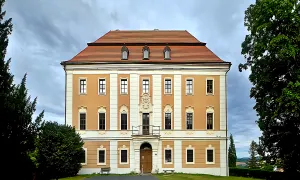
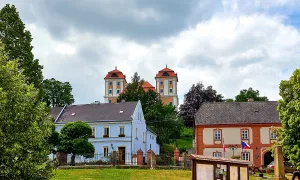
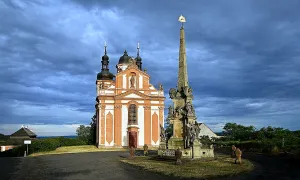
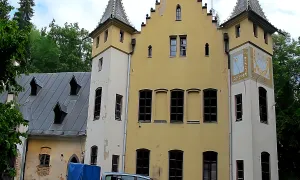
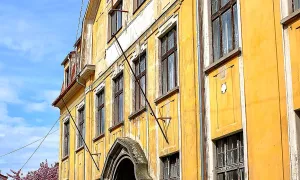
Photos from the area
Real photos taken near the monument


Zdroj a licence jsou uvedeny u každého snímku.
Tips from visitors
No tips yet. Be the first!
Log in and add your tip.
Sources and literature
Photos: Petr Kinšt / CC BY-SA 4.0 — Wikimedia Commons. The author and licence also appear when you hover over the image.
Faktickým podkladem tohoto textu byl článek na Wikipedii, jehož autory jsou přispěvatelé Wikipedie. Článek je dostupný pod licencí CC BY-SA 4.0.
Location on the map
Příběhy a pověsti
Legendy, pověsti a příběhy spjaté s touto památkou
Fotografie návštěvníků
Zatím žádné fotografie. Buďte první, kdo přidá fotografii z návštěvy!
Log in a přidejte svou fotografii nebo hodnoťte.
Za ověřenou návštěvu v aplikaci získáte víc bodů — poznáme podle GPS, že jste na místě.
Reviews and comments