






Jiráskova 707 House
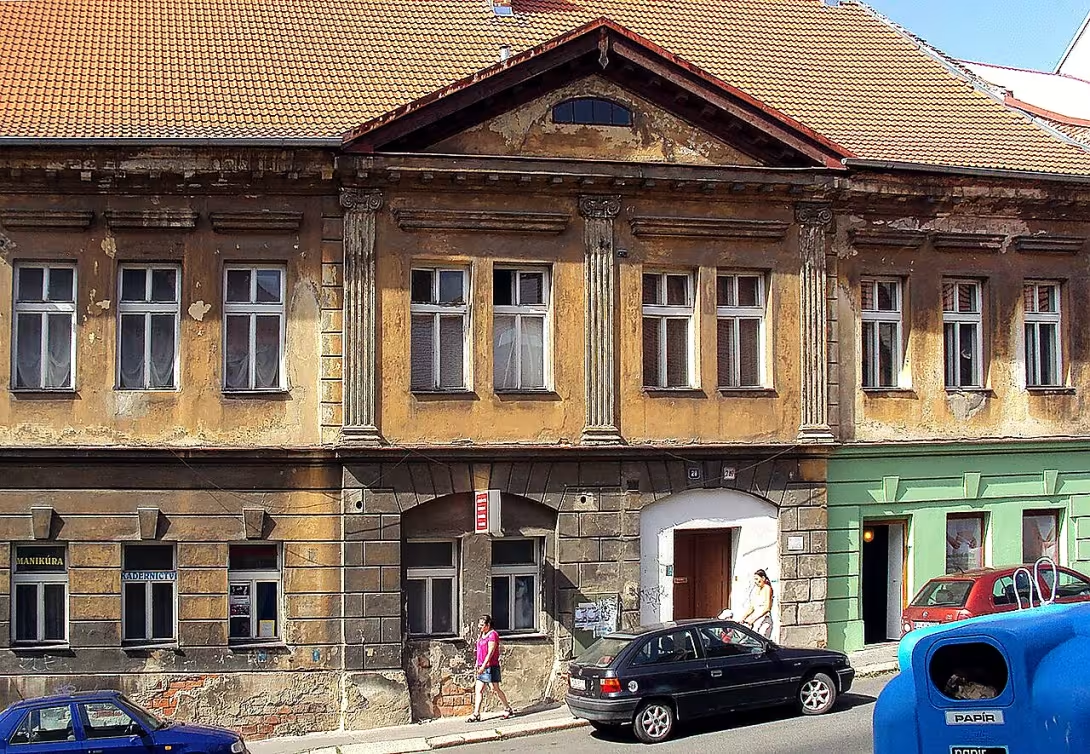
The Brumof house, located at the address Jiráskova 707 in the centre of České Lípa, is a classicist one-storey building built between 1820 and 1824. It was built for the needs of the local Jewish community and belonged to Josef Brumof, a rich Jewish businessman. Its architecture is characterized by classical elements such as canals and ionic warheads. The house is one of the best preserved objects of the former Jewish ghetto in Česká Lípa and is protected as a cultural monument of the Czech Republic.
The emergence of Brumof's house was a direct response to a catastrophic fire that hit the city in 1820. After this tragedy, Josef Brumof decided to build a new house on the site of several older objects that were destroyed by flames. This move not only contributed to the restoration of the Jewish community in Česká Lípa, but also reflected the broader historical context of the first half of the 19th century, when romanticism and classicism developed in Europe. These artistic directions had a significant impact on the architecture of the time, which is also evident in the style of the Brumof House.
Architecturally, the house is characterized by classical elements. His facade is decorated with caned columns and Ionian warheads, which adds elegance and harmony to the construction. The central risalite is completed by a triangular tympanone, which is supplemented by mutulas under the ledge. It is also remarkable that the remains of an older mountain house have been incorporated into the new building, which adds historical context and uniqueness to the building.
Josef Brumof, a rich Jewish businessman from Česká Lípa, was the owner and initiator of the building. His decision to invest in a new house for the local Jewish community reflected his position in society and his ties to the city. The completion of the construction in 1824 meant not only the reconstruction after the fire, but also the strengthening of the Jewish ghetto in České Lípa.
Today, Brumof's house is one of the few surviving objects of the former Jewish ghetto and its preservation as a cultural monument underlines its historical and architectural value. The house is open to the public and is worth visiting not only for its aesthetic qualities, but also as a monument to the heritage of the Jewish community in Česká Lípa. Its history recalls the importance of protecting cultural heritage and provides a valuable insight into the past of the city.
The Brumof house is not only an architectural pearl but also a witness to the history of the Jewish community in Česká Lípa. Its preservation and protection as a cultural monument underlines the importance of recognising and preserving cultural heritage for future generations. Visiting this house offers a unique view of the history of the city and its inhabitants, which makes it not only a monument, but also an exciting travel destination.
Historical milestones
- 1820
- Catastrophic fire hit the city of Česká Lípa
- 1820-1824
- Building a Brumof house for the needs of Jewish village
- 1824
- Completion of new house construction
Architectural development
The Brumof house was built in a classical style with a facade decorated with Pilastres and Tympanone. The remains of the older mountain house were inserted into the new building.
Historical events
- 1820
- After the disastrous fire of the city, the house was built on the site of several older buildings.
- 1824
- Finishing the building of Brumof's house.
Owners
In 1820-1824 the house was built by Josef Brumof, a rich Jewish businessman from Česká Lípa.
Points of interest
- Brumof's house is a classicist single storey building built between 1820 and 1824 for the needs of the local Jewish community. - It was built in response to a catastrophic fire that hit Czech Lip in 1820. - The house is one of the best preserved objects of the former Jewish ghetto and is protected as a cultural monument of the Czech Republic. - Its architecture is characterized by classical elements, including canals and Ionian warheads. - The remains of an older mountain house have been incorporated into the new building, which gives the building historical context and uniqueness.
Guide
Show guide text
This text was created by artificial intelligence and has not been editorially reviewed. It may contain inaccuracies.
Welcome to Česká Lípa. You're standing right where time stops and history touches the present. In front of your eyes is a house on Jiraskova Street, with a number of seven hundred and seven. At first glance, you may think it's a simple, single-storey building that was quietly wedged into a city building. But please don't stop at the first impression. Stop, perceive the atmosphere of this place and let me help you see what is escaping at first sight. This object is not just a brick building. It's a city memory, it's a symbol of recovery, and it's one of the few remnants of the world that no longer exists.
To understand why this house is standing right here and why it is so important, we need to go back deep into the past. Imagine a thousand eight hundred twenty. That was the year that changed the face of Czech Lip. The city was hit by a devastating and catastrophic fire. Imagine the thick smoke, the constant heat, and the great despair when the flames consumed the houses, streets, and people's memories. The fire left nothing but ashes, debris and emptiness. But at this very difficult time, at this moment the greatest trials were born to need to start over.
Just as a direct response to this disaster, it was decided that it had to build a new background for the local Jewish community. The needs of this community were absolutely vital at the time, and the house had to be not only functional but also dignified to express the stability and strength of the people who tried to reassemble their lives after the fire. The construction of this house you are watching today began shortly after this tragic phenomenon and lasted several years. Between a thousand and eight hundred twenty and a thousand and eight hundred and twenty-four years, there was constant creation in this place. Imagine the noise of construction work, the smell of fresh painting and wood, and the hope that grew with every stone laid. Just in the year of a thousand and eight hundred and twenty-four, the entire building was completed and ready to serve its people.
Now please pay close attention to the architecture of the building itself. Look at her face. The house is built in a classical style. This style was not chosen by chance. Classicism brings to space a sense of peace, order and harmony, which was exactly what the city needed after the chaos of a devastating fire. It is an architecture that seeks beauty in simplicity, balance and strict rules.
Raise your eyes and look at the walls of the building. Notice the vertical elements that decorate the facade. They're pilasters, i.e. flat columns that are part of the wall. They're not separate columns that hold the roof, but they're used to give the building grandeur and rhythm. If you look at them up close, you'll see they're not smooth. They are decorated with vertical grooves, which are technically called canning. These grooves create a fascinating game of light and shadow that gives the facade depth and dynamics. See how the shadows in these grooves change depending on how the sun moves in the sky.
And now try to look even higher at the vertices of these pilasters. There you will find what makes this style so yummy. They're Ionian warheads. If you look at them, you'll see fine, twisted shapes that resemble parchment coils. This detail, this detail, is proof that even at the time of recovery after the disaster, people sought beauty and wanted their new environment to be aesthetically perfect. This whole single-storey object is very balanced, elegant and peaceful thanks to these elements.
When you look at this house, you can see nothing more than rocks and plaster. You need to see people. This house was built for the needs of the Jewish village, which was a very important part of social life in České Lípa. It's one of the best preserved objects we have left of the former Jewish ghetto. Ghetto, this neighborhood, was a place where fate, tradition, and the everyday life of hundreds of people connected. It was the heart of the community, a place full of life, business and faith.
One of the names that are closely associated with this place is Josef Brumof. Even though we don't know the names of everyone who lived and worked here, we see the name Brumof as part of this inheritance. This house was a symbol of stability for a community that had to rebuild its home and its identity in a new, changed world after the fire.
Perhaps you are now being said: what is so unusual about such a house? The answer is simple, yet very deep. It's his survival. Most of the buildings from this time that stood around were eventually lost, rebuilt or destroyed by the modernization of the city. But this house has resisted time. It stands here as a silent witness to history that allows us to see the world 200 years ago. It's one of the few pieces of the puzzle we have left to understand what old Česká Lípa looked like. There's something mysterious about how this calm object survived all the storms the city has gone through. Imagine all the generations of people that have passed this house, and all the changes that have happened around here, while this house has remained motionless in its place.
I hope this brief view of Brumof's house helped you see the surroundings differently than you did before. Let this journey continue through the streets of the city, where there are other stories on every corner. Please look at other parts of this city and do not get tired of looking for beauty in details. Every facade, every alley can have its own voice. Thank you for spending this moment with us. We'll get you a nice and inspiring walk.
Tips for visitors
The best time to visit Brumof's house is in the spring or autumn season when the weather is pleasant and sunny. This time of year offers ideal conditions for walking through the streets of České Lípa and exploring the historical details of the house without hot summer period.
Parking can be found near the city center where the house is located. Public transport is also appropriate; We recommend that you verify the current connection using an online search engine or mobile application for local transport to get to the centre of České Lípa.
When visiting, it is advisable to take a camera with you and, in case of long stay, also a supply of drinking water. The house and the surrounding streets offer a beautiful view of the urban architecture, which is suitable for photography.
For photographers, the best place to capture a house from its back is where the light is the most beautiful when the sun rises and sets. Also take pictures of Jiráskova Street, which provides a wide view of the historic buildings of the city.
In the vicinity of the house you can visit the National Museum in České Lípa, located nearby and offers interesting exhibitions about the history of the region. A visit to a local zoo or park is suitable for families with children, where children can enjoy leisure time.
Businesses nearby
Do you run a restaurant, accommodation, shop, museum, rental, wellness or other visitor service near this monument? Show yourself directly to the people heading to it — this is how they will see you in the app and on the web:
Nearby
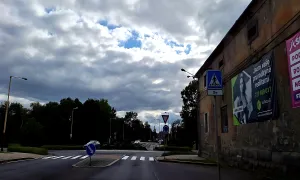
Dům se nachází ve středu Jiráskovy ulice v České Lípě, blízko vyústění ulice Nerudovy.
Accommodation nearby
Themed route
Thematic cruise route: "Jiráskova 707 and its surroundings"
1.Jiráskova 707 (house) - Type: Historical House - Why is it worth a visit: This important house is connected to the life and work of Czech writer Jaroslav Hašek, known under the pseudonym Jakub Arbes. It's a place where the author could get inspiration for his literary works. Visiting Jiráskov 707 is a valuable way to immerse yourself in the cultural heritage of Česká Lípa.
2. At the exit of Nerudova Street - Type: Place with historical value - Why is it worth a visit: This place is important for understanding urban development. The opening of Nerudova Street to Jiráskova Street symbolizes the connection of various historical periods and architectural styles that affected Czech Lípa.
3. Jirásek Street - Type: Historical aisle - Why is it worth a visit: Jiráskova Street is not only a road between important places, but also a cultural monument in itself. Its architecture and atmosphere offer a view into the past of the city, where each building has its own story.
4. Ambient shops and restaurants - Type: Cultural and gastronomic experiences - Why is it worth a visit: After exploring historical sites it is advisable to relax in one of the nearby shops or restaurants. These places offer the opportunity to get to know the modern page of Česká Lípa, its gastronomy and the daily life of the locals.
This route will guide you through historical and current aspects of the part of the city where Jiráskova 707 is located. It is an ideal way to experience the wealth of the cultural heritage of Česká Lípa as part of a short trip.
Seasonal recommendations
Spring: In the spring, the surroundings of the Jiráskova 707 house awaken to life and everything begins to green. Light is soft and pleasant in this period, which creates an optimistic atmosphere. We recommend taking layered clothes because the morning cold can still be felt. It is an ideal time to visit, because there are few tourists so far and you can see the memory in peace.
Summer: Summer months bring strong sun and long days to Czech Lips. The atmosphere is alive, but the heat may be uncomfortable in the morning. For the best experience we recommend coming early in the morning to avoid the biggest crowds and the highest heat. Don't forget the sun cap and plenty of fluids.
Autumn: Autumn season offers beautiful colours and often accompanies morning fog, which provide a quiet and mysterious atmosphere. The light is low at this time and very interesting to observe details. It is advisable to carry a waterproof jacket because the weather can change quickly. It is best to visit the place in the morning, when there is still enough light.
Winter: In winter time it is often cold in the area of České Lípa and the days are short. Monuments work in freezing weather very hard and monumentally, especially when snow falls. A warm winter jacket, scarf and gloves are necessary. Due to the short time of the day we recommend planning a visit around noon when the most light is.
Visualizations and artistic views

The visualisations are generated by artificial intelligence and serve as inspiration.
Photos from the area
Real photos taken near the monument


Zdroj a licence jsou uvedeny u každého snímku.
Tips from visitors
No tips yet. Be the first!
Log in and add your tip.
Sources and literature
Photos: Zákupák / Public domain — Wikimedia Commons. The author and licence also appear when you hover over the image.
Faktickým podkladem tohoto textu byl článek na Wikipedii, jehož autory jsou přispěvatelé Wikipedie. Článek je dostupný pod licencí CC BY-SA 4.0.
Location on the map
Příběhy a pověsti
Legendy, pověsti a příběhy spjaté s touto památkou
Fotografie návštěvníků
Zatím žádné fotografie. Buďte první, kdo přidá fotografii z návštěvy!
Log in a přidejte svou fotografii nebo hodnoťte.
Za ověřenou návštěvu v aplikaci získáte víc bodů — poznáme podle GPS, že jste na místě.
Reviews and comments