






vodní hrad Lipý Castle ruin
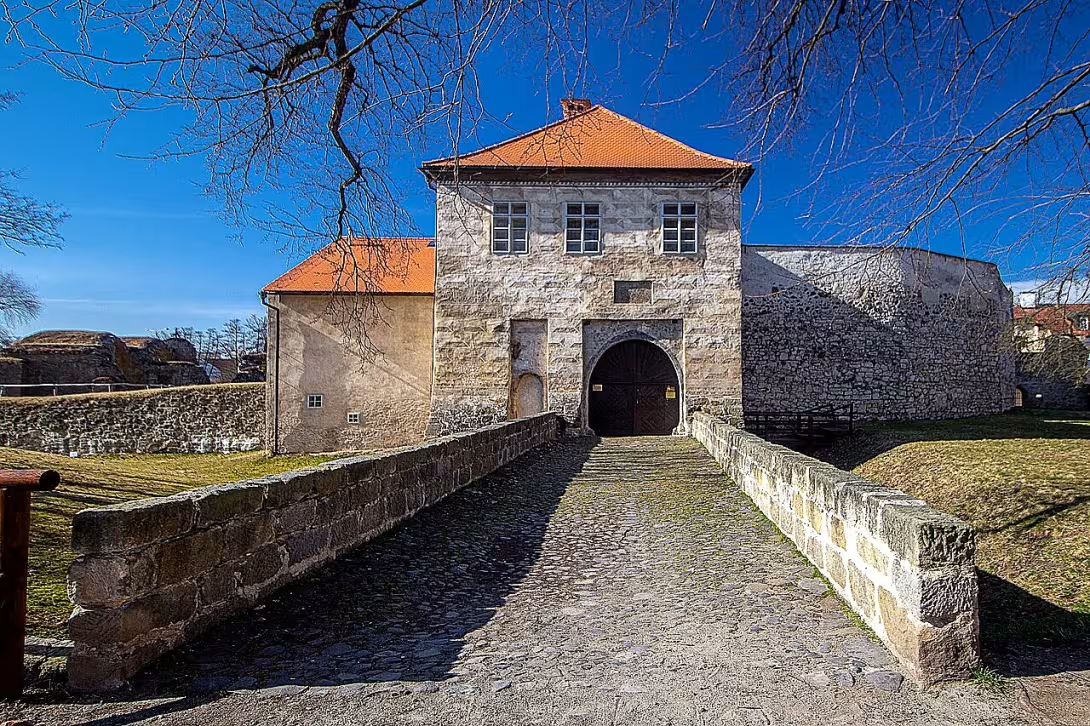
Lipý is a historic ruin of the castle, located in the heart of the town of České Lípa on the island between the shoulders of the river Ploučnice. This monument has roots dating back to the 13th century and is remarkable for its rich historical heritage, which includes transitions from the Gothic water castle to the Renaissance castle. Today only the remains of the original buildings are preserved and serve as a place for cultural events of the city.
The founding of Lipé dates back to around 1268 when Chval z rodu Ronovců built it. Originally, the castle was wooden and was located in the place of the guard castle of Serbian Milchans. His son Chenek continued to develop the mansion, which became a fortress with a stone tower of the type bergfrit and walls. This transition from wooden to stone was a key moment in the development of Lipý as a defensive site.
Architecturally Lipý evolved from a Gothic fortress to a Renaissance castle. The original wooden structure was replaced by stone walls and towers before 1300, which served as the last refuge for defensemen. During the 14th century there was further development with new palace structures and toilet tower. The Renaissance reconstruction in the 16th century brought new elements such as raised bridges and stone bridge near the castle.
The ownership of Lipé has changed over time between different noble families. The castle Jindřich z Lipé, followed by the Berkovci of Dubé in 1319, was taken over by the Ronovce Breed. These new owners expanded and modernised the structure of the castle. In the 15th century the castle became one of the foundations of the Hussite army, which led to its conquest and burning. After the Hussite wars, Lipý went into the hands of Zikmund Děčiných of Vartenberk and later returned to Berk.
On 19 May 1426 the castle was conquered by Hussite troops under the direction of Jan Roháč of Dubé, which led to its partial destruction. After Hussite wars, the castle became the property of Zikmund Děčiných z Vartenberk and later again Berk. During the 16th century there was a Renaissance reconstruction which turned Lipý into a castle.
The gradual destruction of the castle began after the Berk family, when they became owners of various noble houses and later Salomon Altschul. After the fire in 1820 and other confiscation, the castle lost its original function. In the 20th century, the remains of the castle were used for various purposes, including sugar factories and schools.
Today, only the foundations of the original buildings are preserved in Lipé's place. After archaeological research between 1995 and 2003, there is a gradual renovation that allows visitors to see the history of this place. The area serves as a venue for cultural events and is protected as a cultural monument.
Lipý represents not only an architectural heritage, but also evidence of historical changes in the region. Its ruins are a place where different periods of Czech history and culture meet. This is an opportunity for visitors to explore the rich past and appreciate the importance of the monument as part of the cultural development of Česká Lípa.
Then and now
Drag the slider to compare how the landmark may have looked when it was built with the view today.
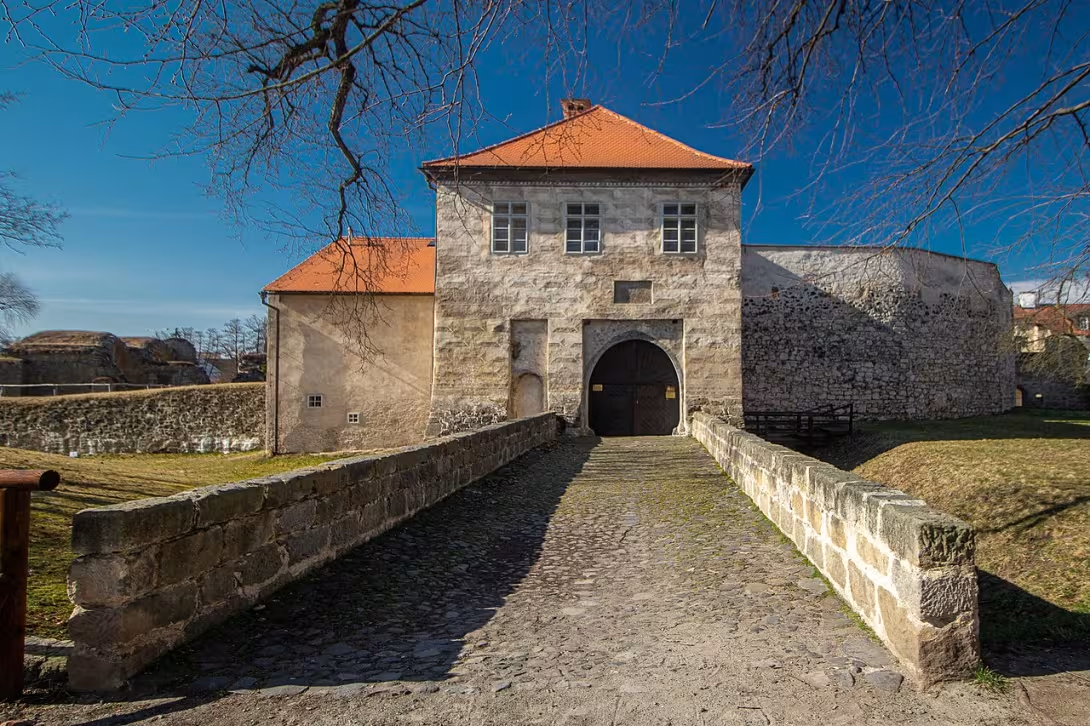
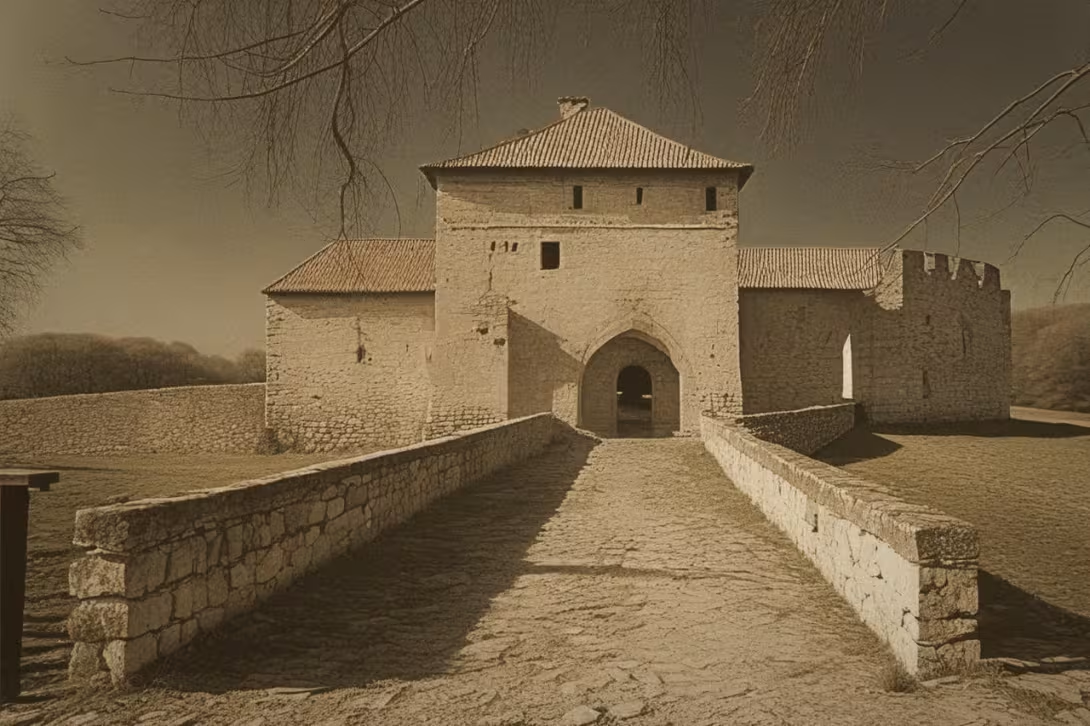
The historical appearance on the left is an AI-generated visualisation and serves as inspiration only.
Historical milestones
- 1268
- The founding of the Castle of Chval of Ronovce
- 1319
- Sale of the castle to the Berks of Dubé
- 1426
- Conquered and burned by the Hussite army
- 1591
- Minutes of sale of part of the castle in the bill of sale
Architectural development
The original wooden structure was replaced by stone walls and a bergfrit tower before 1300. In the 14th century, new palaces and toilet towers were created, while in the 16th century a Renaissance reconstruction took place to the castle. The current situation is mainly the remains of these buildings and the foundations of the original buildings.
Historical events
1268 the foundation of the Castle by Chval of Ronovce; 1319 sale of the castle to the Berks of Dubé; 1426 conquest of the castle by Hussite troops under the direction of John Roháč of Dubé; 1444 conquest of the castle by the soldiers of the Lužický Six Cities.
Owners
Chval z rodu Ronovců (around 1268), Jindřich z Lipé (after 1278), Berks from Dubé (from 1319), Zikmund Děčina from Vartenberk (from 1435), Berks from Dubé (after 1444).
Points of interest
- Lipý is a historic ruin of the castle located on the island between the shoulders of the river Ploučnice. The founding of Lipé dates back to 1268 when Chval z rodu Ronovců built it. - Architecturally Lipý evolved from a Gothic fortress to a Renaissance castle with a reconstruction in the 16th century. - On 19 May 1426 the castle was conquered by Hussite troops led by Jan Roháč of Dubé, which led to its partial destruction. - After archaeological research between 1995 and 2003, a gradual renovation of Lipý is taking place, allowing visitors to see the history of this place.
Guide
Show guide text
This text was created by artificial intelligence and has not been editorially reviewed. It may contain inaccuracies.
Welcome to the heart of Česká Lípa, where history meets the calm of flowing water. Right now, you're standing in front of the ruins of Lipé Water Castle. Stop for a moment and observe the surroundings. You are on an island that naturally separates the shoulders of the river Ploučnice. This position was not chosen by chance. Centuries ago, the water was the best ally of anyone who wanted to protect his home and property safely. Look around you at what's left of the castle. In front of you are the remains of a once powerful structure that has changed its face several times over time. Now you can't see the high walls or the roofs, but you can see the atmosphere of a place that once dominated the landscape.
Let us now return in time deep into the past, to the very beginnings of this place. Imagine this island around 1268. That's when the first fortification started. But it was not a stone work as we know from later times, but a wooden fortress. It was founded by Chval z rodu Ronovců, one of the most important noble families at the time. The Ronns were people with great power and influence, and they recognized the strategic importance of this place by the river Ploučnice. The wooden walls and palisades surrounded by water at that time were an inaccessible obstacle to the enemy. The castle Lipý thus began its journey as a fixed point in the landscape which was intended to protect and manage the surrounding territories.
Once time moved forward, the needs of the people of the castle changed. The wood was available but was not sufficiently resistant to fire or long siege. That's why Lipé gradually changed. A simple wooden fortification became a stone Gothic fortress. Gothic has brought with it a sense of invulnerability and stability. If you look around now, look at the foundations that resemble this era under your feet. Even though they are today only shadows of their former glory, they can still read the syllabus of the castle, which was supposed to be a military support point in the first place.
Now pay attention to what you see right in front of you. Note the preserved foundations of the palaces, the remnants of the walls and the tower tracks. It is these elements that are today the main witnesses of the past. Try to add in your mind how tall these walls once were and how powerful they must have been when visitors approached them on bridges across the river. The walls were not only an ornament, but a real barrier that separated the safe inner space from the dangerous world outside. The towers were then used as sightseeing points, from which it was possible to see the approaching danger or guests in time.
The history of Lipé, however, is full of dramatic twists and changes of owners. In 1319, the castle came into the hands of the Berk family of Dubé. This family was very influential in the region and Lipé Castle under their administration became the center of their power. Among the personalities associated with this place, we can also mention Chenka of Lipé or Henry of Lipé, who left their mark at different times in the history of this estate. Berks from Dubé, and especially Jan Roháč z Dubé, are names that appear in chronicles as symbols of ambition and struggle for influence in Czech countries.
One of the darkest and most fascinating moments in the history of the castle was 1426. At the time of the Hussite wars, when the Czech country was torn apart by conflict and struggle, the Hussite army reached Leipzig. Imagine the chaos, the screaming and the flames. The castle was conquered and burned down. The fire destroyed much of the Gothic fortress at the time. It was a turning point that struck a severe blow to the castle, but Lipé did not give up. Even after such a disaster, people returned and repaired and modified the construction.
As time went by, when the political situation settled, and the time of knights in coats with horses began to give way to the time of elegance and comfort, Lipý Castle went through another transformation. In the Renaissance period, especially in the sixteenth century, the strict military fortress began to become a representative castle. Renaissance brought a desire for light, space and beauty. The castle was no longer meant to be just an inescapable cabin, but a home where it was comfortable and where social gatherings were held. This reconstruction is also evidenced by documents, such as the 1591 purchase note, in which the sale of part of the castle is registered. This record shows us that the castle was still actively used at the time and was perceived as valuable property.
Unfortunately, no building is eternal. The biggest blow of the castle Lipý planted modern history After World War II, the Renaissance castle was demolished. So what you see today is primarily the oldest parts, foundations and ruins that have survived centuries, but the pressures of modern times have not stopped. It's sad to think how much beauty has been lost, but there's also something poetic about it. The ruin allows us to see deeper, all the way to the very roots of the building, and allows us to fantasize about what the castle looked like in various epoch.
An interesting thing that may interest you is the fact that the castle is still on its island. The water that once protected him from his enemies now surrounds him as a silent guardian. It is a place where the natural landscape and human architecture have become one whole. Imagine what it must have been like at a time when the castle was in full bloom and the water in the river Ploučnice served not only for defence but also for transport and fishing.
Today Lipý Castle no longer serves as a defence or as a seat of nobles. The campus has become a cultural space. Here are the events that return life to these old walls. Music, performances and meetings of people in ruins create a unique contrast between the silence of history and the noise of the present. When you look around like that, see how the smell of water, grass and old stone mingle.
Now I invite you to take a slow walk between the well-preserved foundations. Try to imagine where the corridors lead, where the doors stood, and where the nobles of the Ronovci family or the Berks of Dubé walked. Observe the details in the stone, follow the line of walls and let the atmosphere of this place consume you. Every stone here has a story, even if it's no longer written in any book.
Thank you for spending some time with us at Lipé Water Castle. We hope that you are interested in this journey over time and that you have felt the spirit of history that is still here. Now you can freely explore the rest of the island and enjoy the peace of the river Ploučnice. We wish you a pleasant follow-up trip to Česká Lípa and its beautiful sights. Goodbye.
Tips for visitors
Best time to visit the water castle Lip is during the summer months, especially from May to September. This period offers pleasant weather and beautiful vegetation, which decorate the surroundings of the castle. Visit him in the early afternoon for the best light for photography.
Parking is possible to find near the centre of České Lípa, where you can conveniently start your journey to the island with the castle. For those who prefer public transport, it is possible to use buses or trams to the city centre and drive further on foot or bike.
When visiting the castle, bring clothes suitable for walking on the hill, including shoes with good fingers and a protective umbrella. Also remember to drink and perhaps some light food preparation for a short break.
Photography here is great, especially in the early afternoon or evening. The best places for photos are on the north side of the castle, where the view of the river Ploučnice and the city panoramic picture is opened. The light in these hours is the most beautiful to capture the details of the ruins.
In the vicinity of the castle there is a river Ploučnice, which offers swimming and picnic options. For families with children it is the ideal place for a quick rest in nature. In addition, you can visit the centre of České Lípa, which offers several museums and cultural events.
Businesses nearby
Do you run a restaurant, accommodation, shop, museum, rental, wellness or other visitor service near this monument? Show yourself directly to the people heading to it — this is how they will see you in the app and on the web:
Nearby
Řeka Ploučnice, město Česká Lípa.
Accommodation nearby
Seasonal recommendations
Spring: In the spring season, vodní hrad Lipý turns into a great natural shelter, where flowering shrubs and trees color the landscape with beautiful colors. The sun illuminates the wall of the ruins in fine shades, which gives the atmosphere of romantic peace. It is advisable to visit the castle in the early morning or evening when there are fewer people and nature offers its full beauty. It is recommended to wear clothes with the possibility to dress or dress according to temperature.
Summer: During the summer season vodní hrad Lipý is a popular destination for visitors who enjoy bright days and warm sunlight. Thanks to the presence of many people it is advisable to visit the castle earlier on or later in the evening to avoid the peak hours. Clothes should be light and comfortable, with sun protection such as hats and sunglasses.
Autumn: In autumn days, vodní hrad Lipý offers a wonderful colour of the leaves, which make a living landscape around the ruins. The sun's rays light up through a weaker leaf cover and give the atmosphere a melancholy touch. It is advisable to visit the castle in the early afternoon to be used in the sun before setting the clouds. It is recommended to wear laminated clothing and a protective carrier.
Winter: In winter, vodní hrad Lipý is covered with snow, which gives its ruins a fantastic view. The sun lights up masonry in softer colours and the atmosphere is calm due to a lower number of visitors. It is advisable to visit the castle earlier because the opening time is shorter. It is recommended to wear warm clothes and protective shoes to move on the snow surface.
Visualizations and artistic views


The visualisations are generated by artificial intelligence and serve as inspiration.
Photos from the area
Real photos taken near the monument


Zdroj a licence jsou uvedeny u každého snímku.
Tips from visitors
No tips yet. Be the first!
Log in and add your tip.
Sources and literature
Photos: VitVit / CC BY-SA 4.0 — Wikimedia Commons. The author and licence also appear when you hover over the image.
Faktickým podkladem tohoto textu byl článek na Wikipedii, jehož autory jsou přispěvatelé Wikipedie. Článek je dostupný pod licencí CC BY-SA 4.0.
Location on the map


Příběhy a pověsti
Legendy, pověsti a příběhy spjaté s touto památkou

Fotografie návštěvníků
Zatím žádné fotografie. Buďte první, kdo přidá fotografii z návštěvy!
Log in a přidejte svou fotografii nebo hodnoťte.
Za ověřenou návštěvu v aplikaci získáte víc bodů — poznáme podle GPS, že jste na místě.
Reviews and comments