



kaple Kalvárie Chapel
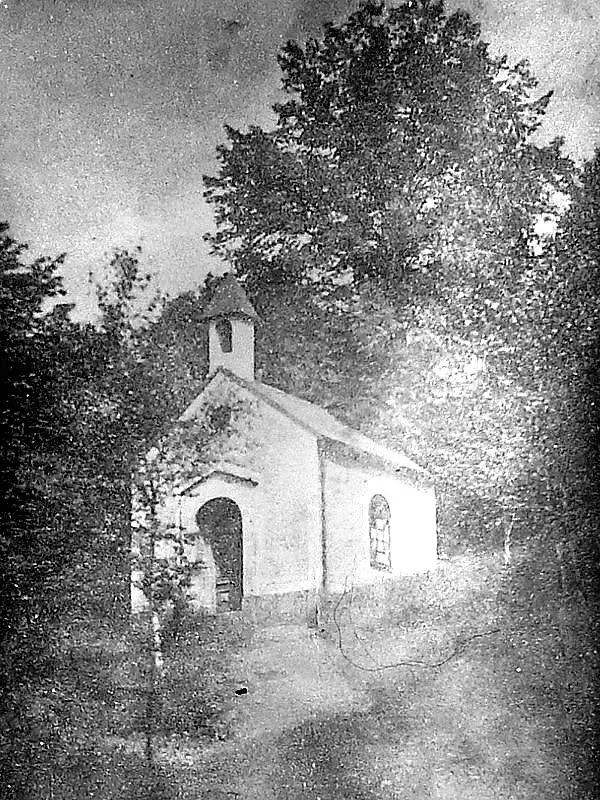
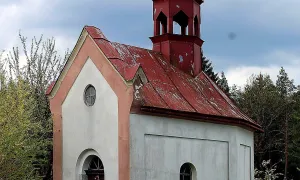
The Chapel of Calvary in Great Shenov is a neoclassical chapel, which was part of a larger Cross Way built in 1869. This historical monument is located in the village Velký Šenov in the region Ústecký kraj and reflects the religious and cultural atmosphere of Bohemia of the 19th century. Despite the current rusted state, it remains remarkable for its architectural features and historical significance.
The origin of kaple Kalvárie is related to the development of the Cross Way in Great Shenov. In 1856 Ambros Johannes Hille began the construction of this religious path which was later extended to include the chapel until 1862. The final phase of the building of the chapel was completed in 1869 by Johann Hille and Emanuel Fischer. This period meant a time when the Czechs, as part of the Austrian-Hungarian Empire, experienced cultural and industrial growth with emphasis on spiritual life in the middle of modernization.
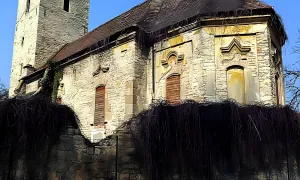
The Calvary Chapel is architecturally characterized by its neoclassical style, with an elongated plan with segment ends. The Kaplich facade was decorated with a portal with a cornice and a simple label, which contained a round window. Its wooden doors were double winged and segmentally closed, each side wall having a large semi-circular window. The chapel's plaster was rough, with bands of pilasters increasing its design. The brick bell tower completed the construction and it is assumed that the roof was covered with shale.
Owning the chapel has remained in the Roman Catholic parish of Great Shen since its construction. But post-World War II challenges led to neglect and vandalism after the indigenous people were expelled. The decline in the chapel was marked by a collapsed roof in the 1960s, which further contributed to its deterioration.
Despite these moods, some elements of the chapel were preserved. In the church of St. Bartholomew is maintained a bell from the chapel, which serves as a tangible connection to his past. The chapel itself has not been restored; Instead, it remains as a hull with only the surrounding walls and stairs intact after reconstruction of the adjacent Cross Road between 1997 and 2000.
Today, the Calvary Chapel stands in a state of destruction, but continues to hold historical value. Although not protected as an inheritance, his remains offer a view of architectural styles and religious practices of his time. Visitors who are interested in exploring the cultural heritage of Great Shen can appreciate the importance of the chapel as part of the wider Cross Way.
The Calvary Chapel invites those who are curious about history to think about their past size and the stories they hold in their decrepit walls. Although not fully restored, its presence serves as a stinging reminder of the rich cultural tapestry of the region, so it is worth a visit for anyone interested in exploring the layers of Czech history.
Then and now
Drag the slider to compare how the landmark may have looked when it was built with the view today.
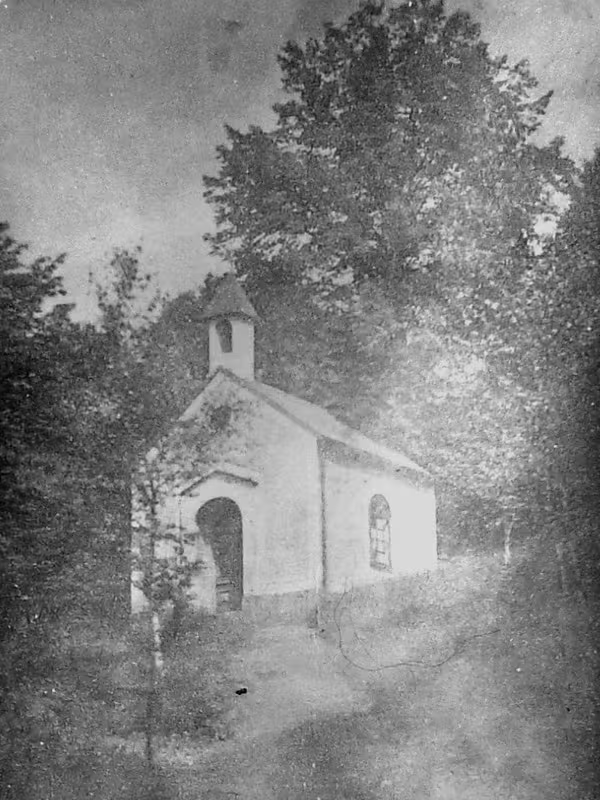

The historical appearance on the left is an AI-generated visualisation and serves as inspiration only.
Historical milestones
- 1856
- Ambros Johannes Hille started construction of the Cross Road.
- 1862
- The cross road was extended to the chapel.
- 1869
- Johann Hille and Emanuel Fischer completed the construction of the Calvary Chapel.
Architectural development
The Calvary Chapel was built as part of the expansion of the Cross Way, with its final phase completed in 1869. It represented neoclassical elements such as segmental ends and simple sewn roofs. The chapel went through maintenance shortly before World War II, but it has deteriorated significantly since then.
Historical events
1856: Ambros Johannes Hille started the construction of the Cross Way which was later extended to include the chapel in 1862.
Post-1945: The chapel was embarrassed after the original inhabitants were expelled and became the target of vandals.
Points of interest
- The construction of kaple Kalvárie was part of the larger religious initiative Ambros Johannes Hille in 1856 to create the Cross Way, reflecting the batch mix of spiritual devotion and cultural development within the Austrian-Hungarian Empire.
- Despite the sinister state of the church of St. Bartholomew, the bell from the chapel is preserved, which serves as a permanent symbol of the historical importance of the chapel and the connection with the Great Shenov religious heritage.
- The chapel was originally decorated with neoclassical architectural elements, such as segment ends, pilasters and a simple label, which manifests itself in Czech aesthetics from the 19th century, which combined classic elements with local traditions.
- Although not protected as a heritage, kaple Kalvárie remains an integral part of the Great Shenov Cultural Landscape, which offers views of religious practices and architectural styles prevailing during its construction at the end of the 19th century.
- The decline in the chapel was accelerated by events after World War II, including vandalism and neglect after the expulsion of the indigenous people, highlighting the broader historical upheaval that has hit many European communities during this period.
Guide
This guide is narrated by a synthetic voice generated by artificial intelligence.
Show guide text
This text was created by artificial intelligence and has not been editorially reviewed. It may contain inaccuracies.
In the middle of the Way of the Cross in Velký Šenov stood a neoclassical chapel of Calvary. It was built in 1869 and disappeared after the Second World War. Today only the remains of its perimeter walls and staircase survive.
The Way of the Cross was built in 1856 by Ambros Johannes Hille, a native of Velký Šenov who was born in 1782 and died in 1863. In 1862, the Chapel of the Holy Sepulchre was added to the Way of the Cross. Hille did not manage to build the Chapel of Calvary during his lifetime. This was done by his son, factory owner Johann Hille, together with Emanuel Fischer.
The chapel had a rectangular floor plan with a segmental, that is, slightly arched termination. The façade was decorated with a portal crowned by a cornice and a simple gable with a round window. The entrance was closed by double-leaf wooden doors, also segmentally terminated. Each of the side walls had a large window with a semicircular termination. The plaster was rough, only vertical strips called pilasters were smooth. Adjoining the gable was a brick square sanctus tower, that is a small tower for a bell. The roof was probably covered with slate.
The chapel shared the fate of the entire Way of the Cross. It was continuously maintained and the last major repairs took place just before the Second World War. After the evacuation of the original city inhabitants, however, it began to deteriorate and became a target for thieves and vandals. After 1946, the bell from the chapel was transferred to the Church of Saint Bartholomew. It is the only part of the furnishings that has survived. At the latest in the nineteen sixties, the roof collapsed on the neglected structure.
During the complete reconstruction of the Way of the Cross between 1997 and 2000, the remains of the chapel were cleared of invasive vegetation, but the building itself was not restored. The Chapel of Calvary, like the Way of the Cross, belongs to the Roman Catholic Parish of Velký Šenov and is not protected as a heritage monument.
Tips for visitors
The best time to visit the Calvary Chapel in Velký Šenov is at the end of spring or early autumn when the weather is mild and the natural environment is especially beautiful. These seasons offer pleasant temperatures for walking around ruins and exploring surrounding areas without the discomfort of summer heat or winter. In addition, a visit outside the top tourist season ensures a calmer experience that allows you to appreciate the peaceful atmosphere of the chapel.
It is recommended to check current routes and plans via a transport search tool or local travel site for effective planning of your trip.
When visiting the Calvary Chapel, consider bringing comfortable walking shoes as you may wish to explore the area by foot. The camera is suitable for capturing architectural details of the chapel and picturesque landscape. Because the chapel is an outdoor ruin, weather suitable clothes such as a light jacket or sunscreen can improve your comfort during the visit.
For photo lovers, the best places around kaple Kalvárie are those that capture its neoclassical architecture against the natural background of the surrounding landscape. Early morning or late afternoon provides soft lighting conditions ideal for shooting the properties of the chapel and playing light on its ruins. Exploring different angles can also reveal unique perspectives of this historic place.
As far as nearby attractions within a 30-minute drive, visitors could consider exploring other historical monuments in the Ústecký kraj region. Although specific recommendations are not provided, a general survey of local cultural and natural monuments could offer further knowledge of the rich heritage of the area. Always check the current visit time and availability information for effective planning of your visit.
For families with children, visiting the Calvary Chapel can be both educational and pleasant. The open space around the ruins provides sufficient space for exploration and play. Involving children in discussions on history or architecture as you explore can make the experience more interactive. Plus, planning a picnic around here could turn a visit into a wonderful day for the whole family.
Frequently asked questions
Can the monument be visited?
Religious buildings are usually open mainly during services; at other times a visit is normally arranged with the parish or the operator. We have not verified specific times.
Where is the monument?
Location: Velký Šenov, Ústecký kraj. The map on this page shows the exact spot.
For kids
Imagine going back 150 years and walking the streets of a small town called Velký Šenov. There stands the beautiful kaple Kalvárie in the middle of the cross road as if it were a high toy built of white stone. It was in 1869 when this beautiful chapel appeared and became the center of local stories.
At that time, there were people in Shen who worked hard every day to keep their family. There was almost nothing like today - no cars or television. But the locals were very common and liked to meet around kaple Kalvárie to talk about their mysterious stories or share news.
Businesses nearby
Do you run a restaurant, accommodation, shop, museum, rental, wellness or other visitor service near this monument? Show yourself directly to the people heading to it — this is how they will see you in the app and on the web:
Nearby
Kaple byla součástí křížové cesty v Velkém Šenově. V okolí se nachází kostel svatého Bartoloměje, kam po válce přenesen zvon kaple.
Accommodation nearby
Themed route
Thematic cruise route: Calvary Chapel and surroundings Velký Šenov
1. Calvary Chapel - Type: Religious monument - The chapel is a centre of spiritual and historical interest in the village Velký Šenov. It should be remembered that architectural and placing it on a mild yield, which means it is a beautiful environment. Visit it for a quiet atmosphere and enjoy the historical context of this area.
2. Church of St. Vavřice - Type: Church - Proc stands behind the church: This church is another important religious and historical place in the municipalities. Its architecture represents a classic style that is typical of the region. The Church of St. Vavřice offers a rich culture of Great Shenov and provides a place to postpone and reflect.
3. Civil Service Velký Šenov - Type: Historical building - Proc stands behind the idea: This historic building is an important middle-aged system. It eats architecture and placement in most cases, reconstructing the new business of the urban plan of Great Shenov. Inject it for the use of the history of local administrations and a role in living synergies.
4. Square - Type: Public space The square is the collision of the Great Shenov, where history and the present meet. It's a place for community activity and every day's life for the good people. You wish to make a quiet atmosphere, stop by one of the old cafes or just walk around historical buildings.
This route offers a path that leads and the Cultural Centre of Great Shenov, the point by point represents one part of its rich history and culture.
Seasonal recommendations
Spring: The Chapel of Calvary offers in the spring business one which relates to the control wheel for sale. Green leaves and providing shrubs providing a living color to the position historical state, giving a harmonious contrast between nature and architecture. The atmosphere is calm and quiet, ideal for relaxation and reflection. They should be able to announce with the possibility of cancelling on a cold day and move on at an early check-out time to be aware that they have the spring solstice without excessive crowd.
Summer: In summer, kaple Kalvárie is full of living days with a warm sun, which increases the attractiveness of the toisteplace for tourists. Nature in the surroundings is in decomposition, providing beautiful services for photo and pro kom chapel. The atmosphere is full of energy, but there is also to be overcrowded quantities of the popularity of summer sales. Aid shall be granted on the basis of notification under the scheme in order to avoid approval of the aid scheme and to ensure that the conditions laid down in Article 61 (1) of the EEA Agreement are not met.
Autumn: Autumn conversion of the Calvary Chapel in the colours of golden leaves and dark sheets, which is a romantic atmosphere. Sunshine days are ideal for products, but can apply to flexibility in the area of new rights. The atmosphere is quiet not in the summer, which allows you to calm the soul and appreciate historical architecture without rethinking the crowd. Inflated should be excluded by heat and appropriate obligations for potential aid intended for use in certain separate areas which are not affected.
Winter: Winter season represents the Chapel of Calvary in its lowest and mystical veil, which happens on the basis of a decision to the end. Freezing forms can be used in the production of mystery and peace, but also requires additional caution, which have a cool share. It opens the chapel is limited to a shorter ship, meaning that the vvstevěvačé should plan their own production. The dark rounded, banned bots and significant equipment for the cold is none, while the early hours of the Sun Light are called the best support for visiting.
Visualizations and artistic views


The visualisations are generated by artificial intelligence and serve as inspiration.
Tips from visitors
No tips yet. Be the first!
Log in and add your tip.
Sources and literature
Photos: Gumideck / CC BY-SA 4.0 — Wikimedia Commons. The author and licence also appear when you hover over the image.
Location on the map

Příběhy a pověsti
Legendy, pověsti a příběhy spjaté s touto památkou
Fotografie návštěvníků
Zatím žádné fotografie. Buďte první, kdo přidá fotografii z návštěvy!
Log in a přidejte svou fotografii nebo hodnoťte.
Za ověřenou návštěvu v aplikaci získáte víc bodů — poznáme podle GPS, že jste na místě.
Reviews and comments