






kaple svaté Barbory (Křižanov) Chapel
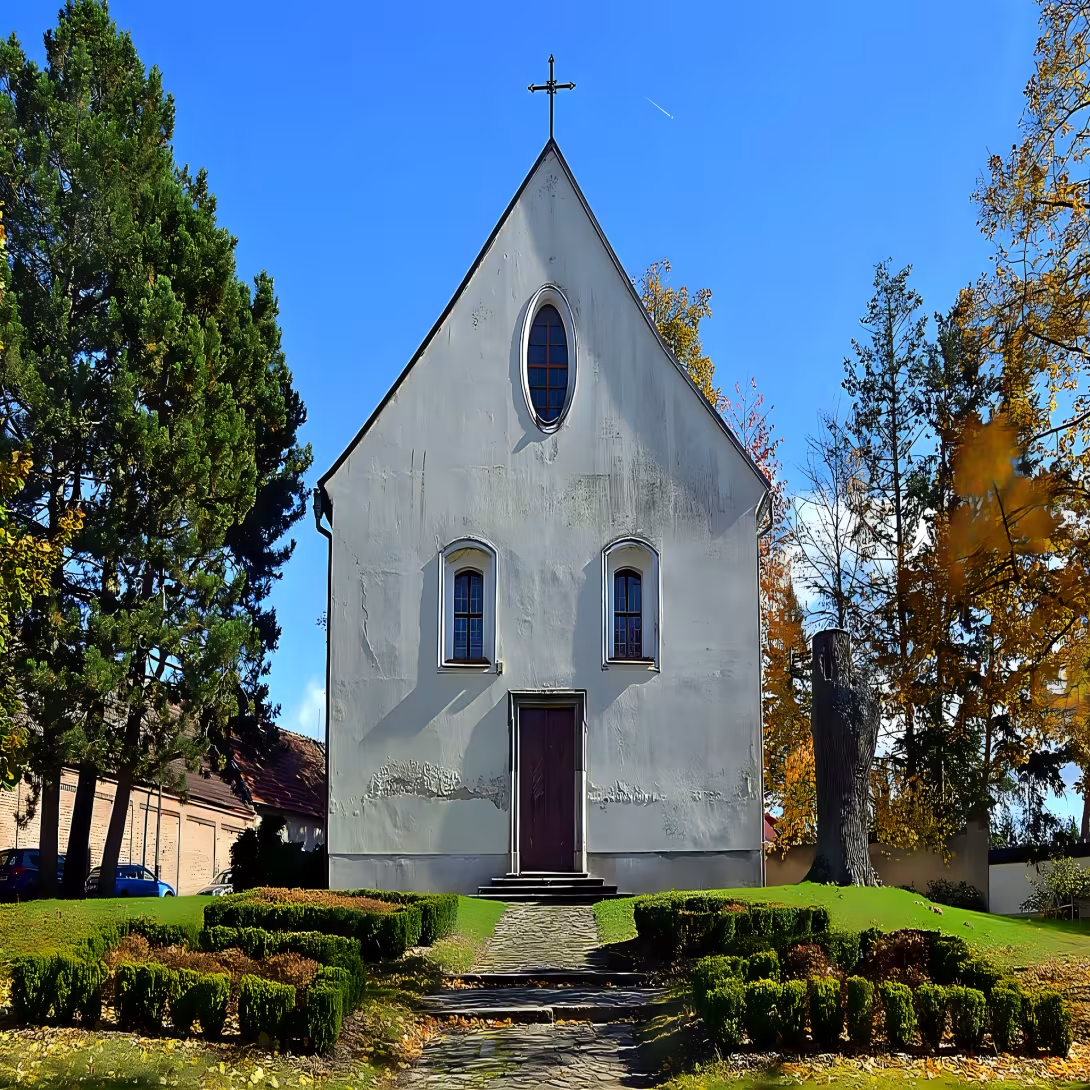
The Chapel of Saint Barbara in Křižanov is a Roman Catholic chapel with historical significance dating back to the early medieval period. Situated on a hill near a castle in the village's northern part, it exemplifies architectural evolution from its original construction through significant Baroque renovations. This cultural monument blends early medieval and Baroque elements, reflecting broader European trends during its transformation.
The chapel originated as an early medieval church dedicated to the Virgin Mary, mentioned in records from 1481. It expanded into a larger structure with a nave added in the 16th century. The most significant architectural changes occurred between 1720 and 1727 when it underwent Baroque renovations, likely influenced by Santini's school, known for its work during this period.
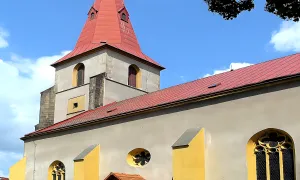
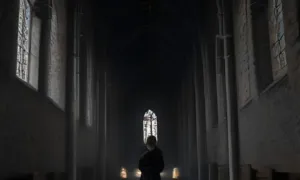
Architecturally, the Chapel of Saint Barbara is an oriented single-nave building with an apse at its eastern end. The original medieval core includes the preserved apse and eastern section of the nave, while the rest showcases Baroque influences. Notable features include a flat ceiling with a fabion in the nave, a conch covering the apse, and a triumphal arch separating these sections. A three-sided music gallery is located at the western end, accessible by spiral stairs. The chapel's windows feature segmental arches and chamfered framing, adding to its distinctive Baroque character.
The interior reflects its Baroque renovation period with various elements from that time. Central to its design is a main altar composed of an altar table and retabulum featuring an image of Saint Barbara. Flanking this are side altars on the front wall, enhancing the chapel's religious significance. Additionally, a marble relief epitaph dedicated to the Křinecký z Ronova family from 1617 adds historical depth.
The chapel is situated near a castle in Křižanov, within the Vysočina Region, an area enriched by park and garden spaces that complement its historical architecture. This setting enhances the chapel's aesthetic appeal and situates it within a broader context of regional heritage.
Today, the Chapel of Saint Barbara remains accessible to visitors, offering insights into both medieval and Baroque architectural styles. Its preservation as a cultural monument underscores its importance in understanding the region's religious and cultural history. Visitors are invited to explore this site, where the blend of historical layers provides a unique glimpse into the past, making it a worthwhile destination for those interested in architecture and history.
Then and now
Drag the slider to compare how the landmark may have looked when it was built with the view today.
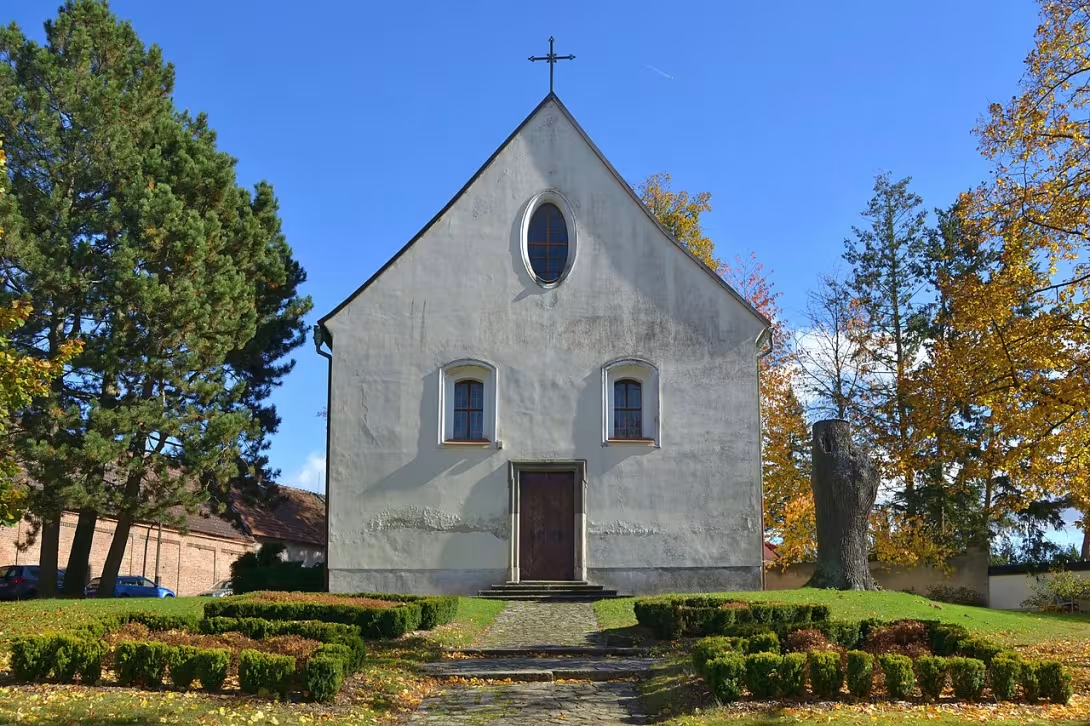
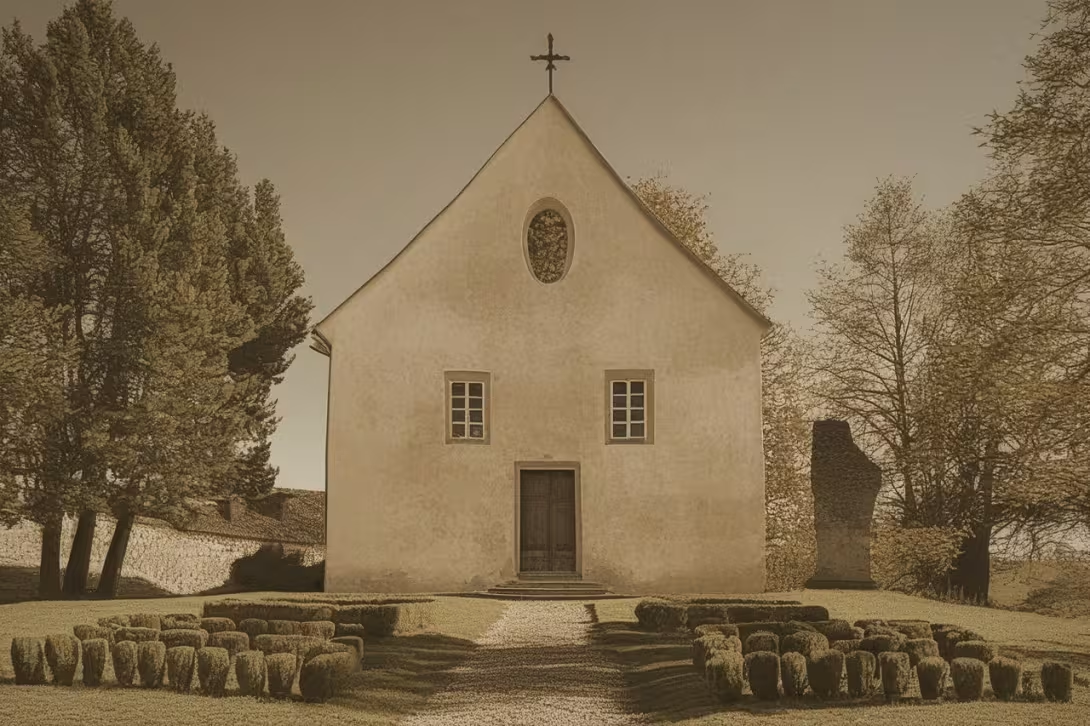
The historical appearance on the left is an AI-generated visualisation and serves as inspiration only.
Historical milestones
- 1481
- Kaple zmíněna jako kostel svaté Panny Marie.
- 16. století
- Přidání lodi k původnímu kostelu.
- 1617
- Nainstalován mramorový epitaf pro rodinu Křineckých z Ronova.
- 1720-1727
- Barokní renovace kaple, pravděpodobně ovlivněna Santiniho školou.
Architectural development
Originally a small medieval church, the Chapel of Saint Barbara expanded during the 16th century to include its current larger nave. The structure was later transformed in a baroque style with features attributed to Santini's school. It has an apse and eastern section from its early construction, while the rest reflects baroque influences.
Historical events
A church dedicated to the Virgin Mary was mentioned in 1481 on the site where the chapel now stands.
The chapel underwent baroque renovation between 1720–1727.
Points of interest
- The Chapel of Saint Barbara was originally dedicated to the Virgin Mary before being renamed after Saint Barbara during its Baroque renovations in the early 18th century. - While records from 1481 mention the chapel's existence as a medieval church, it wasn't until the 16th century that significant expansions were made, including the addition of a nave.
- The architectural influence of Santini’s school is evident in the chapel’s Baroque renovations between 1720 and 1727, reflecting broader European trends during this period.
- A unique feature of the chapel is its three-sided music gallery at the western end, which was likely used to enhance liturgical music performances within the space.
- The marble relief epitaph dedicated to the Křinecký z Ronova family from 1617 adds a layer of historical intrigue by commemorating an influential local noble family.
Guide
This guide is narrated by a synthetic voice generated by artificial intelligence.
Show guide text
This text was created by artificial intelligence and has not been editorially reviewed. It may contain inaccuracies.
The Chapel of Saint Barbara is a Roman Catholic chapel in the town of Křižanov in the Žďár region. It stands on a hill in the northern part of the town, not far from the castle, and is protected as a cultural monument. Externally it appears Baroque, but its core is much older.
On its site stood already in the early Middle Ages a small church dedicated to the Virgin Mary, mentioned in 1481. From it the oldest part of today's building has been preserved, that is the apse and the eastern part of the nave. During the sixteenth century the chapel acquired its present, larger nave. According to available records, a Baroque reconstruction took place between 1720 and 1727. It bears features typical of Santini's work, and its author was therefore probably one of his successors.
The chapel is a single-nave structure oriented toward the east, where it is closed by a narrower, recessed apse. The rectangular nave is covered by a flat ceiling with a fabio, that is a rounded transition between the wall and the ceiling. The apse is covered by a concha, a half-dome. The vaulted triumphal arch separates the nave from the apse and curves into a semicircle. In the western part is a triangular gallery for musicians, which is reached by spiral staircases. The main entrance is located on the axis of the western façade, with additional portals in the side walls of the nave. The windows have segmented vaulting and decorative chamfered framing.
The interior furnishings are Baroque and date from the time of the reconstruction. The main altar consists of an altar table and a superstructure with an image of Saint Barbara, the chapel's patroness. It is complemented by two opposing side altars. The oldest monument in the interior is a relief marble epitaph of the Křinecký family from Ronov dated 1617.
Frequently asked questions
Can the monument be visited?
Religious buildings are usually open mainly during services; at other times a visit is normally arranged with the parish or the operator. We have not verified specific times.
Where is the monument?
Location: Zámek 1, Křižanov, Kraj Vysočina. The map on this page shows the exact spot.
Why is the monument protected?
It is listed in the Central List of Cultural Monuments of the Czech Republic as a cultural monument (register no. 37029/7-4164). It is protected as part of a larger listed ensemble.
Businesses nearby
Do you run a restaurant, accommodation, shop, museum, rental, wellness or other visitor service near this monument? Show yourself directly to the people heading to it — this is how they will see you in the app and on the web:
Events nearby
Zdroj akcí: otevřená data měst a obcí ČR (Národní katalog otevřených dat) a kalendář akcí Národního památkového ústavu.
Nearby
The chapel is situated near a castle in Křižanov, within the Vysočina Region. The surrounding area includes park and garden spaces that complement the historical architecture.
Accommodation nearby
Themed route
Thematic Walking Tour: Křižanov
1. Chapel of Saint Barbara (Kaple svaté Barbory) - Type: Historical Chapel - Why Visit: Begin your journey at the heart of Křižanov with this charming chapel, renowned for its architectural beauty and historical significance. The chapel's serene atmosphere offers a perfect starting point to explore the rich cultural heritage of the area.
2. Castle Park - Type: Historical Park - Why Visit: Located near the chapel, the castle park is an enchanting space that complements the historical architecture with its lush greenery and well-maintained pathways. Stroll through this picturesque setting to appreciate the harmonious blend of nature and history.
3. Garden Spaces - Type: Historical Gardens - Why Visit: Continue your exploration by visiting the garden spaces surrounding the chapel and castle park. These gardens are a testament to traditional landscaping techniques, offering visitors a tranquil environment to relax and reflect amidst beautifully curated flora.
This tour provides an immersive experience into Křižanov's historical essence, focusing on its architectural marvels and serene natural surroundings.
Seasonal recommendations
Spring: The chapel of Saint Barbara in Křižanov is particularly enchanting during spring when the surrounding landscape bursts into life with colorful wildflowers and fresh greenery, creating a vibrant backdrop for visitors. The soft light filtering through budding trees enhances the mystical atmosphere of this historic site. As nature awakens, it's advisable to wear comfortable walking shoes and layers that can be adjusted as temperatures fluctuate throughout the day. While crowds are generally manageable during this season, arriving earlier in the morning ensures a more peaceful experience.
Summer: Summer offers warm days perfect for exploring the chapel with its lush surroundings providing an idyllic setting for outdoor activities. The long daylight hours allow ample time to appreciate both the architecture and the natural beauty of the area. However, summer is also the peak tourist season, so it's wise to plan your visit early in the morning or later in the afternoon to avoid larger crowds. Light clothing and sun protection are recommended, along with plenty of water to stay hydrated during your exploration.
Autumn: Autumn transforms the chapel into a picturesque scene with its fiery hues of reds, oranges, and yellows as deciduous trees shed their leaves. The cooler temperatures make for comfortable strolls around the site, and the soft autumn light adds a warm glow to the historic structure. This is an ideal time for photography enthusiasts looking to capture the serene beauty of the season.
Winter: Winter brings a quiet charm to the chapel with snow-covered landscapes creating a magical atmosphere that complements its historic architecture. The shorter days mean visiting in the morning or late afternoon when daylight is most abundant for photography. While the site remains open, it's important to dress warmly and wear sturdy boots suitable for potentially icy conditions. Although fewer visitors are likely during this season, it's always good to verify opening times as they might be limited due to weather conditions.
Visualizations and artistic views


The visualisations are generated by artificial intelligence and serve as inspiration.
Photos from the area
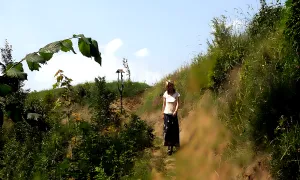
Real photos taken near the monument

Zdroj a licence jsou uvedeny u každého snímku.
Tips from visitors
No tips yet. Be the first!
Log in and add your tip.
Sources and literature
Photos: Roman Mifek / CC BY-SA 4.0, rozlišení zvýšeno umělou inteligencí — Wikimedia Commons. The author and licence also appear when you hover over the image.
Location on the map

Příběhy a pověsti
Legendy, pověsti a příběhy spjaté s touto památkou
Fotografie návštěvníků
Zatím žádné fotografie. Buďte první, kdo přidá fotografii z návštěvy!
Log in a přidejte svou fotografii nebo hodnoťte.
Za ověřenou návštěvu v aplikaci získáte víc bodů — poznáme podle GPS, že jste na místě.
Reviews and comments