



Kaple svatého Gotharda Chapel
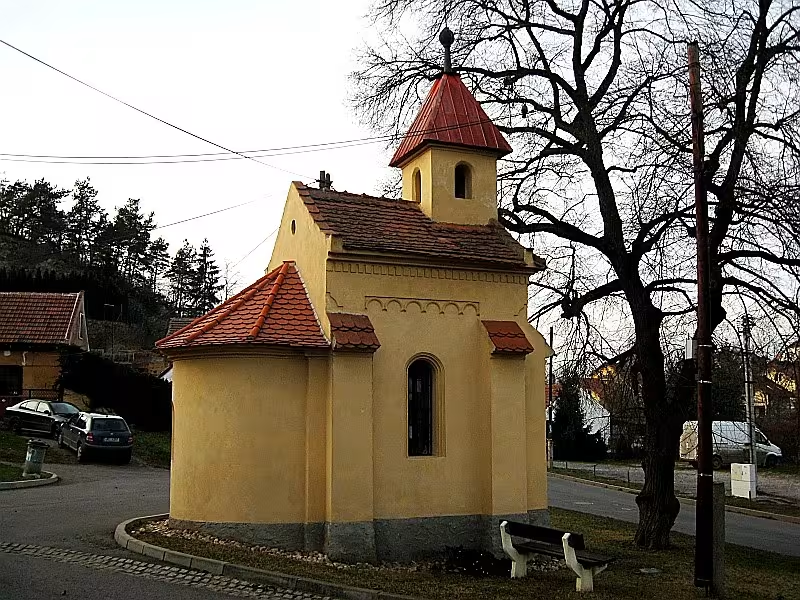
The Kaple svatého Gotharda in the Great Plots in Prague-West district is a New Romanesque sacral building from 1880. This cultural monument, protected since 2009, replaced an older Baroque object and represents a typical example of the historical architecture of the 19th century.
The original baroque chapel was built in the village in 1772 as a protection against crop failure. However, the construction has been fading over time. In addition, its location on the eastern side of the village made it difficult to operate and enter local settlements, so it was decided to build a new chapel in a more suitable place. At the time of its inception in 1880, Czech countries experienced the boom of historic architecture within Austria-Hungary. At the time, rural modernisation often led to modifications to the sites and the construction of new public buildings.
The construction has a rectangular plan with a semi-circular approach towards the south and a tower at the head in which the bell is located. The facade breaks visible support pillars covered by counter roofs and mantelpieces decorated with teeth. In the side facades of the ship there are half-circle arched windows in profiled plaster sides, half-circle arched niche is broken in the apside axis. The southern portal consists of a semi-ring arched niche with a profiled edge and an entrance with a profiled archive. The date sign of the Lord's summer 1880 is placed above the entrance. The object is plastered with a smooth limestone plaster of light ochre colour, the plinth is formed by rougher bright grey plaster. The main ship covers the saddle roof, the apsid roof valbic; roofing is made up of ceramic bags of bomniks.
The owner of the chapel is the village of Great Sticks. During the interwar period, the original ceramic cover on the bell tower was replaced by tin. In 1990 the facade was repaired and in 2008 the municipality provided a comprehensive reconstruction including the restoration of doors and windows. The interior is linked to the history of St. Gothard's altar painting, which was consecrated together with the original chapel in 1772. When the new building was consecrated in 1880, the original painting was replaced by a copy, while the late Baroque frame was restored and placed in the new building. In 2010, the municipality had this work restored.
The original chapel has a local reputation for two bricklayer brothers, John and Joseph. In the hot summer of 1877, angels appeared to them in a dream and called on them to build a chapel so that passengers would have a place to rest and hide from adversity. The brothers then built the chapel and, according to the story, they were to be rewarded for their obedience with images that came from heaven.
Kaple svatého Gotharda shows changes in rural architecture and local godliness at the end of the 19th century. The visit to this building offers the opportunity to see a sensitively maintained cultural monument, which, even after more than a hundred years, has played a role in the urban community.
Historical milestones
- 1772
- Construction of the original Baroque chapel of St. Gothard.
- 1880
- Construction of the current New Romanesque Chapel.
- 2009
- The chapel is declared a cultural monument.
Architectural development
The construction is done in a new Romanesque style with smooth lime plaster. The main ship is covered by a saddle roof, apsida valbic, the original ceramic cover on the bell tower was replaced by tin during the interwar period. In 1990 and subsequently 2008 the facade, windows and doors were repaired.
Historical events
1772: Construction of the original Baroque chapel. 1880: Completion and ordination of the new New Romanesque chapel. 2009: Declaration for cultural heritage.
Owners
Municipality of Great Sticks
Points of interest
- The chapel is a New Romanesque sacral building from 1880, which replaced an older Baroque building. - The original Baroque chapel was built in 1772 to protect it from the crop. - The building has a rectangular plan with a semi-circular apside and a tower in which the bell is located. - In the interwar period, the original ceramic cover on the bell tower was replaced with tin. - The original chapel has a reputation for two bricklayer brothers, to whom angels appeared in a dream and called them for construction.
Guide
Show guide text
This text was created by artificial intelligence and has not been editorially reviewed. It may contain inaccuracies.
Welcome. You are standing in a place where history touches the present and in the silence of the village there is a story of many generations. In front of your eyes is the chapel of St. Gothard. Even though this sacral structure is small, its presence is strong and it immediately brings you to a quiet, spiritual space. Feel the atmosphere around her. It is a place that does not only act as a building of stone and mortar, but as a living witness to the time that lasts and watches the changing world around it. Look at her face and try to imagine how many people have stood before you in this place looking for comfort or answers to their questions.
Now let's move further into the past together to understand why this building looks just like this. In order to understand the present, we must return to the beginnings that are much older than might appear at first sight. Already in the year one thousand seven hundred seventy-two there stood another chapel. It was a Baroque-style building, which at the time corresponded to both spiritual and aesthetic feelings. Why did people build it then? The motive was very deep and related to the most basic needs of man - the need to survive. At that time, people were afraid of crop failure, that their fields would not give birth to enough rides and that hunger could take over their lives. This original Baroque chapel was supposed to be a certain protection, a spiritual support for the whole village in difficult times when nature did not want to be kind.
But time has brought great changes. The village was growing, life was accelerating, and what was right before became an obstacle. The original place where the old Baroque chapel stood simply no longer suited the needs of the then transport. The roads changed, people moved in different directions, and the position of the chapel on the village was no longer consistent with how the village worked. So there had to be a new way, literally even carried. So it was decided that the old building had to give way to new ones. In the year one thousand eight hundred and eighty, this present chapel was built, which you now admire. It's a Neo-Romanesque style building that tries to return to strength, stability and geometric purity. This transition from baroque curvature to New Romanesque directness is a fascinating mirror of how people's minds changed over the centuries.
Now pay attention to the architecture itself and look at the details that are right in front of you. Notice the overall form of the construction. The chapel has a rectangular plan, which gives it a sense of balance and strength. If you start going around it, you'll notice that there's a semi-circular range on one side called apsida. This element is typical of sacral buildings and gives the building its spiritual character. There is a tower at the head of the chapel. This tower is not just an ornament, it is an important point in the landscape that signals the presence of a sacred place. And if you look closer, you can realize that it is in this tower that the bell is hidden. Imagine the sound of it carrying through the air and announcing to people important moments in their lives.
Now look at the facade itself, the face of the building. Notice how it is divided by several important elements. See those pillars? These vertical parts act as solid arms that hold the walls and give the construction a sense of unshakefulness. And now look at the moldings, the horizontal elevated parts that decorate the walls. They're decorated with so-called teeth. These small, regular geometric shapes create an interesting rhythm on the facade and play light and shadow. This detail, although small, gives the whole building the right degree of dignity and beauty a sacral object should have. This whole New Romanesque architecture is about strength, about stability, and about the existence of something lasting in this world.
Although we do not know the names of the particular architects who designed this project, nor do we know the names of the people who put every stone into this building, we must realise that their work here still lives. Every detail you see now is the result of their efforts and their belief that this place will serve other generations. There are hidden their prayers, their hopes and their efforts to create something beautiful and lasting. This chapel is a monument to unknown creators who have left their work a mark in time.
It's fascinating how our perception of history changes. What was once just an ordinary part of village life is now a rare treasure that we must protect. In the year two thousand and nine, this chapel was officially declared a cultural monument. This is proof that its value is not only in its decorative details or at its age, but in what it represents for our common heritage. It is a connection with our ancestors, with their fear of crops, with their need to have their own place of prayer and their ability to adapt to a changing world.
Now you can walk freely and perceive every corner of this chapel. Let yourself be carried away by the atmosphere of this place and look at the details you may have missed at first glance. Feel the harmony between architecture and surroundings. Thank you for stopping by and paying attention to the chapel of St. Gothard. We hope that this brief insight into the past has brought you interesting thoughts and peace of mind. We wish you a beautiful rest of the day when you discover the beauty of this place.
Tips for visitors
The best time to visit is in the morning or late afternoon when the sun creates soft shadows on the New Romanesque facade and emphasizes architectural details of the construction. For photography, I recommend using a wide-angle lens from a respectful distance to capture the chapel on its whole scale against the surrounding building. Take your comfortable shoes with you for a walk around the village and if you are interested in the history of local sacral architecture. In the vicinity of the Great Apartment in the Prague-West area you can take a quiet walk through the villages, which offers a view of the rural atmosphere, which complements the historical context of this building from the end of the nineteenth century.
Frequently asked questions
Can the monument be visited?
Religious buildings are usually open mainly during services; at other times a visit is normally arranged with the parish or the operator. We have not verified specific times.
Why is the monument protected?
It is listed in the Central List of Cultural Monuments of the Czech Republic as a cultural monument (register no. 1604445794).
Businesses nearby
Do you run a restaurant, accommodation, shop, museum, rental, wellness or other visitor service near this monument? Show yourself directly to the people heading to it — this is how they will see you in the app and on the web:
Events nearby

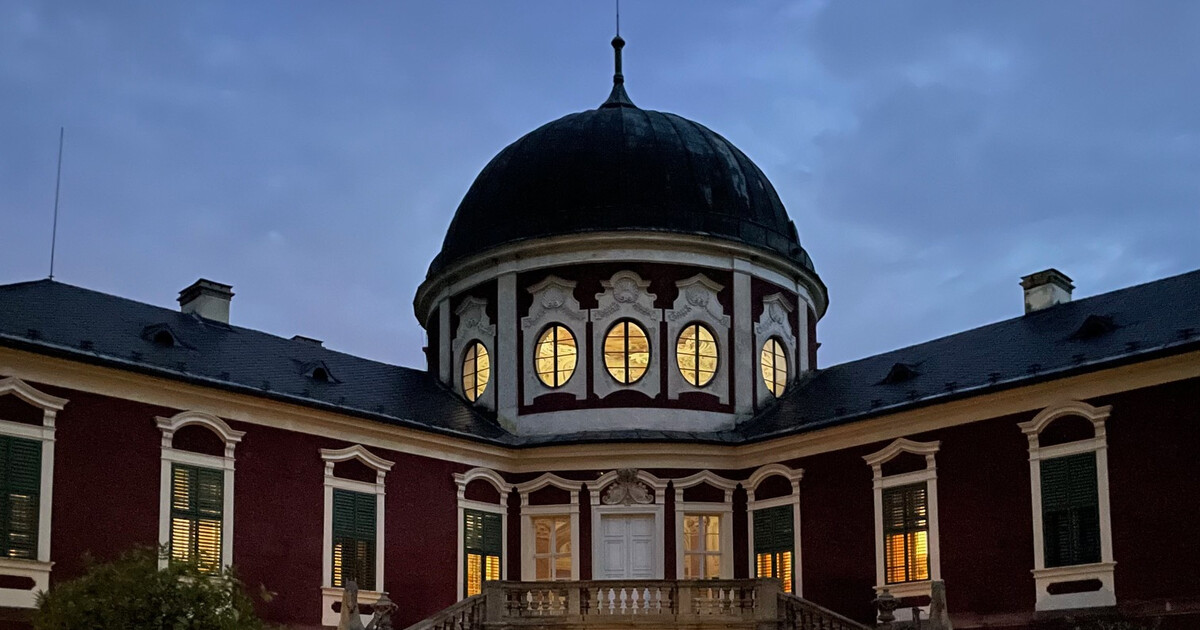

Zdroj akcí: otevřená data měst a obcí ČR (Národní katalog otevřených dat) a kalendář akcí Národního památkového ústavu.
Nearby
Obec Velké Přílepy, oblast Praha-západ.
Accommodation nearby
Trips and activities nearby
Guided tours, tickets and activities nearby from GetYourGuide
Affiliate link: if you buy from the partner, we may receive a commission. The price for you does not change.
Search tours and activities →Themed route
1. Municipality of Great Sticks Type: municipality Walk the village and the road to the main monument.
2. The outer space of St. Gothard's Chapel Type: architecture Observing the exterior facade and details of the construction.
3. Interior of the chapel of St. Gothard Type: sacral space A tour of the inner facilities and space for quiet contemplation.
4. The area of the chapel of St. Gothard Type: surrounding area Walk in the immediate vicinity of the monument.
Seasonal recommendations
Spring: In the spring season of St. Gothard's Chapel, there is a unique shiny lighting, where the sun's rays penetrate through towers and windows, creating a touching atmosphere. The surrounding green nature awakens from its winter sleep, with flowering bushes and trees surrounding the memory, which gives pilgrims a feeling of a new beginning. For the visit it is advisable to prepare a light coat or plaid, because morning and evening can become colder. The best time to walk around the chapel is at noon when the sun lights up the whole area.
Summer: In the summer season, the surroundings of St. Gothard's Chapel become full of life and color. Sunshine days amplify the beauty of the sacral structure, while long sunlight creates dramatic shadows on its facades. Nature is in full bloom, with a variety of plants and animals, which adds a lively atmosphere to the pilgrimage. Visitors are advised to wear light clothes and protective sunglasses to enjoy a walk without discomfort from overheating. The best time to visit is in the morning or in the afternoons, when the temperature gets lighter.
Autumn: During the autumn, the chapel of St. Gothard becomes melancholy and calm. The leaves turn into a rich palette of shades, giving the surrounding countryside unique beauty. The sun is lower in the sky, meaning shorter light clocks and longer shadows around the monument. This is the perfect time for a quiet walk without large crowds of tourists. It is recommended to wear warmer clothes such as a jacket or scarf, and perhaps shoes suitable for walking on dry leaves. The best time to visit is in the forecast hours.
Winter: In winter, the Chapel of Saint Gothard has a magical atmosphere where snow covers its surroundings and trees, making the view even more impressive. Sun rays on the snowy background create captured photographs. Although the traffic may be lower, the atmosphere is calm and quiet. Visitors are advised to wear warm clothes, including shirts, jackets and protective leg bags. The best time to visit is in the middle hours of the day when the sun lights up the snow and increases the temperature by a few degrees above the freezing morning.
Visualizations and artistic views

The visualisations are generated by artificial intelligence and serve as inspiration.
Photos from the area
Real photos taken near the monument


Zdroj a licence jsou uvedeny u každého snímku.
Tips from visitors
No tips yet. Be the first!
Log in and add your tip.
Sources and literature
Photos: Sovicka169 / CC BY-SA 4.0 — Wikimedia Commons. The author and licence also appear when you hover over the image.
Faktickým podkladem tohoto textu byl článek na Wikipedii, jehož autory jsou přispěvatelé Wikipedie. Článek je dostupný pod licencí CC BY-SA 4.0.
Location on the map





Příběhy a pověsti
Legendy, pověsti a příběhy spjaté s touto památkou
Fotografie návštěvníků
Zatím žádné fotografie. Buďte první, kdo přidá fotografii z návštěvy!
Log in a přidejte svou fotografii nebo hodnoťte.
Za ověřenou návštěvu v aplikaci získáte víc bodů — poznáme podle GPS, že jste na místě.
Reviews and comments