






Kostel svatého Havla (Teplýšovice) Church
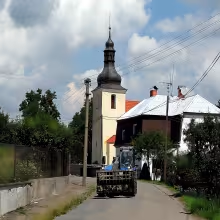
In the warm country there is a church dedicated to St. Havel, who is part of the Catholic Church and represents one of the few buildings that have endured continuous development from the Middle Ages until today. The long existence of this church, interrupted several times by total destruction, makes it an interesting witness to Czech history.
The oldest written mention of the church dates back to the 14th century. In these distant times, the construction was wooden, making it vulnerable to fire and wars. When Hussite wars broke out in the 15th century, Teplýšovice also affected their vortex. The parish of the church probably disappeared at that time - according to the evidence it is assumed to have been connected to neighbouring Munich or Chocerados.
The 30-year war has become a disaster for construction. During this European conflict, the church burned down for the first time. Its repair and reconstruction took place only around 1664, when the village seemed to have stabilised in the landscape. However, this correction was not the last one. The most tragic thing was the Prussian-Austrian война, which completely destroyed the church. Apparently it was the most serious moment in his history - not just repair, but a real recovery from the ground up.
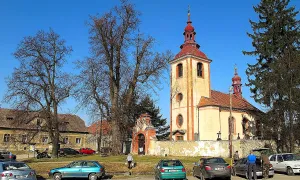
The new form of the church was born in 1754. At that time the construction was rebuilt in Baroque style, which dominated Czech construction at the time. This Baroque look is preserved by the church until today and gives it elegance characteristic for its period. Over the centuries, the church received minor modifications which gradually cared for its maintenance.
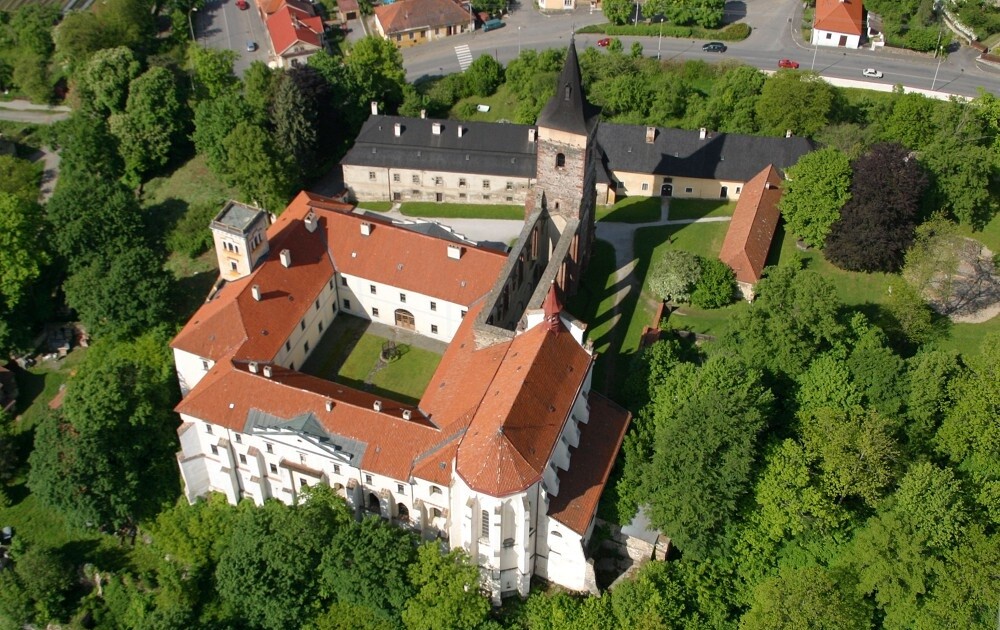
In late modern times, namely in 1999, complex reconstruction took place at the church. This fundamental renewal has restored new life to the construction and ensured its preservation for future generations. Today, the visitor looks at a building that, although bearing the features of the Baroque era, has been conscientiously restored to serve the parish and the people interested in Czech церковo architecture for a long time.
The Church of St. Havel is so much more than a religious state - it is a story of Czech resistance, when the building was destroyed three times and rebuilt three times. For a historically focused visitor, it is an excellent example of how the landscape remembers its past suffering and the will of local people to overcome it.
Then and now
Drag the slider to compare how the landmark may have looked when it was built with the view today.
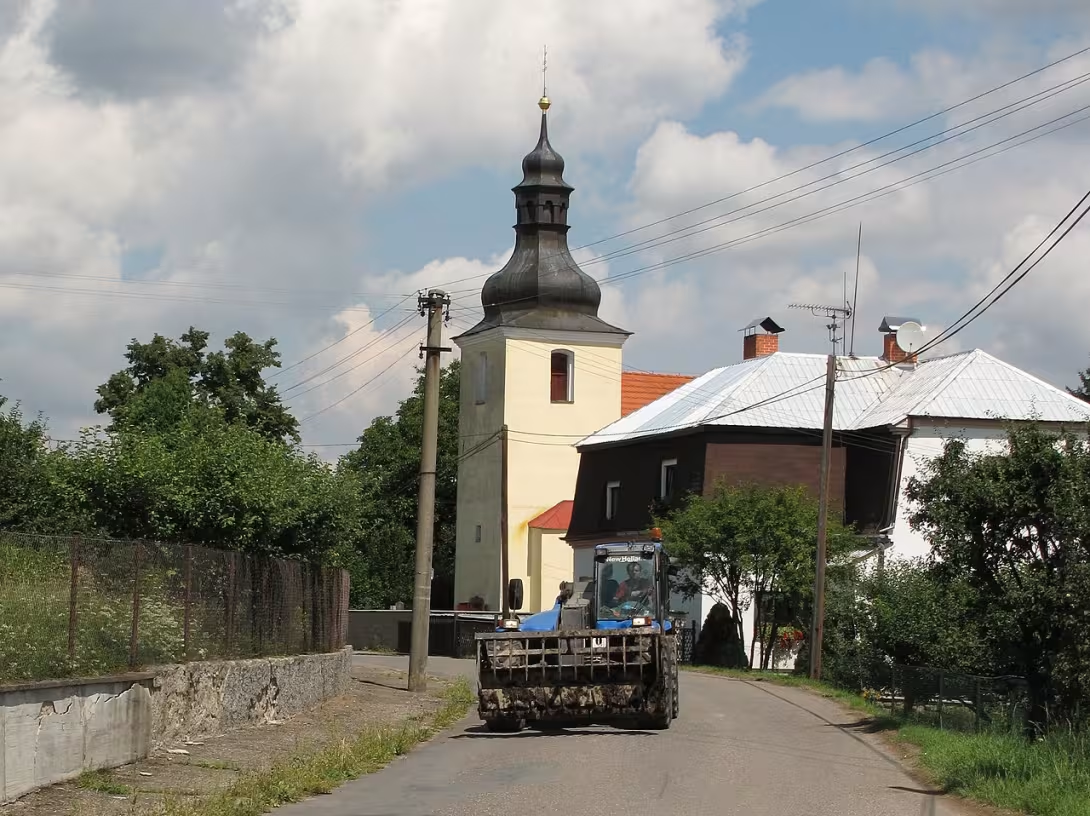
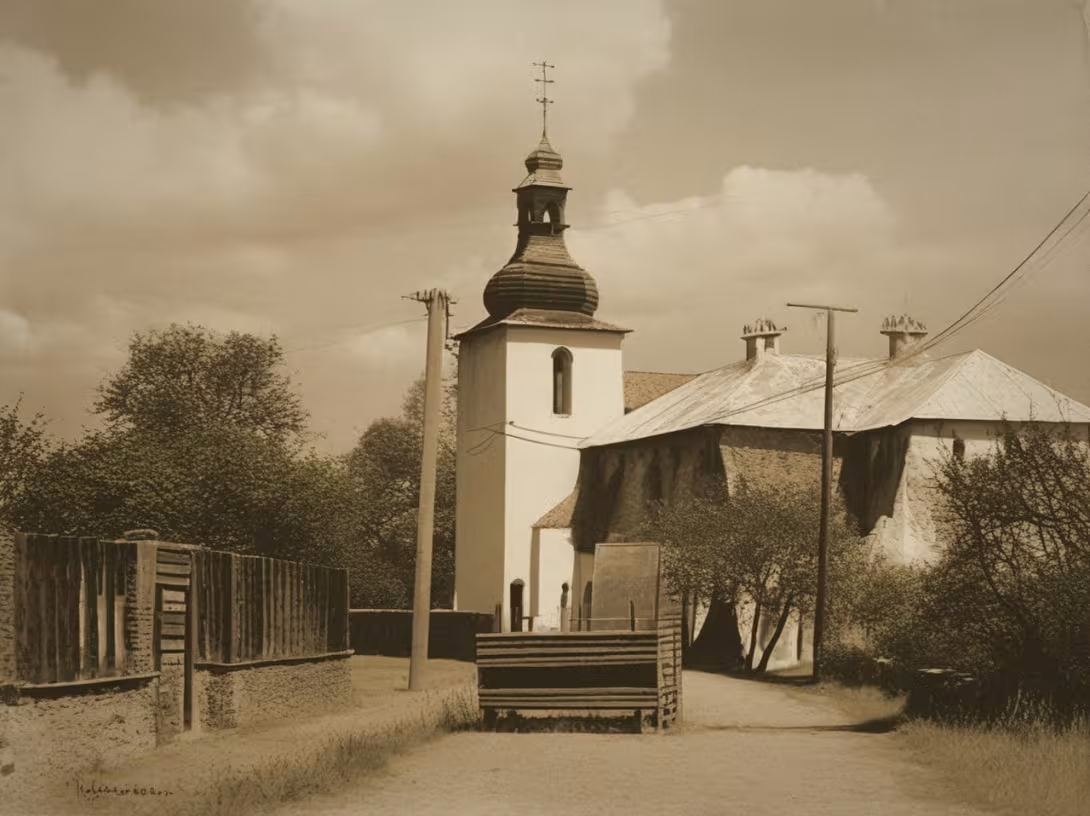
The historical appearance on the left is an AI-generated visualisation and serves as inspiration only.
Historical milestones
- 14th Century
- Oldest written mention of the church
- 15th Century
- The destruction of the parish during the Hussite Wars
- 1618-1648
- The first burning of the church during the Thirty Years War
- Around 1664
- Repair and restoration of church
- 1754
- New church construction in Baroque style
- 1999
- Complex reconstruction of the building
Architectural development
Originally a wooden building, the church went through several stages of construction and reconstruction. In 1754 it was built in Baroque style with a prism tower and triangular presbytery, which added its characteristic features to the church.
Historical events
- 14
- First written mention of the church.
- 17
- The church burned down during the Thirty Years' War.
- 1754
- Rebuilt in Baroque style after destruction during the Prussian-Austrian war.
Owners
Teplýšovice
Points of interest
- The oldest written mention of the church dates back to the 14th century, when the construction was wooden. - In the fifteenth century during Hussite wars, the church parish was apparently destroyed and connected to neighbouring Munich or Chocerados. - During the Thirty Years' War, the church burned down for the first time and was repaired around 1664. - The Prussian-Austrian war completely destroyed the building, which led to its restoration from the foundations of Baroque style in 1754. - The building has been destroyed three times and rebuilt three times throughout its history.
Guide
This guide is narrated by a synthetic voice generated by artificial intelligence.
Show guide text
This text was created by artificial intelligence and has not been editorially reviewed. It may contain inaccuracies.
Welcome to Tevlašovice. You are now facing one of the most important historical points of this village, the church of St. Havel. Before you take the next step and start looking more closely, stop for a moment and feel the atmosphere of this place. You may feel the peace that is now in existence, but this peace is redeemed by hundreds of years of constant struggle, renewal and incredible endurance. In front of your eyes is a building that is much more than a set of walls and roofs. He is a living witness to history that has survived wars, devastating fires, and political upheavals. Look at his face and try to imagine how many generations of people have been gathered here to seek spiritual support or celebrate the most important moments of their lives in these places. This building is a symbol of man's ability to rise again even after everything has been lost.
Let's move further into time together and understand how this church came into being and why it looks the way you see it right now. To understand its essence, we must return to the 14th century. This is the time when the oldest written references to this place appear. Imagine the landscape at the time - probably there was no monumental structure, but a simple wooden structure. It was a building from when people returned to the basic materials of nature, and even though it was fragile, it became the basis for something much more permanent. This wooden history is fascinating because it shows how deep the roots of this place are rooted in the past.
However, the history of the Czech countries was very stormy in those times and the church was fully involved. In the 15th century, during the devastating Hussite wars, the fate of the local parish changed dramatically. At this time the church lost its separate function and the parish probably disappeared. Local believers must have been looking for connections to neighbouring Munich or the Chocerads. This shows us how much war has been able to disrupt even the most basic social and spiritual structures of the village, and how much the community's link in times of unrest has been transformed.
Another difficult test came during the Thirty Years' War, which was a period of darkness and chaos for the whole of Europe. Between 1618 and 1648, the church of St. Havel first met the fatal misfortune when it burned down. At the time, the building burned down almost certain destruction, but people didn't let it break. Around 1664 the church was repaired and revived, which was the first of many waves of renewal that accompanied this object.
Now pay attention to what you're seeing right now. The current shape of the church, which you perceive with your eyes, is the result of another great transformation that came much later. After the devastating consequences of the Prussian-Austrian war, which brought further destruction, there was a major turning point. In 1754 a new construction started, which breathed into the church today's Baroque form.
Pay attention to these shapes and the total silhouette of the building. The Baroque style that dominates here at the time was not just a matter of aesthetics or fashion. It was a way of expressing dignity, strength and grandeur. Although we do not know the names of the particular architects who designed this construction, their vision is evident in the overall harmony and balance that you perceive. The Baroque architecture is designed to influence human senses, inspire amazement and lead the mind to higher things. When you look at the facade or the overall structure of the building, you can feel the effort for monumentality that was typical for this period. It's an architecture that tries to communicate with the heavens and people on earth.
This building is not just a static object that stopped in time. It is the result of the long and constant work of many hands. Even in recent history, he had to look after the church to serve other generations. This was reflected in 1999, when a complex reconstruction took place. Thanks to this effort, we can now look forward to seeing these shapes in their almost intact beauty and that we have managed to preserve this piece of history for the future.
Although there were no names of great personalities in the historical records that were directly related to this church, the greatest and most important story here is the story of resistance itself. Every layer of stone and every repair in this place tells about people who refuse to give up. It's a story about how a simple wooden building became a baroque monument that resists centuries. It's a story about a community that tried to keep its place in the world, even though the world around them was changing and often falling apart.
The interesting thing that may interest you is the incredible transformation of the material and form that this church has undergone. Imagine the huge contrast between the fragile wood of the 14th century and the hard stone of the baroque church that stands before you. It's like history has materialized and strengthened. This transformation perfectly depicts the turbulent history of our countries - from medieval uncertainty and fragility to religious conflicts and wars to the stability and balance of the baroque period.
Now that you have taken a fundamental view of this monument and understood its deep roots, I suggest you continue your tour of the area. Feel the silence that exists here, and try to connect the individual epochs that you have just heard. The Church of St. Havel will continue to stand here as a silent guardian of the history of Teplášovice and as a reminder that even after the biggest storm will come the time for renewal.
Thank you for spending this moment with us and for choosing to listen to the story of this place. We wish you a beautiful and inspiring further journey in the historical footsteps of our region.
Tips for visitors
For the best experience we recommend a visit in the morning or late afternoon, when the sun best highlights the Baroque details of the facade. In these times the atmosphere is usually calmer, which allows a better perception of the history of the construction.
You can reach the monument by car or via public transport. The current transport connections and parking options in the village are best checked by internet search engines or transport applications.
We recommend taking drinking water and comfortable shoes with us. For families with children it is advisable to prepare some simple questions about the history of the church to make the tour for the smallest more interesting and interesting.
If you are engaged in photography, you will find the best light to capture the architecture of St. Havel's Church during the so-called golden hour when shadows are soft. The most beautiful views of the building are obtained from a slight distance to capture its total silhouette.
There are no other specific monuments in the immediate surroundings, so it is recommended to pay attention to the Baroque construction itself and its historical importance.
Frequently asked questions
Is Kostel svatého Havla (Teplýšovice) open to the public?
Yes, the church is open to the public. Opening hours: Monday - Sunday 9: 00- 17: 00.
How do I get to the place by car / public transport?
St. Havel's Church in Teplášovice is located near the center of the village. Best thing to do is drive up and park by the church. If you use public transport, you can use bus lines from a nearby village.
How much is the entrance fee and is it paid on the spot?
The entrance to St. Havel's church is free. In case you wish to contribute to the maintenance of the monument, you can give a gift in the register inside the church.
Is the tour suitable for children and seniors?
Yes, a tour of St. Havel's Church is suitable for families with children and seniors. The church offers a quiet environment and interesting historical details.
How long does the tour take?
The tour of St. Havel's Church takes approximately 30-60 minutes.
What are the opening times and booking is required?
The Church of St. Havel is open to the public from Monday to Sunday at 9: 00- 17: 00. Reservation is not required, but if you want to arrange a guided tour, you can contact the local information centre.
What's interesting in the immediate vicinity?
Near the church of St. Havel is located the historical center of the village Teplýšovice. You can visit the local chateau or walk past historic houses and streets.
For kids
Imagine going back to the past in the Middle Ages. Instead of modern houses and cars, there are old trees, followed by a high church of St. Havel in Teplášovice.
It was like entering another world where people lived differently than we do today. At that time Teplýšovice was a small village with wooden houses and a natural pond. All the inhabitants had to take care of their own needs - farm in the fields, raise animals and lay wood from the forest.
Businesses nearby
Do you run a restaurant, accommodation, shop, museum, rental, wellness or other visitor service near this monument? Show yourself directly to the people heading to it — this is how they will see you in the app and on the web:
Events nearby
Zdroj akcí: otevřená data měst a obcí ČR (Národní katalog otevřených dat) a kalendář akcí Národního památkového ústavu.
Nearby
Teplýšovice
Accommodation nearby
Themed route
Since in the given base the "surrounding area" is empty, it is necessary to follow the principle that I must not invent any other places. The route therefore focuses exclusively on the main objective and its immediate site, as ordered.
Kostel svatého Havla (Teplýšovice) Type: Sacral monument Why is it worth a visit: This church represents the key cultural and historical point of the village Teplýšovice in the district of Benešov. Its architecture and history are the basis for understanding the local heritage.
Tanks Church of St. Havla Type: Outdoor space Why is it worth a visit: Walk through the courtyard allows for peaceful contextation and admiration of the exterior of the building without interference. It is an ideal place for first familiarization with the atmosphere of the complex.
Tower of St. Havla Church Type: Architectural dominant Why is worth a visit: The tower often serves as an orientation point and its structure reveals the construction techniques used in the given historical epoch. It offers a closer look at the facade details.
Interior of St. Havla Church Type: Interior Why is worth a visit: Inside you can admire liturgical elements, altars and possible preserved paintings or sculptures. The space offers silence and the possibility of deeper immersion in spiritual and artistic context.
Park or garden at St. Havla church Type: Green area Why is worth a visit: If there is an immediate green area around the area, it provides space for relaxing and photographing the whole building in the natural environment. It completes the circuit around the main monument without having to leave its surroundings.
This route is designed in such a way that it respects the limitation of the assignment and focuses only on the available and verified elements of the main objective.
Seasonal recommendations
In the spring, the church surrounds the awakening nature and fresh greenery, creating an optimistic atmosphere. Soft spring light is ideal for observing the details of the facade and surrounding landscape. We recommend wearing layers of clothing because the weather is usually variable, and visit the place in the morning when there are fewer people around.
The summer season brings radiant sun and rich green trees that provide a pleasant shade near the temple. The atmosphere is full of energy and bright colors. Due to the high season and larger groups of visitors, it is best to come first thing in the morning to avoid crowds. Don't forget light, breathable clothes and plenty of fluids.
In autumn, the landscape around the monument turns into golden and brown tones, which gives the place a nostalgic touch. Foggy mornings create a mysterious mood and silence creates space for reflection. Wet shoes and a warm jacket are suitable. The best time to visit is late afternoon, when the low sun will highlight architecture beautifully.
In winter, the church operates calmly and silently, especially if the landscape is covered with snow. The atmosphere is quiet and brave, which is typical especially in advent time. It is necessary to wear warm functional clothing and to check in advance the shortened opening times. We recommend a short tour in times when daylight is still visible.
Visualizations and artistic views


The visualisations are generated by artificial intelligence and serve as inspiration.
Photos from the area
Real photos taken near the monument


Zdroj a licence jsou uvedeny u každého snímku.
Atmosphere of the place
This atmospheric visualisation of the place and period was generated by artificial intelligence. It is not real footage of the location.
Tips from visitors
No tips yet. Be the first!
Log in and add your tip.
Sources and literature
Fotografie: Juan de Vojníkov / CC BY-SA 3.0, rozlišení zvýšeno umělou inteligencí — Wikimedia Commons. The author and licence also appear when you hover over the image.
Faktickým podkladem tohoto textu byl článek na Wikipedii, jehož autory jsou přispěvatelé Wikipedie. Článek je dostupný pod licencí CC BY-SA 4.0.
Location on the map

Příběhy a pověsti
Legendy, pověsti a příběhy spjaté s touto památkou
Fotografie návštěvníků
Zatím žádné fotografie. Buďte první, kdo přidá fotografii z návštěvy!
Přihlaste se a přidejte svou fotografii nebo hodnoťte.
Za ověřenou návštěvu v aplikaci získáte víc bodů — poznáme podle GPS, že jste na místě.
Reviews and comments