

kaple svatého Ignáce (Všemily) Rock chapel
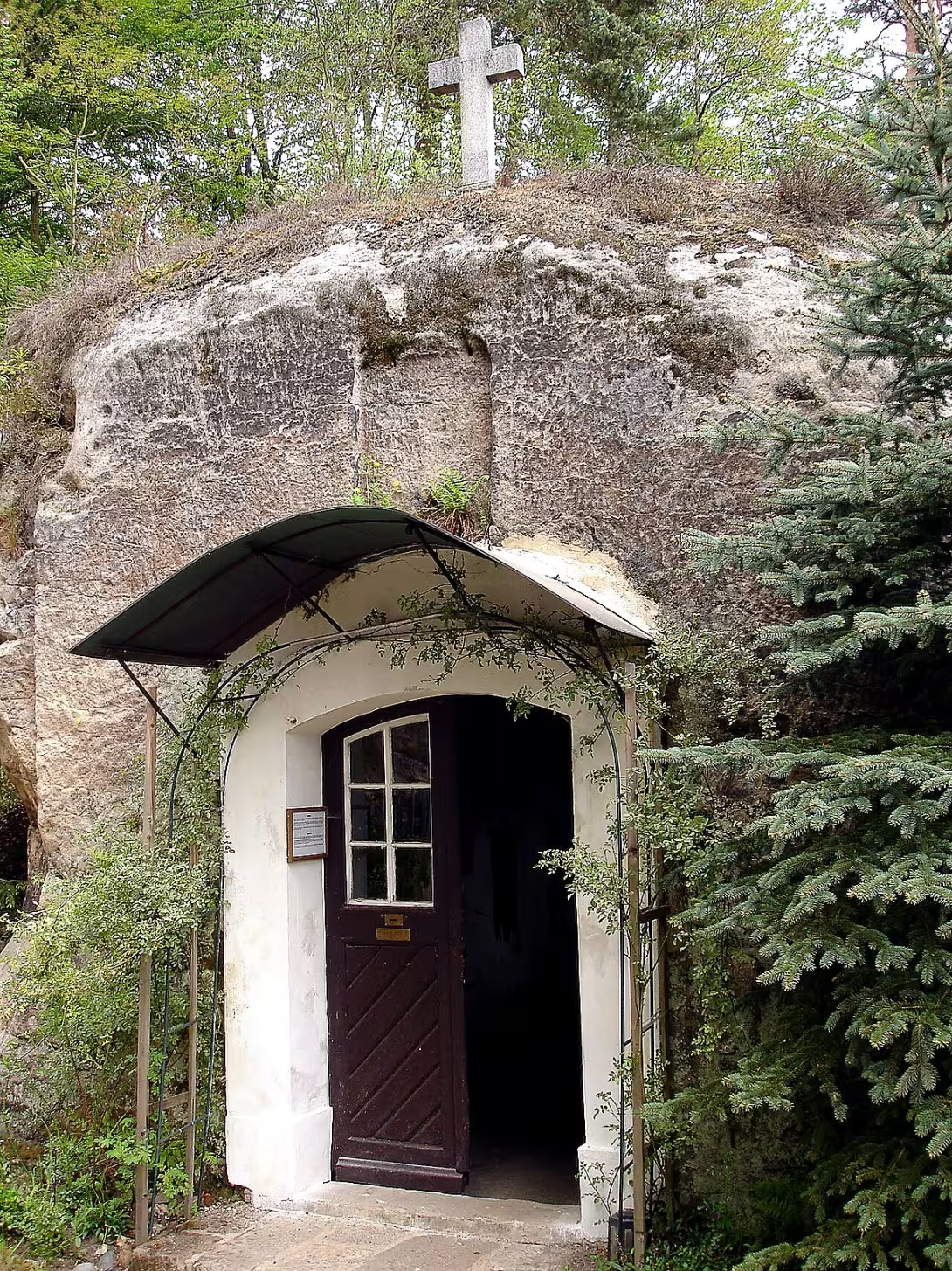
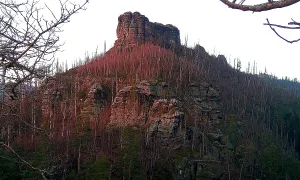
The Kaple svatého Ignáce, also known as the St Ignatius Rock Chapel, is a unique historical monument located in Všemily, within the Jetřichovice district. This remarkable chapel is built into a sandstone block resembling a loaf of bread, making it one of Bohemian Switzerland's most notable holy monuments.
The origin of this extraordinary structure dates back to 1810, when an epidemic primarily affected children and the elderly. In response, Priest Ignaz Clar organized a prayer procession on July 31, leading to the chapel's creation as an act of thanksgiving. The chapel was carved directly into the sandstone rock, featuring an altar with a painting of Saint Ignatius of Loyola.
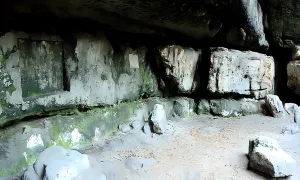
From outside, the structure blends seamlessly with the natural rock formation, revealing only a door and window. Inside, the unique architecture is characterized by a damp environment, noted as early as 1835. Despite these challenging conditions, the chapel has survived to this day, thanks to local residents who have looked after it and protected it from abandonment.
Today, the Kaple svatého Ignáce is under the care of Jetřichovice's municipal office, ensuring its preservation. Visitors can explore this remarkable monument, surrounded by natural rock formations, appreciating its unique blend of architecture and history. The chapel's significance extends beyond its physical structure, serving as a spiritual monument to epidemic victims and Saint Ignatius' intercession.
As you stand before this site, it is easy to see why it has endured for so long. Its unique architecture, rich history, and cultural significance make it a must-visit destination for anyone interested in exploring Bohemian Switzerland's fascinating heritage.
Then and now
Drag the slider to compare how the landmark may have looked when it was built with the view today.
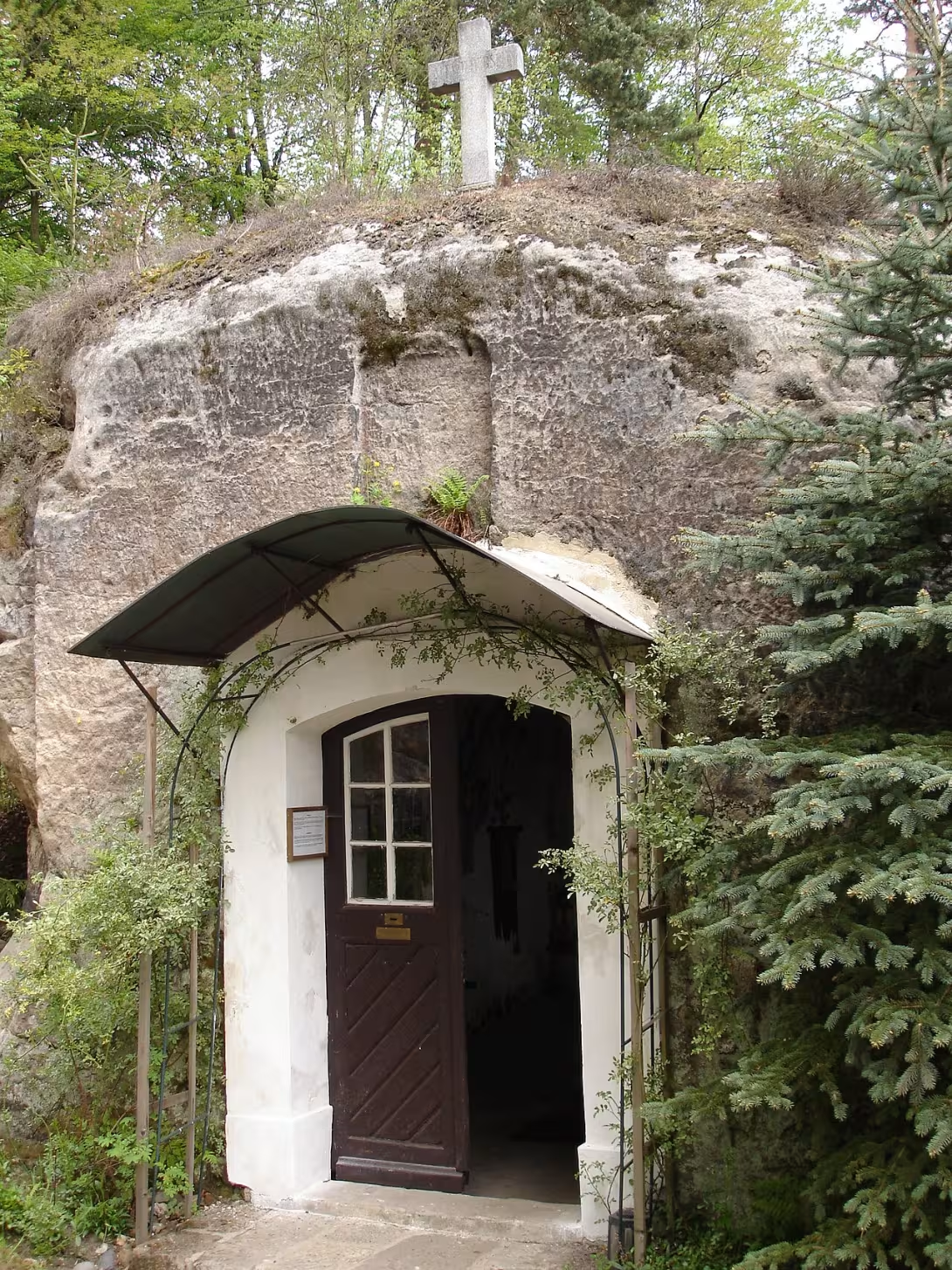
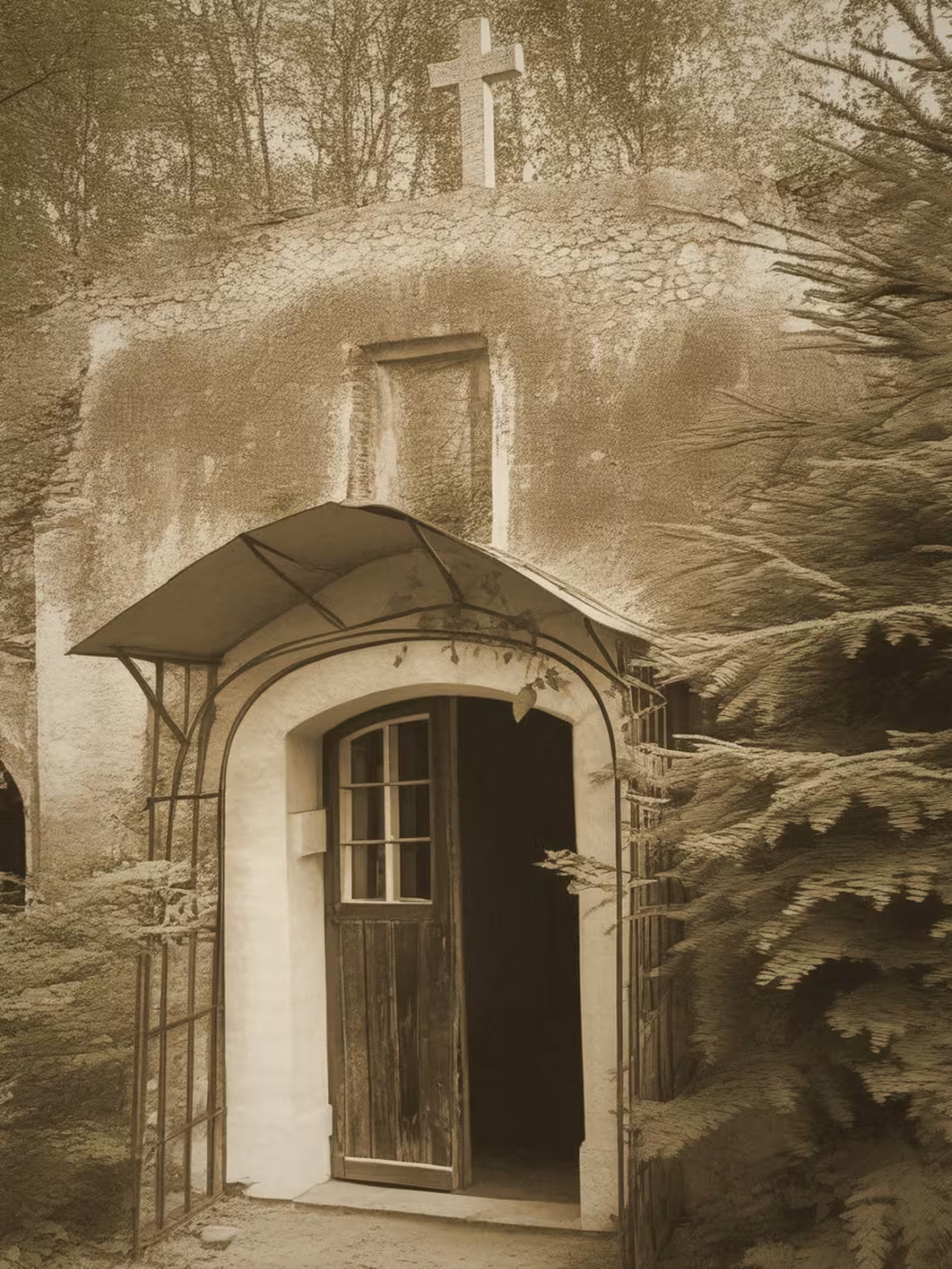
The historical appearance on the left is an AI-generated visualisation and serves as inspiration only.
Historical milestones
- 1810
- The epidemic of smallpox and typhus subsides, prompting the creation of the chapel as a gesture of gratitude.
- 1835
- The chapel is documented in a registry of crosses and chapels under the name Schemmler Kapelle.
- 1896
- Historian Anton Amand Paudler describes the chapel's appearance as nearly identical to a natural sandstone rock.
Architectural development
The chapel was carved directly into the sandstone rock. Its interior originally featured an altar with a painting of Saint Ignatius of Loyola, which was later replaced by a copy of the Sistine Madonna. A small statue of the suffering Christ in chains was also placed in a niche to the right of the altar.
Historical events
1810: Outbreak of smallpox and typhus epidemics in Všemily and Srbská Kamenice. 1810: Priest Ignaz Clar organized a prayer procession on July 31, leading to the chapel's eventual creation.
Owners
Originally built on farm land; currently maintained by local cottage owners.
Points of interest
– The Kaple svatého Ignáce is a unique historical monument located in Všemily, within the Jetřichovice district.
– This remarkable chapel was built into a sandstone block resembling a loaf of bread and is one of Bohemian Switzerland's most notable holy monuments.
– The origin of this extraordinary structure dates back to 1810, when an epidemic primarily affected children and the elderly.
– Despite being carved directly into the sandstone rock, the chapel has survived to this day thanks to local residents who have looked after it and protected it from abandonment.
Guide
This guide is narrated by a synthetic voice generated by artificial intelligence.
Show guide text
This text was created by artificial intelligence and has not been editorially reviewed. It may contain inaccuracies.
Welcome to Všemily. As you stand here in the quiet beauty of the Jetřichovice region, take a moment to simply look at what lies before you. You might have expected a traditional building, perhaps something with grand columns or a towering spire, but what you are witnessing is something far more intimate and profound. You are standing before the Kaple svatého Ignáce, a place where the boundary between human devotion and the raw power of nature seems to have completely dissolved. Notice how the structure does not sit upon the landscape, but rather emerges from it. It is carved directly into the very heart of the sandstone cliff, a silent, stony sentinel that has watched over this valley for over two centuries. As you observe the rugged texture of the rock, try to sense the stillness of the place. It is not just a monument of stone; it is a monument of memory, etched into the earth itself.
To understand why this chapel exists, we must travel back in time to the year 1810. Imagine this landscape not as a peaceful destination for travelers, but as a place of profound struggle and collective grief. At the dawn of the nineteenth century, the community here was struck by a devastating wave of sickness. Epidemics of smallpox and typhus swept through the area, leaving a trail of sorrow in their wake. These were not just passing illnesses; they were catastrophic events that struck hardest at the most vulnerable members of society—the children and the elderly. The loss was felt deeply by every household in the vicinity.
However, as the fever broke and the epidemic finally subsided, a powerful sense of relief and overwhelming gratitude began to take hold of the people. They did not want this survival to be forgotten. They wanted to create a permanent gesture of thanks, a way to honor those who were lost and to give thanks for those who remained. This was the spark that led to the creation of the Kaple svatého Ignáce. It was conceived as an act of thanksgiving, a spiritual anchor for a community that had looked into the face of death and emerged on the other side. By dedicating the chapel to Saint Ignatius of Loyola, the people sought a divine intercession, turning the very rock of their home into a sanctuary of hope and a testament to their resilience.
As you turn your attention to the physical form of the chapel, please take a closer look at how it integrates with the environment. This is one of the most remarkable examples of architecture in the Bohemian Switzerland area, precisely because it defies the standard definition of a building. Instead of being constructed from separate blocks of stone, the chapel is part of the sandstone block itself. If you look at the overall silhouette, you might notice a peculiar shape; many have remarked that the structure resembles a large, weathered loaf of bread nestled within the cliffside.
This organic quality is what makes the Kaple svatého Ignáce so unique. There are no harsh, artificial lines that clash with the surrounding forest. Instead, the craftsmanship follows the natural contours of the sandstone. While the architects of this site remain unknown to history, their mastery of the medium is evident in how they transformed a natural feature into a sacred space. As you gaze at the facade, notice how the light plays across the uneven surfaces of the cliff. The chapel does not stand against the elements; it lives within them, weathering the same storms and basking in the same sun as the cliffs that surround it.
The history of this site is woven with the names of those who lived through its eras. While the hands that carved the stone are lost to us, the spirit of the place is tied to individuals like Ignaz Clar, whose presence is linked to the history of this location. Even the way the chapel was recorded in the past tells a story of its evolving identity. If we were to look back at the official registries from 1835, we would find this site documented under the name Schemmler Kapelle. This reminds us that while the chapel feels like a timeless part of the earth, it has also been a documented, recognized part of human civilization for generations, serving as a landmark for travelers and a place of prayer for locals.
There is a certain mystery to the chapel that continues to fascinate historians and visitors alike. It possesses a quality of camouflage that is almost supernatural. In 1896, the historian Anton Amand Paudler studied this site and noted something truly remarkable. He described the appearance of the chapel as being nearly identical to a natural sandstone rock. This observation captures the essence of the Kaple svatého Ignáce—it is a man-made creation that has successfully returned to a state of nature. It challenges our perception of what is "built" and what is "grown." Is it a building, or is it a geological formation that happens to hold a sacred purpose? This ambiguity is part of its charm, inviting you to wonder about the exact moment when the chisel met the stone and the rock began to look like a sanctuary.
As you prepare to continue your journey through the beautiful landscapes of Jetřichovice, take one last look at the Kaple svatého Ignáce. Let the weight of its history sink in—the fear of the epidemic, the relief of survival, and the incredible human impulse to carve gratitude into the very bones of the earth. It stands as a reminder that even in our most difficult moments, we have the capacity to create something beautiful, something lasting, and something that exists in perfect harmony with the world around us. Thank you for visiting this extraordinary site. Please, continue your exploration of the cliffs and the forests, and may the quiet strength of this place stay with you on your walk.
Tips for visitors
The best time to visit the chapel is from late spring through early autumn (May to September). During these months the weather is mild, the sandstone cliffs are dry, and daylight lasts long enough to enjoy both the interior and the surrounding rock formations. Early summer offers vibrant greenery, while early autumn provides softer light and fewer visitors.
Public transport options exist to the nearby village of Jetřichovice, from where a short walk or local taxi leads to the chapel; always check the current schedule before your trip.
Wear sturdy walking shoes with good grip, as the path to the chapel involves uneven sandstone steps and rocky ground. Bring water, sun protection (hat, sunscreen), and a light jacket even in summer, as the cliff can be windy and shaded. A small snack and a fully charged camera or smartphone will make the visit more comfortable.
For photography, aim for the golden hours shortly after sunrise or before sunset when the soft light highlights the texture of the sandstone and the chapel’s interior. The entrance framing the cliff and the view looking out over the surrounding formations make striking compositions. Avoid harsh midday sun, which creates strong contrasts and can wash out details.
Within a 30-minute drive you can explore the wider sandstone landscape around Všemily, take a leisurely stroll through the village of Jetřichovice, or visit nearby viewpoints that showcase the same rock formations. For families with children, the short walk to the chapel is manageable for kids who enjoy light hiking; bring a carrier for younger toddlers, keep an eye on the steep steps, and turn the visit into a mini-adventure by pointing out the natural shapes in the rock and telling the story of the chapel’s origin.
Frequently asked questions
Can the monument be visited?
Religious buildings are usually open mainly during services; at other times a visit is normally arranged with the parish or the operator. We have not verified specific times.
Where is the monument?
Location: Jetřichovice. The map on this page shows the exact spot.
Why is the monument protected?
It is listed in the Central List of Cultural Monuments of the Czech Republic as a cultural monument (register no. 1000124618).
Businesses nearby
Do you run a restaurant, accommodation, shop, museum, rental, wellness or other visitor service near this monument? Show yourself directly to the people heading to it — this is how they will see you in the app and on the web:
Events nearby
Zdroj akcí: otevřená data měst a obcí ČR (Národní katalog otevřených dat) a kalendář akcí Národního památkového ústavu.
Nearby
🏰 Historic sites (139)
- Dolský Mlýn 2.1 km
- Kriegerdenkmal 2.5 km
- Falkenštejn 2.9 km
- venkovské zemědělské muzeum 2.9 km
- Skalní kaple Posledního soudu 2.9 km
- Kesslerova deska 3.4 km
- Šaunštejn 3.7 km
- Památník letecké havárie DC-9 JAT 26. 1. 1972 3.9 km
- Pomník havárie DC-9 JAT 26.1.1972 4.0 km
- Podzemní letecká továrna 4.1 km web
- Podzemní letecká továrna 4.2 km
- Obětem fašismu 4.3 km
- Obětem 2. světové války 5.0 km
- hrobka rodiny Preidl 5.0 km
- Obětem 1. světové války 5.0 km
- Salhausenovský dům 5.1 km
- Hieronymus Grafen Clary und Aldringen († 28.7.1941 bei Sokolowka) 5.3 km
- zámek Česká Kamenice 5.3 km
- Heino Dahms 5.6 km
- Unseren im Weltkrieg 1914-1918 gefallenen Helden 5.8 km
🍽️ Restaurants and dining (256)
- Ubytování u Slivků 0.3 km
- Pod Kaštany 1.2 km +420 412 555 111 web
- U Ferdinanda 1.2 km web
- Občerstvení 1.6 km +420 732 757 790
- Dřevák 2.0 km +420 412 555 015 web
- Hotel Bellevue 2.1 km
- Praha 2.2 km
- U Havrana 2.2 km
- Penzion Jeloma 2.2 km +420412555232
- Zelená hospoda 2.2 km
- Bistro Falk 2.2 km +420 777 127 953 web
- Vesna 2.3 km
- Švýcarský Dvůr 2.3 km
- Ve starém krámě 2.5 km +420 412 555 082
- Basta 2.5 km
- Občerstvení Zvoneček 2.6 km
- Penzion Zvonecek 2.6 km
- Na Výsluní 2.7 km
- Restaurace Les 2.9 km +420 604 793 183 web
- U Nás 2.9 km +420 412 555004 web
🏨 Accommodation (166)
- Penzion Pohoda 0.4 km Všemily 24
- U Ferdinanda 1.3 km Srbská Kamenice 148 +420 737 147 230 web
- Autokemp Jetřichovice 1.4 km web
- Starý mlýn 1.6 km +420 602 587 431; +420 731 175 371 web
- Svobodný pán z Falkenštejnu 1.9 km +420412511220 web
- Pension Dřevák 2.0 km +420 412 555 015 web
- Hotel Bellevue 2.1 km +420 412 555 022 web
- Resort Vysoka Lipa 2.1 km
- U Havrana 2.2 km
- Natur Resort Jetřichovice s.r.o. 2.2 km Jetřichovice 12 +420730891240 web
- Apartmán Vysoká Lípa 2.2 km +420603440820 web
- Vesna 2.3 km
- Hofberg 2.3 km
- Pension Pod skálou 2.4 km
- Penzion U Kostela 2.5 km
- Hotel Lípa 2.5 km
- Ubytování U Rybníčku 2.6 km
- Penzion Les 2.9 km +420 604 793 183 web
- U Nás 2.9 km
- KORTUS 3.0 km web
🚲 Rentals and sport (20)
- Městské koupaliště 4.8 km
- Cyclosport 5.2 km
- Půjčovna koloběžek 5.2 km +420 724 074 038
- Kuželky 5.7 km
- Pumptrack Růžová 6.0 km Růžová 319
- Biotop Nový Svět 6.9 km
- Střelnice Ludvíkovice 7.8 km
- HUDYsport a.s. 8.0 km
- Hudy Sport 9.8 km +420 412 554 086 web
- KURSPORT 11.9 km
- Termální koupaliště 12.2 km
- Bowling Lípa 12.5 km
- Sportovní areál Českého Švýcarska 12.5 km
- Zimní stadion 13.0 km Oblouková 638/21
- Sportisimo 13.2 km Oblouková 1395/4 +420 226 292 537 web
- Lanový park Jedlová 13.2 km web
- SG Reinhardtsdorf Waldstadion 13.3 km
- Labská plavební - Děčín - Hřensko - Dráždany 13.4 km
- Cyklopůjčovna, ferratové sety 13.5 km +420 739 561 932 web
- ČD bike 14.2 km
🥾 Hiking and nature (1985)
- Převis Kůlna 0.2 km
- Meniskus 0.6 km web
- Sváteční věž 0.6 km web
- Vyhlídková věž 0.6 km web
- Všemilská vež 0.6 km web
- Anti-VK 0.7 km web
- Sarka Farka (Kobra) 0.7 km web
- Monika 0.7 km web
- Doveda 0.8 km web
- Satan 0.8 km web
- Sokolská věž 0.8 km web
- Srnčí kámen 0.8 km web
- Jelení věž 0.8 km web
- Bobek 0.8 km web
- Diktátor 0.8 km web
- Nevěrnice 0.8 km web
- Lupínek 0.9 km web
- Free Copy 0.9 km web
- Kanec (Prase) 0.9 km web
- Kančí zub 0.9 km web
Accommodation nearby
Themed route
1. sandstone landscapes of Všemily, Natural landscape: Explore the unique geological beauty of the surrounding terrain. 2. natural rock formations, Geological formations: Wander through the impressive stone structures that characterize the area. 3. kaple svatého Ignáce (Všemily), Chapel: Discover this spiritual landmark nestled within the scenic landscape. 4. Jetřichovice, Municipality: End your trip by visiting this local settlement near the sandstone region.
Seasonal recommendations
Spring
The spring season at the Chapel of Saint Ignatius (Všemily) in Jetřichovice brings a sense of renewal and rejuvenation. The surrounding nature awakens from its winter slumber, with blooming flowers and greenery adding to the chapel's serene atmosphere. As the weather warms up, visitors can enjoy the scenic views without the crowds that come later in the year.
Practical tips: Consider arriving early to avoid the growing crowds, and dress comfortably for a pleasant walk around the area.
Summer
During the summer months, the Chapel of Saint Ignatius takes on a lively atmosphere. The warm weather makes it an ideal time to visit, with the surrounding nature in full bloom. Visitors can enjoy the scenic views without the chill of winter or the crowds that come later in the year.
Practical tips: Plan your visit early in the morning or late in the afternoon to avoid the peak tourist hours and heat of the day. Wear comfortable shoes for a leisurely walk around the area.
Autumn
As autumn sets in, the Chapel of Saint Ignatius takes on a cozy atmosphere. The foliage surrounding the chapel creates a picturesque backdrop, with the leaves changing colors adding to the serene ambiance. Visitors can enjoy the crisp fall air and scenic views without the crowds that come later in the year.
Practical tips: Consider visiting during the week or early morning/late afternoon to avoid the weekend tourists. Dress warmly for the cooler weather, but still enjoy the beautiful scenery.
Winter
During the winter months, the Chapel of Saint Ignatius takes on a peaceful atmosphere. The snow-covered landscape creates a serene backdrop, with the chapel's architecture standing out against the winter wonderland. Visitors can enjoy the quiet and tranquility of the season without the crowds that come later in the year.
Practical tips: Plan your visit early in the morning or late in the afternoon to avoid the peak tourist hours and cold weather. Wear warm clothing for a comfortable walk around the area, and consider visiting during the week when the chapel is less crowded.
Visualizations and artistic views


The visualisations are generated by artificial intelligence and serve as inspiration.
Photos from the area
Real photos taken near the monument


Zdroj a licence jsou uvedeny u každého snímku.
Tips from visitors
No tips yet. Be the first!
Log in and add your tip.
Sources and literature
Photos: R.D. --Rolf-Dresden / CC BY 2.5 — Wikimedia Commons. The author and licence also appear when you hover over the image.
Faktickým podkladem tohoto textu byl článek na Wikipedii, jehož autory jsou přispěvatelé Wikipedie. Článek je dostupný pod licencí CC BY-SA 4.0.
Location on the map
More monuments – Jetřichovice
Show all in the municipality
Příběhy a pověsti
Legendy, pověsti a příběhy spjaté s touto památkou

Fotografie návštěvníků
Přidat fotografiiZatím žádné fotografie. Buďte první, kdo přidá fotografii z návštěvy!
Máte k místu vzpomínku nebo zajímavý příběh?
Log in a přidejte svou fotografii nebo hodnoťte.
Za ověřenou návštěvu v aplikaci získáte víc bodů — poznáme podle GPS, že jste na místě.
Reviews and comments