



Kaple svatého Isidora (Dobročovice) Chapel
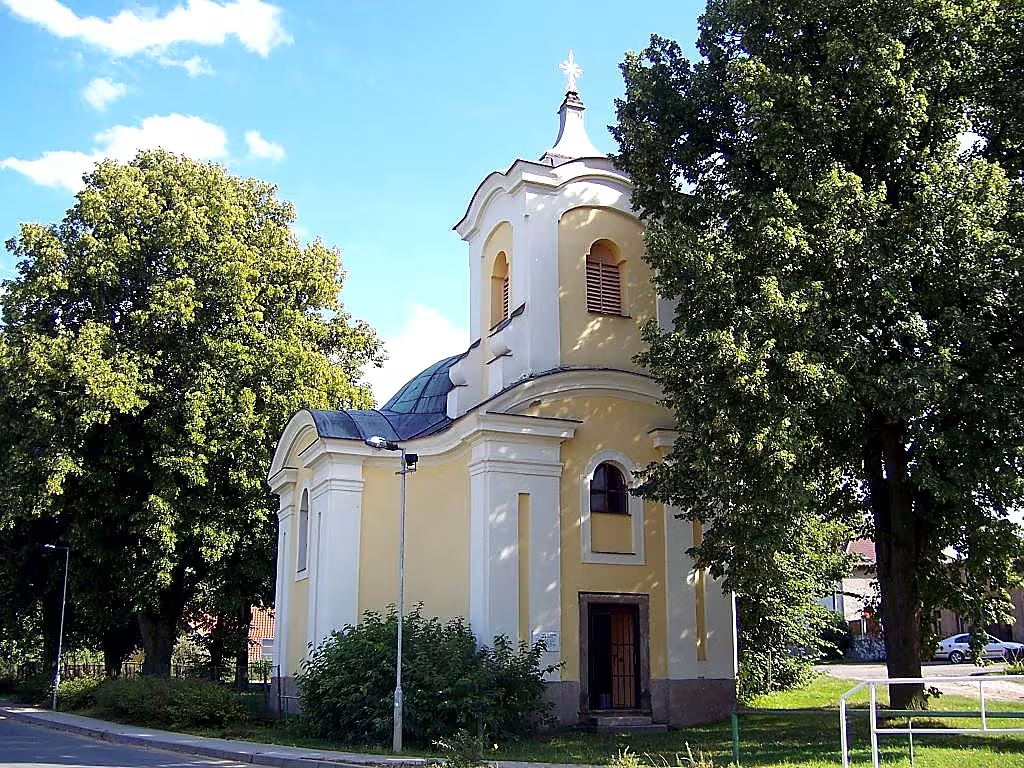
The Chapel of Saint Isidore in Dobročovice is a notable Baroque structure on the southern side of the village square. Constructed in 1771 by Duchess Marie Therese of Savoy, it replaced an older chapel from around 1700. This cultural monument highlights the architectural and historical significance of the region during the late 18th century.
The original chapel at this site dates back to approximately 1700, built after the Thirty Years' War. In 1771, Duchess Marie Therese of Savoy commissioned the current Baroque chapel, marking a significant transformation from its predecessor. This period was characterized by Maria Theresa's reign over Bohemia as part of the Habsburg Monarchy, during which she implemented extensive reforms and fostered a flourishing of Baroque art and architecture across Europe.
Architecturally, the Chapel of Saint Isidore is distinguished by its brick structure with plastered surfaces. It features a cross-shaped floor plan with chamfered sides and a semi-circular presbytery. The design includes pilasters, vertical grooves, and a profiled eaves cornice, all contributing to its Baroque style. The chapel's windows are framed by ogee arches and surrounded by shutters with stepped lintels, while the entrance is through a rectangular stone portal with a lintel. A bell tower on the western facade is segmented by pilasters and window openings without shutters, topped by a gabled roof that culminates in a dome with a stone capital above the central section. The tower's low roof ends with an ornamental Latin cross mounted on a high base.
The chapel's location on the southern side of Dobročovice's village square near a main road places it within a typical Czech rural landscape, potentially surrounded by other local cultural sites. Its historical and architectural significance is underscored by its designation as a protected cultural monument.
Today, the Chapel of Saint Isidore remains accessible to visitors, offering a glimpse into Baroque architecture and the historical context of 18th-century Bohemia. It stands as a valuable piece of cultural heritage, inviting those interested in history and architecture to explore its unique features and appreciate its enduring legacy.
Then and now
Drag the slider to compare how the landmark may have looked when it was built with the view today.
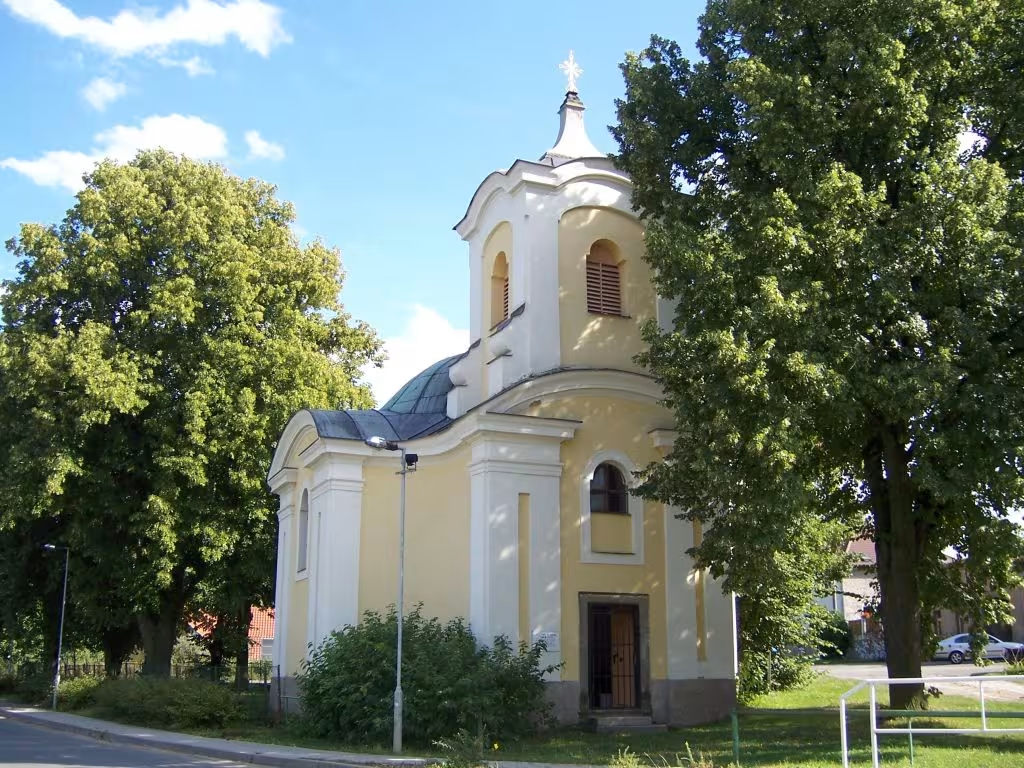

The historical appearance on the left is an AI-generated visualisation and serves as inspiration only.
Historical milestones
- 1700
- Původní kaple postavena po Třicetileté válce.
- 1771
- Barokní kaple svatého Isidora postavena Marie Teresou Savojskou.
Architectural development
The chapel underwent significant architectural transformation in 1771 when it was rebuilt into its present form. The design includes a brick structure with plastered surfaces, characterized by a cross-shaped plan and semi-circular presbytery. Architectural details such as pilasters, cornices, and window arches contribute to its baroque style.
Historical events
The original chapel on the site was built around 1700 during the period of the Thirty Years' War aftermath.
In 1771, Duchess Marie Therese of Savoy commissioned the construction of the current baroque chapel.
Points of interest
- The Chapel of Saint Isidore was built during a time when Duchess Marie Therese of Savoy was implementing reforms across the Habsburg Monarchy, reflecting her influence on Baroque architecture beyond just Bohemia.
- Despite its Baroque style, the chapel features a unique blend of architectural elements such as ogee arches and stepped lintels in window shutters, which were less common in other religious structures from that era.
- The bell tower's design includes a dome with a stone capital above the central section, an unusual feature for rural chapels in the region, indicating a special emphasis on its visual prominence.
- The chapel replaced an older structure dating back to around 1700, built post-Thirty Years' War, highlighting the continuous cultural and architectural evolution of Dobročovice over more than seven decades.
- Although primarily known as a religious site, the Chapel of Saint Isidore also served as a symbol of Maria Theresa's broader efforts to stabilize and culturally enrich her territories after periods of conflict.
Guide
This guide is narrated by a synthetic voice generated by artificial intelligence.
Show guide text
This text was created by artificial intelligence and has not been editorially reviewed. It may contain inaccuracies.
Welcome to the Chapel of Saint Isidore in Dobročovice, a remarkable testament to Baroque architecture nestled on the southern side of this charming village square. As you stand here, take a moment to absorb the serene beauty that surrounds you. This rotunda, with its graceful curves and elegant details, invites you into a story woven through time.
The origins of this chapel trace back to a period shortly after the Thirty Years' War, when a simpler structure was erected around 1700. However, it was in 1771 that Duchess Marie Therese of Savoy transformed this space entirely, replacing the older building with what stands before you today—a stunning example of Baroque design.
As your eyes wander across its façade, notice the chapel's cross-shaped floor plan and chamfered sides that gracefully lead to a semi-circular presbytery. The architectural elements are truly captivating: observe the cornice, pilasters, and vertical grooves that define this structure’s elegance. These features reflect not only the artistic sensibilities of the Baroque period but also the influence of Marie Therese herself, who was known for her impactful reforms across the Habsburg Monarchy.
Marie Terezie Savojská is a key figure in this chapel's history. Her patronage and vision brought about its construction during a time when she was actively shaping architectural landscapes beyond Bohemia. Her influence can be felt not just in the grandeur of the design but also in the cultural significance that this chapel holds today.
Now, let’s delve into an intriguing aspect: despite its Baroque style, the chapel uniquely blends various architectural elements, creating an atmosphere both familiar and distinct. This fusion speaks to the broader trends of the time, where innovation met tradition under Marie Therese's guidance.
As you conclude your visit here at the Chapel of Saint Isidore, we invite you to linger a moment longer, soaking in its historical aura and artistic beauty. May this experience inspire you to explore more about Dobročovice and the stories embedded within its landscape. Thank you for joining us on this journey through time and architecture. Safe travels as you continue your exploration of Středočeský kraj.
Frequently asked questions
Can the monument be visited?
Religious buildings are usually open mainly during services; at other times a visit is normally arranged with the parish or the operator. We have not verified specific times.
Where is the monument?
Location: Dobročovice, Středočeský kraj. The map on this page shows the exact spot.
Why is the monument protected?
It is listed in the Central List of Cultural Monuments of the Czech Republic as a cultural monument (register no. 45750/2-2041).
Businesses nearby
Do you run a restaurant, accommodation, shop, museum, rental, wellness or other visitor service near this monument? Show yourself directly to the people heading to it — this is how they will see you in the app and on the web:
Events nearby
Zdroj akcí: otevřená data měst a obcí ČR (Národní katalog otevřených dat) a kalendář akcí Národního památkového ústavu.
Nearby
The chapel is situated on the southern side of Dobročovice's village square, near a main road. The surrounding area includes typical Czech rural landscapes and possibly other local cultural sites.
Accommodation nearby
Trips and activities nearby
Guided tours, tickets and activities nearby from GetYourGuide
Affiliate link: if you buy from the partner, we may receive a commission. The price for you does not change.
Search tours and activities →Themed route
Tematická výletní trasa: Dobročovice a Kaple svatého Isidora
1. Kaple svatého Isidora (Dobročovice) - Kaple Začněte svůj výlet u samotné kaple svatého Isidora, která se nachází na jižní straně náměstí Dobročovic. Tato malá, ale historicky významná kaple je známá pro svou architektonickou krásu a klid, který nabízí. Je ideálním místem k pochopení duchovního a kulturního dědictví obce.
2. Náměstí Dobročovice - Kulturní centrum Přejděte na náměstí, které je srdcem místní komunity. Toto místo slouží jako kulturní a sociální centrum pro obyvatele Dobročovic. Je to ideální příležitost prohlédnout si tradiční architekturu domů, které jsou charakteristické pro české venkovské vesnice. Náměstí také nabízí možnost pozorovat každodenní život v obci.
3. Okolní pole a vinice - Přírodní krajinářství Krátce se pohybujte po okolních polích a vinicích, které představují typickou českou venkovskou krajinu. Tato oblast nabízí klidný zážitek plný přírodní krásy a je ideální pro relaxaci nebo prozkoumání místních zemědělských praktik.
4. Hlavní silnice poblíž kaple - Kulturní průjezdy Navštivte hlavní silnici poblíž kaple, která propojuje různé části obce. Tato trasa vám umožní si prohlédnout další kulturní a historické prvky místní infrastruktury. Je to také ideální místo k pozorování, jak se venkovský život prolíná s moderními potřebami.
Tato trasa nabízí komplexní pohled na kulturní a přírodní bohatství Dobročovic, začínající od hlavního duchovního centra kaple svatého Isidora až po venkovskou krajinu a místní život.
Seasonal recommendations
Spring: Visiting the Chapel of Saint Isidore during spring offers a unique opportunity to witness nature's reawakening as wildflowers begin to bloom around the serene landscape, enhancing the chapel’s tranquil atmosphere with vibrant colors and fresh scents. The soft morning light filters through budding trees, casting gentle shadows that add an ethereal quality to the site. This season is ideal for photography enthusiasts seeking natural backdrops. Visitors should dress in layers, as temperatures can fluctuate throughout the day. While crowds are generally manageable, arriving early ensures a peaceful experience before larger groups gather.
Summer: Summer at the Chapel of Saint Isidore provides long daylight hours perfect for exploring its historical details and surrounding countryside. The lush greenery creates an idyllic setting, with warm sunlight enhancing the chapel’s architectural beauty. This season is popular among tourists, so it's advisable to visit early in the morning or late afternoon to avoid crowds. Comfortable walking shoes and light clothing are recommended due to the warmer weather. Don’t forget sunscreen and a hat for protection against the sun.
Autumn: Autumn transforms the Chapel of Saint Isidore into a picturesque haven with its rich tapestry of red, orange, and yellow foliage. The crisp air and golden sunlight create an inviting atmosphere that is perfect for leisurely strolls around the site. This season offers fewer visitors compared to summer, allowing for a more intimate experience. Layered clothing is essential as temperatures can drop significantly by late afternoon. Bringing a camera is recommended to capture the stunning seasonal colors.
Winter: The Chapel of Saint Isidore in winter presents a serene and mystical atmosphere, with snow-covered landscapes providing a stark yet beautiful contrast against its historic architecture. Shorter days mean earlier closures, so plan your visit accordingly. Winter attire should include warm layers, gloves, and sturdy boots to navigate potentially icy paths comfortably. Despite the cold, fewer visitors during this season allow for quiet reflection in the chapel’s peaceful surroundings, making it an ideal time for those seeking solitude.
Visualizations and artistic views


The visualisations are generated by artificial intelligence and serve as inspiration.
Photos from the area
Real photos taken near the monument


Zdroj a licence jsou uvedeny u každého snímku.
Tips from visitors
No tips yet. Be the first!
Log in and add your tip.
Sources and literature
Photos: Mirekk / CC BY 3.0 — Wikimedia Commons. The author and licence also appear when you hover over the image.
Faktickým podkladem tohoto textu byl článek na Wikipedii, jehož autory jsou přispěvatelé Wikipedie. Článek je dostupný pod licencí CC BY-SA 4.0.
Location on the map





Příběhy a pověsti
Legendy, pověsti a příběhy spjaté s touto památkou
Fotografie návštěvníků
Zatím žádné fotografie. Buďte první, kdo přidá fotografii z návštěvy!
Log in a přidejte svou fotografii nebo hodnoťte.
Za ověřenou návštěvu v aplikaci získáte víc bodů — poznáme podle GPS, že jste na místě.
Reviews and comments