






kaple svatého Vavřince (Libochovice) Chapel
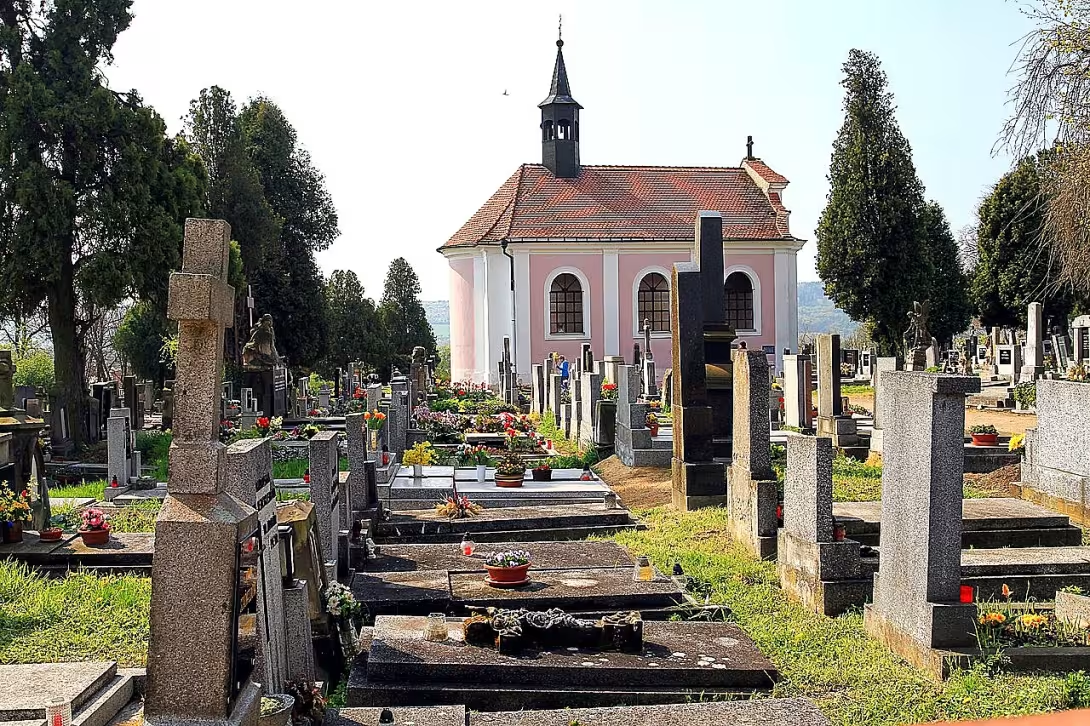
The Chapel of Saint Lawrence in Libochovice is a notable Baroque sacred building constructed between 1720 and 1722 by Petr Pavel Columban. Situated on the site of an older church from 1601, it has been protected as a cultural monument since 1964. This chapel stands out for its architectural elegance and historical significance within the region.
The Chapel's origins trace back to the early 18th century when Bohemia was part of the Habsburg Monarchy, experiencing a period of cultural flourishing under Baroque influence. The decision to replace an older church with this new structure reflects the era’s penchant for grandeur and elaborate detail in religious architecture. Petr Pavel Columban, a builder from Roudnice, undertook its construction, marking a transition to the Baroque style characterized by its use of dressed stone and plastered surfaces.
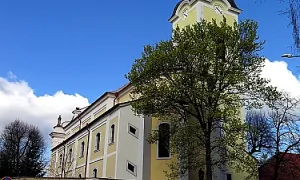
Architecturally, the Chapel of Saint Lawrence is distinguished by its single-nave structure with smooth oblique closure. The building materials include dressed stone covered in plaster, contributing to its refined appearance. Its design features pilasters, semi-circular windows, and a distinctive gable adorned with sculptures, including a niche housing a statue of Saint Lawrence. The main facade showcases a central recessed risalit flanked by concave curves, lisenes framing the rectangular portal, and segmentally finished blind windows. A curved pediment topped with lisenes, an inset field, and a niche containing Saint Lawrence's sculpture concludes the structure.
The interior of the chapel is equally impressive, featuring a barrel vault with lunettes supported by pairs of pilasters dividing the wall sections into panels. The closure includes a shallow apse, while a brick pulpit rests on two columns, its smooth, curved cornice adding to the aesthetic appeal. Notably, the main altar from the early 18th century is Baroque in style, showcasing an image of Saint Lawrence within an acanthus frame and featuring a depiction of the Holy Trinity above it. A predella painting presents The Last Supper from 1605, bearing the coat of arms of Jan Kavkovec (Kavka). Additionally, early Baroque organ pipes with bolted ornamentation are present.
The chapel underwent significant renovations in 1868 and further major restorations at the beginning of the 1990s, ensuring its preservation for future generations. Surrounding the chapel is a historic cemetery featuring neoclassical gravestones from 1834, a memorial for Josef Kruchina ze Švanbergu from 1844, a stone cross with a relief from 1707, and a monument to zoologist F. Klapálka, complete with a bust by Rudolf Březy from 1929.
Today, the Chapel of Saint Lawrence remains an accessible site for visitors interested in exploring its architectural beauty and historical depth. Its well-preserved state offers insights into Baroque artistry and religious heritage, making it a worthwhile destination for those keen on cultural and historical exploration. Visitors are invited to appreciate this remarkable monument's enduring legacy and significance within the region.
Then and now
Drag the slider to compare how the landmark may have looked when it was built with the view today.
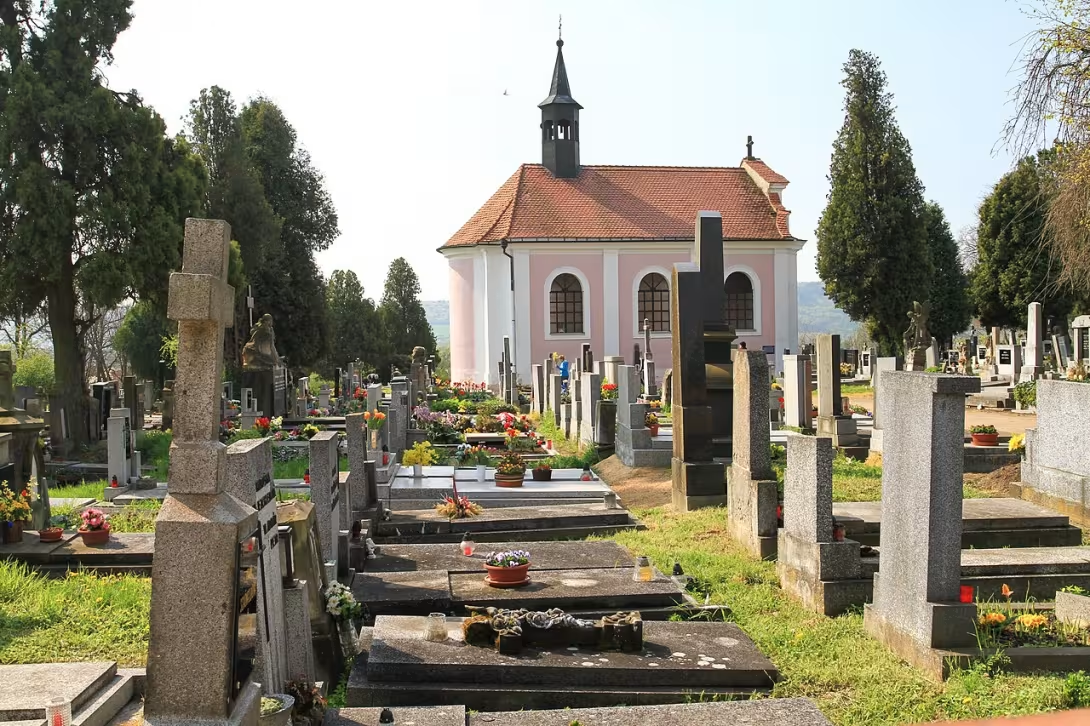
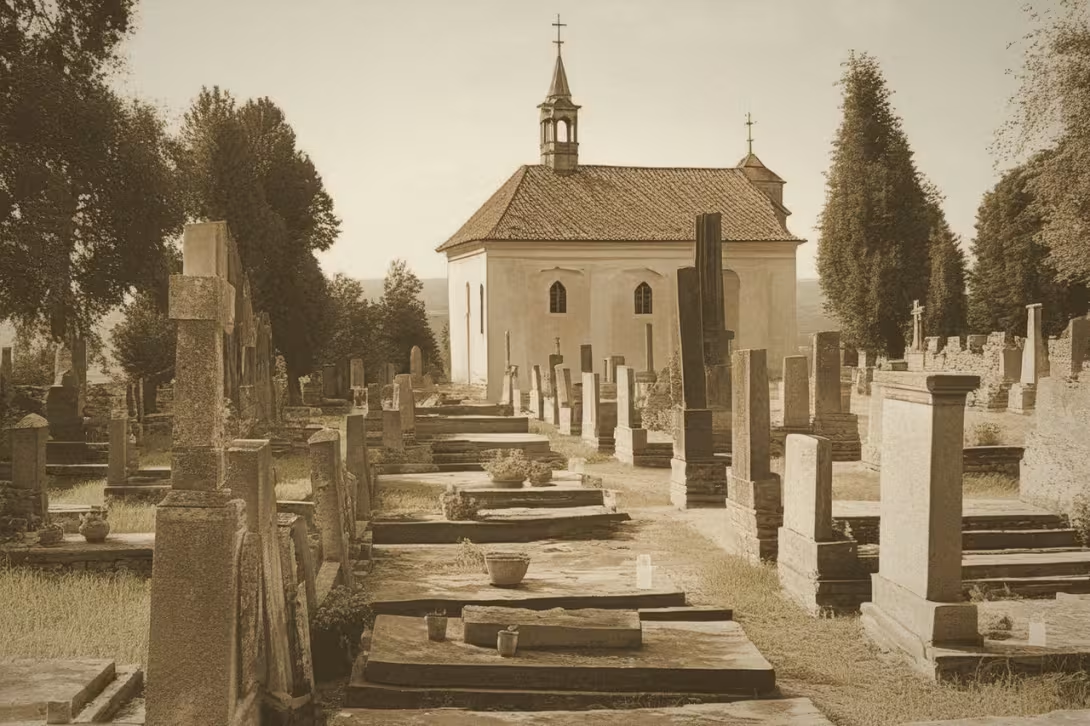
The historical appearance on the left is an AI-generated visualisation and serves as inspiration only.
Historical milestones
- 1722
- Completion of the Chapel's construction by Petr Pavel Columban.
- 1868
- Significant renovations were carried out on the chapel.
- 1990
- Major restorations took place at the beginning of the decade.
Architectural development
The Chapel of Saint Lawrence was initially constructed between 1720 and 1722 by Petr Pavel Columban. It replaced an older church from 1601, reflecting a transition to baroque architectural style with its use of dressed stone and plastered surfaces. The chapel underwent significant renovations in 1868 and further major restorations at the beginning of the 1990s.
Historical events
The chapel was built between 1720 and 1722 by the Roudnice builder Petr Pavel Columban.
In 1868, the chapel underwent significant renovations.
Further major restorations took place in the early 1990s.
Points of interest
- The Chapel of Saint Lawrence was built on the site of an older church from 1601, reflecting a common practice during the Baroque period to replace earlier structures with grander designs that embodied the era’s artistic and cultural aspirations.
- The chapel's main altar features a depiction of the Holy Trinity above an image of Saint Lawrence, showcasing the integration of religious iconography typical in Baroque art, which aimed to convey spiritual narratives through elaborate visual elements.
- Among the interior furnishings is a predella painting titled "The Last Supper" from 1605, notable for bearing the coat of arms of Jan Kavkovec (Kavka), linking the artwork directly to historical figures and their patronage during that time.
- The chapel's exterior includes early Baroque organ pipes with bolted ornamentation, highlighting the craftsmanship and decorative styles prevalent in musical instruments from the period, which were often integral parts of sacred spaces.
- A monument dedicated to zoologist F. Klapálka stands near the chapel, featuring a bust by Rudolf Březy from 1929, illustrating how later generations continued to honor significant contributors to science and culture within this historical site.
Guide
This guide is narrated by a synthetic voice generated by artificial intelligence.
Show guide text
This text was created by artificial intelligence and has not been editorially reviewed. It may contain inaccuracies.
Welcome to the Chapel of Saint Lawrence in Libochovice! As you stand here, take a moment to absorb the serene beauty of this baroque gem nestled in Ústecký kraj. This modest yet captivating chapel is an emblem of historical continuity and artistic evolution.
The origins of this sacred site trace back to 1601 when an older church once stood here. However, it was between 1720 and 1722 that the current structure emerged under the skilled hands of architect Petr Pavel Columban. The decision to replace the earlier building with a more grandiose design reflects the Baroque period's penchant for dramatic transformation and cultural expression.
As you gaze upon the chapel now, notice its single-nave construction, an elegant simplicity achieved through the use of dressed stone covered in plaster. Observe the architectural finesse displayed by the pilasters that line its facade, creating a rhythm that draws your eyes upward toward the smooth oblique closure. This design choice not only enhances the chapel's aesthetic appeal but also speaks to the era’s architectural ingenuity.
While specific historical figures associated with this site remain unnamed, the story of the chapel itself is rich with narratives of change and restoration. In 1868, significant renovations were undertaken, breathing new life into its structure, followed by major restorations at the dawn of the 1990s. These efforts have ensured that the Chapel of Saint Lawrence continues to stand as a testament to both its historical significance and enduring beauty.
Now, let your curiosity be piqued by an intriguing aspect of this chapel: it was built on the site of an older church from 1601. This practice of replacing earlier structures with more elaborate designs was common during the Baroque period, embodying the era’s artistic aspirations and cultural shifts.
As you prepare to move forward in your exploration, take a moment to appreciate not just the physical structure but also the layers of history it represents. The Chapel of Saint Lawrence invites you to delve deeper into its past, ponder its architectural elegance, and reflect on the stories it silently holds within its walls. Thank you for joining us today, and we hope this experience inspires you to discover more hidden gems in Libochovice and beyond.
Tips for visitors
The best time to visit the Chapel of Saint Lawrence is during late spring or early autumn, when the weather is mild and pleasant for exploring both the chapel and its surrounding historic cemetery. During these months, you can enjoy the lush greenery and blooming flowers around the site, which enhance the serene atmosphere of this baroque structure. Additionally, visiting outside peak summer months helps avoid large crowds, allowing for a more intimate experience with the architecture and history.
Parking is available nearby, but it's advisable to check local resources or maps online for specific locations as they can change over time. For those preferring public transport, Libochovice is accessible by bus from larger cities in the Ústecký region. It’s recommended to verify current routes and schedules using a transportation app or website to ensure smooth travel plans.
When visiting the Chapel of Saint Lawrence, consider bringing comfortable walking shoes as you may want to explore the surrounding cemetery area with its historic gravestones and monuments. A camera is also essential for capturing the chapel's intricate baroque details and the picturesque setting of the cemetery. Additionally, carrying a light jacket or sweater can be useful in case of sudden weather changes.
For photography enthusiasts, the best spots are around the entrance of the chapel where natural light accentuates the baroque architecture, especially during early morning or late afternoon when the sunlight is softer. Inside the chapel, capturing details such as carvings and altars can provide stunning images. The surrounding cemetery offers unique photo opportunities with its neoclassical gravestones and the stone cross adorned with a relief from 1707.
Nearby attractions within a 30-minute drive include the historic cemetery itself, which features notable monuments like the memorial for Josef Kruchina ze Švanbergu and the monument to zoologist F. Klapálka. These sites offer additional historical insights and are perfect for those interested in exploring more of Libochovice's cultural heritage.
For families with children, visiting the Chapel of Saint Lawrence can be both educational and enjoyable. The historic cemetery provides a fascinating backdrop for storytelling about local history and architecture. Encourage kids to look for details on gravestones and monuments, turning it into an interactive learning experience. Ensure that younger visitors are aware of respectful behavior in such historical sites.
Businesses nearby
Do you run a restaurant, accommodation, shop, museum, rental, wellness or other visitor service near this monument? Show yourself directly to the people heading to it — this is how they will see you in the app and on the web:
Events nearby



Zdroj akcí: otevřená data měst a obcí ČR (Národní katalog otevřených dat) a kalendář akcí Národního památkového ústavu.
Nearby
The surrounding area includes a historic cemetery featuring neoclassical gravestones from 1834, a memorial for Josef Kruchina ze Švanbergu from 1844, and a stone cross adorned with a relief from 1707. Additionally, there is a monument to zoologist F. Klapálka, complete with a bust by Rudolf Březy from 1929.
Accommodation nearby
Trips and activities nearby
Guided tours, tickets and activities nearby from GetYourGuide
Affiliate link: if you buy from the partner, we may receive a commission. The price for you does not change.
Search tours and activities →Themed route
Thematic Walking Tour: Libochovice
1. Kaple svatého Vavřince (Libochovice) - Type: Chapel - Why Visit: This charming chapel is a serene starting point for your tour, offering a glimpse into the spiritual and architectural heritage of Libochovice. Its peaceful ambiance provides an ideal setting to reflect on history before exploring nearby sites.
2. Historic Cemetery - Type: Cemetery - Why Visit: Located just a short walk from the chapel, this historic cemetery features neoclassical gravestones dating back to 1834. It's a fascinating place for those interested in local history and architecture, showcasing beautifully preserved gravestones that tell stories of past generations.
3. Memorial for Josef Kruchina ze Švanbergu - Type: Memorial - Why Visit: A few steps from the cemetery is this memorial dedicated to Josef Kruchina ze Švanbergu, erected in 1844. It offers insight into the notable figures of Libochovice's history and serves as a poignant reminder of the area's cultural legacy.
4. Stone Cross with Relief - Type: Stone Cross - Why Visit: Nearby stands an ancient stone cross adorned with a relief from 1707, providing a tangible connection to the region’s early religious traditions. This site is perfect for those interested in exploring historical artifacts and their significance within the community.
5. Monument to Zoologist F. Klapálka - Type: Monument - Why Visit: Conclude your tour at this monument dedicated to zoologist F. Klapálka, featuring a bust by Rudolf Březy from 1929. It celebrates the contributions of a local scientist and offers an opportunity to appreciate the intersection of art and science in Libochovice.
This thematic walking tour is designed to immerse you in the rich history and cultural heritage of Libochovice through its significant landmarks, all within close proximity for easy exploration.
Seasonal recommendations
Spring: The chapel of Saint Lawrence in Libochovice welcomes visitors with the gentle rebirth of nature, as cherry blossoms and other spring blooms create a picturesque setting around this historic site. As daylight extends, the soft morning light enhances the chapel's architectural details, offering a serene atmosphere for exploration. During this time, visitor numbers are moderate, making it an ideal period to enjoy the tranquility without large crowds. It is recommended to wear comfortable layers that can be adjusted as temperatures fluctuate between cool mornings and warmer afternoons.
Summer: In summer, the chapel of Saint Lawrence basks in long daylight hours, providing ample time for visitors to explore its historical significance and surrounding landscapes. The lush greenery and vibrant flora create a lively backdrop, perfect for leisurely walks or picnics nearby. This is peak tourist season, so arriving early can help avoid larger crowds. Light clothing is advisable, along with sun protection such as hats and sunscreen, to ensure a comfortable visit during the warmer months.
Autumn: Autumn transforms the chapel of Saint Lawrence into a stunning canvas of reds, oranges, and yellows, making it an enchanting destination for those who appreciate fall foliage. The cooler temperatures create a crisp atmosphere ideal for photography and leisurely strolls through the surrounding parkland. Visitor numbers tend to decrease as the season progresses, offering more solitude in later months. Layered clothing is recommended to accommodate the changing weather, from mild days to chilly evenings.
Winter: During winter, the chapel of Saint Lawrence exudes a quiet charm beneath a blanket of snow, with its historic architecture standing out against the stark landscape. The shorter daylight hours and colder temperatures create an intimate atmosphere, perfect for those seeking a peaceful retreat. Visitor numbers are typically low, providing a more personal experience. It is essential to dress warmly in layers, including hats, gloves, and insulated footwear, while being mindful of potentially reduced opening hours during this season.
Visualizations and artistic views


The visualisations are generated by artificial intelligence and serve as inspiration.
Photos from the area
Real photos taken near the monument


Zdroj a licence jsou uvedeny u každého snímku.
Tips from visitors
No tips yet. Be the first!
Log in and add your tip.
Sources and literature
Fotografie: Ondřej Kořínek / CC BY-SA 4.0 — Wikimedia Commons. The author and licence also appear when you hover over the image.
Faktickým podkladem tohoto textu byl článek na Wikipedii, jehož autory jsou přispěvatelé Wikipedie. Článek je dostupný pod licencí CC BY-SA 4.0.
Location on the map
Příběhy a pověsti
Legendy, pověsti a příběhy spjaté s touto památkou

Fotografie návštěvníků
Zatím žádné fotografie. Buďte první, kdo přidá fotografii z návštěvy!
Přihlaste se a přidejte svou fotografii nebo hodnoťte.
Za ověřenou návštěvu v aplikaci získáte víc bodů — poznáme podle GPS, že jste na místě.
Reviews and comments