






Karlštejn (zámek) Hunting lodge
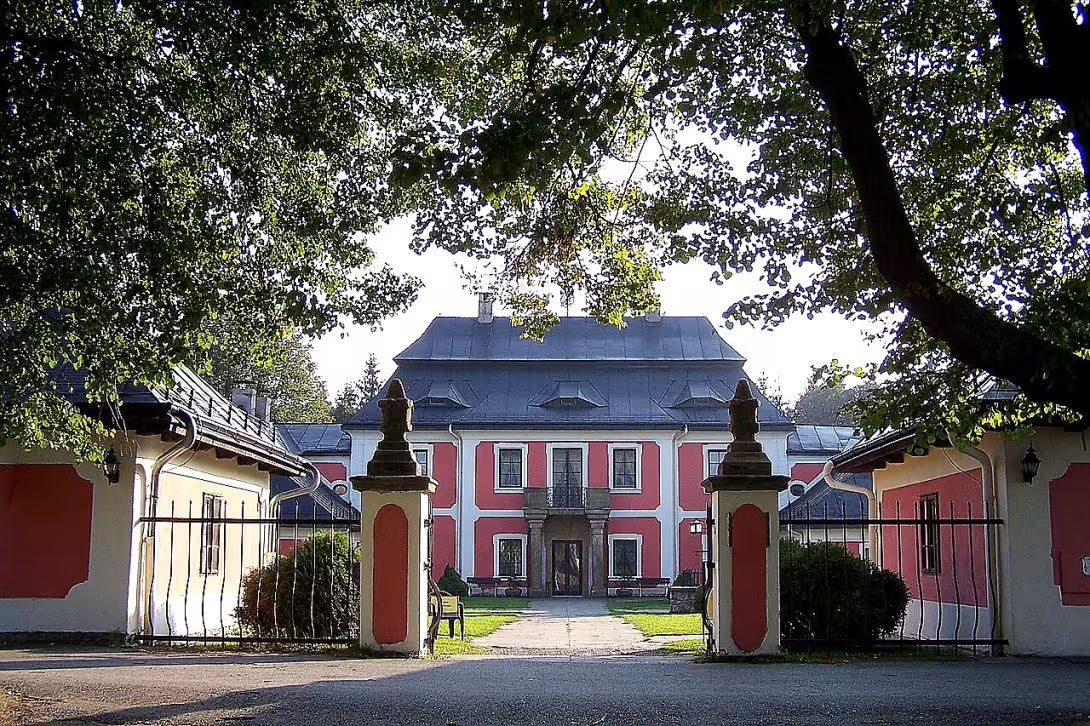
Karlstejn near Svratouch is originally a hunting castle built between 1770 and 1775 in a late Baroque style with rococo elements. It is located at an altitude of 780 metres in Ždářské vrší in Chrudim district, which makes it one of the highest-laid locks in the Czech Republic.
The first building in the complex was the chapel of St. Jilji, whose altar was consecrated in 1708. It is believed that she had it built by Countess František Rosalie Beatrix of the House of Berk of Dubé, who inherited the fast-moving estate in 1706. The building itself was built in 1770 by Count Filip Kinský and remained in the property of its house until 1823. In the Enlightenment period, the headquarters served not only as a hunting ground, but also as an administrative centre for the administration of local iron and glass smelters since 1784.
The architecture of the castle stands out with strict axis symmetry and three-wing layout in the shape of horseshoe. The main one-storey pavilion with three-axis risalite and a double valb roof are complemented by two ground-level side wings, ending with a semi-circular outer wall. The facade consists of contrasting combinations of wine-red colour and light mortars. It is integrated into the southeast wing by the chapel of St. Gilji with an octave turret and a helmet cap. The honour court closes two separate economic buildings that connect fences with metal bars and entrance gates to the main pavilion.
After 1823, the German Prince of Thurn-Taxis bought the estate, which used the castle to manage the surrounding forests until the end of World War II. Subsequently, the property was confiscated by the Czechoslovak State and in the second half of the 20th century the building was used for recreational purposes of various businesses. Since 1958, the monument has been protected by the state. After 1989, the premises became privately owned and underwent a comprehensive renovation between 2014 and 2020.
The castle Karlstejn presents a unique example of Baroque hunting architecture, which was closely linked to the economic development of the Ždářské výšky. It has been open to the public again since July 2020, following extensive renewal. Visiting this place offers the opportunity to become acquainted with the history of a noble residence in one of the highest places in the country.
Then and now
Drag the slider to compare how the landmark may have looked when it was built with the view today.
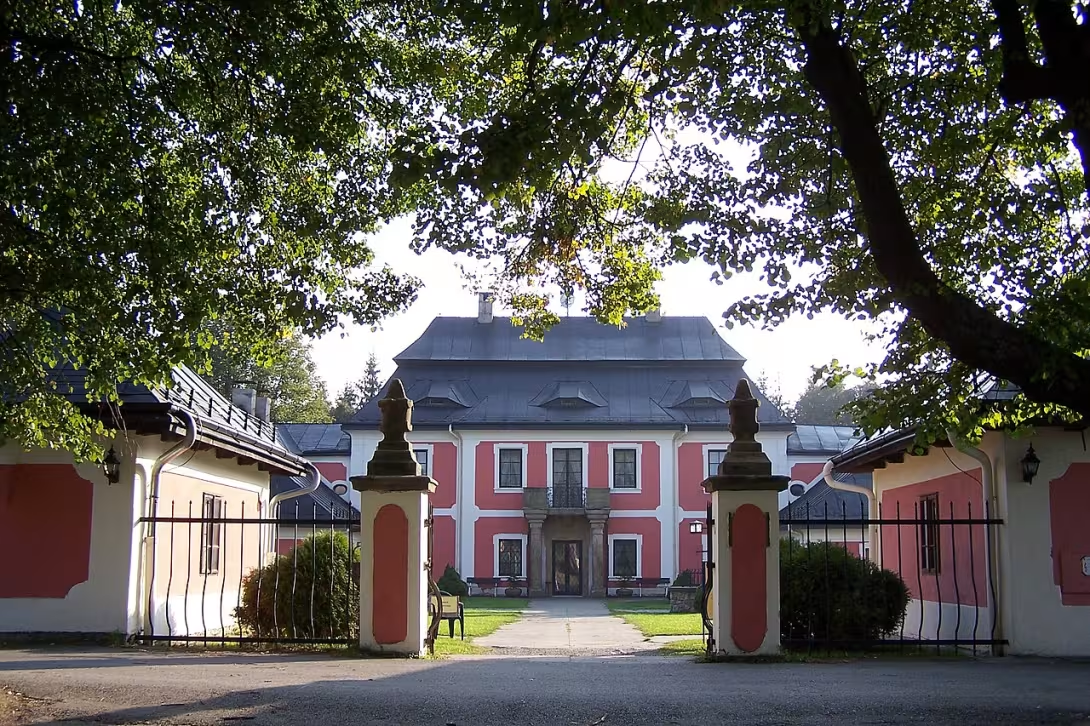
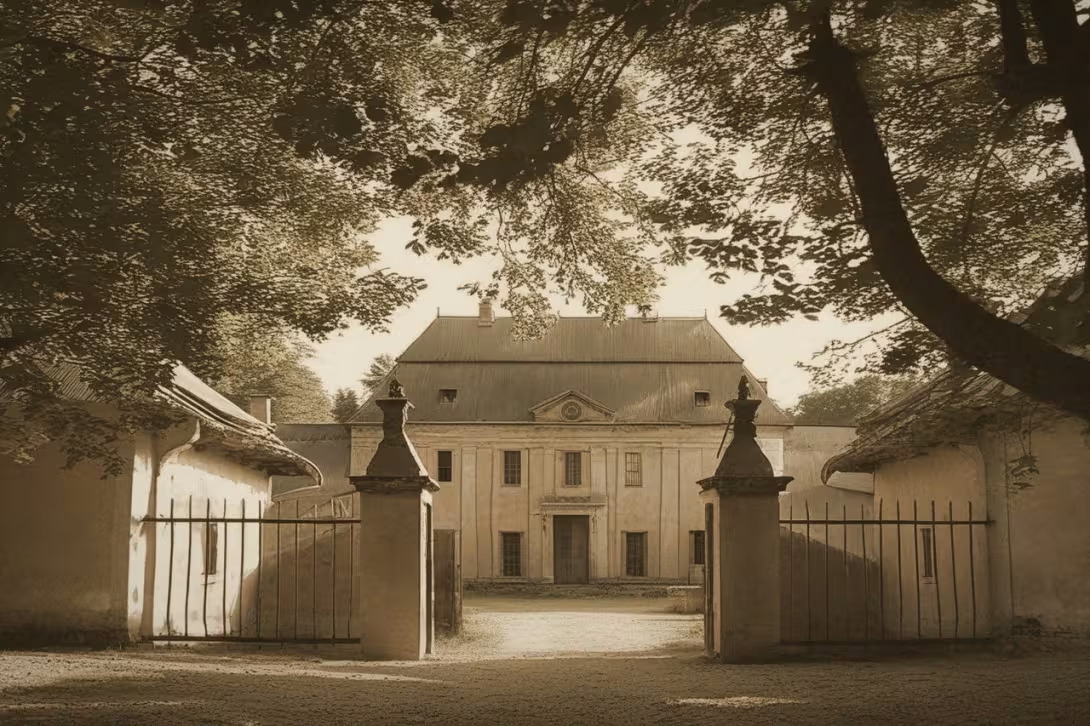
The historical appearance on the left is an AI-generated visualisation and serves as inspiration only.
Historical milestones
- 1770
- Entering the building of the hunting castle by Count Filip Kinský
- 1775
- Completion of the castle area
- 1958
- Announcement of the object by cultural monument
- 20
- Opening the castle for the public after renovation
Architectural development
The one-storey main pavilion with two ground wings was built in the Baroque style. The facade is characterized by light mortar belts and contrast wine red. The original sacral structure of the St. Gilji Chapel was integrated into the southeast wing.
Historical events
1784: establishment of the office of administration of iron and glass smelters, 1823: transfer of the estate to the property of Thurn-Taxis, 2014- 2020: complex renovation of the castle
Owners
Rod Kinský (until 1823), family Thurn-Taxis (from 1823), Czechoslovak state (after 1945), privacy (after 1989)
Points of interest
- Karlstejn near Svratouch is a hunting castle built between 1770 and 1775 in a late Baroque style with rococo elements. - Thanks to its position at an altitude of 780 metres in Ždářské vršky, it is one of the highest-laid locks in the Czech Republic. - The first building in the complex was the chapel of St. Jilji, whose altar was consecrated in 1708. - Since 1784 the headquarters served not only as a hunting ground but also as an administrative centre for the management of local iron and glass smelters. - The architecture of the castle stands out with strict axis symmetry and three-wing layout in the shape of horseshoe.
Guide
Show guide text
This text was created by artificial intelligence and has not been editorially reviewed. It may contain inaccuracies.
Welcome here, to the silence and peace of the hill. Stop for a moment, take a breath with fresh mountain air and look around you. You're standing in front of Karlstejn at Svratouch. Perhaps your name immediately led you to the famous castle near Prague, but forget about it. Here you are in a completely different world. Before you, there is a structure that is not designed to threaten its enemies or protect state jewels, but to serve as a place of rest, pleasure in hunting and managing the surrounding regions. Feel the atmosphere of this place where history is bound to nature and where time has slowed down for a while.
Let us now look together at how this monument was created and why it is even built here. It all began in 1770 when Count Filip Kinský commissioned the construction of this hunting castle. At the time, the hunter was much more than a simple shelter for hunters. It was a symbol of power, prestige and a way to escape from the slow rhythm of urban life into the wilderness. Karlstejn near Svratouch was built in a short period of time, namely between 1770 and 1775. In addition to its function as a background for wanking, the castle also performed a very practical, economic purpose. It served as an administrative centre for local smelters, which was a key pillar of prosperity in this area. So imagine this place as a combination of a luxury resort and a modern one for the time of the yönetime center.
Now pay attention to the architecture itself, which you see right in front of you. Look at the overall composition of the building. The dominant is a three-wing castle pavilion. Notice its strict symmetry. This harmony and balance are typical of the period aesthetics that sought order and logic in space. The style of the castle is defined as a late Baroque, but if you look more carefully at the details, note the finer, lighter elements that bring the Rococo style into the building. Rococo brought playfulness and elegance to architecture, which, combined with baroque monumentality, creates a very pleasant and noble impression.
In addition to the main pavilion, feel the surrounding space. There are separate economic buildings that used to ensure the smooth running of the entire castle and prepare everything necessary for hunting expeditions. But now please look at one very special and interesting element that fits into the premises, even though it is older than the castle itself. It's the chapel of St. Jilji. Note her dominant turret, which stands out over the surrounding roofs. This chapel was deliberately incorporated into the castle area and reminds us that even at the time of hunting and metallurgy, faith and spiritual refuge had its fixed place.
When we think about this place, we can't forget the people who inhaled his life. The first of them was the already mentioned Count Filip Kinský, a man with a vision who wanted to create a place in these hills corresponding to his status. Together with this home is the figure of Františka Rosalie Beatrix from Berk of Dubé. Imagine all the conversations, plans, and maybe even the disputes that took place in these premises. The nobility spent time here, visiting its friends and watching the development of its metallurgical businesses. Although we do not know the names of the particular architects who worked out the construction plans, their work in the form of this symmetrical construction lasted centuries.
Now I want to impress you with one fact, which makes this castle quite unique. Try to remember where you are right now. We are in the Zdářské mountains at an altitude of seven hundred eighty meters. Thanks to this position, Karlstejn at Svratouch belongs to the highest-laid locks in the Czech Republic. Imagine what it must have been like in the eighteenth century to come here in the winter when a deep snow blanket covered the landscape, or how refreshing the air must have been during hot summer days. This height gives the castle some mystery and isolation from the rest of the light, making it an ideal hiding place for those who seek peace.
Another interesting thing is the altar in the chapel of St. Jilji, which forms the spiritual heart of the whole complex. It's a place where the history of an older sacral space connects to a newer noble residence. This contrast between the practical use of the castle for hunting and metallurgy and the quiet prayer space of the chapel creates a unique dynamic of this place.
The history of the castle was not only about celebrations and hunting. The building has undergone various stages of its development. In 1958, the building was officially declared a cultural monument, which ensured that its values would not be forgotten or destroyed. However, time is relentless and construction required care. After long years and extensive renovation, the castle was reopened to the public in 2020. What you see today is the result of a great effort to preserve the original character of the late Baroque and Rococo so that future generations can feel the same impression you feel now.
Now that you know the story of this place, its architectural details and the people who created it, you are invited to explore again. Walk slowly around the three-wing pavilion, perceive the symmetry of its walls and look up once more at the tower of the chapel of St. Gilji. Try to imagine the sound of the hooves of horses, the call of hunters in the forest and the heat of nearby smelters that once defined the rhythm of life in this area.
Thank you for accompanying me on this short journey through time. I hope you've found a moment to think and that Karlstejn at Svratouch has taken you by his humble yet noble beauty. Now it's up to you to discover the rest of this compound. I wish you a pleasant walk and a beautiful day spent in the heart of the Žďářské mountains. Goodbye.
Tips for visitors
{'best _ cas': For a visit we recommend weekdays outside the main summer season when you best enjoy the quiet atmosphere of the baroque castle and surrounding nature of the Zdářská hills without large crowds of tourists. ',' transport _ and _ parks': 'The castle is available by car, parking is provided near the property. Use the nearest stop in the village of Svratouch to travel by public transport and walk the rest of the way; Check the current connection in the traffic search engine.', 'equipped _ and _ photo': 'We recommend fixed shoes for walking in the surrounding nature. For photography is the most suitable soft light during the morning or late afternoon, when the symmetrical architecture of the castle pavilion and its rococo details stand out.', 'of all _ and _ families': 'Zdářské výšky region offers ideal conditions for family trips to nature. In the immediate vicinity of the castle you can take care of light hiking in picturesque landscape, which is also suitable for families with children looking for peace and clean air.'}
Businesses nearby
Do you run a restaurant, accommodation, shop, museum, rental, wellness or other visitor service near this monument? Show yourself directly to the people heading to it — this is how they will see you in the app and on the web:
Events nearby
Zdroj akcí: otevřená data měst a obcí ČR (Národní katalog otevřených dat) a kalendář akcí Národního památkového ústavu.
Nearby
The castle is located in the natural area of Zdářské mích over the village of Svratouch.
Accommodation nearby
Themed route
Thematic cruise route around the castle Karlstejn
1. Castle Karlstejn - Type: Historical castle - Why is it worth a visit: Karlstejn Castle is one of the most famous and important historical monuments of the Czech Republic. It was built by Emperor Charles IV in the 14th century as a safe place to store crown jewels and other valuables. Its architecture, historical significance and beautiful location on top of the village of Svratouch make it an essential visit for every traveler.
2. - Type: Village - Why is it worth a visit: Svratouch is a small village located near the castle Karlstejn, known for its natural beauty and tranquility. It's an ideal place to relax after a tour of the castle. Here you can enjoy the quiet moments in nature or look at the picturesque landscapes of Žďářské výšky.
3. Groom hills - Type: Natural area - Why it is worth a visit: This mountain area offers beautiful views and is ideal for various activities in nature such as walking or cycling. Its diverse terrain and natural beauty make it a perfect addition to the historical experience in Karlstejn.
4. Church of St. George - Type: Church - Why is it worth a visit: This church, located near Svratouch, is an important local monument with a rich history. Its architecture and location offer a view of the surrounding landscape beauty of the Zdářské mountains.
5. Karlstejn Castle Station - Type: Historical area - Why is it worth a visit: The Castle Station offers the opportunity to see other architectural elements and historical details that are not visible inside the castle itself. It is also a place where you can relax and enjoy a quiet moment while viewing panoramic views of the surrounding landscape.
This route offers a combination of historical experiences and natural beauties, making it ideal for a day trip.
Seasonal recommendations
In spring the castle will surround the lush green and blooming trees, creating an optimistic atmosphere. The light is soft and nature around the castle awakens to life. We recommend to dress in layered clothes because the weather is usually variable. It is advisable to arrive in the morning when the crowds of visitors are still relatively small.
The summer season brings rich green forests and sharp sun, highlighting the details of stone walls. The atmosphere is full of energy, but also a noisy rush. Due to the greatest burden of tourists, it is crucial to arrive immediately to avoid long fronts. Choose light, breathable clothes and don't forget enough fluids.
In autumn, the surrounding landscape turns into golden and red tones, while the morning fog in the valley gives the memory a mysterious touch. It's the perfect time for romantic walks in peace. It is practical to bring waterproof shoes and raincoats with you because the roads can be damp and the air can be cooler.
In winter the castle is majestic, especially if it is covered by a layer of snow and the freezing morning clears the sky. There is peace and quiet, which is not found at other times. Don't forget to wear very warm clothes and watch out for shortened opening hours. The Advent Time visit offers a unique experience of history in winter form.
Visualizations and artistic views


The visualisations are generated by artificial intelligence and serve as inspiration.
Photos from the area
Real photos taken near the monument


Zdroj a licence jsou uvedeny u každého snímku.
Tips from visitors
No tips yet. Be the first!
Log in and add your tip.
Sources and literature
Fotografie: Michal Louč / CC BY 3.0 — Wikimedia Commons. The author and licence also appear when you hover over the image.
Faktickým podkladem tohoto textu byl článek na Wikipedii, jehož autory jsou přispěvatelé Wikipedie. Článek je dostupný pod licencí CC BY-SA 4.0.
Location on the map
Příběhy a pověsti
Legendy, pověsti a příběhy spjaté s touto památkou
Fotografie návštěvníků
Zatím žádné fotografie. Buďte první, kdo přidá fotografii z návštěvy!
Přihlaste se a přidejte svou fotografii nebo hodnoťte.
Za ověřenou návštěvu v aplikaci získáte víc bodů — poznáme podle GPS, že jste na místě.
Reviews and comments