






kostel svatého Petra a Pavla (Nová Říše) Church
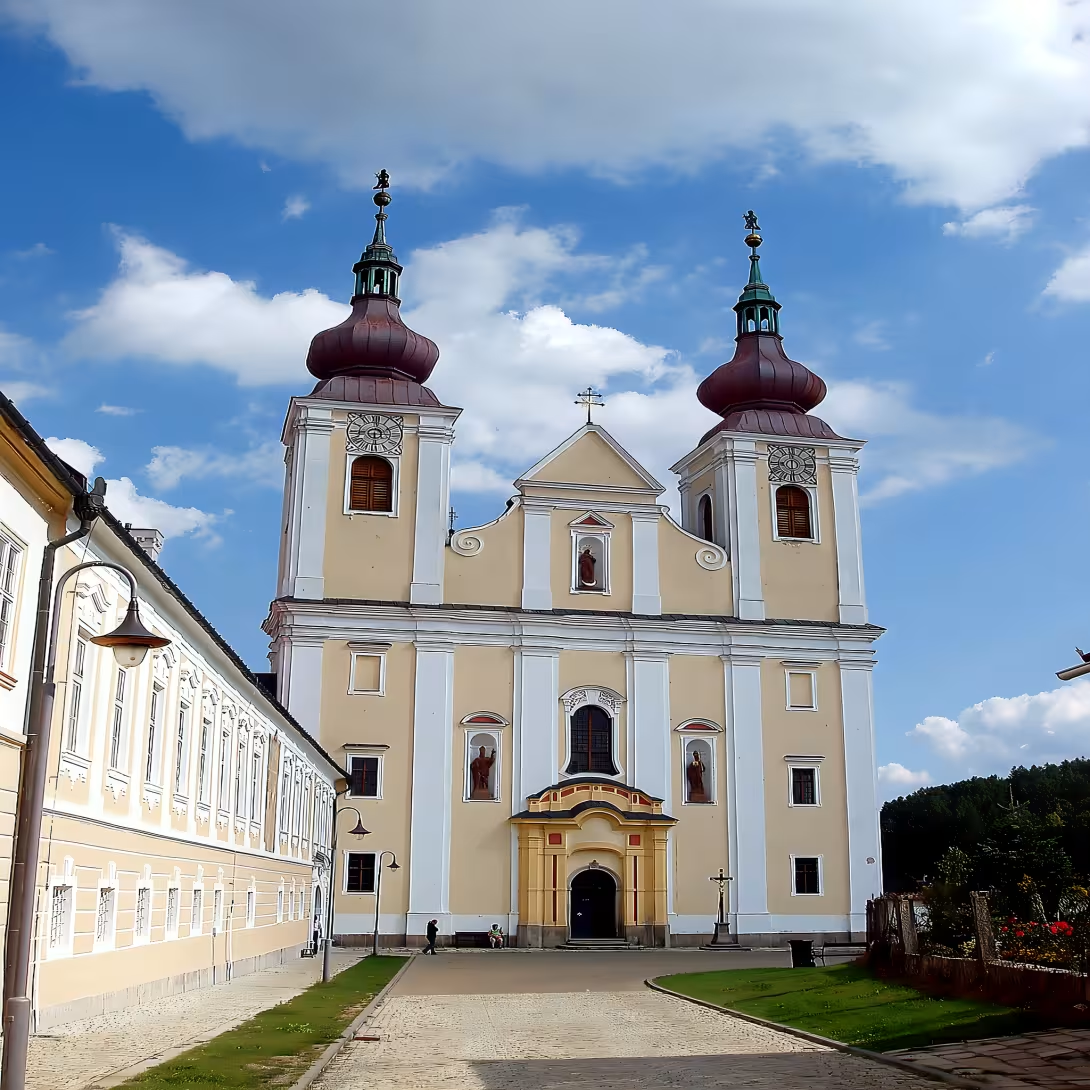
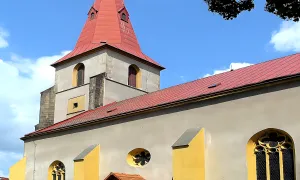
Church of St. Peter and Paul in Nové The empire is a monastery and parish church part of the premonstrate canony of the same name. Located in the centre of the village near the square and is protected as a cultural monument of the Czech Republic. Its history extends over 800 years and speaks of the Institute's endurance in the midst of major historical disasters.
The monastery was founded already in 1211 for the Women's Convention of the Premonstrate Order and gradually grew. In Hussite riots, however, it was ravaged between 1430 and 1433. Although it was later renewed, the institution collapsed - in 1596 the last sister of the monastery left. It was only in 1641 that a new garrison came and the monastery woke to life.
The present church grew in the seventeenth century. The builder Bartoloměj Hassler started construction in 1677 in the place of the older temple from 1504. The construction experienced a dramatic twist - in 1683 the church was burned down, but in 1687 it was finished. In 1705, the main altar was created with the painting of Peter and Paul from Adam Enza's hand. In 1733, the local proboscy was promoted to abbey and the church with the monastery continued to develop.
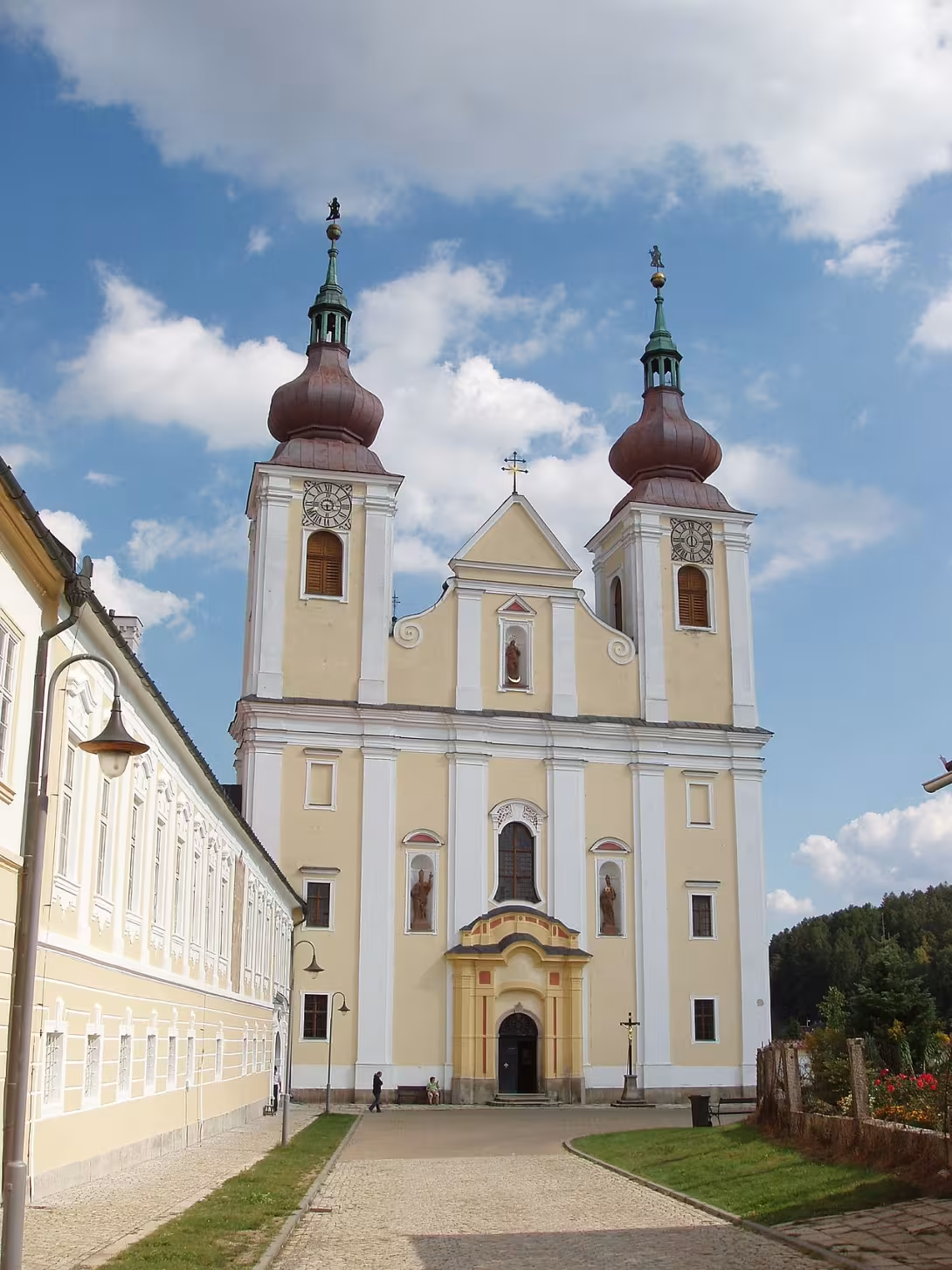
The architecture corresponds to a baroque style - one-boat rectangular building with two side caples and two prism towers. It measures 45 meters in length and 12 meters in width in the main ship. The interior is richly decorated with frescoes, painted between 1766 and 1767 by Johann Lukas Kracker. The Móbiliary is a valuable one: the main altar from sculptor Jan Hennevogel, a pulpit with rich carving from author Arbeite, an organ from Bedřich Semrad with 23 registers from 1764-1765 and a cross road from František Bílek and Viktor Förster.
The fate of the church meant fires and wars. In 1813 a fire broke out in the monastery. New bells were made in 1814, but one of the oldest bells remained from this period. During World War II, the monastery served as the seat of Hitler Youth and the bells were recited. After the war, only the oldest bell returned, the new bell was procured in 2003.
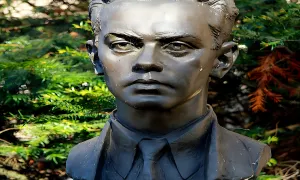
From 1945 to 1991, both the church and the monastery decayed in a long period of decline. Since 1991, they have been gradually undergoing reconstruction. In the side chapel of the Virgin Mary Painful meditated Otokar Březina, who taught in the New Reich.
Then and now
Drag the slider to compare how the landmark may have looked when it was built with the view today.
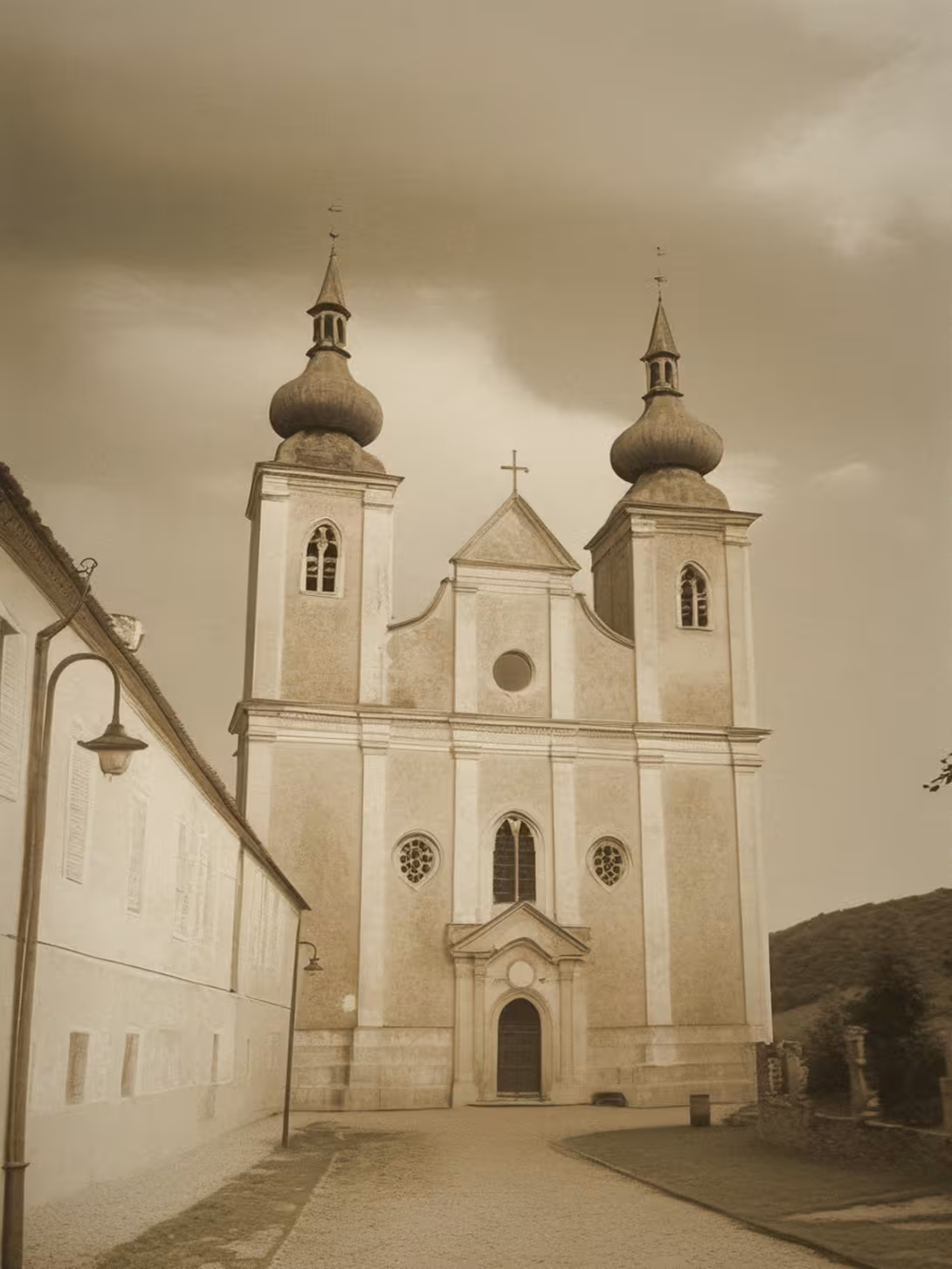
The historical appearance on the left is an AI-generated visualisation and serves as inspiration only.
Historical milestones
- 1764
- The acquisition of an organ by Bedrich Semrod.
- 1813
- The monastery and the church burned down during the fire.
Architectural development
Originally founded as a female convention, the monastery was restored after Hussite riots. In 1677 the construction of a new church under the leadership of Bartholomew Hassan began. After the fire in 1683, the construction was completed in 1687. The church went through several stages of reconstruction and enlargement, especially during the Baroque period.
Historical events
- 1211
- The establishment of a monastery for the Women's Convention of the Premonstrate Order.
- 1430
- The monastery was ravaged during Hussite riots.
- 1641
- The new staff of the monastery came and began to build a new church.
Owners
parish Nová Říše
Points of interest
The monastery was founded in 1211 for the Women's Convention of the Premonstrate Order. - The present church burned down in 1683 before completion, which happened only in 1687. - Interior decorated with frescoes, painted by Johann Lukas Kracker from 1766 to 1767. During World War II, the monastery served as the seat of Hitler Youth. - In the side chapel of the Virgin Mary Painful meditated Otokar Březina.
Guide
This guide is narrated by a synthetic voice generated by artificial intelligence.
Show guide text
This text was created by artificial intelligence and has not been editorially reviewed. It may contain inaccuracies.
Welcome to the New Reich. You're standing in front of one of the most important baroque finds in the entire Highlands. Before your eyes is the church of St. Peter and Paul, a building that carries the incredible power of history and spiritual heritage. Do you feel that strange atmosphere radiating from these walls? It is a combination of calm, nobility and something unruly that has survived centuries of surges, fires and barren times. This building is not just a simple religious object, it is a monumental witness to eight centuries of human effort, faith and artistic expression. While you're looking at its present form, try to imagine how many generations of people have stood here in exactly the same place as you are now, looking for comfort or answers in this space.
Now let's take a deeper look at the surface and understand how this place has become what it is today. To understand the importance of this place, we must return to the beginning of 1211. This is the moment when the first chapter of the story began to be written here today. At that time a monastery was established for the women's convention of the premonstrate order. Imagine the early medieval society, the spiritual strength and determination that was needed to give birth to such an important place for prayer and community life in this country. For centuries, the role of this place changed, but its core remained the same - it was a pillar for the surrounding parish and for monastic life.
Now pay attention to the architecture itself that you are currently observing. What you see before you is the ultimate manifestation of baroque style. This architecture does not try to be quiet; She wants to act, she wants to excite, and she wants to evoke emotions. The main architect who printed this construction of its current, monumental character was Bartoloměj Hassler. The Baroque style that dominates here so clearly is known for its wealth and dynamism. Even if you're out there now, feel the power that this building is causing in the surrounding space. Look at its facade and see how baroque shapes try to connect with the outside world, how they try to control space with their presence. Each line and every element you see was designed to express glory and grandeur.
But the history of this place was not just a linear process of building and blooming. It was also the history of the relentless trials that this monument had to face. If you look at the history of the church, you'll find it was built several times from ashes. One of the most dramatic moments took place in 1683. When the present Baroque church had not yet been completed, the monastery and the church hit a devastating fire. It was a period of uncertainty and destruction where everything that was built seemed to be lost in an instant. They had to wait until 1687 until the construction was actually completed and flourished again. But fate had another test for this place. In 1813 the monastery and the church burned down again. This constant cyclism of destruction and rebirth is one of the most important aspects of the identity of this place. Every repair, every new layer of baroque decorating was an act of will and faith that this place must remain.
When you now decide to enter the interior, prepare yourself for a completely different world. If you see the power of architecture outside, inside you will be visual and spiritual depth. The interior is a real treasure that was created during the period of the greatest bloom. From 1766 to 1767 here Johann Lukas Kracker created beautiful frescoes. These paintings are not just decorations; They are stories painted on walls designed to guide the eye and the mind of the visitor to higher spheres. Baroque painting in this concept is used to make space work infinitely, so that the borders between the material world and the spiritual world begin to wipe away.
And not only what you see, but what you might hear. In 1764, an organ from Bedřich Semrad was acquired here. Imagine the sound that spreads in these areas. The music of this organ is an essential part of this church's atmosphere. It is a sound that is connected to Baroque aesthetics, a sound that complements the visual richness of frescoes and architecture. So when you move inside, just let yourself be carried away by the total impression where the image, space and sound are connected.
There is one interesting thing that may make you think of both elasticity and durability. This monument is protected as a cultural monument of the Czech Republic, which gives it the status of something immortal within our national heritage. Although it was destroyed several times by fire, although it changed from 1211 to today, it still stands. It is a fascinating paradox - a building that is perceived as solid and constant, was actually constantly moving, constantly being repaired and transformed. This ability to adapt while preserving its essence is what makes St. Peter and Paul's church an extraordinary monument.
Now that you have a basic idea of what's in front of you, I suggest you continue your search. Let the atmosphere of this place drift. Take a look at the details that allow you to perceive baroque art up close and try to find your own moment of silence and wonder. You may be interested in the invisible connection between artists like Hassler or Kracker and the people who created these buildings with such commitment.
Thank you for spending this moment with us and for being interested in the history of this place. We hope that this short guide has helped you better understand the importance of St. Peter and Paul's Church and that you will be able to take away not only the knowledge, but also the feeling of beauty that baroque architecture can produce. We wish you a wonderful further trip to Highlands and many other experiences in discovering our historical treasures. Goodbye.
Tips for visitors
The best time to visit is in the morning or late afternoon, when the Baroque facade of St. Peter and Paul's church best responds to natural light, which is ideal for capturing architecture. When shooting we recommend focusing on details in the interior and connecting the church with the premises of the premonstrate canon.
You can reach the New Reich by car and public transport; We recommend checking the current connections and timetables in the Internet search engine. Parking is available near the city centre, where the monument is easily accessible by foot.
We recommend shoes suitable for walking. We recommend families with children to use a visit to familiarize themselves with the history of monastery life and Baroque style in a quiet Highlands environment.
Since it is a sacral space, we recommend that we carry suitable clothes in accordance with respect to the place. There are no other specific monuments in the area that can be visited in the provided documentation.
Frequently asked questions
Is kostel svatého Petra a Pavla (Nová Říše) open to the public?
Yes, the church is open to the public. Opening hours: 9: 00- 17: 00.
How do I get to the place by car / public transport?
The nearest bus stop is Nová Říše, from which you can walk or bike to the church. Parking for visitors is possible in the nearby area.
How much is the entrance fee and is it paid on the spot?
Admission is free.
Is the tour suitable for children and seniors?
Yes, it is advisable to visit the church with children or seniors. The tour is relatively short and undemanding.
How long does the tour take?
The church tour takes approximately 30-45 minutes.
What are the opening times and booking is required?
Opening hours: 9: 00- 17: 00. Reservation is not required, but we recommend prior verification of the availability of the monument.
What's interesting in the immediate vicinity?
In the vicinity of the church there is a nature reserve and other historical monuments in the New Reich, such as the chateau or museum.
For kids
Imagine going back to when the New Reich was a small town in the heart of Moravia. It was a different era, different lights and dark, but one thing remained the same - beautiful nature and beautiful buildings.
When you go back in time, you see the city of the New Reich as a vast village with small houses and a large village. People have lived here partly since agriculture and grazing animals. St. Peter and Paul's church was still under construction at the time. The construction of the church took several centuries, so we can see various architectural elements on it.
Businesses nearby
Do you run a restaurant, accommodation, shop, museum, rental, wellness or other visitor service near this monument? Show yourself directly to the people heading to it — this is how they will see you in the app and on the web:
Events nearby
Zdroj akcí: otevřená data měst a obcí ČR (Národní katalog otevřených dat) a kalendář akcí Národního památkového ústavu.
Nearby
Nová Říše
nature reserves
Accommodation nearby
Trips and activities nearby
Guided tours, tickets and activities nearby from GetYourGuide
Affiliate link: if you buy from the partner, we may receive a commission. The price for you does not change.
Search tours and activities →Themed route
1. Church of St. Peter and Pavla (sacral building) - The tour of the interior reveals rich Baroque decoration and a unique spiritual atmosphere. 2. Church Tower (prospect) - The tower exit provides a beautiful view of the surrounding landscape. 3. Tanks Church (areal) - The space around the building offers a peaceful walk and the possibility to observe architecture from the outside.
Seasonal recommendations
Spring - In March and April, the church is surrounded by blooming flowers in nearby gardens and meadows, creating a fine pastel background for historic stone walls. Morning sun rays penetrate the stained glass and spill soft paint into the interior, which underlines the Gothic details. It is still relatively low in this period, which is why it is worth arriving soon after opening (around 9 h) so that you can view the crypt and baroque altar in peace. We recommend a light jacket or sweater because in the morning it can be cold, and comfortable shoes on uneven foundation around the church.
Summer - In the summer months, especially in July and August, the church is located in the heart of green fields and forest paths which are in full bloom. At noon, sunlight strongly illuminates high towers and creates dramatic shadows, underlining baroque statues on the facade. In the main summer season, however, the number of tourists increases, so it is best to plan a visit early in the morning or late in the afternoon (before 17 h) when the crowds are smaller. Take your hat and sunglasses, light clothes and plenty of water because the surrounding nature can be hot and dry.
Autumn - In October and November, a golden palette of autumn leaves spread around the church, which colour roads and gardens into warm shades of orange and red. The weaker sunlight penetrates through the stained glass and creates an intimate, almost meditation atmosphere inside. The beginning of autumn is still relatively quiet, but the traffic is gradually increasing during weekend trips, so it is advisable to arrive during working days. We recommend layered clothing - sweater under a light jacket - and firm shoes, because leaves can be slippery and roads around the church slightly uneven.
Winter - In December and January the church stands in a snowy calm, where the white blanket highlights the stone details and the roof with red bags. The weak winter light penetrates through the windows and creates cool but clean glare that underscore the spiritual atmosphere. Opening hours are shorter, often until the afternoon, and it may be colder inside, so it is worth coming in a warm coat, hat and gloves. In winter, the crowds are the smallest, so you can soak up the historical environment in peace. Bring a hot drink thermos and tread carefully on snowy roads where it can be slippery.
Visualizations and artistic views


The visualisations are generated by artificial intelligence and serve as inspiration.
Photos from the area
Real photos taken near the monument

Zdroj a licence jsou uvedeny u každého snímku.
Atmosphere of the place
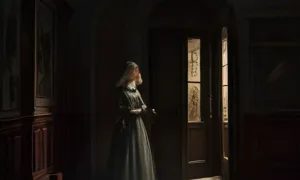
This atmospheric visualisation of the place and period was generated by artificial intelligence. It is not real footage of the location.
Tips from visitors
No tips yet. Be the first!
Log in and add your tip.
Sources and literature
Fotografie: User:Sefjo / CC BY-SA 3.0, rozlišení zvýšeno umělou inteligencí — Wikimedia Commons. The author and licence also appear when you hover over the image.
Faktickým podkladem tohoto textu byl článek na Wikipedii, jehož autory jsou přispěvatelé Wikipedie. Článek je dostupný pod licencí CC BY-SA 4.0.
Location on the map


Příběhy a pověsti
Legendy, pověsti a příběhy spjaté s touto památkou
Fotografie návštěvníků
Zatím žádné fotografie. Buďte první, kdo přidá fotografii z návštěvy!
Přihlaste se a přidejte svou fotografii nebo hodnoťte.
Za ověřenou návštěvu v aplikaci získáte víc bodů — poznáme podle GPS, že jste na místě.
Reviews and comments