



Kašna se sochou svatého Václava Fountain
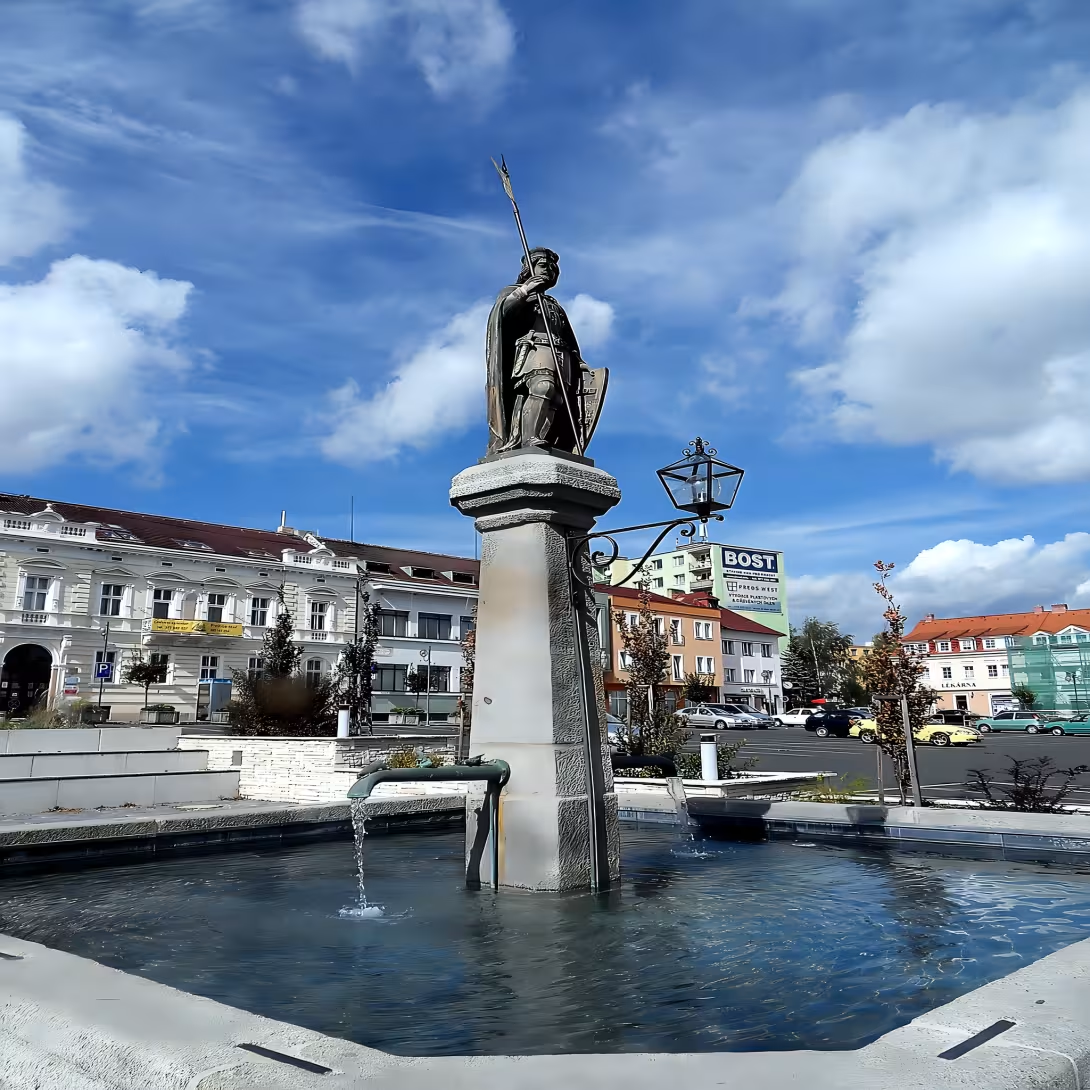
Kašna se sochou svatého Václava is a Baroque monument located on Masaryk Square in the village Přeštice, the district of Pilsen-south. This building, which belongs to a group of four statues, is listed in the Central List of Cultural Monuments of the Czech Republic.
The Baroque fountain and center column come from the late 18th or early 19th century. The sandstone statue of St. Wenceslas was given to the city of JUDr. Augustin Brauner as a thank-you for his election to the Reich Assembly in 1848, which was related to political changes in the Austrian Empire and European revolutions.
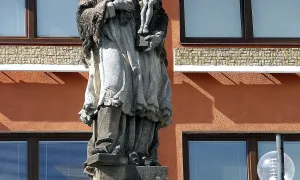
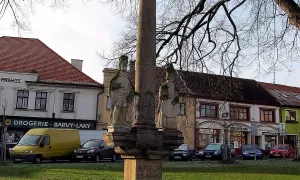
The architecture of the monument includes a granite tank with a square plan with ends and a granite plate bottom. On the circumference of the wall of the tank runs the exiting belt with a profiled ledge. In the middle there is a granite chamber needle on the prism plinth, which ends with a profiled head and a cover plate. There's a lantern hanging on the front of the column. At the bottom of the column, the gargoyles come out of the side walls. The sandstone statue of St. Wenceslas, dressed in armor, coat and a prince's hat, rests on the shield with the left hand and holds the flag in the right. The statue stands on the cover plate in contrast.
In 2010, the fountain was repaired during the revitalization of the square, and the decorative elements included the overprotective pigs on the rim and the gargoyles.
This object is an important part of Přeštice history and symbolizes the connection of the local political past with the artistic heritage. We recommend visiting it to anyone interested in baroque monuments or the history of the region.
Historical milestones
- End of 18th or beginning of 19th century
- The creation of a Baroque fountain and a central column.
- 1848
- The dedication of the sandstone statue of St. Wenceslas to the city of Přeštice.
- 2010
- Repair of the fountain within the revitalization of Masaryk Square.
Architectural development
The fountain and column come from the late 18th or early 19th century and are performed in Baroque style. The construction was used granite for tank and column and sandstone for statue. In 2010, decorative elements were added to the frames and gargoyles in the form of presytic pigs.
Historical events
In 1848, JUDr. Augustin Brauner donated a statue of St. Wenceslas. In 2010 the fountain was repaired as part of the revitalization of the square.
Points of interest
- The sandstone statue of St. Wenceslas donated to the city of JUDr. Augustin Brauner. He did this as a thank you for the election of the first preschool Member to the Reich Assembly in 1848. - The Baroque fountain and center column come from the late 18th or early 19th century. - The statue of St. Wenceslas is dressed in armor, coat and a prince's hat. The right hand holds the flag and the left hand rests on the shield. - During the 2010 repair, the decorative elements included overprotective pigs on the rim and gargoyles. - The monument is listed in the Central List of Cultural Monuments of the Czech Republic.
Guide
Show guide text
This text was created by artificial intelligence and has not been editorially reviewed. It may contain inaccuracies.
Welcome to the heart of Přeštice. You are standing right in the middle of Masaryk Square, and before your eyes is this important symbol of the local space that has been watching over the life of this square for many decades, perhaps even centuries. It's a baroque fountain that immediately attracts your attention. The first thing she has to do is reach out to you is to be impressive and to fit perfectly into the environment. Feel the atmosphere of peace and stability that this monumental entity brings.
Now look at the essential part of this work. You see this robust, square tank made of dark, solid granite stone. Note how fine the corners are, which gives the whole piece some elegance despite its considerable weight and mass. Above this tank is a central column which is also made of solid granite. Its shape resembles a chamber needle, which creates a very stable and noble base for what follows above. This granite part is very old, it comes from the end of the eighteenth or the beginning of the nineteenth century. Imagine all the decades that this stone has experienced, all the times that the city around it has been changing, but he's been here as a fixed point.
But now raise your eyes even higher, where the rarest and most delicate are. There is a sandstone statue of St. Wenceslas at the top of this granite column. Notice the interesting contrast between the darker, hard granite base and this lighter, much softer sandstone. The statue is processed with great skill and artistic feeling. St. Wenceslas is depicted here as a powerful ruler and defender. He's wearing a full armor that suggests his war role, and he's got a heavy coat falling over his shoulders that gives the character dignity. He wears a prince's hat on his head that emphasizes his high standing and authority. In his right hand he holds the battalion firmly, which gives the whole character dynamic as if he was ready to move. This whole building is not just an ordinary decoration of the square, but is recognised as part of our national heritage and is included in the official list of cultural monuments of the Czech Republic.
To fully understand the meaning of this place, we need to go back in time and understand the story that connects the statue to this place. Although the fountain itself is older, the sandstone statue of St. Wenceslas was dedicated to the city of Přeštice only in 1848. That was a year of political upheaval and major changes in our countries. And it is here that the history of the city meets the fate of great personalities. The figure you are currently observing is svatý Václav, patron saint of the Czech nation, a figure that brings respect and national pride to people's hearts. But there is another name that is closely linked to this monument. His name was Augustin Brauner. He was a lawyer who had a great heart and influence for this city. In 1848 he was elected the first Member from Přeštice to the Great Reich Assembly. This was a moment of great pride and an important step forward in political life for local people. As a token of his deep gratitude for this trust expressed by people, Augustin Brauner gave this wonderful sandstone statue to the city. So it is a gift that combines personal success with public gain and love for its own roots.
It is fascinating to think of how one political success in 1848 left such a lasting mark in the form of this work of art, which stands here today. This statue is not just a stone, it is a symbol of gratitude and connection between an individual and his community.
You might wonder if this monument always looked this perfect. It is important to know that even such strong and lasting things need care. In order to serve future generations, this monument underwent a thorough reconstruction of Masaryk Square in 2010. Thanks to this restoration, we can watch the details of the armor and texture of sandstone in their best form and enjoy their beauty.
Now that you know the story of this place, its creator and those people who have imprinted his soul, I suggest you continue your walk around the square. Feel the atmosphere of this space, which is so firmly connected to the important moments of the past. Look at other parts of the square, feel its rhythm and let yourself drift through the history that is present in every corner of this city. Thank you for spending this moment with this monument, and we wish you a beautiful and inspiring visit to Přeštice.
Tips for visitors
The best time to visit Kashna with the statue of St. Wenceslas is in spring or autumn, when the weather is pleasant and sunny day increases the beauty of the monument. The Baroque architecture and granite elements are illuminated most beautifully in these months, which is ideal for taking photos.
Local buses and trams can be a comfortable way to get to Přeštice. The current connection can be verified in an online traffic search engine.
When visiting the fountain with the statue of St. Wenceslas, take with you sun protection clothes, especially in summer. Photography is the best of various angles around the square where you can capture both the monument and its surroundings with other statues.
For families with children, Masaryk Square is suitable for short walks and entertainment. Children can enjoy a view of the monument and other statues that are located in the middle of the square. In addition, it is possible to visit other historical places in the surroundings, such as three other statues on Masaryk Square.
Frequently asked questions
Can the monument be visited?
This is a structure in a public space that can usually be seen from outside free of charge. We have not verified that this particular one is freely accessible.
Where is the monument?
Location: Přeštice. The map on this page shows the exact spot.
Why is the monument protected?
It is listed in the Central List of Cultural Monuments of the Czech Republic as a cultural monument (register no. 1000160223).
Businesses nearby
Do you run a restaurant, accommodation, shop, museum, rental, wellness or other visitor service near this monument? Show yourself directly to the people heading to it — this is how they will see you in the app and on the web:
Events nearby

Zdroj akcí: otevřená data měst a obcí ČR (Národní katalog otevřených dat) a kalendář akcí Národního památkového ústavu.
Nearby
Masarykovo náměstí v Přešticích, kde se nacházejí další tři sochy.
Accommodation nearby
Trips and activities nearby
Guided tours, tickets and activities nearby from GetYourGuide
Affiliate link: if you buy from the partner, we may receive a commission. The price for you does not change.
Search tours and activities →Themed route
Thematic cruise route from the village of Přesky
1.Kašna se sochou svatého Václava (memorial) Type: Monuments This fountain is a center of attention for lovers of history and art, because there is a statue of St. Wenceslas. It's a place where you can enjoy the peace and beauty of architecture.
2. Masaryk Square Type: Public space with works of art This square is important for three statues that resemble historical figures. It is an ideal place to walk and learn local cultural heritage.
3. Statue of T.G. Masaryk Type: Art memorial in the square The statue of President T.G. Masaryk is important for understanding the history and political heritage of the Czech Republic. It's a beautiful work of art that deserves the attention of every visitor.
4. Statue of Edvard Beneš Type: Art memorial in the square President Edvard Benes' statue is important for understanding the historical events of the 20th century. It's a place where you can think about the past and the present.
5. Statue of Thomas Garrigua Masaryk Jr. Type: Art memorial in the square This statue is dedicated to the son of T.G. Masaryk, which adds another layer of historical value to the overall picture of the square. It is an ideal place to understand family and political ties.
This route offers a view of the cultural and historical page Přeštice, where each point brings new knowledge of the local heritage.
Seasonal recommendations
In spring nature wakes up around the fountain and the surrounding greenery start to grow beautifully green. The light is soft and pleasant in this period, which greatly highlights the face of St. Wenceslas. I recommend visiting the morning hours when the air is the cleanest. Dress in layers, because the morning cold may remain, but the afternoon will be pleasant. People aren't as many crowds as they were in the summer, so you'll enjoy the memory in peace.
In summer it brings strong sun and bright colors that make the monument a significant point in the surroundings. The atmosphere is alive and full of energy. Due to high temperatures and a larger number of visitors, it is best to arrive early in the morning or just before sunset when the shadow and air cool them. Don't forget the headgear and light, breathable clothes.
In autumn, the monument offers the most impressive view thanks to the golden and brown shades of leaves that fall to the ground. The morning fog around the fountain creates a mysterious and soothing atmosphere. It's good to wear a windbreaker or a warmer coat because temperatures change fast. The best time for observation is in the afternoon when the sun shines low and creates long shadows.
In winter, the statue is very majestic, especially if it is covered with frost or snow. The atmosphere is quiet and lonely, allowing deep perception of history. Since the days are short, plan a visit around noon to use the most light. The need is very warm clothes, including gloves and hat to keep warm during the observation of the monument.
Visualizations and artistic views

The visualisations are generated by artificial intelligence and serve as inspiration.
Photos from the area
Real photos taken near the monument


Zdroj a licence jsou uvedeny u každého snímku.
Tips from visitors
No tips yet. Be the first!
Log in and add your tip.
Sources and literature
Photos: Jik jik / CC BY-SA 3.0, rozlišení zvýšeno umělou inteligencí — Wikimedia Commons. The author and licence also appear when you hover over the image.
Faktickým podkladem tohoto textu byl článek na Wikipedii, jehož autory jsou přispěvatelé Wikipedie. Článek je dostupný pod licencí CC BY-SA 4.0.
Location on the map

Příběhy a pověsti
Legendy, pověsti a příběhy spjaté s touto památkou
Fotografie návštěvníků
Zatím žádné fotografie. Buďte první, kdo přidá fotografii z návštěvy!
Log in a přidejte svou fotografii nebo hodnoťte.
Za ověřenou návštěvu v aplikaci získáte víc bodů — poznáme podle GPS, že jste na místě.
Reviews and comments