






Hrobka Josefa Hlávky Tomb
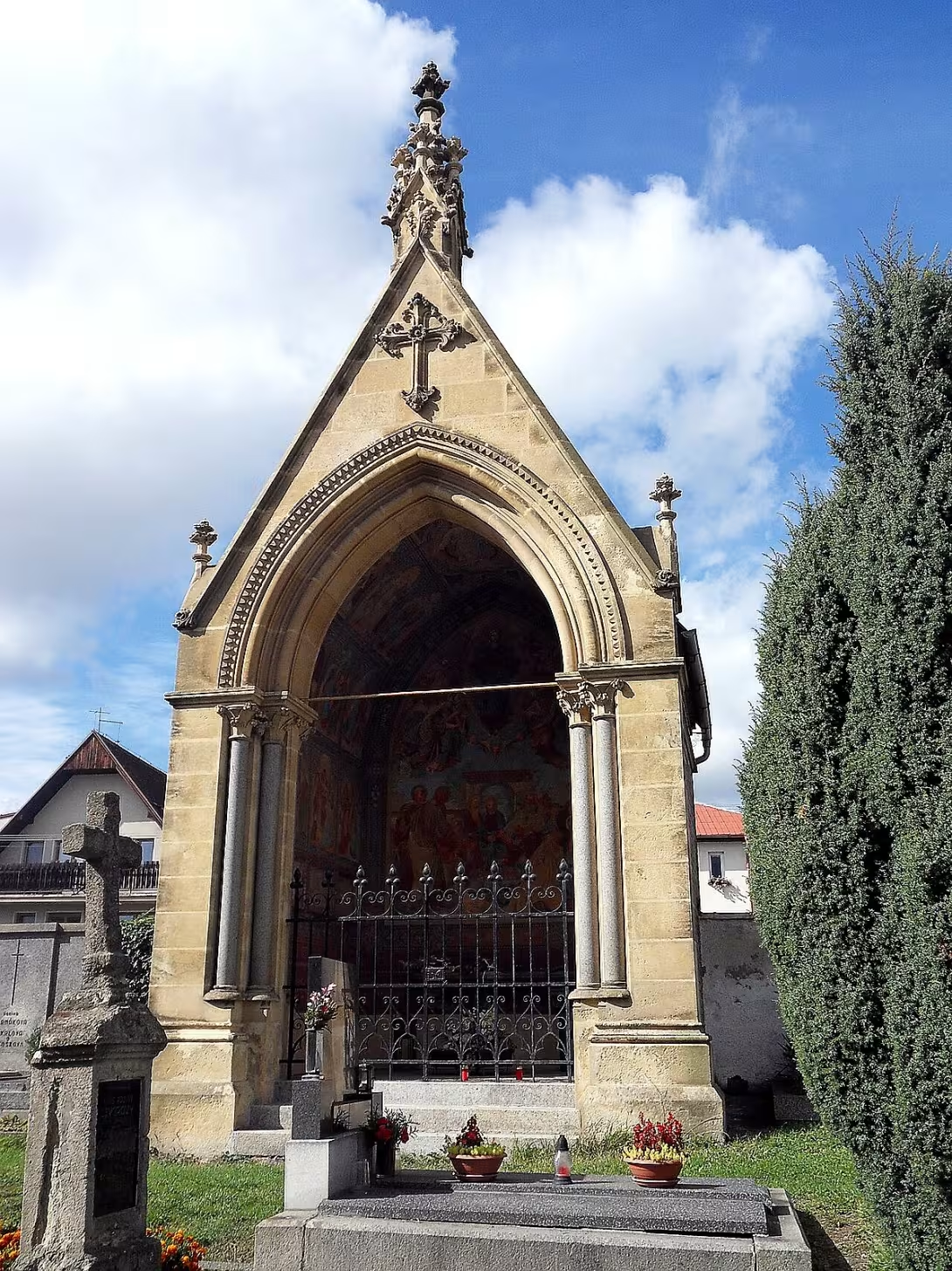
Hrobka Josefa Hlávky in the cemetery in Přeštice is a remarkable monument of Czech history and architecture. This neo-gothic building was created in 1887 according to the design of Josef Závka, an important architect and benefactor. The location of his birthplace highlights the author's personal connection to this region. The building is protected as a cultural monument of the Czech Republic and attracts attention with its aesthetic value and historical significance.
The creation of the tomb was related to the desire of Josef Hlavka for his own family resting place, which would reflect his architectural and religious beliefs. In 1887, when the construction was completed, the Czech countries were in a period of national excitement and the flowering of historism. As a leading figure in Czech engineering, the line played a key role in shaping national identity through its projects and patron activities. The Preštice tomb is one of his many pieces in which personal and professional philosophy were combined.
Architectural construction represents a neo-gothic style. It is visible on its square shape of stone and bricks with a saddle roof. The front side is opened with a broken arch and the cross-decorated shield ends with an attachment with stone flowers. The interior contains rich decoration by Vienna painter Karel Jobst. The space is decorated with biblical scenes in Nazareth style, which provide spiritual depth and artistic value. On the tombstones of the red marble, the names of members of the family are engraved, which underlines their connection to this place.
The tomb serves as a final resting place for Josef Hávka and his loved ones. In addition to him lies both his wife, Mary and Zdeněk, mother Anna, brother Antonín and parents of his first wife. Although he originally planned to bury the second wife in Vyšehrad, he wished the family to stay together in Přeštice. This desire reflects his personal values and the importance of family coexistence.
The key event in the history of the monument was the funeral of Josef Hlavka in 1908. It was a great opportunity; After saying goodbye in the Prague pantheon of the National Museum, the coffin was transported to Přeštice. Here there were other ceremonies, and the singers of Hlahol assisted in putting the remains in the tomb, stressing the important position of the deceased in society.
Today the tomb is available for visitors. It is worth visiting not only because of its architectural beauty, but also the historical context. Location at the cemetery in Přeštice and the proximity of the road to Klatovy ensure easy access. The construction is not only a family tomb, but also a testament to the life and work of Josef Závka, who left a permanent print in Czech architecture and culture.
The visit to the tomb offers a unique opportunity to explore the heritage of an important Czech figure. It is a place connecting the personal and professional aspects of Josef Hlavka's life. For those who want to understand the importance of historical and neo-gothic style in Czech countries, this monument is an invaluable goal.
Then and now
Drag the slider to compare how the landmark may have looked when it was built with the view today.
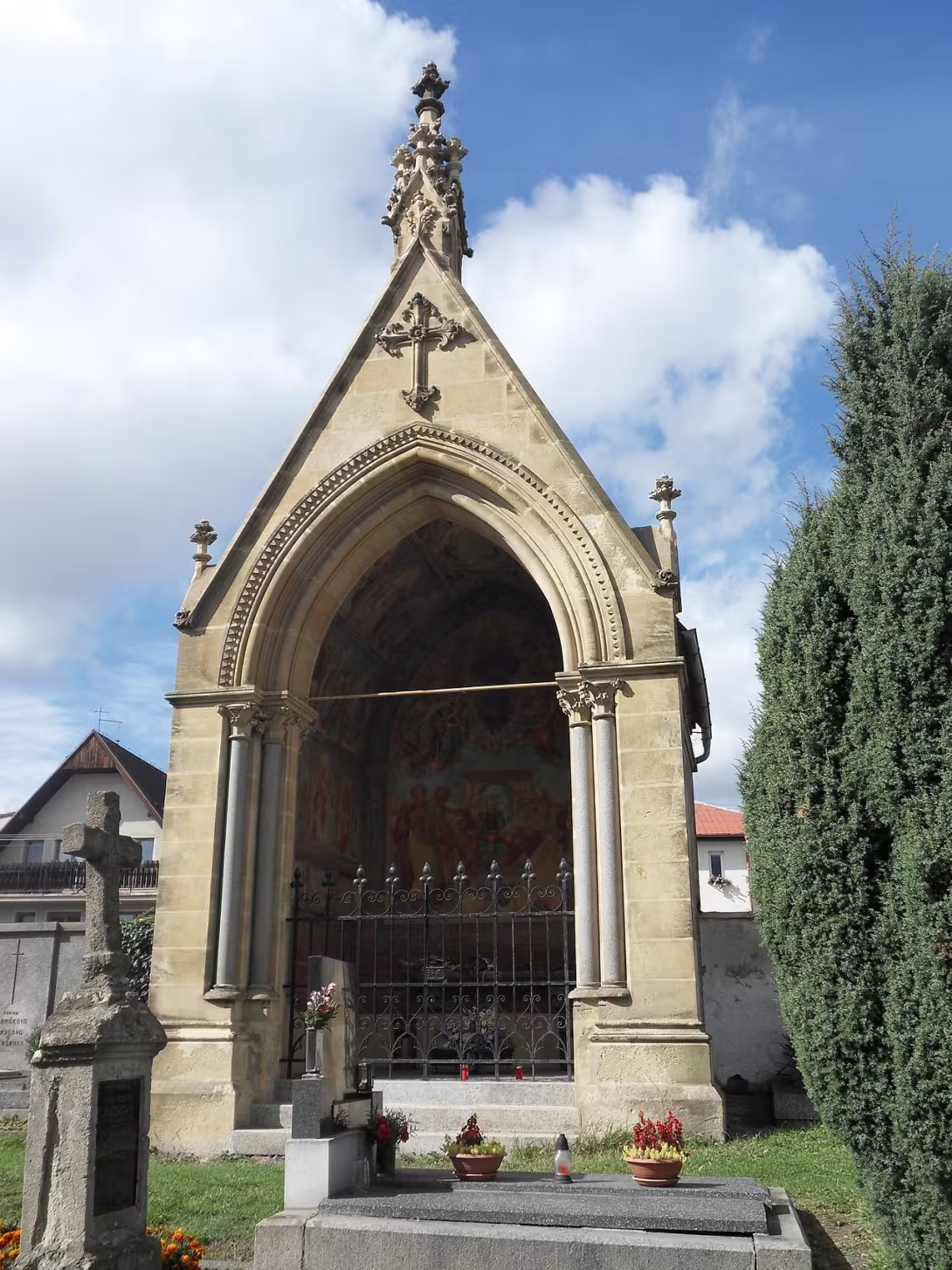
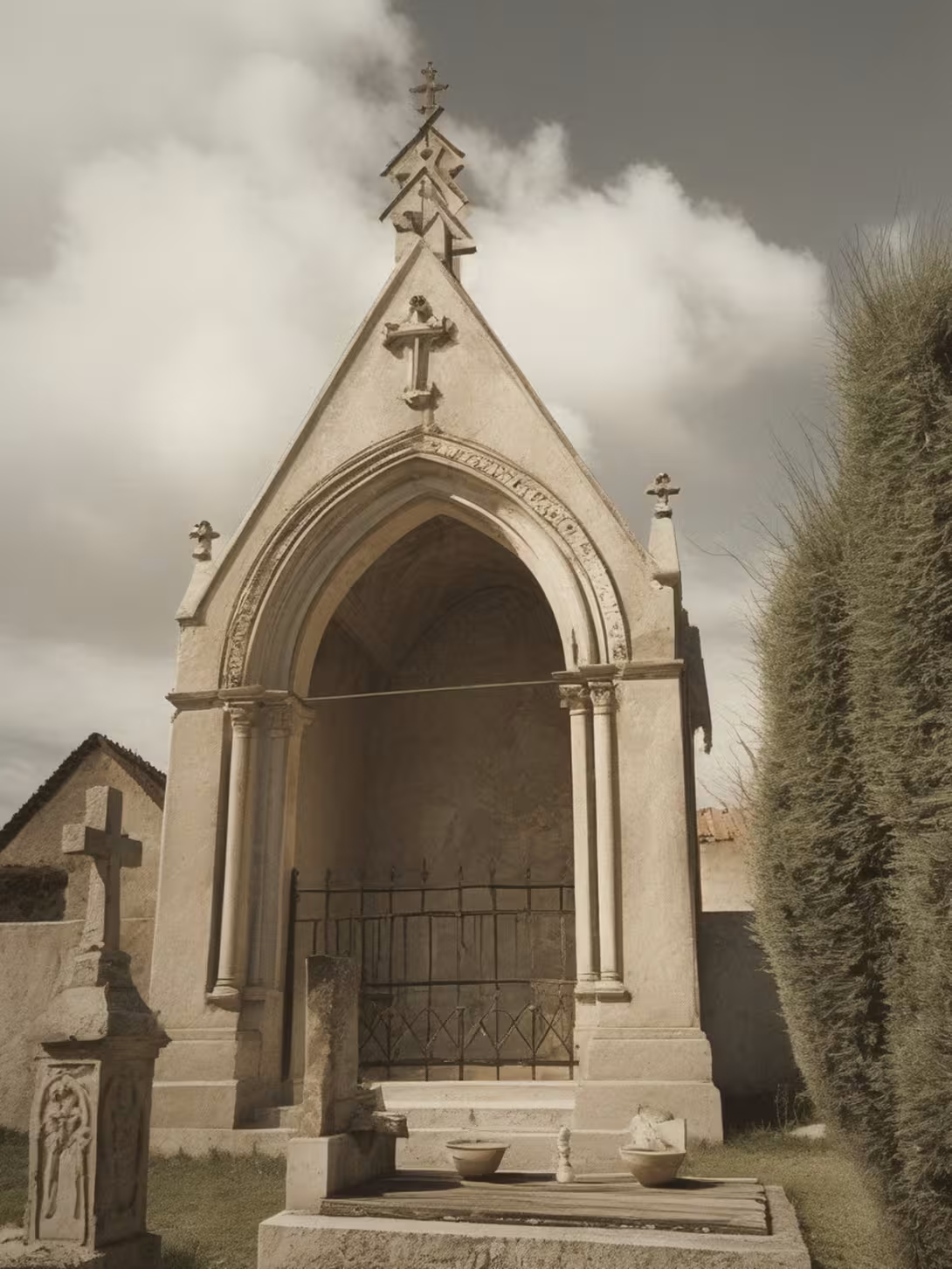
The historical appearance on the left is an AI-generated visualisation and serves as inspiration only.
Historical milestones
- 1887
- Completion of the neo-gothic construction of the tomb according to the design of Josef Hlavka
- 1908
- Magnificent funeral of Josef Hávka and his remains in the tomb
Architectural development
It is a rectangular, non-reflecting building made of stone and bricks with a saddle roof. The architecture uses elements of neo-gothic, such as a broken arch and a cross-decorated shield. The interior is decorated with painted paintings and gravestones made of red marble.
Historical events
1887: Building a tomb according to Josef Hlavka's design. 1908: The magnificent funeral of Josef Hávka with the participation of the singers Hlahol.
Points of interest
- The Novogotic building was built in 1887 according to the design of Josef Hlavka. - The interior is decorated with biblical scenes in Nazareth style by Vienna painter Karel Jobst. The tombstones are made of red marble. - In addition to Josef Hlavka, his wife Mary and Zdeněk, the mother Anna, brother Antonín and the parents of the first woman. - At the funeral of Josef Hlavka in 1908, the singers of Hlahol assisted.
Guide
Show guide text
This text was created by artificial intelligence and has not been editorially reviewed. It may contain inaccuracies.
Welcome. You have just stopped in front of one of the most impressive and important places in this cemetery in Přeštice. You are standing right in front of the tomb of Josef Hlavka and I believe that the first impression that attacked you is a sense of peace, dignity and deep history. In front of your eyes is a neo-gothic structure whose presence in this space is very strong and balanced. Please feel the atmosphere of this place where architecture, art and human destiny are united. This building is not just an ordinary stone object; it is a witness of a significant era, when architecture sought to combine an earthly lasting existence with spiritual search.
Now let's go back in time to understand why this building is standing here and how it came to be. The whole story of this tomb begins in 1887. At that time the Czech region was full of creators who tried to build national identity through art and construction. And it is in this context that we must see the name Josef Hlavka as something much bigger than just the name of the builder. He was an important Czech architect and also a generous benefactor, a man who devoted his energy to the development of culture and beauty. What's most surprising about this tomb is that he designed it for himself. So Josef Hlávka planned his final journey and his resting place with precision a master who knows what inheritance he wants to leave behind. The entire construction process was completed in 1887, creating this neo-gothic monument to serve generations.
Now pay attention to the architecture itself and the details you have right in front of you. Notice how the tomb is built. It is a solid, resilient structure made of stone and bricks, which carries both the weight of time and stability. The Novogotic style you will find here is reflected in its specific lines and spiritual religion, which radiates the building. In order to protect the inner space from the outside world and at the same time remain accessible for the sight of believers and visitors, the entire building is equipped with a metal grid. This grate creates an interesting contrast between the strength of the stone and the fineness of the space that you look through it. If you look at the tombstones, notice their colour and material. They are made of red marble, which, with its rich and warm colour, gives the whole place nobility and distinguishes it from the surrounding grey stones. This marble is not just material, it is a symbol of endurance and nobility.
Now, if you try to look deeper into the interior through the metal grate, prepare to meet with high art. The interior of the tomb is not empty; is richly decorated with biblical scenes. But these paintings are not any paintings. They're designed in the so-called Nazareth style. This style is known for its purity, calm and striving to return to the ideals of the early Renaissance, where the spiritual depth and harmony of the figures were important. These scenes do not work with aggression, but rather with finesse and light, which perfectly matches the sacred character of the place. The author of these masterpieces was Vienna painter Karel Jobst. Imagine the efforts and sensations that Jobst had to put in creating these biblical scenes to capture eternal truths in such intimate and enclosed space.
But this tomb is more than just a work of architecture and painting. It's a place where personal stories and family ties collide. Although Josef Hlávka is the central figure here, he is not alone in this place. This tomb serves as a final resting place for his entire family. His wife Marie and Zdeněk are resting next to him. His mother Anna and brother Antonín are also here. Each of these names represents a life that was part of the great story of the Fella family. It's fascinating to think about how in this one stone object the fates of several generations are bound. The magnificent funeral of Josef Hávka himself took place only in 1908 when his remains were stored in this tomb which he himself designed. This moment closed his earthly activity and at the same time strengthened his legacy in this particular place.
If you're looking for something that might actually interest you or let you think about it, think about the very concept of this place. Imagine an architect who spent his whole life designing buildings for others, for the public, for the city. And yet, when the time came for his own end, he decided to create something very personal, something that was directly reflecting his own soul and his own perception of beauty. This tomb is his last, most intimate project. It is a dialogue between the creator and his work that has become his home for eternity. It's a fascinating idea that a man can design his own departure to be beautiful and dignified.
I hope this short stop has helped you better understand the meaning and beauty of the tomb of Josef Hlavka. It is a place that deserves not only the sight, but a moment of quiet reflection on what remains of us. Please do not quell in further examination of this cemetery. Any next step can lead you to other stories that are hidden here in stone and silence. Thank you for spending this moment with us. We wish you a peaceful and inspiring walk.
Tips for visitors
The best time to visit the tomb of Josef Hlavka is in the spring or autumn period when there are mild temperatures and beautiful lighting conditions. This time of year also offers an opportunity to see the wonderful flowering cemetery in Přeštice.
Parking can be found on nearby roads, or you can use public transport. The road leading from Klatovic to Přeštice provides comfortable access to the tomb. You can check current information about parking and public transport connections online.
When visiting, wear suitable shoes, because the ground in the cemetery can be untouched. Furthermore, it is good to have an ambulance with you against the rain and the sun if you are planning a long walk.
To photograph the tomb of Josef Hlavka, best choose the time near noon when the light is brighter and fewer shadows. The best places for photo are the front of the tomb and its surroundings, offering a view of the overall architectural detail.
In the vicinity of the tomb you can visit the historical cemetery in Přeštice. For families with children it can be interesting to explore the surrounding natural environment and beautiful green areas around where you can also take fast walking walks.
Businesses nearby
Do you run a restaurant, accommodation, shop, museum, rental, wellness or other visitor service near this monument? Show yourself directly to the people heading to it — this is how they will see you in the app and on the web:
Events nearby
Zdroj akcí: otevřená data měst a obcí ČR (Národní katalog otevřených dat) a kalendář akcí Národního památkového ústavu.
Nearby
The cemetery in Přeštice and the road leading to Klatovy.
Accommodation nearby
Trips and activities nearby
Guided tours, tickets and activities nearby from GetYourGuide
Affiliate link: if you buy from the partner, we may receive a commission. The price for you does not change.
Search tours and activities →Themed route
1. Road leading to Klatovy (Access Path): The entrance route that takes you from the surroundings directly to the village Přeštice. 2. Cemetery in Přeštice (Cemetery area): Place of calm and contemplation, which serves as a way to the main destination. 3. Hrobka Josefa Hlávky (others) (Memorial): The main point of the visit, where you will honor the memory of the famous poet.
Seasonal recommendations
Spring: During the spring season Hrobka Josefa Hlávky in Přistice is strangely attractive due to the beautiful flowering of the surrounding park, which turns into a lively palette of colours. Sunny days and mild temperatures create ideal conditions for a relaxed walk between historic trees. Visitors should choose clothes suitable for mild weather, such as sweater and short gloves, because the temperature may change significantly during the day. If you visit the Grave on Sunday or leisure days, it is advisable to come early in the morning to enjoy the quiet and mild crowd.
Summer: In the summer Hrobka Josefa Hlávky gets full of life and light in Overtime. Long sunny days allow a long visit, but due to strong temperatures, it is necessary to remember the sun protection. It is recommended to wear short clothes and hat as well as water to keep hydration during walks. The best time to visit is an early afternoon or early evening hour, when temperatures fall slightly and the crowd becomes less and less. These moments allow you to enjoy the quiet atmosphere in the park and get closer to historical monuments.
Autumn: In autumn months, Hrobka Josefa Hlávky offers visitors a view of the golden and red palette of leaves, which adds a romantic atmosphere to the historic trees. The temperatures are usually mild, but may vary significantly during the day, so it is good to wear top clothing or sweater. Due to the possibility of rainy days, it was advisable to come up with protective clothing. The best time to visit is usually on Sundays or leisure days when the park is quieter and allows you to enjoy natural beauty without obstacles to crowds.
Winter: During the winter period Hrobka Josefa Hlávky is in Overtime atmosphere of calm and quiet, when the park is covered with snow or freezing glacier. The temperatures are low, so it is important to come up with warm clothes, including fur and wide gloves to enjoy a walk without discomfort. Due to the shorter daylight, it is recommended to visit the memory early in the morning or at noon when the sun lights up the park and increases the temperature. During these months the opening hours often shorten, so it is advisable to check the current information before visiting.
Visualizations and artistic views


The visualisations are generated by artificial intelligence and serve as inspiration.
Photos from the area
Real photos taken near the monument


Zdroj a licence jsou uvedeny u každého snímku.
Tips from visitors
No tips yet. Be the first!
Log in and add your tip.
Sources and literature
Fotografie: Jik jik / CC BY-SA 3.0 — Wikimedia Commons. The author and licence also appear when you hover over the image.
Faktickým podkladem tohoto textu byl článek na Wikipedii, jehož autory jsou přispěvatelé Wikipedie. Článek je dostupný pod licencí CC BY-SA 4.0.
Location on the map
More monuments – Přeštice
Show all in the municipality

Příběhy a pověsti
Legendy, pověsti a příběhy spjaté s touto památkou
Fotografie návštěvníků
Zatím žádné fotografie. Buďte první, kdo přidá fotografii z návštěvy!
Přihlaste se a přidejte svou fotografii nebo hodnoťte.
Za ověřenou návštěvu v aplikaci získáte víc bodů — poznáme podle GPS, že jste na místě.
Reviews and comments