



Skočice Motte
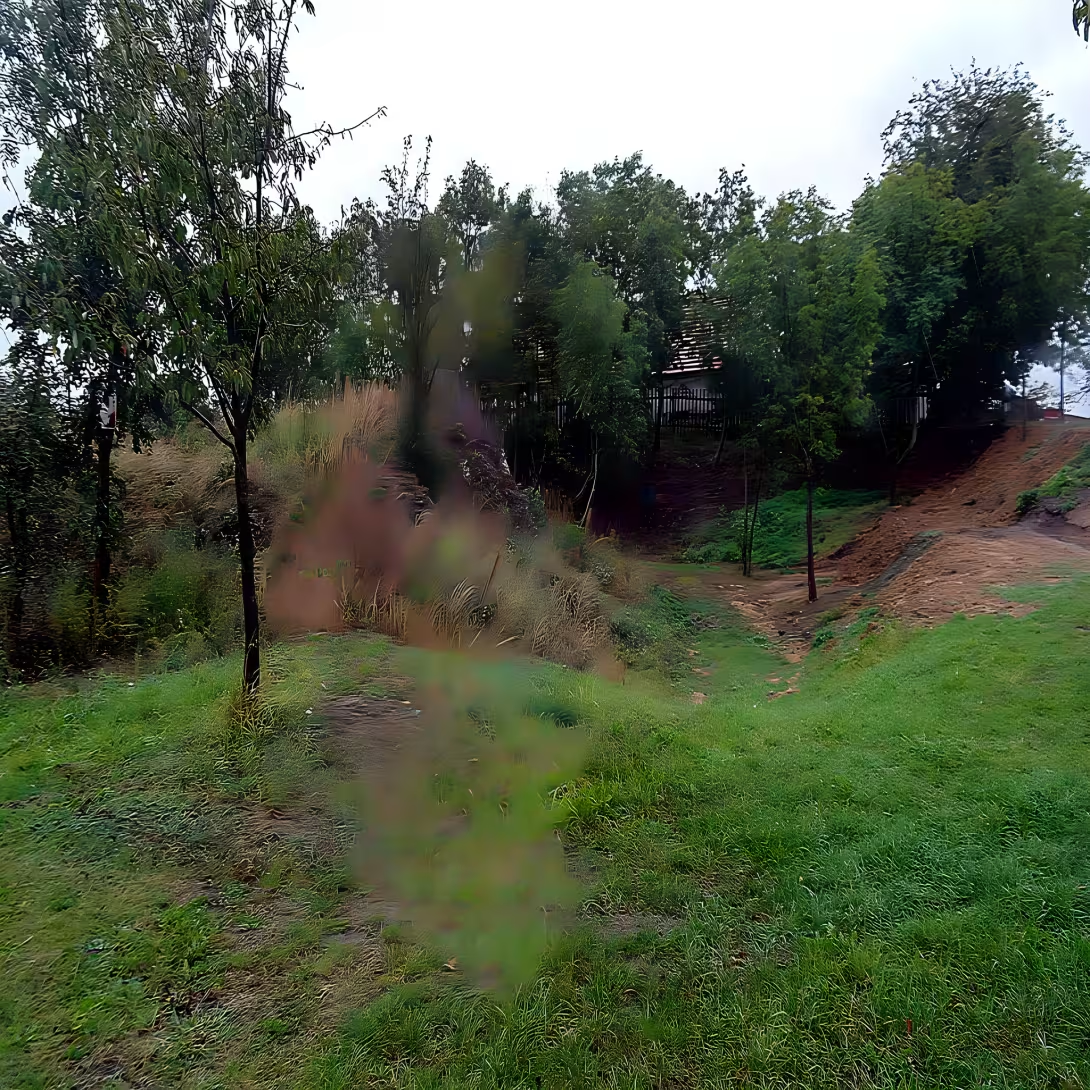
Objekt se nedochoval — na místě dnes nestojí. Následující text popisuje jeho historii, ne současnou návštěvu.
Přečické harbours is an area of the extinct superstructure in the village Skočice u Příštice in the district of Plzeň-south. The existence of the fortress has been archaeologically documented since the mid-14th century and the object is today protected as a cultural monument. The area represents the remains of the medieval building, which later served as a residence of the genus Příchovský.
The first written mention of the village Skočice dates back to 1239, when it was divided into two parts. One belonged to the Kladrub monastery and the other belonged to Břítislav of Skočice in 1250. The exact time to establish the fort itself is unknown. However, archaeological research from 1990 in the trench brought the findings of ceramics from the second half of the 14th century. Most fractions come from the 15th century, a smaller part from the 16th to 17th centuries.
The current stronghold was cut by a wide moat with rounded corners. From the east, the north-east and the south-east, there is a large front. The fortification complements the perimeter wall, which is significantly reduced in the north and west. The tower itself was protected by its narrower moat and filling. In this internal system there are drawn rock bases which may be the remains of bridges.
Historical sources provide two schematic images of the object. The 1753 village view plan shows a regular four-wing courtyard. It was probably the renaissance residence of Příchovsky. The older fort is shown here as a prism tower with tent roof and round fortification. The panoramic view from 1793 confirms the existence of a large granary and the roof with a wall of multi-storey tower. Behind it was another large building with a valb roof.
Since the beginning of the 14th century the village was divided into Small and Bigger Skočice. From 1318 to 1352 Jaroslav from Skočice lived here. His son Seagull was the owner of the cruise in Little Jumpers in 1379. At the end of the same century, the local flags were related to Roupovsky of Roupov, who owned Bigger Skočice. Later, the farmhouse bought Bohouš from Obesice, who was on the Catholic side at the beginning of the Hussite wars. The last mention of him or his son of the same name dates back to 1448. From 1475 to 1497 he was the owner of Wilhelm of Kříňov.
The first written proof of the existence of the fort dates back to 1519, when William of Chríňov sold it to Zdebor of Příchovice. After his death, which occurred in 1527 at the latest, the estate inherited Marklart from Příchovice. His sons then shared the estate. Zdebor acquired a tower, a yard with a sheepskin and half of the sailing yard. Adam received the second half of this area with buildings on the front and the court in the village. Both parts were sold in 1584 and 1589 to Peter from Příchovice, a gentleman in Lužany. In the 16th century, he had a Renaissance mansion built in the sailing yard.
The property was subsequently inherited by Jan Marklart and Jiří from Příchovice. He visited Jan Markart in 1599 after returning from the trips Kryštof Harant z Polžic. After his death, she took over the administration of the widow Alena Příchovská of Scoletic, who sold part to Peter the younger of the Romans. Later, it was won by Václav, the Elder of Příchovský. He was sentenced to manhood in 1623 for participation in the State Uprising. For his confession, he sold his residence in 1628 to Peter Jiří Kříchovský.
Peter George In 1628, Zdebor transferred the farm to Kříchovský, whose sons shared it in 1634. The only owner later became Jan Vilém, who in 1651 reached the release of the manhood. The second part of the fort, which passed through the hands of Anna Vidrježigágář and Catherine Saloména, was again connected in 1659 with the property of John Vilém. This made Skočice a permanent part of the Luhanian estate.
At the end of the 17th century, the leapfrog fortress was abandoned and began to decay. The vast ruins of the old and new manor were still visible at the beginning of the 19th century. However, they were gradually dismantled into building materials until the above-ground wall completely disappeared. Since 2013, local citizens' associations have been taking care of the site.
The Scottish Fortress is a valuable testament to the development of noble settlements and their transformation over centuries. Visiting this archaeological site allows you to perceive a trail of lost architecture in the landscape.
Historical milestones
- 1239
- First written mention of the village Skočice.
- 1519
- The first documentary evidence of the existence of the fort.
- 1599
- Visit of Christopher Harant of Polžice.
- 1628
- The sale of the property to Peter Jiří Příchovský.
Architectural development
The original medieval fortress from the 14th century was supplemented in the 16th century with a Renaissance residence in the sailing yard. The archaeological findings of ceramics in the ditch confirm the use of the premises from the 14th to 17th century.
Historical events
1519: First written mention of the existence of a claim in the purchase agreement. 1599: Visit of Christopher Harant from Polžice. 1623: The condemnation of Václav the Elder of the Horst to manhood.
Owners
Břítislav z Skíčice (1250), Jaroslav z Skočice (1318-1352), Boouš z Otěšice (do 1448), Vilém z Chříňova (1475-1497), Zdebor z Příchovice (from 1519), the family Příchovský, Petr jr., Václav older Příchovský (do 1628), Jan Vilém Příchovský (do 1661).
Points of interest
- Archaeological research from 1990 in the trench brought the findings of ceramics from the 14th to 17th century. - The tower was protected by its own narrow moat and mound, where there are apparent rock bases, which may be the remains of bridges. - The 1753 plan depicts the older fort as a prism tower with a tent roof and round fortification. - The panoramic view from 1793 confirms the existence of a large granary and a brick tower with a tent roof. - In 1599 he visited Jan Markart at this mansion Kryštof Harant z Polžic.
Guide
Show guide text
This text was created by artificial intelligence and has not been editorially reviewed. It may contain inaccuracies.
Welcome to the place where history touches the ground and where every clue in the field tells the story of a long forgotten life. You are standing right in front of an archaeological site in Skopčice, a place that may be peaceful and simple today, but beneath your feet is a deep layer of events that have shaped this landscape for centuries. Feel this atmosphere. It may seem to you that it is only a common resort, but it was here, near Přeštice, that there was once a significant superstructure, which, with its strength and importance, ruled the surrounding area.
Let's go back in time together and understand what you're seeing. Although you may not have high walls or monumental gates in front of your eyes, remember that you are in the area of the extinct fortress. The first traces of human presence in this village can be traced back to 1239, when Skočice first appeared in written records. But the fortress itself was built much later, probably in the middle of the 14th century. Even though we know of its existence from archaeological research, the first official paper confirming its existence dates back to 1519. Imagine the difference between the country's silent testimony and the first official record on the parchment. This fortress was not just an ordinary house, but the seat of one of the branches of the significant family of Příchovice. It was a firm hand in this area, a place that provided security and expressed the power of its owner.
Now pay attention to what you can perceive around you in the terrain itself. Although the main buildings had long since died, the face of the place still holds the traces of its former architecture. Look at the surrounding landscape breakdown. Notice the narrow moat and mound surrounding the original tower. This defense system was key to protecting the mansion. If you look more closely at the rock starting points you can see here, you can come across one of the most interesting questions in this place. Archaeologists believe that these stone formations may be the remains of old bridges that once allowed access to the fortress through its own defense. Although there are no bridges here today, these rocks remind us of how this building was connected to the natural background.
If we try to reconstruct what this place looked like at the time of its greatest boom, we must lean on historical plans. One of them, dating back to 1753, gives us a fascinating insight into the past. According to this document, the fort manifested itself as a prism tower which was crowned by a tent roof. Imagine the silhouette as it stood over the surrounding vegetation as a symbol of stability and strength. Even though later, at the end of the seventeenth century, the seat function of this place disappeared and the object gradually began to disappear, this idea of a square tower with a sharp roof helps us build this place again in spirit.
The history of this place is not only about stones and land, but above all about the people who lived here, ruled and decided the fate of the surroundings. One of the most important names associated with Skočicemi is Kryštof Harant z Polžic. In 1599, at a time when this fort was still a functional and important residence, Harant visited here. He was a man of great ambition and broad horizons, a figure who carried the spirit of the Renaissance within him. His presence here gives this place a sense of nobility and reminds us that Skočice was part of a wider, dynamic world of nobility and political ties. Later, in 1628, there was another fundamental change when the property was sold to Peter Jiří Příchovský, which meant another chapter in the history of this family and this mansion.
You may now wonder what is really underneath this country. And that's where the most interesting part of our story comes in. The archaeological research that took place here in 1990 revealed secrets that had been hidden in a ditch for hundreds of years. In the excavations, fragments of ceramics dating from the 14th to 17th centuries were found. These tiny shards of vessels aren't just a waste of the past. It's the voices of people who have been cooking, eating and living here. Every shard tells us about everyday life, about the quality of the ceramics they used, and about how tastings and customs change over the centuries. These findings are the bridge that connects us to every man who once walked these places.
You're standing in a place where power gradually turned to dust, but where dust became history. The jump fort is no longer a fortified fortress, but it is a rare cultural monument that allows us to think about the fleeting of human efforts and the incredible ability of history to constantly recover through archaeological knowledge.
Now I beg you to continue your walk and let the atmosphere of this place drift. See the individual parts of the complex, see the shapes of the earth and try to find the shadows of the old prism tower in your imagination. Every corner of this site has its own story waiting to be rediscovered. Thank you for your journey through time and we will see you again in your next survey of this beautiful landscape.
Businesses nearby
Do you run a restaurant, accommodation, shop, museum, rental, wellness or other visitor service near this monument? Show yourself directly to the people heading to it — this is how they will see you in the app and on the web:
Events nearby


Zdroj akcí: otevřená data měst a obcí ČR (Národní katalog otevřených dat) a kalendář akcí Národního památkového ústavu.
Nearby
Municipality of Přeštice in the district of Pilsen-south.
Visualizations and artistic views


The visualisations are generated by artificial intelligence and serve as inspiration.
Photos from the area
Real photos taken near the monument


Zdroj a licence jsou uvedeny u každého snímku.
Tips from visitors
No tips yet. Be the first!
Log in and add your tip.
Sources and literature
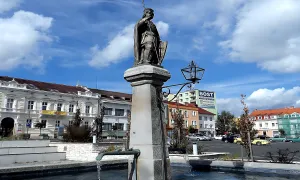
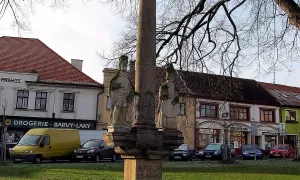
Photos: Jklamo / CC BY-SA 3.0, rozlišení zvýšeno umělou inteligencí — Wikimedia Commons. The author and licence also appear when you hover over the image.
Faktickým podkladem tohoto textu byl článek na Wikipedii, jehož autory jsou přispěvatelé Wikipedie. Článek je dostupný pod licencí CC BY-SA 4.0.
Location on the map

Příběhy a pověsti
Legendy, pověsti a příběhy spjaté s touto památkou
Fotografie návštěvníků
Zatím žádné fotografie. Buďte první, kdo přidá fotografii z návštěvy!
Log in a přidejte svou fotografii nebo hodnoťte.
Za ověřenou návštěvu v aplikaci získáte víc bodů — poznáme podle GPS, že jste na místě.
Reviews and comments