



Kašparova vila Villa
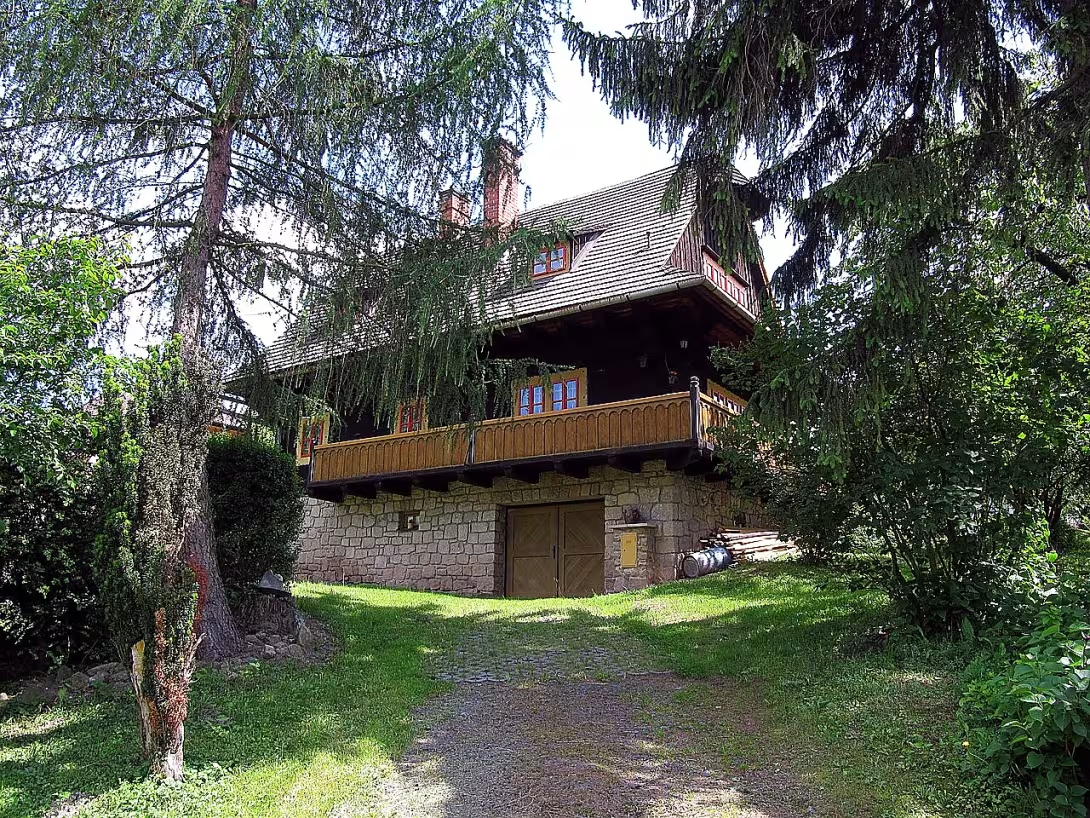
Kašparova vila, located in Russia, is the family house of painter Adolf Kaspar and represents a unique monument to Czech architecture from the period between two world wars. This grafted object, built in 1932, is remarkable by its inspiration by the mountain cottage Kohutka and folk architecture of Valašska. The villa was declared a cultural monument in 1958, but its protection was abolished in 1987.
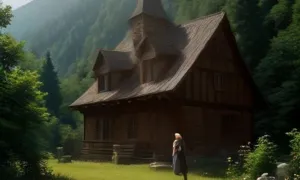
The creation of Kaspar's villa is closely connected with the personality of Adolf Kaspar, who, despite his permanent stay in Prague in Kampa, showed deep affection for Moravia. This passion was reflected in the position of the grafted cottage in Rusava, which served as a summer residence and studio painter. The architectural design of the villa was inspired by the mountain cottage Kohutka in Javornice and folk architecture of Valachian, which is evident on its grafted wall, stone suspect and saddle shingles roof with half-cone cabins. The house has a wooden braid with a wooden railing and caster windows decorated with carved yellow and blue destruction, which gives the object a characteristic national character.
Kašparova vila was built as a grafted building on a stone suspect with a saddle shingle roof and a half-conical cabin. The house has a wooden bunk, caster windows and decorative elements such as carved year 1932 on the main beam in the skylight. The ground floor rooms have grafted walls and beam ceilings with a cover, the attic is covered with floorboards. There's a sign on the cover of one of the shields that says, "Whatever you were, daggers like you were, there's never been one that wasn't."
Adolf Kašpar was the owner and main creator of this object. After his position in 1932 the villa was declared a cultural monument in 1958, highlighting its historical and architectural importance. However, in 1987 the monument protection was abolished, reflecting changes in cultural heritage assessment.
Key events include the position of the grafted cottage in Rusava in 1932 and its declaration for cultural monument in 1958. An interesting feature is the inscription on the cover of the shield, which brings personal knowledge of Kaspar's life philosophy.
Today, Kašparova vila stands as a witness to the architectural art and personal history of Adolf Kaspar. Its unique architecture and historical context make the object an interesting destination for visitors who want to know more about the Czech cultural monument from the period between two world wars. The visit to Kaspar Villa offers an opportunity to appreciate the combination of art and architecture with the personal life of one of the important Czech painters.
Historical milestones
- 1958
- Declaration for a cultural monument.
- 1987
- Withdrawal of memorial protection.
Architectural development
Kašparova vila was built as a grafted building on a stone suspect with a saddle shingle roof and a half-conical cabin. The house has a wooden bunk, caster windows and decorative elements such as carved year 1932 on the main beam in the skylight.
Historical events
- 1932
- The position of the grafted cottage in Rusava.
- 1958
- Declaration of the object for cultural monument.
- 1987
- Withdrawal of memorial protection.
Owners
Adolf Kašpar
Points of interest
- Kašparova vila is the family house of painter Adolf Kaspar and represents a unique memory of Czech architecture from the period between two world wars. - This grafted object, built in 1932, is remarkable by its inspiration by the mountain cottage Kohutka and folk architecture of Valašska. - The villa was declared a cultural monument in 1958, but its protection was abolished in 1987. - The inscription on the shield cover brings personal knowledge of Kaspar's life philosophy: "Whatever you were, daggers like that never were before." - Today, Kašparova vila stands as a testament to the architectural art and personal history of Adolf Kaspar.
Guide
Show guide text
This text was created by artificial intelligence and has not been editorially reviewed. It may contain inaccuracies.
Welcome to Russia. You're standing right in front of a construction that carries the incredible power of the past and the beauty of folk art. Before you take the next step, stop for a moment and feel the atmosphere of this place. In front of your eyes is Kašparova vila, a home that is not just a simple wood and stone, but a living witness of a time that has long since gone, but has left its soul behind. Perhaps at first glance you will be interested in the special harmony between nature and the human hand as this house floats in the landscape as if it had always belonged here. Feel the calm presence this grafted object radiates.
Let's go back in time together and understand why this house is standing right here and why it looks so special. Imagine the year one thousand nine hundred thirty-two. At that time, the world was between two great world wars, a time of searching for its own identity and returning to its roots. It was in this important historical context that Kašparova vila was built. It was not just a housing project, but an effort to preserve tradition in the modern world. This house was created as a family home for a man whose life was inseparable from the beauty of the surrounding nature and colors.
Now that you've gotten used to the first look, pay attention to the details you have right in front of you. If you raise your gaze to the upper parts of the house, notice these amazing carved elements. What you see under the roof is yellow and blue. These colour details are not random; They are tiny artistic elements that give the whole grafted house ease and joy. The colors yellow and blue intertwine with the natural texture of the wood and create a picture that must enchant you. And look at the windows now. See those distinctive red frames? These caster windows are one of the most important features of this building. The red color creates a strong and unmistakable contrast to darker wood walls and gives the whole facade an unexpected energy and character. This whole architecture is not a random cluster of elements, but a deliberate reference to the mountain cottage Kohutka in Javorníky and to the rich folk architecture of the whole of Valašska. Every cut into the wood, every color element tells the story of how people in this region perceived the beauty of their home.
To understand the true soul of this place, we need to look at the person who lived here. Kašparova vila wasn't just a building, it was an inspiration. It belonged to the painter Adolf Kaspar. Imagine a man who spent his whole life watching the world through color and light. For artists like him, this house was an ideal space. Every look from the window, every shadow falling on the grafted walls and every color of the sunrise above the mountains could be a theme for its canvas. This house was his world, his hiding place, and his greatest work of art in the form of the space in which he moved. When you look at the red frames or the carved details, look at them through the artist's eyes. He saw in them more than just decoration; He saw in them the rhythm of life and the connection with the tradition of his ancestors.
It's fascinating to see the fate of this building change over the years. This villa was so special that in the year one thousand nine hundred fifty-eight it was officially declared a cultural monument. She became part of our common heritage, something we have a duty to protect and cherish. However, history is often complicated, and in the year one thousand nine hundred and eighty-seven this protection was abolished. Yet, although it is no longer protected by the same legal instrument, its value for us, for visitors and for people who love beauty remains unquestionable. It's one of those monuments you have to keep in mind, even though time is constantly changing.
Something that might interest you is the constant question of how this house managed to keep in such good shape, inspired by the old shapes. There is a mystery as to how the modern age between two wars has been combined with such a deep respect for folk construction. This villa is a unique example of architecture that did not try to be different from it, but tried to be the best version of tradition.
Now that you've looked at the main features of this place, I suggest you continue your walk. Let yourself be carried away by the atmosphere of Rusava and see how this house is being incorporated into the surrounding environment. Maybe if you look at the carved details or the windows, you'll find something new that you missed before. Thank you for spending this moment with us and for stopping to see the beauty of Kaspar's villa. We wish you a beautiful and inspiring journey further.
Tips for visitors
The best time to visit Kaspar's villa is autumn when the surrounding forests are coloured and provide a beautiful background. This period also offers mild weather suitable for walking.
When visiting, remember the appropriate clothes, especially if you visit during a freezing period. It is also important to bring a camera or mobile phone to capture beautiful surroundings.
Photography of Kaspar Villa and its surroundings will offer the best light of the afternoon, when the sun illuminates architectural details. Also remember to explore the surrounding forest trails.
In the vicinity of Kaspar Villa is located the national park Poodří, which offers beautiful natural landscapes and is suitable for family trips. For children, an interesting activity can be a walk along the forest path.
Frequently asked questions
Can the monument be visited?
This is a residential or farm building, not a museum with opening hours. Please view it from public space and respect the owners' privacy. We have no information about access to the interior.
Where is the monument?
Location: Zlínský kraj. The map on this page shows the exact spot.
Why is the monument protected?
It is listed in the Central List of Cultural Monuments of the Czech Republic as a cultural monument (register no. 1000160893).
Businesses nearby
Do you run a restaurant, accommodation, shop, museum, rental, wellness or other visitor service near this monument? Show yourself directly to the people heading to it — this is how they will see you in the app and on the web:
Nearby
🏰 Historic sites (206)
- Muzeum Rusava 0.2 km web
- Pomník obětem 1. a 2. sv. v. 0.9 km
- pomník partyzánovi Slávkovi Londovi 1.9 km
- zřícenina hradu Křídlo 2.1 km
- Památce přerovských horolezců 2.2 km
- základy Kříže světla 3.0 km
- Kříž s pomníkem obětem 1. a 2. světové války 3.0 km
- Muzeum v Jurkovičově sále 3.0 km
- sv. Antonín Paduánský 3.1 km
- sv. Ambrož 3.1 km
- sv. Cyril 3.1 km
- sv. Pavel 3.1 km
- Madona 3.1 km
- sv. Petr 3.1 km
- sv. Metoděj 3.1 km
- Božské srdce Páně 3.2 km
- sv. Anna 3.2 km
- Básník Fr. Táborský - Malíř Fr. Ondrúšek 3.2 km
- Pomník hubertské poutě 3.3 km
- Památník umučených kněží 3.3 km
🍽️ Restaurants and dining (322)
- Hostinec U Hradilů 0.2 km
- Obecní dům 0.9 km
- Čecher 0.9 km
- Restaurace Ráztoka 1.6 km web
- U Kůlu 1.8 km Rusava 313 web
- Myslivecká chata Grůň 2.0 km +420702911999 web
- Penzion a restaurace U bílého koně 2.4 km +420 775 035 146 web
- Restaurace Brusenka 2.8 km web
- Občerstvení Na rybníčkách 3.0 km
- Restaurace Poutní dům 3 3.0 km
- Restaurace poutní dům 2 3.1 km
- Ovčárna 3.1 km web
- Kavárna pod bazilikou 3.1 km Svatý Hostýn
- Chaloupka Maruška - Občerstvovna 3.2 km
- Vojtova hospoda 3.7 km
- Občerstvení na hřišti 3.7 km
- Vagón 4.2 km
- Hotel Říka 4.4 km
- Hostinec Pod lipami 4.8 km
- Bufet na tenisovém kurtu 4.9 km
🏨 Accommodation (69)
- Apartmán Rusava 0.6 km +420 736 268 162 web
- Hotel Rusava 0.7 km
- Oneness Centrum 0.8 km
- Apartmány Rusava 1.1 km web
- RS Jestřabí 1.2 km web
- Marek Horák 1.5 km
- Penzion U Ráztoky 1.6 km
- U Kůlu 1.8 km
- RZ ČS Rusava 1.8 km web
- Penzion Brusenka 2.8 km
- Nad přehradou 2.8 km +420 603 238 776 web
- Tábořiště Svatý Hostýn 3.1 km
- Poutní dům 3 3.1 km
- Poutní dům 3 3.1 km
- Poutní dům 2 3.1 km
- Poutní dům 1 3.1 km
- Schweigrovka 3.7 km
- Hotel Harmonie 4.2 km
- Wellness Hotel Sola Gratia 4.5 km
- Kamenná chata na Tesáku 6.2 km
🚲 Rentals and sport (35)
- Kuci 0.2 km web
- Koupaliště 0.9 km
- Sokol 7.0 km
- Brouzdaliště 7.5 km
- Velký bazén 7.5 km
- SPORT CYKLO s.r.o. 8.2 km Masarykova 651/11 +420 573 394 918 web
- Lanové centrum 8.3 km web
- Cyklo Unite 8.5 km Malá 48 web
- Sokolovna 8.5 km
- PINGU SPORT 8.7 km Palackého 726 web
- Sportcenrtum Holešov 8.9 km web
- Sportcentrum Holešov 8.9 km Tovární 1081 web
- Koupaliště 9.6 km
- Tělocvična SVČ p.o 10.1 km
- sportovní areál 11.1 km
- Sokolovna 11.4 km
- Emseko bike 13.2 km
- HUDY sport Zlín 13.4 km
- Vertikon 13.5 km web
- Stolní tenis 13.5 km
🥾 Hiking and nature (239)
- Park u kostela 0.2 km
- Hurbanova studánka 0.4 km
- Grapy 0.6 km
- Čecher 0.8 km
- Na skále 0.8 km
- Pardus 1.6 km
- Sirková 1.9 km
- Javorčí 2.0 km
- Poschlá 2.1 km
- Křídlo 2.1 km
- Barvínek 2.2 km
- Skalný 2.2 km
- Chochol 2.3 km
- Bukovina 2.4 km
- Veverkova studánka 2.4 km
- Malinová 2.4 km
- Kotár 2.5 km
- Malíková 2.7 km
- Pod Valy 2.8 km
- Břestek 2.8 km
Accommodation nearby
Trips and activities nearby
Guided tours, tickets and activities nearby from GetYourGuide
Affiliate link: if you buy from the partner, we may receive a commission. The price for you does not change.
Search tours and activities →Themed route
Since the line with surrounding areas does not include any other specific objectives, this cruise route is designed as a tour within the monument itself and its immediate area, which surrounds the main destination.
1.Kašparova vila Type: Historical villa Why is it worth a visit: This unique building represents an example of architectural art and offers a view of history associated with the life of the region's important personalities.
2. Main building and internal exposition Type: Museum exhibition Why is it worth a visit: Visitors here can admire the original interiors, historical period items and learn details about the life and work of the builder of this property.
3. Villas belonging to the park and garden Type: Outdoor area Why is it worth a visit: The surrounding green area attracts a peaceful walk between the grown trees and offers a pleasant environment for relaxation in the immediate vicinity of the historical residence.
Seasonal recommendations
Spring brings to the surroundings of Kaspar's villa the awakening of nature, when garden treatments and flowering trees become part of the overall impression of the historic building. The light at this time is soft and scattered, which creates a calm atmosphere ideal for peaceful observation of architectural details of the facade. This period is suitable for visitors to avoid the biggest summer crowds while enjoying pleasant temperatures without extreme heat. It is recommended to wear layered clothes as spring weather is variable and it may be cold in the morning and evening. The best time to visit is in the morning when the air is fresh and the surrounding vegetables have not yet grown to full size, which allows you to better see the villa itself.
Summer is the main season where the monument is the most visited, both local and tourist. The sunlight hits the facade directly, highlighting the colours and texture of the material, but at the same time it can be hot and dazzling in the morning. The atmosphere is vibrant and full of energy, but this is also related to the higher density of people around it. The practical advice is to arrive as early as possible in the morning, ideally before nine o'clock to avoid the largest crowd and intense sun. Light, breathable clothing and head protection are suitable. If it is hot, it is good to take with you enough water and plan a walk to include shady places near the villa.
Autumn brings rich colors of deciduous trees around the villa, which create contrast with historical architecture. Light is lower and warmer, which gives the scene a romantic and thoughtful character. Nature is slowly calming down and the atmosphere is calmer than in summer, which allows you to focus on the details of the building without interference. Clothes should correspond to colder temperatures, i.e. jacket, sweater and possibly scarf are necessary. The most suitable is a visit in the afternoon when the sun shines at an angle and illuminates the facade with a soft golden light. The crowds are smaller in this period, which ensures a more private experience.
Winter is a period of peace and relaxation for this memory, where the surroundings are often covered with snow or frost. The lighting is short and cold, which may highlight the contours of the building, but also requires caution due to slippery surfaces. The atmosphere is quiet and isolated, which is suitable for those who are looking for a break from summer activity. Practical advice includes warm clothes, including gloves and hats, and shoes with a good heel for safe walking on frozen ground. The best time is the late morning, when the day is the hottest and safest to move outside.
Visualizations and artistic views


The visualisations are generated by artificial intelligence and serve as inspiration.
Photos from the area
Real photos taken near the monument


Zdroj a licence jsou uvedeny u každého snímku.
Tips from visitors
No tips yet. Be the first!
Log in and add your tip.
Sources and literature
Photos: Palickap / CC BY-SA 3.0 — Wikimedia Commons. The author and licence also appear when you hover over the image.
Faktickým podkladem tohoto textu byl článek na Wikipedii, jehož autory jsou přispěvatelé Wikipedie. Článek je dostupný pod licencí CC BY-SA 4.0.
Location on the map
More monuments – Zlínský kraj
Show all in the region
Příběhy a pověsti
Legendy, pověsti a příběhy spjaté s touto památkou
Fotografie návštěvníků
Zatím žádné fotografie. Buďte první, kdo přidá fotografii z návštěvy!
Log in a přidejte svou fotografii nebo hodnoťte.
Za ověřenou návštěvu v aplikaci získáte víc bodů — poznáme podle GPS, že jste na místě.
Reviews and comments