



Katovna (Nymburk) Other
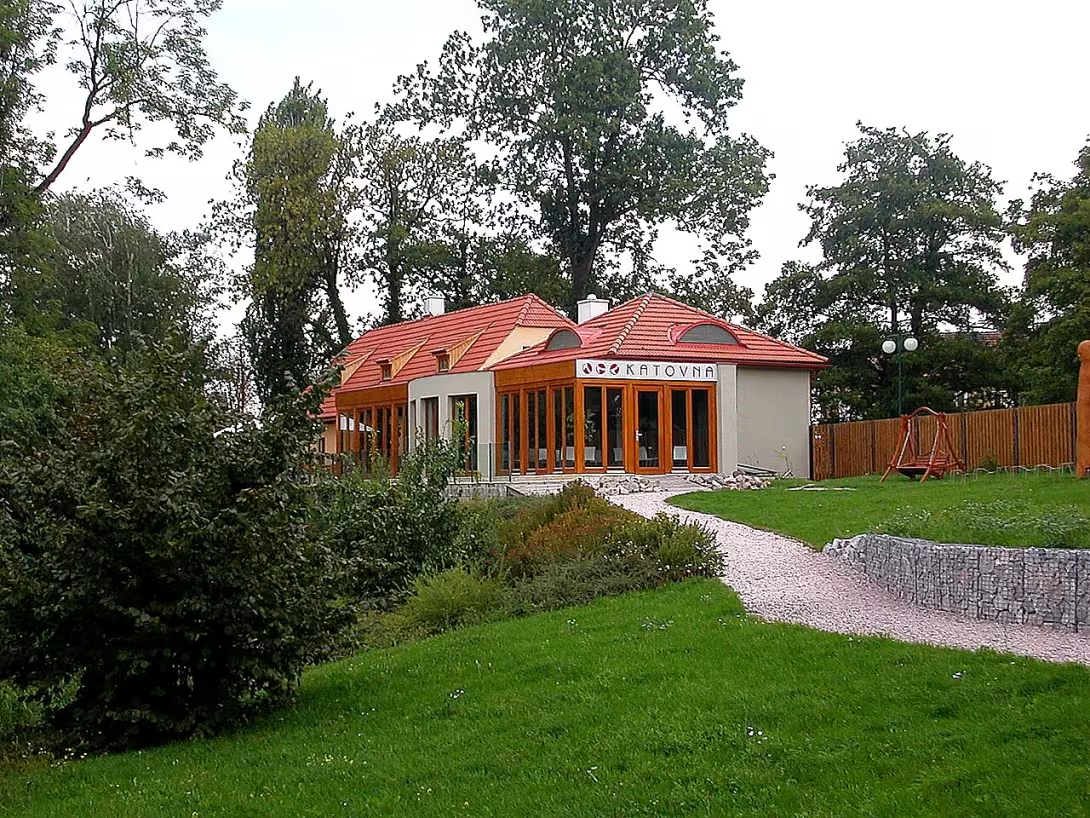
The Nymburské katovna is a Baroque building from the 17th century, which stands in the location Na port between two water moats of the original urban fortification. The building is protected by monuments and according to tradition it served as a residence of the town executioner.
Few direct reports of the creation of the house have been preserved, but it is assumed that it was built during the 17th century. This period in Czech countries marked the aftermath of the Thirty Years' War and Recatolation, when the Baroque style was significantly reflected in the form of urban settlements. The location of the house near the Elbe and the walls corresponded to the current needs of city administration as well as the performance of capital law.
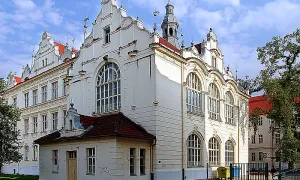
The construction is ground floor and covered with a saddle roof with halves. The facades are smooth, separated only by simple Lizzy frames. The original layout of the yard facade was three axes with the entrance in the middle, but later it was disturbed by the breach of the other doors. A modern part was added to the historical core of the building on the southeast side, while the overall layout of the original building was preserved.
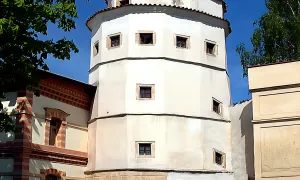
A tower called Horčice or Horice, which served as a prison and torture chamber, was built in close proximity to the cathode house. This tower was demolished in the 18th century, which destroyed part of the complex associated with the execution of justice. The house itself, whose name refers to the alleged profession of the population, was declared a cultural monument in 2001.
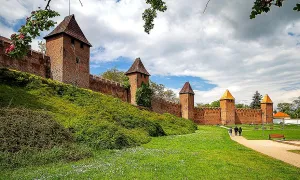
Currently, the object serves as a restaurant, creating a contrast to its former purpose. Visitors can see the exterior of the building while walking through the historical center Nymburka, where the remains of the city fortification are visible.
This monument represents an interesting proof of baroque development and reminds of the less well-known aspects of life in the historic city. Visiting the site Na port offers an opportunity to see the history of Nymburka in the context of its original fortification.
Historical milestones
- 17th century
- Construction of the building as an execution house.
- 18th century
- The demolition of the neighbouring Tower of Horčice.
- 2001
- Object declared a cultural monument.
Architectural development
Ground floor house with saddle roof and halves has smooth facades with Lizzy frames. The original three-axis layout of the yard facade was later disturbed by breaking through new doors. On the southeast side, the modern part was added to the historical core.
Historical events
In the 18th century, the neighbouring Tower of Horčice was demolished. In 2001 the building was declared a cultural monument.
Points of interest
- The construction dates back to the seventeenth century and is built in a Baroque style. - The building is located in a place called Na Harbour between two water moats of the former city fortifications. According to tradition, the house served as a residence for the town executioner. - There was a tower called Horčice or Hořice in close proximity, which served as a prison and torture chamber before it was torn down in the eighteenth century. At present, the house serves as a restaurant, which makes it a contradiction to its earlier purpose.
Guide
Show guide text
This text was created by artificial intelligence and has not been editorially reviewed. It may contain inaccuracies.
Welcome to Nymburk. Right now, when you put on your headphones, you're in a place that tells stories of years ago and carries the shadows of history that you might be very interested in. You're standing in a location called The Port, and if you look around you, you can feel the proximity of water. It is very strange here because it is this proximity to the Elba River and to the water trench that determines the atmosphere of this place. There's a building in front of you that's not just a house. It's a historic hangout, an object that has its own very specific identity. Now, feel the atmosphere of peace that exists here, but at the same time, realize that this place was once part of a much more dynamic and even more stringent system of urban fortification.
Look at the building right in front of your eyes. This Baroque building is a fascinating witness to the past. Its roots go deep into the seventeenth century, which means that this house has seen centuries of changes, coming and going people and transforming the whole city. Look at how this building is located. It's not random. The building lies externally integrated between two water trenches, which were once part of the original urban fortification. These waterways were once a key element of city protection and this cathode was firmly anchored in this system. It is a fascinating view of how architecture has adapted to the needs of defence and the needs of people who have performed their heavy tasks in this city.
Now pay attention to the very purpose of this house. According to the tradition attached to this place, this object served as a residence for a city executioner. It's a word that carries a great deal of weight and perhaps a slight touch of mystery. The executioner was a figure that was absolutely necessary for the city at the time when this building was created, but it was also a figure that lived in the margins of society. He was a man who had to perform tasks other people refused to perform. His home, this building, must have been a place that reflected his social position. Although he was part of the urban order, his life was defined by work that was terrifying to most people.
If you look at the construction itself now, notice its Baroque style. Although time is constantly changing, the Baroque character of this building still allows us to understand the aesthetics and thinking of the time when the construction was intended for use. The Baroque style is known for its richness and emphasis on the shapes we find here in this building. Even though the building now appears to be a peaceful part of the landscape, its architecture carries the dignity and gravity that has been required for such important persons. Feel the harmony between the water surrounding it and the solid structure of this house.
Now let's think about moving forward in time and imagine what was happening around here. In close proximity to where you're standing right now, there was once another important building. It was a tower called the mustard. This tower was very familiar to the surroundings and its presence was constantly felt. But it wasn't just an ordinary tower. She was very strict. She served as a prison and as a place where a torture chamber was carried out. Imagine the weight this place was carrying. While the executioner was home to the man who carried out the sentences, the Tower of Horčice was the place where human fate was decided in the darkest moments. This tower was part of the same system as this building, it was part of the protection and administration of the city. Unfortunately, in the eighteenth century this tower was demolished. There is no visible structure left behind today, but its history is still firmly linked to this place and the atmosphere you feel here. It's one of those things that makes this place so interesting - you see one structure, but in your mind you have to draw the other one that's not there anymore.
It's interesting to see how time changes the perception of these places. What was once a place of fear, prison and the execution of punishment is now perceived as a valuable legacy. In the year two thousand and one, this building was officially declared a cultural monument. This means that its value for us, for future generations, is recognised and protected. We're not just looking at him as an old house between the waters anymore, but as an important point on the map of our history.
Try to stand there for a while and see it all around you. Feel that stream of water in the trenches, feel the proximity of the Elbe River and try to reconstruct the image of the city that was surrounded by water and fortifications. Imagine those times when people were on these roads in period clothes, when the Tower of Horčice was still high and when life in this city was much more affected by the presence of the executioner and his house. This hangroom is like a chapter in a book that remains open.
Now I want to invite you to continue your walk through this beautiful location. Nymburk has many other secrets and other places worth exploring. Perhaps you will go further along the river, or go to the very center of the city to look for more clues of the past. I hope this brief view of the history of the cathode has helped you better understand this place and its meaning. Thank you for spending this moment with me. I wish you a beautiful and inspirational journey along Nymbura. I will say goodbye and wish you this journey to fill you with new experiences.
Tips for visitors
The best time to visit is during the sunny morning, when the light beautifully depicts the Baroque details of the building and surrounding greenery at the water moat. You avoid crowds and enjoy the peaceful atmosphere of the historic place.
The location is easily accessible by foot from the city center.
For photography we recommend using morning or late afternoon light to highlight masonry texture. The best shots are taken from the road along the city fortification, where the house is visible in context with the water moats.
These places are within walking distance and offer a comprehensive view of the city's history.
The location is suitable for families with children due to the proximity of the park areas near the fortification and river. Children appreciate the space for outdoor movement and the opportunity to see historical buildings from outside, which is a non-violent form of history.
Frequently asked questions
Can the monument be visited?
We have not verified whether this monument is accessible. Please ask the owner or operator, or the local municipal office.
Where is the monument?
Location: Nymburk. The map on this page shows the exact spot.
Why is the monument protected?
It is listed in the Central List of Cultural Monuments of the Czech Republic as a cultural monument (register no. 1000440899).
Businesses nearby
Do you run a restaurant, accommodation, shop, museum, rental, wellness or other visitor service near this monument? Show yourself directly to the people heading to it — this is how they will see you in the app and on the web:
Nearby
Historické centrum města Nymburk, řeka Labe, zbytky městského opevnění.
Accommodation nearby
Themed route
1. Historical center of the city Nymburk, city area: Walk through the old streets allows you to soak up the atmosphere of the historic city. 2. the remnants of the city fortification, historical monuments: Here you can see the old levees and the remnants of the protective structures. 3. Katovna (Nymburk), historical object: The main destination of the trip, which shows the location associated with earlier punishments. 4. River Elbe, Water flow: Great place for final rest by the water.
Seasonal recommendations
Spring: In the spring period, Katovna in Nymburk is dominated by a wonderful flower, when the surrounding gardens and the greenery of the city awaken to life. The sunny days offer ideal conditions for walking around historical walls and projecting against the background of the natural image. During these months the number of visitors increases, so it is advisable to visit the memory in the early hours of the morning or later in the afternoon when the crowds begin to decline. Due to the mild weather, light clothes with a decolted coat or plaid are suitable for cooling.
Summer: Summer in Nymburk brings long sunny days and warm but not evaporating heat. The atmosphere is full of life with frequent rural events, which can mean a larger number of visitors. It is advisable to visit Katovna early morning or late afternoon to avoid heat and crowds. Wearing light clothes with sun protection (e.g. a hat or scarf) is important for comfort during the visit.
Autumn: Autumn moons bring pastel colours of trees and cooler weather, creating a calm and quiet atmosphere around Katowna. Days become shorter, so it is advisable to visit the memory early in the morning or before the start of the evening lights. This time of year is ideal for lovers of peaceful moments and beauty of mature nature. Clothing should be consistent with mild weather, i.e. a combination of warm coat and light coat.
Winter: Winter in Nymburk comes with snowy streets and noticeable atmosphere. Katovna offers a unique view when its historical architecture is illuminated by evening light, which creates a romantic winter scene. Winter visits are often less visited due to cold and shorter opening times of the sights. It is important to come up with warm clothes, including a fur coat or a decolbled plaid, and perhaps with protective shoes for snow ground. Visiting a memory early in the morning can be a quiet experience without obstacles to crowds.
Visualizations and artistic views

The visualisations are generated by artificial intelligence and serve as inspiration.
Photos from the area
Real photos taken near the monument


Zdroj a licence jsou uvedeny u každého snímku.
Tips from visitors
No tips yet. Be the first!
Log in and add your tip.
Sources and literature
Photos: Daniel Šebesta / Public domain — Wikimedia Commons. The author and licence also appear when you hover over the image.
Faktickým podkladem tohoto textu byl článek na Wikipedii, jehož autory jsou přispěvatelé Wikipedie. Článek je dostupný pod licencí CC BY-SA 4.0.
Location on the map
Příběhy a pověsti
Legendy, pověsti a příběhy spjaté s touto památkou
Fotografie návštěvníků
Zatím žádné fotografie. Buďte první, kdo přidá fotografii z návštěvy!
Log in a přidejte svou fotografii nebo hodnoťte.
Za ověřenou návštěvu v aplikaci získáte víc bodů — poznáme podle GPS, že jste na místě.
Reviews and comments