



Klášter dominikánů v Ústí nad Labem Monastery
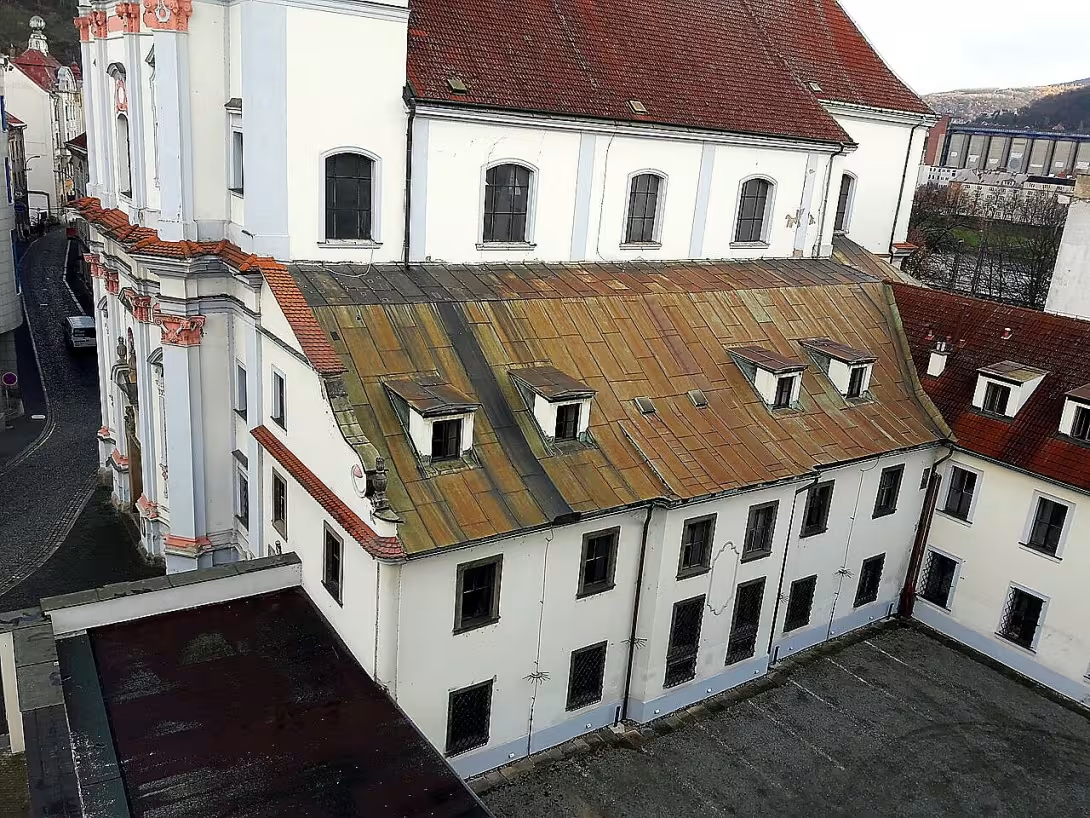
The Dominican Monastery in Ústí nad Labem is a baroque architectural gem that reflects the city's rich religious history. Established in 1617, it includes the Church of Saint Wenceslas and played a key role in re-Catholicization efforts in the region. Its historical significance is highlighted by legal disputes with the city over church usage rights and its endurance through economic hardships until its closure in 1935.
The monastery's origins trace back to 1617 when Jan Arnošt Schösser, then Ústí nad Labem primátor, invited the Dominicans to spearhead re-Catholicization following Bohemia's religious and political upheavals after the Thirty Years' War. This initiative received imperial approval from Císař Matyáš, marking a significant moment in Europe's Counter-Reformation movement. Despite Schösser's tragic death during the "ústecké defenestraci" later that year, the Dominicans established their presence and began their mission.
Architecturally, the monastery is noted for its baroque style, particularly evident in the Church of Saint Wenceslas, completed in 1650 after a protracted legal dispute with the city. This church became central to the Dominicans' religious activities, serving as a focal point for sermons, masses, and missions aimed at re-Catholicizing Ústí nad Labem and its surroundings. The monastery's modest size throughout its existence reflected both limited resources and its status among the poorest in the Czech province.
Ownership of the monastery remained with the Dominicans from 1617 until its dissolution in 1935, a period marked by significant historical events. In 1785, during Emperor Joseph II's reforms aimed at dissolving monasteries, the Ústí nad Labem monastery faced potential closure. However, it was spared following a petition by the local magistracy. Despite this reprieve, the monastery continued to face challenges, culminating in its official dissolution as part of broader religious order closures in 1935.
The site's history is punctuated by key events that highlight its resilience and importance. After the Dominicans' departure, obláti took over from 1935 until 1945, when the monastery was briefly revived post-World War II before being dissolved again in 1950 during Akce K řeholní společenství. In the late 20th century, a temporary revival of the Dominican community occurred, though no permanent community exists today.
Today, the Dominican Monastery stands as a cultural monument within Ústí nad Labem's urban landscape. Its historical and architectural significance makes it a compelling site for visitors interested in exploring the religious and cultural history of the region. The Church of Saint Wenceslas remains a notable feature, inviting exploration and reflection on its storied past.
The Dominican Monastery is not just an architectural relic but a symbol of resilience and faith through centuries of change. Its rich history offers valuable insights into the religious dynamics of Ústí nad Labem and invites visitors to delve deeper into its historical narrative. Whether drawn by its baroque architecture or intrigued by its role in the Counter-Reformation, this site promises an enriching experience for those who visit.
Then and now
Drag the slider to compare how the landmark may have looked when it was built with the view today.
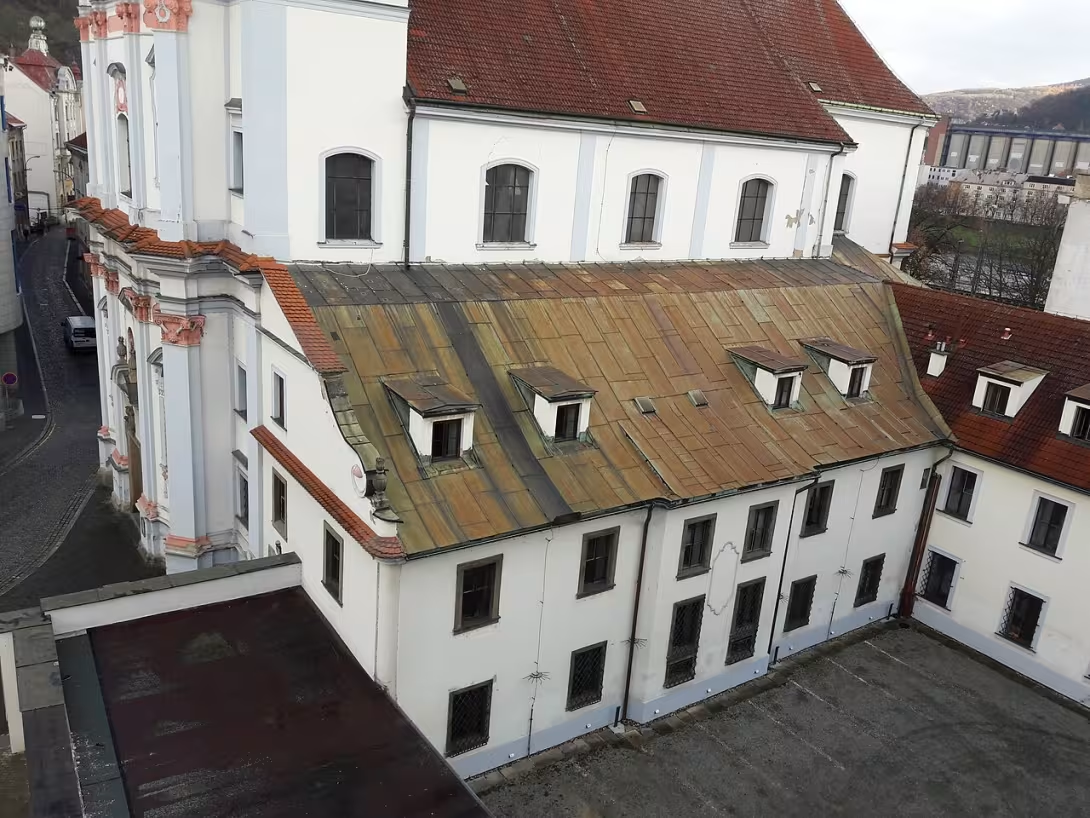
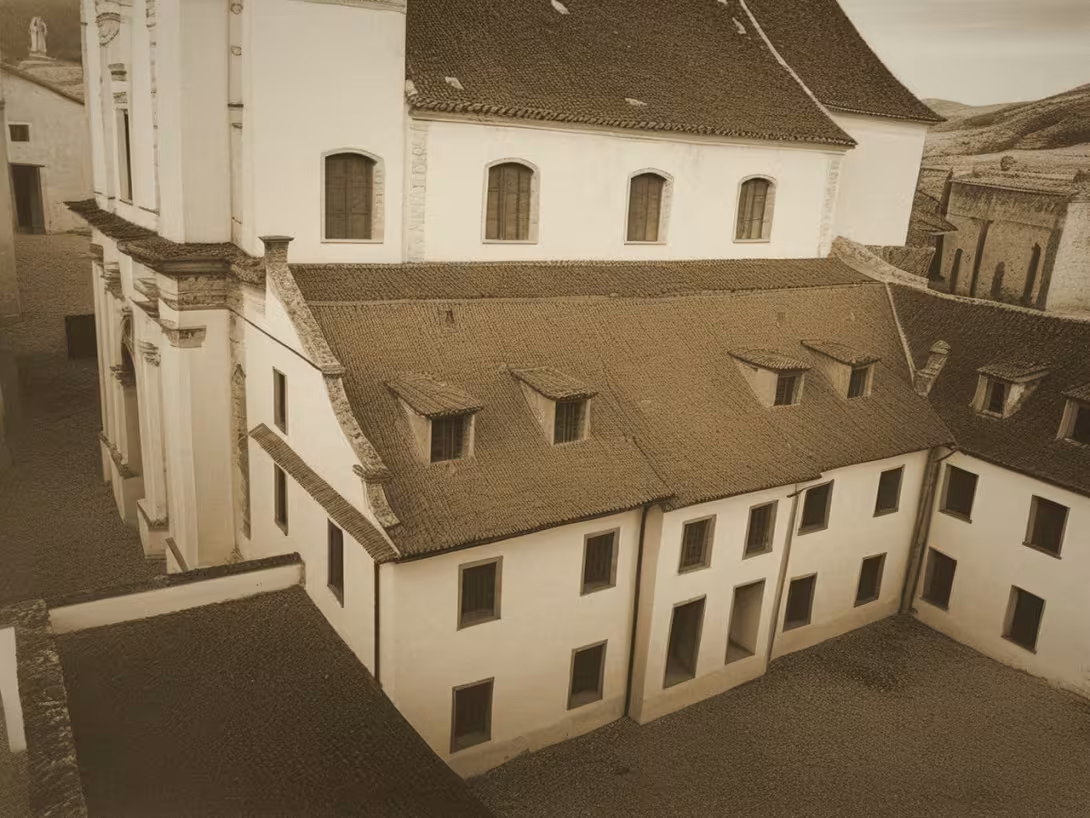
The historical appearance on the left is an AI-generated visualisation and serves as inspiration only.
Historical milestones
- 1617
- The Dominicans were founded in Ústí nad Labem.
- 1650
- Completion of St. Wenceslas Church after a legal dispute.
- 1785
- The monastery faced closure during Joseph II's reforms, but was preserved.
- 1935
- Official dissolution of the monastery.
- 1945
- A short time after World War II, there was a revival of the monastery.
- 1950
- The monastery was dissolved again during Action K against religious communities.
Architectural development
Initially modest in size, the monastery underwent significant architectural development with the completion of the Church of Saint Wenceslas in 1650. The baroque style is evident in its design and construction, reflecting the artistic trends of the period.
Historical events
- 1617
- The Dominicans were invited to Ústí nad Labem by Jan Arnošt Schösser for re-Catholicization efforts.
- 1650
- Completion of the Church of Saint Wenceslas after a legal dispute with the city.
- 1785
- The monastery faced dissolution under Emperor Joseph II's reforms, but was spared due to a petition by the local magistracy.
- 1935
- The Dominican Monastery was officially dissolved as part of broader religious order closures.
Owners
The Dominicans owned the monastery from its establishment in 1617 until its closure in 1935. After a brief period of ownership by oblats between 1935 and 1945, the monastery was briefly revived post-World War II before being dissolved again in 1950.
Points of interest
- The Dominican Monastery's establishment in 1617 was part of a broader Counter-Reformation movement across Europe, receiving imperial approval from Císař Matyáš. This highlights its strategic importance during a period of intense religious and political change following the Thirty Years' War.
- Despite facing potential closure during Emperor Joseph II's reforms in 1785 aimed at dissolving monasteries, the Ústí nad Labem monastery was spared due to a successful petition by the local magistracy. This intervention underscores its valued role within the community and the resilience of its supporters.
- The "ústecké defenestraci" refers to a dramatic event where Jan Arnošt Schösser, who played a pivotal role in inviting the Dominicans to Ústí nad Labem, met his tragic end. This incident illustrates the turbulent times during which the monastery was founded and its connection to significant historical events.
- After the Dominicans left in 1935, the obláti community took over the monastery until 1945, demonstrating a brief period of religious continuity amidst broader societal upheavals, including World War II. The site's history reflects its adaptability and enduring significance through changing times.
- In the late 20th century, there was a temporary revival of the Dominican community at the monastery before it dissolved again in 1950 during Akce K řeholní společenství. This highlights the cyclical nature of religious presence and influence at this historic site over the centuries.
Guide
This guide is narrated by a synthetic voice generated by artificial intelligence.
Show guide text
This text was created by artificial intelligence and has not been editorially reviewed. It may contain inaccuracies.
Welcome to the Dominican Monastery in Ústí nad Labem, a remarkable testament to baroque architecture and spiritual history nestled within this vibrant city. As you stand here, take a moment to absorb the grandeur of this historical edifice that has witnessed centuries unfold.
The story of this monastery begins in 1617 when it was established as part of a convent during a period marked by religious transformation across Europe. This was an era following the Thirty Years' War, where the Counter-Reformation movement sought to reinvigorate Catholicism. The Dominicans were granted imperial approval from Císař Matyáš, underscoring the monastery's strategic importance in these tumultuous times.
As you gaze upon the structure now, notice its baroque elements that speak volumes about its past. Though specific architectural details are not documented here, take a moment to appreciate the overall aesthetic and atmosphere of this historic site. The Church of Saint Wenceslas stands as a central feature within the monastery complex, having been completed in 1650 after a legal dispute.
Throughout its history, the monastery has seen significant figures such as Jan Arnošt Schösser z Emblebenu, who played a pivotal role in guiding its religious mission. His leadership was instrumental during the re-Catholicization efforts within Ústí nad Labem and beyond.
One intriguing aspect of this site is how it managed to survive various challenges over the centuries. Notably, during 1785, amidst Joseph II's reforms that led to the closure of many monasteries, this one remained intact. However, by 1935, it faced official dissolution, only to be briefly revived after World War II in 1945. Yet again, in 1950, it was dissolved during a campaign against religious orders.
As you continue your exploration, consider how the monastery has endured through these cycles of closure and revival, reflecting broader historical currents that have shaped not just this region but Europe as a whole.
I invite you to delve deeper into this site's rich history. Wander around, let your imagination wander with it, and perhaps uncover more stories etched in its walls. Thank you for joining me on this journey through time at the Dominican Monastery. Enjoy your visit!
Tips for visitors
The best time to visit the Dominican Monastery in Ústí nad Labem is during late spring or early autumn when the weather is mild, and the crowds are fewer compared to summer months. During these times, you can enjoy a pleasant walk around the monastery grounds without the discomfort of extreme temperatures. Additionally, visiting on weekdays rather than weekends can provide a more tranquil experience, allowing for better exploration of its architectural details.
It's advisable to check current routes and schedules using a local transportation app or website to ensure smooth travel plans.
When visiting the monastery, it is recommended to bring comfortable walking shoes as you will likely explore both indoor areas and outdoor surroundings. A camera is also suggested for capturing the intricate baroque architecture of the Church of Saint Wenceslas and other notable features within the complex. Additionally, carrying a light jacket or sweater can be useful due to varying temperatures inside and outside.
For photography enthusiasts, some of the best spots include the interior of the Church of Saint Wenceslas where natural light beautifully illuminates the baroque elements during certain times of the day. Early morning or late afternoon is ideal for capturing soft lighting effects. Outside, photographing the monastery from different angles around its perimeter can provide a comprehensive view against the backdrop of urban development.
Nearby attractions within a 30-minute distance include the Ústí nad Labem Castle, which offers panoramic views of the city and river, and the Museum of East Bohemia located in the historic center. These sites are perfect for extending your cultural exploration after visiting the monastery. For families with children, consider bringing along some snacks or a packed lunch as there are limited dining options directly at the monastery.
Frequently asked questions
Can the monument be visited?
Religious buildings are usually open mainly during services; at other times a visit is normally arranged with the parish or the operator. We have not verified specific times.
Where is the monument?
Location: Ústí nad Labem, Ústecký kraj. The map on this page shows the exact spot.
Why is the monument protected?
It is listed in the Central List of Cultural Monuments of the Czech Republic as a cultural monument. It is protected as part of a larger listed ensemble.
Businesses nearby
Do you run a restaurant, accommodation, shop, museum, rental, wellness or other visitor service near this monument? Show yourself directly to the people heading to it — this is how they will see you in the app and on the web:
Events nearby

Zdroj akcí: otevřená data měst a obcí ČR (Národní katalog otevřených dat) a kalendář akcí Národního památkového ústavu.
Nearby
The Dominican Monastery is located in Ústí nad Labem, surrounded by urban development. The Church of Saint Wenceslas remains a notable feature within the complex.
Accommodation nearby
Trips and activities nearby
Guided tours, tickets and activities nearby from GetYourGuide
Affiliate link: if you buy from the partner, we may receive a commission. The price for you does not change.
Search tours and activities →Themed route
Ústí nad Labem Thematic Tour
1. **Klášter dominikánů v Ústí nad Labem (Monastery) Start your journey at the heart of urban development in Ústí nad Labem, where the Dominican Monastery stands as a testament to architectural and spiritual heritage. This site is renowned for its historical significance and the serene atmosphere it offers amidst the bustling city life. Visitors are drawn by its stunning Gothic architecture and the opportunity to explore religious art within its walls.
2. **Church of Saint Wenceslas (Church) Located within the monastery complex, the Church of Saint Wenceslas is a highlight not to be missed. This church captivates visitors with its rich history and beautiful interior design. It serves as an excellent example of religious architecture and provides insight into the spiritual life that has flourished here for centuries.
3. **Nádvoří Kláštera (Monastery Courtyard) Take a moment to stroll through the monastery courtyard, which offers a peaceful retreat from the urban environment surrounding it. This area is perfect for appreciating the architectural beauty of the complex and provides a tranquil space for reflection or photography.
4. **Věž Kláštera (Monastery Tower) Conclude your visit by climbing to the top of the monastery tower, if accessible. The view from here offers a unique perspective on Ústí nad Labem and its surroundings. It's an ideal spot for those who appreciate panoramic views and wish to capture memorable photographs of the cityscape.
This thematic tour allows visitors to immerse themselves in the historical and cultural richness of the Dominican Monastery in Ústí nad Labem, exploring both its spiritual significance and architectural beauty.
Seasonal recommendations
Spring: Visiting the Dominican Monastery in Ústí nad Labem during spring offers a unique experience as nature begins to bloom around this historic site. The fresh greenery and blossoming flowers create a vibrant backdrop, enhancing the monastery's serene atmosphere. As daylight extends, visitors can enjoy longer exploration times with natural light accentuating the intricate architectural details of the monastery. During this season, it is advisable to wear comfortable layers due to variable temperatures and bring an umbrella in case of spring showers. Early mornings or late afternoons tend to be less crowded, providing a more peaceful visit.
Summer: Summer at the Dominican Monastery is characterized by long days filled with warm sunshine, making it ideal for leisurely exploration. The lush surroundings are particularly inviting during this season, as gardens and pathways around the monastery are in full bloom. However, the peak tourist season means that larger crowds can be expected, especially on weekends and holidays. To avoid the heat of midday and long lines, consider visiting early in the morning or later in the afternoon. Light clothing is recommended to stay comfortable during your visit.
Autumn: Autumn brings a picturesque transformation to the Dominican Monastery with its stunning display of fall foliage. The warm hues of reds, oranges, and yellows create a magical atmosphere that complements the historic architecture beautifully. This season often sees fewer visitors than summer, offering a quieter experience. As temperatures begin to drop, it's wise to wear layers and bring a light jacket for cooler mornings or evenings. The softer lighting conditions during this time can also provide excellent opportunities for photography.
Winter: Winter at the Dominican Monastery offers a serene and contemplative atmosphere as snow may blanket the grounds, adding a touch of enchantment to the historic site. Shorter days mean that visits are best planned around daylight hours, with mornings often being ideal due to longer opening times. The cold weather necessitates warm clothing, including coats, hats, gloves, and sturdy footwear for walking on potentially icy paths. While fewer tourists typically visit during this time, it's important to check the monastery's seasonal opening schedule as some days may have limited access or shorter hours.
Visualizations and artistic views


The visualisations are generated by artificial intelligence and serve as inspiration.
Photos from the area
Real photos taken near the monument


Zdroj a licence jsou uvedeny u každého snímku.
Tips from visitors
No tips yet. Be the first!
Log in and add your tip.
Sources and literature
Photos: RomanM82 / CC BY-SA 4.0 — Wikimedia Commons. The author and licence also appear when you hover over the image.
Faktickým podkladem tohoto textu byl článek na Wikipedii, jehož autory jsou přispěvatelé Wikipedie. Článek je dostupný pod licencí CC BY-SA 4.0.
Location on the map
More monuments – Ústí nad Labem
Show all in the municipality



Příběhy a pověsti
Legendy, pověsti a příběhy spjaté s touto památkou

Fotografie návštěvníků
Zatím žádné fotografie. Buďte první, kdo přidá fotografii z návštěvy!
Log in a přidejte svou fotografii nebo hodnoťte.
Za ověřenou návštěvu v aplikaci získáte víc bodů — poznáme podle GPS, že jste na místě.
Reviews and comments