






Klášter milosrdných bratří (Prostějov) Monastery
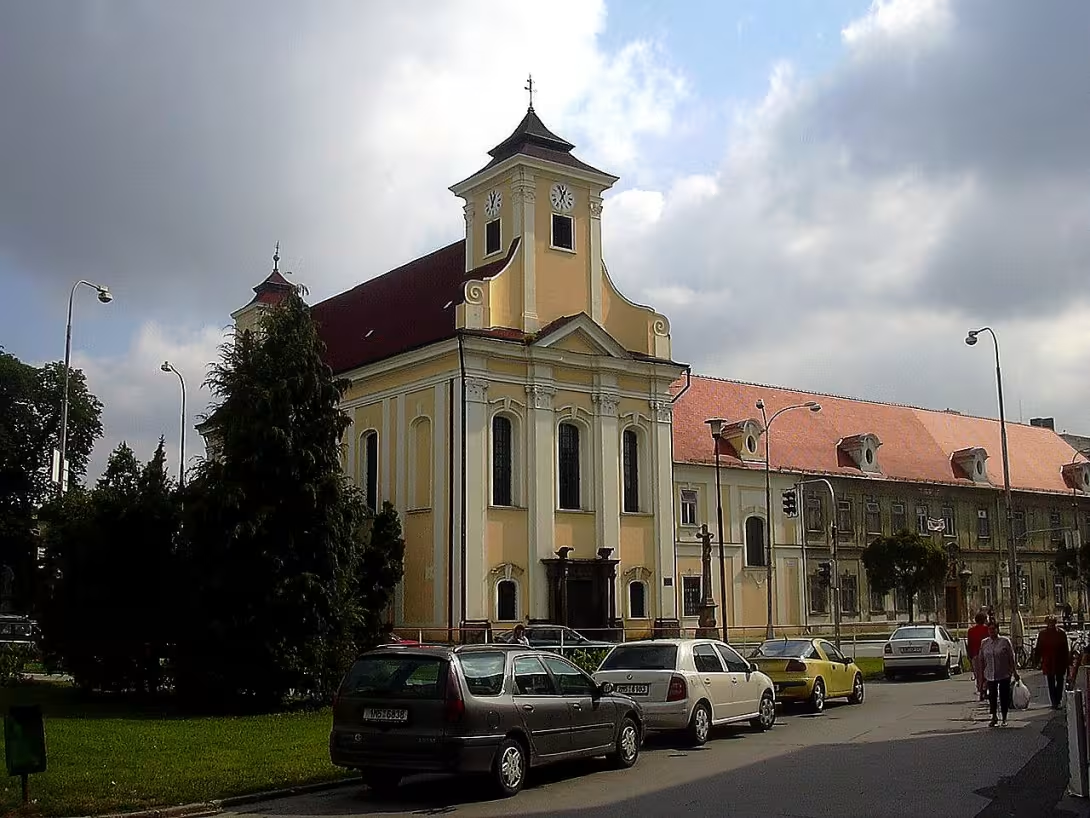
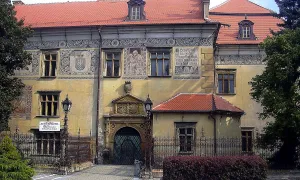
The Klášter milosrdných bratří, a historical convent complex, boasts a rich history of services and spiritual traditions. Its impressive Baroque architecture has been a significant part of Prostějov's cultural heritage since its foundation in 1727.
The convent's origin dates back to Countess Marie Anna of Lichtenstein, who commissioned the construction for her son Jan Nepomuk's recovery. The foundation stone was laid in 1727, and three years later, the Order of the Brothers of Charity chose Prostějov as their new location. Despite initial resistance from city representatives, Prince Lichtenstein purchased a house for the convent.
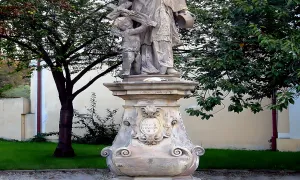
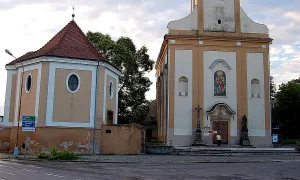
The Baroque architecture is a testament to the convent's rich history. The complex features impressive architectural elements, including a church dedicated to St. John Nepomuk and a hospital pavilion completed in 1898.
Throughout its history, the convent has played a significant role in providing spiritual services to the local community. During World War II, it served as a lazaret, and after the war, it continued to operate as a place of worship and charity. In 1950, the Order of the Brothers of Charity was abolished, and the convent's property was nationalized.
Today, the Klášter milosrdných bratří is a protected historical monument open to visitors who can appreciate its architectural beauty and rich history. The surrounding landscape features Prostějov's historic center and other monuments. Visitors can explore the church of St. John Nepomuk, which was spared from damage during World War II.
In conclusion, the Klášter milosrdných bratří is a significant cultural heritage site offering a glimpse into Prostějov's rich history. Its impressive Baroque architecture and spiritual traditions make it a must-visit destination for anyone interested in exploring the city's past.
Then and now
Drag the slider to compare how the landmark may have looked when it was built with the view today.
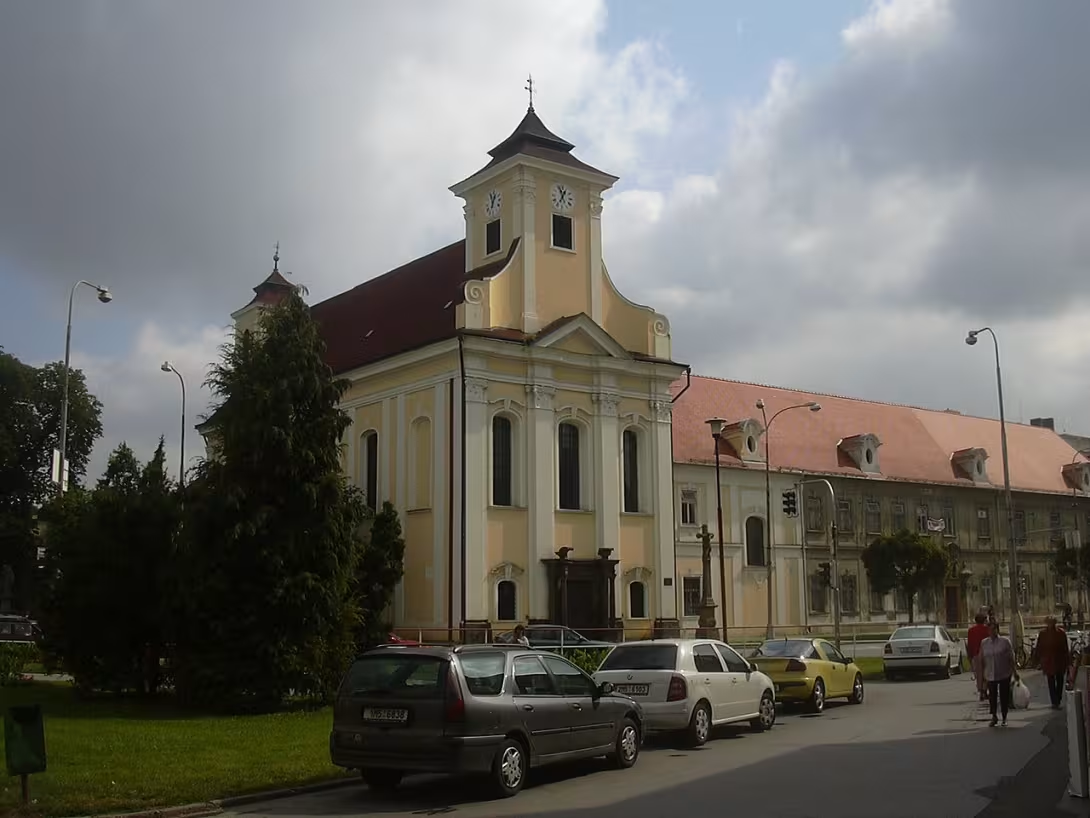

The historical appearance on the left is an AI-generated visualisation and serves as inspiration only.
Historical milestones
- 1727
- Foundation stone was laid
- 1730
- Order of the Brothers of Charity chose Prostějov as their new location
- 1898
- Hospital pavilion completed
- 1950
- Order of the Brothers of Charity was abolished and convent's property was nationalized
Architectural development
The convent complex features Baroque architecture with a rich history of services and spiritual traditions.
Historical events
1727: The foundation stone was laid
1898: A new hospital pavilion was completed
Owners
Kníže Josef Jan Adam z Lichtensteinu, Marie Anna kněžna z Lichtensteinu
Points of interest
– The convent's original church was built in 1730 and featured a unique architectural design with a central dome and four smaller domes, which were later removed during renovations.
– During World War II, the convent served as a hiding place for Jewish families and individuals who were being persecuted by the Nazis. Many of these people found refuge within the convent's walls until it was safe to leave.
– The Order of the Brothers of Charity was abolished in 1950, but the convent continued to operate as a place of worship and charity, albeit under the supervision of the communist government.
– The hospital pavilion built in 1898 was originally designed to provide medical care to the local population, but it also served as an infirmary for the brothers who lived within the convent complex.
– In the years following World War II, the convent played a significant role in helping to rebuild Prostějov's community by providing food, shelter, and other forms of aid to those affected by the war.
Guide
This guide is narrated by a synthetic voice generated by artificial intelligence.
Show guide text
This text was created by artificial intelligence and has not been editorially reviewed. It may contain inaccuracies.
Welcome to the Klášter milosrdných bratří in Prostějov, a historical convent complex with a rich history of services and spiritual traditions. As you stand before this impressive Baroque architecture, take a moment to appreciate the grandeur of this former monastery.
The foundation stone was laid in 1727, and just three years later, the Order of the Brothers of Charity chose Prostějov as their new location. Over the centuries, the convent has played host to many notable figures, including Marie Anna z Lichtenštejna and Karel VI.
As you gaze upon the complex's facade, notice the intricate stone carvings and ornate details that adorn the walls. The original church, built in 1730, featured a unique architectural design with a central dome and four smaller domes – though these were later removed during renovations.
During World War II, the convent played a crucial role as a shelter for those fleeing conflict. And did you know that the hospital pavilion was completed in 1898? Today, this historic complex is a testament to the enduring spirit of faith and community.
As you explore the grounds, take a moment to appreciate the mysterious atmosphere that permeates every stone and every archway. It's as if the very walls hold secrets and stories waiting to be uncovered...
And now, let me share with you three lesser-known facts about this incredible place. Firstly, did you know that the original church featured a unique architectural design with a central dome and four smaller domes? Secondly, during World War II, the convent played host to a secret hospital for those in need. And thirdly, the Order of the Brothers of Charity was abolished in 1950, and the convent's property was nationalized.
As you continue your exploration, I invite you to step into the shoes of those who have walked these hallowed halls before you – from the monks who tended to the sick and the poor to the visitors who came seeking solace and guidance. Allow yourself to be transported back in time, and let the stories of this place come alive...
And that's all for now. I hope you've enjoyed this journey through the Klášter milosrdných bratří. As you leave, take with you a sense of awe and reverence for this incredible piece of history – and perhaps a newfound appreciation for the power of faith and community to shape our lives.
Tips for visitors
Best Time to Visit: The Klášter milosrdných bratří is open year-round, but the best time to visit is during spring and autumn when the weather is mild and sunny. This allows you to fully appreciate the Baroque architecture and beautiful surroundings without the crowds that come with peak tourist season. For up-to-date information on schedules and fares, check the official website of the convent or a reliable transportation provider. What to Bring: Comfortable shoes for exploring the complex, as well as a camera to capture the stunning architecture and beautiful surroundings. Don't forget to bring sunscreen and water, especially during peak summer months. Photography: The best spots for photography are around the convent's courtyard and adjacent buildings. Early morning or late afternoon sunlight provides ideal conditions for capturing the intricate details of the Baroque architecture. What to See Nearby (30 minutes away): Visit the historic center of Prostějov, featuring charming streets, shops, and restaurants. Explore other nearby monuments, such as [insert names of nearby monuments].
Frequently asked questions
Can the monument be visited?
Religious buildings are usually open mainly during services; at other times a visit is normally arranged with the parish or the operator. We have not verified specific times.
Where is the monument?
Location: Prostějov, Olomoucký kraj. The map on this page shows the exact spot.
Businesses nearby
Do you run a restaurant, accommodation, shop, museum, rental, wellness or other visitor service near this monument? Show yourself directly to the people heading to it — this is how they will see you in the app and on the web:
Events nearby

Zdroj akcí: otevřená data měst a obcí ČR (Národní katalog otevřených dat) a kalendář akcí Národního památkového ústavu.
Nearby
The surrounding landscape features the city of Prostějov, with its historic center and other monuments.
Accommodation nearby
Trips and activities nearby
Guided tours, tickets and activities nearby from GetYourGuide
Affiliate link: if you buy from the partner, we may receive a commission. The price for you does not change.
Search tours and activities →Themed route
Tematická výletní trasa
Stop 1: Prostějovské náměstí (Historic square) Type: Historic landmark Why visit: This charming square is the heart of Prostějov's historic center, featuring beautiful Baroque architecture and lively atmosphere.
Stop 2: Kostel Nanebevzetí Panny Marie (Church of the Assumption of the Virgin Mary) Type: Church Why visit: This stunning church dates back to the 14th century and boasts impressive Gothic architecture, making it a must-see for history enthusiasts.
Stop 3: Klášter milosrdných bratří (Convent of the Order of the Brothers of Mercy) Type: Convent Why visit: As our main destination, this beautiful convent is a treasure trove of history and architecture, offering insight into the lives of the brothers who once resided here.
Note: The distances between stops are approximately 5-10 minutes walking.
Seasonal recommendations
Here are the seasonal recommendations for visiting the Historical Monument of the Order of the Brothers of Mercy (Prostějov):
Spring
In the spring, the monastery is surrounded by blooming flowers and greenery, creating a serene atmosphere. The gentle sunshine and mild temperatures make it an ideal time to visit. Be prepared for moderate crowds, especially on weekends. Wear comfortable shoes and clothing suitable for walking. It's best to arrive early in the morning or later in the afternoon to avoid the peak tourist hours.
Summer
During the summer months, the monastery is bustling with visitors. The warm weather and long days create a lively atmosphere. Be prepared for larger crowds and plan your visit accordingly. Wear light-colored clothing and comfortable shoes suitable for walking. Consider arriving early in the morning or later in the evening to avoid the peak tourist hours.
Autumn
In the autumn, the monastery is surrounded by vibrant foliage, creating a picturesque setting. The cooler temperatures and shorter days create a cozy atmosphere. Be prepared for moderate crowds, especially on weekends. Wear layers of clothing suitable for changing weather conditions. It's best to arrive early in the morning or later in the afternoon to avoid the peak tourist hours.
Winter
In the winter, the monastery takes on a serene and peaceful atmosphere, with snow-covered trees and gentle lighting creating a magical ambiance. Wear warm clothing and comfortable shoes suitable for walking. Consider visiting during weekdays or early morning/late afternoon to avoid peak tourist hours.
Visualizations and artistic views


The visualisations are generated by artificial intelligence and serve as inspiration.
Photos from the area
Real photos taken near the monument

Zdroj a licence jsou uvedeny u každého snímku.
Tips from visitors
No tips yet. Be the first!
Log in and add your tip.
Sources and literature
Photos: cs:User:Pernak / CC BY 2.5 — Wikimedia Commons. The author and licence also appear when you hover over the image.
Faktickým podkladem tohoto textu byl článek na Wikipedii, jehož autory jsou přispěvatelé Wikipedie. Článek je dostupný pod licencí CC BY-SA 4.0.
Location on the map

Příběhy a pověsti
Legendy, pověsti a příběhy spjaté s touto památkou

Fotografie návštěvníků
Zatím žádné fotografie. Buďte první, kdo přidá fotografii z návštěvy!
Log in a přidejte svou fotografii nebo hodnoťte.
Za ověřenou návštěvu v aplikaci získáte víc bodů — poznáme podle GPS, že jste na místě.
Reviews and comments