






kostel svatých Petra a Pavla (Prostějov) Church
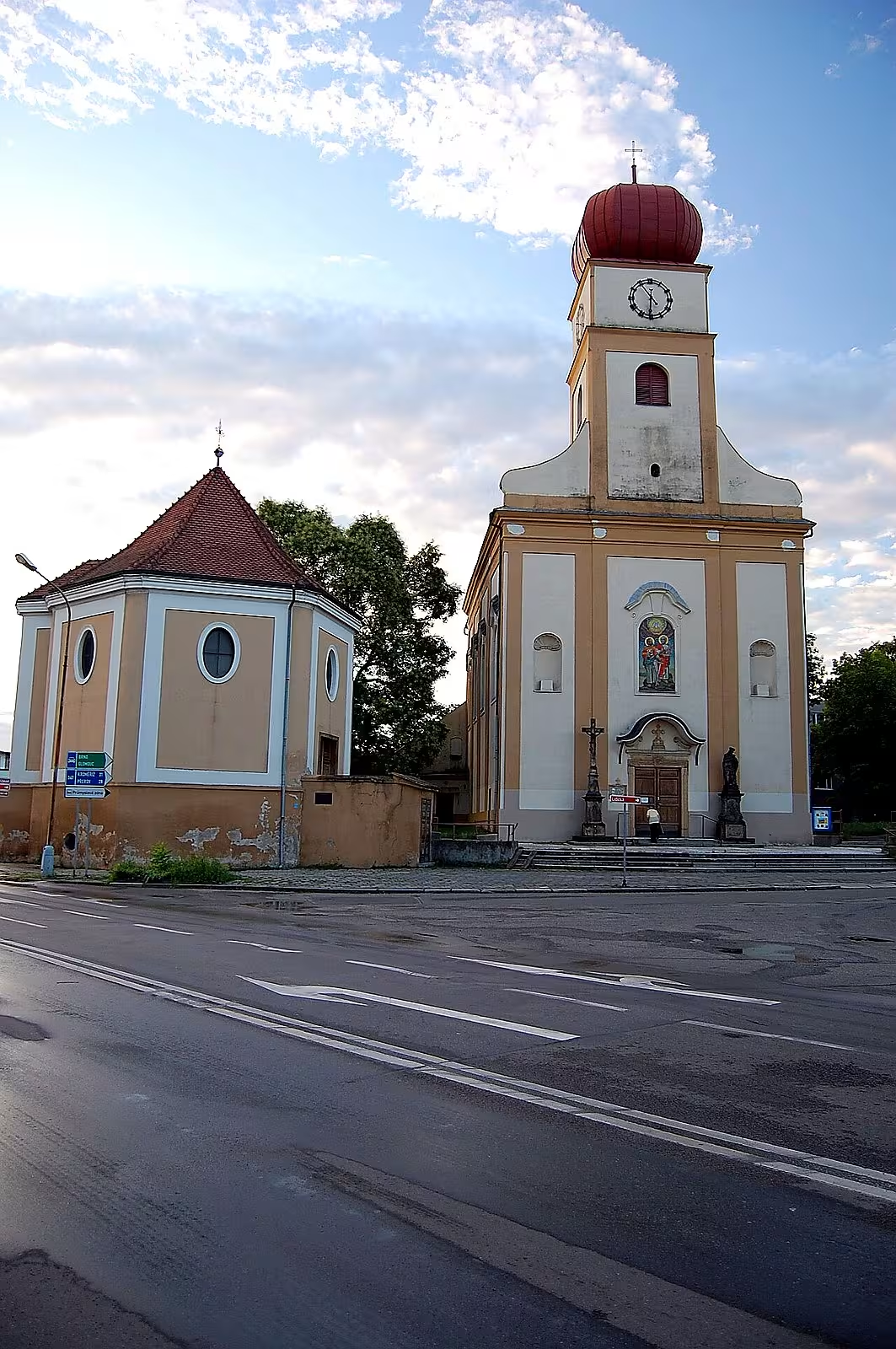
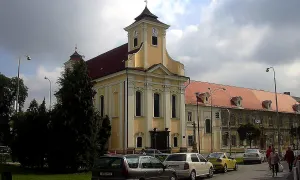
The church is a Roman Catholic parish temple with traditional meaning. Although it was long regarded by tradition as the oldest Prostějov temple, archaeological research did not confirm this assumption. It is believed to have been founded in the 12th or 13th century, and for the first time it is mentioned in writing in 1475. Around the church was the oldest Prostějov cemetery, which shows its importance in the life of the medieval town.
The decisive moment was the second half of the 14th century, when the Augustinian came to Prostějova and founded the monastery of the Assumption of the Virgin Mary. With the restoration of the competitive church of St. Cross, the position of St. Peter and Paul's church has weakened - it has become only a filial temple. The biggest change was made between 1728 and 1730 when its complete reconstruction took place. Underneath the church was established a crypt serving to bury until the Josephine reforms. The new temple was given a tower and a wooden altar; In the priesthood was a painting of the Virgin Mary, later replaced by an icon of St. Peter in chains. The temple was consecrated on June 29, 1731 by Dean Jan Birhel. In 1941, the wooden altar was replaced by marble.
The interior of the church leaves an impression of exhibition and baroque beauty. The church contains six altars from the 18th century, the main one depicting the Last Supper of the Lord. The altar of St. Peter and Paul in Baroque style dates back to 1731 and is decorated with a painting by František Velehrady. Among the other altars stands out the work of sculptor Karl Vysehradski. On the tower is the oldest of the Prostějov bells - dates back to 1506 and weighs 300 kilograms. Under the musical crust are stored Renaissance tombstones of noblemen, especially Jan Lhotsky from the Ptina and Jan Matthew from Bystřice.
Near the church stands the chapel of St. Lazarus with a hexagon plan. There is a tomb in her underground that once served as a skeleton. The inside of the chapel is decorated with paintings depicting the Funeral of the Lord, the Resurrection of the Lord and other biblical scenes that are in bad condition today.
The church has been a centre of piety for a long time. Since 1934, the Society of the Divine Savior has been operating here. Among its members was the local protagonist preacher Methodius Jaroslav Michela, who became a martyr. The period of Nazism and Communism interrupted the activities of the congregation, but in 1990 a separate parish administration was restored. Today, the Salesians help Don Boska with spiritual administration. The church, Salvatorian monastery and rectory near it remain a living part of the Prostějov spiritual tradition.
Then and now
Drag the slider to compare how the landmark may have looked when it was built with the view today.
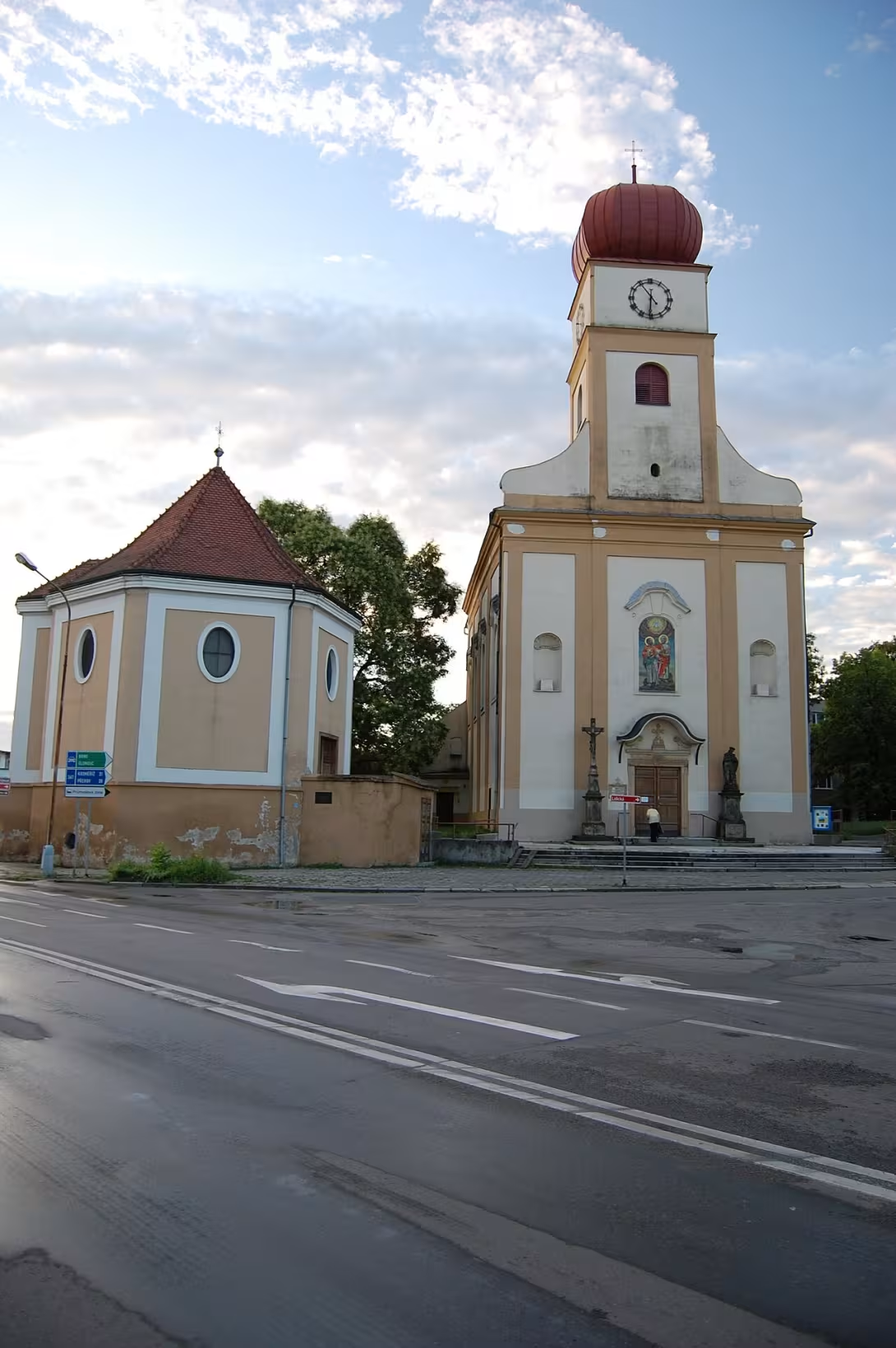
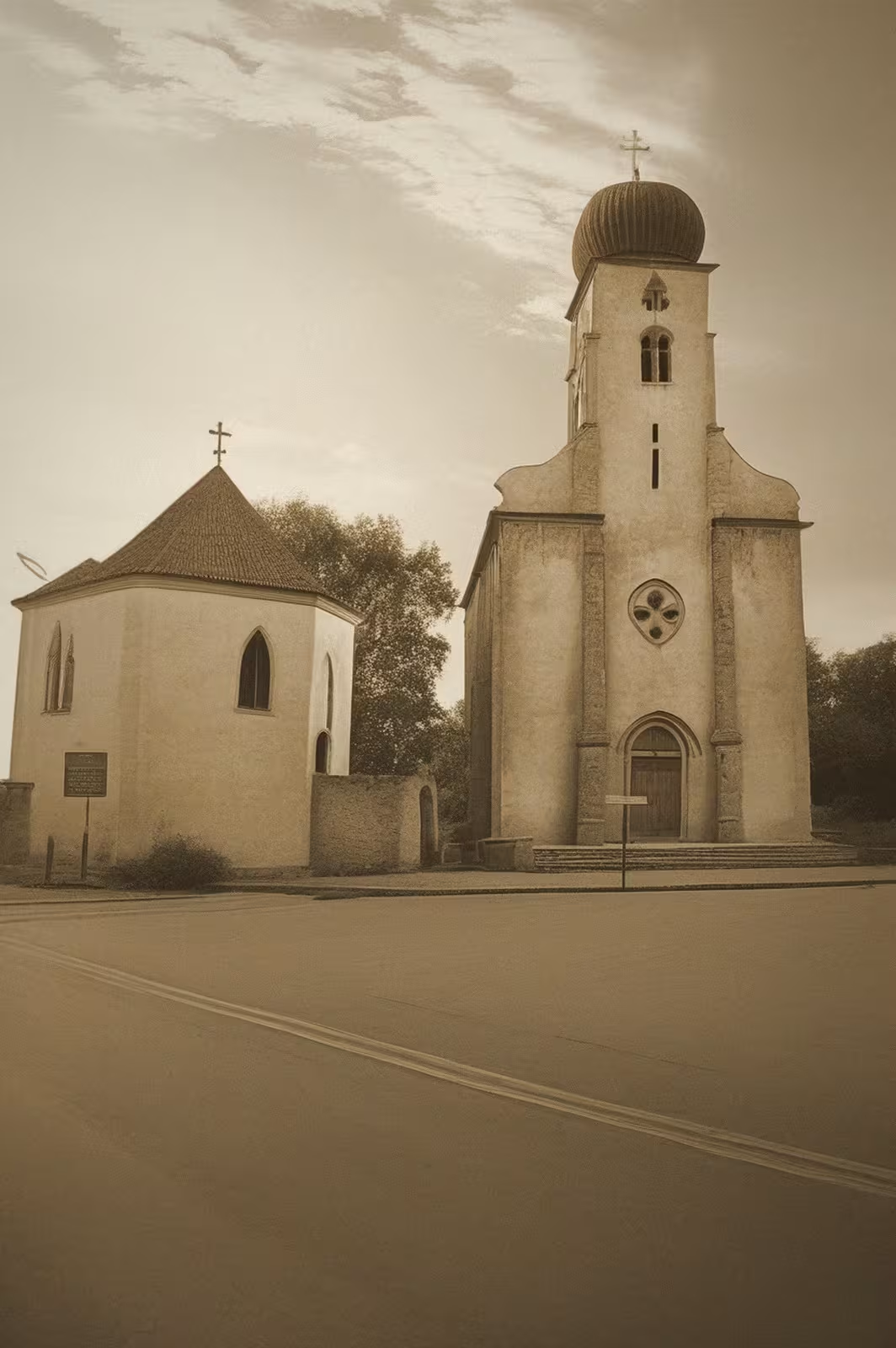
The historical appearance on the left is an AI-generated visualisation and serves as inspiration only.
Historical milestones
- 12.-13th century
- Founder phase of church, originally considered oldest in Prostějov
- 1475
- First written mention of the church
- 1728-1730
- Baroque reconstruction with construction of crypt, tower and main altars
- 1731
- Church ordination after reconstruction
- 1941
- Replacement of the wooden altar with marble
Architectural development
The original building from the 12th - 13th century was gradually rebuilt. The baroque reconstruction in 1728-1730, when the new tower, crypt and main altar of the Last Supper of the Lord, brought the most significant changes. The church was built of stone and bricks, interior decorated with Baroque paintings and sculptures. There were minor modifications in the 19th century, like the exchange of altars.
Historical events
- 1475
- First written mention of the church
- 1731
- The consecration of the church after Baroque reconstruction, the creation of main altars and crypts
- 1941
- Replacement of the wooden altar with marble
- 1990
- Restoration of a separate parish administration
Points of interest
- The church was originally considered the oldest Prostějov temple, but archaeological research disproved this assumption.
- In writing, it is not mentioned until 1475, although it is assumed to have been founded in the 12th or 13th century.
- Around the church was the oldest Prostějov cemetery, which shows its importance in the Middle Ages.
- From 1728 to 1730 the church passed through a complete Baroque reconstruction, which created a crypt and was supplemented by a tower.
- On the tower is the oldest Prostějov bell from 1506, weighing 300 kilograms.
Guide
This guide is narrated by a synthetic voice generated by artificial intelligence.
Show guide text
This text was created by artificial intelligence and has not been editorially reviewed. It may contain inaccuracies.
Audio Guide - Church of St. Peter and Paul in ProstějovA
---
Welcome to this impressive baroque church, which is now opening up to you with its massive front. You are standing in front of the Church of St. Peter and Paul, one of the most important sacral buildings of Prostějova, whose history dates back to the Middle Ages. In front of you is a building which in the past was considered the oldest church in the city - although archaeological research later revealed that it was not. Yet it remains a place full of secrets, art and rich past. Let's go together and see what this church has to offer.
Originally, the church was built probably in the 12th or 13th century, making it one of the oldest temples in Prostějov. But the first written mention of it dates back to 1475, when it was already firmly anchored in urban life. Its importance deepened when the oldest Prostějov cemetery was around it - a place where the lives and memories of many generations met. But the church was constantly growing and changing. From 1728 to 1730 he went through an extensive Baroque reconstruction in which his present form was created. The crypt was expanded, a new tower was built and the interior was enriched with a richly decorated altar. In 1731 the church was consecrated after reconstruction, and since then it has served as a parish temple and spiritual centre of the city.
Now look around you and perceive the atmosphere of this place. In front of you is a baroque facade with typical elements of this epoch - symmetry, rich ornaments and harmonious ground plan. Come in, and you will be welcomed immediately by an inner space full of art gems. Note above all baroque altars, which are one of the main attractions of this church. Their sculptures and paintings refer to the golden era of baroque art. The altar of the saints Peter and Paul, whose painting was painted by František Velehradský, deserves particular attention. His work is full of dynamism and religious depth that immediately captures you.
However, the oldest object in the church is the bell from 1506, which has been preserved here today. His existence suggests that the church already had a firm place in the life of Prostějov citizens at that time. Another interesting feature is the Renaissance tombstones that survived in the church. These monuments remind us of important figures of the past, whose names were no longer preserved, but whose lives were linked to this place.
The Church of Saint Peter and Paul also witnessed many historical events and connected with personalities that influenced not only Prostějov but also the wider region. One of them was Methodius Jaroslav Michoula, the antitinetic preacher and martyr who served here and whose courage and faith have become an inspiration to many people. His story is remembered not only in the church, but in the whole city.
Other artists who participated in the church were Jan Prachař and Karel Vysehradský. The money man painted the painting of the crucified on the altar of the Holy Cross, which is one of the most distinctive works in the interior. Vyšehradský then created a sculpture decoration of the altar of St. Crispin and St. Krispinian, which gives the church even more spiritual depth.
One of the most interesting things about this church is that it was originally considered the oldest in Prostějov. But archaeological research has shown that it is not. Yet it remains a place of rich history that has evolved for centuries. Around the church was the oldest Prostějov cemetery, which shows its importance in the early Middle Ages. This cemetery was a place where many people's lives and memories met, and its existence added even more historical weight to the church.
Now look around you and perceive every detail of this place. Notice how the medieval tradition and baroque art combine here. Every altar, every statue, every tombstone has a story waiting to be discovered. The church of Saint Peter and Paul is not only an architectural gem, but also a place where the past and present meet.
If you want to get to know the history of this church in more detail, visit its exposition or ask the locals who can bring you further attractions. Also remember the oldest Prostějov bell, which will remind you that this building is much older than it may seem at first sight.
Thank you for your visit and your invitation to further discover. The Church of St. Peter and St. Paul is a place that immediately captures you with its beauty and history. Be welcome to his walls and get carried away by his atmosphere.
Tips for visitors
{'paragraph': 'Best time to visit the church of St. Peter and Paul is in the morning or in the afternoon. In these times there is a pleasant light in the interior and the place is less crowded. The Baroque interior and lighting are the best at these times, which allows you to better see the detailed decoration and architecture. If you want to experience a peaceful atmosphere, avoid the main services and visits at the time of parochial events.'}
{'paragraph': 'The church is accessible by car and public transport. If you arrive by car, it is recommended to find a parking lot near the city center where there are plenty of places. By public transport you can get here from any place in Prostějov or nearby. The current connections and routes can be found in the traffic search engine. It is also possible to find a parking lot near the Salvatorian monastery, which is suitable for short-term standing.'}
{'paragraph': 'When visiting, wear comfortable shoes because the church and its surroundings offer several narrow corridors and staircases. Next, prepare comfortable clothes because the interior can be cold. If you are planning to take pictures, take a small camera or smartphone with you with sufficient quality. For better image quality, prepare a tripod too if you want to take photos in the interior in a weaker light.'}
{'paragraph': 'Photography is allowed in the church, but it is recommended to respect the quiet and sacred atmosphere of the place. The best places for photography are the main altar, Baroque pulpit and frescoes on the ceiling. For best results, use the natural light that penetrates the windows around the main altar. In the interior, it is advisable to take pictures with weaker lighting but with longer exposure time if you have a tripod.'}
{'paragraph': 'Around the church is worth visiting the Salvatorian monastery and the Chapel of St. Lazarus. The Salvatorian monastery, originally connected to the cemetery and skeleton, offers interesting history and architecture. The chapel of St. Lazarus, located nearby, is hexagonal and contains biblical paintings. It is also used for parish meetings, so you can see its internal and external space. Both of these objects are just a few minutes' walk from the church. '}
{'paragraph': 'For families with children, a visit to the Church of St. Peter and Paul is very interesting. Children can see the Baroque decorations and learn more about the history of the place. In the vicinity of the church you can visit the Chapel of St. Lazarus, where children can learn about the biblical stories that are depicted here. It is also interesting for children to explore the surrounding areas of the monastery, which offer space for movement and discovery. However, it is recommended to ensure that children are always under adult supervision.'}
Frequently asked questions
Is kostel svatých Petra a Pavla (Prostějov) open to the public?
Yes, the church is open to the public. Opening hours are from Tuesday to Friday from 9: 00 to 5: 00, on Saturday from 10: 00 to 16: 00 and on Sunday from 13: 00 to 18: 00.
How do I get to the place by car / public transport?
The church is located in the heart of Prostějova, so it is accessible by foot or by car. Parking is possible on the surrounding parking areas. The public transport line No. 1 can be transferred to the stop 'Main Station' and then on foot continue for about 10 minutes.
How much is the entrance fee and is it paid on the spot?
Payment is only possible in cash.
Is the tour suitable for children and seniors?
Yes, the church is accessible to all ages. Special guided tours are available for children, which can be booked in advance.
How long does the tour take?
The church tour takes about 30-45 minutes.
What are the opening times and booking is required?
Opening hours are from Tuesday to Friday from 9: 00 to 5: 00, on Saturday from 10: 00 to 16: 00 and on Sunday from 13: 00 to 18: 00. Reservation of the tour is not necessary, but we recommend to do it in advance for groups over 10 people.
What's interesting in the immediate vicinity?
In the immediate vicinity of the church there is the historical centre Prostějova with a number of other monuments such as town hall or chateau. There are several restaurants and cafés nearby.
For kids
Imagine going back to when Prostějov was a small town. The church of St. Peter and Paul stood in the middle of the city and was the center of all activities.
It was like a big family where everyone had their place. Local people met in church for worship, wedding ceremonies or funerals. The church was also a haven for those who sought help and advice. Until today, the church is a symbol of faith and also a monument to the history of the city.
Businesses nearby
Do you run a restaurant, accommodation, shop, museum, rental, wellness or other visitor service near this monument? Show yourself directly to the people heading to it — this is how they will see you in the app and on the web:
Nearby
- A monastery near the church, originally connected to the cemetery and the skeleton under St. Lazarus's chapel.
- A hexagon chapel with a skeleton and biblical paintings, used for parish meetings.
- Near the church is a part of the historical core of the city with preserved fragments of city walls.
Accommodation nearby
Trips and activities nearby
Guided tours, tickets and activities nearby from GetYourGuide
Affiliate link: if you buy from the partner, we may receive a commission. The price for you does not change.
Search tours and activities →Themed route
Thematic cruise route: Historical kernel Prostějova with spiritual reference
1. Church of St. Peter and Paul The Baroque church from the 18th century, dominated by Prostějov Square, is famous for its rich paintings and historical significance. Its interior offers a quiet place for meditation and is the starting point for exploring the surrounding monuments.
2. St. Lazarus Chapel Near the church there is this hexagon chapel with a skeleton and biblical paintings that resembles the medieval tradition. It is an ideal place for reflection and knowledge of local traditions associated with death and afterlife.
3. Salvatorian monastery The monastery originally connected with the cemetery and chapel of St. Lazarus is a unique example of spiritual life in Prostějov. Its complex offers a quiet environment and the possibility to familiarize itself with the Salvatorians and their activities.
4. Prostějov walls and historical core Near the church there are remnants of the wall and the historical core of the city, which resemble medieval architecture. The walk through these streets will allow you to feel the atmosphere of the past and connect it with the spiritual monuments around.
The route is designed to explore not only the main monument, but also its immediate surroundings, which are full of historical and spiritual importance.
Seasonal recommendations
Spring The Church of St. Peter and Paul in Prostějov will be transformed into a place where historical glory is blended with awakening life in the spring months. The light of the sun, which is reflected from white facades and stained vitrates, creates in the interior a game of shadows and colors, while outside blooming trees and green grass provide the surroundings with a calm, almost idyllic atmosphere. In April and May, when the church is often visited by tourists and locals, it is advisable to come early in the morning to avoid crowds that gather especially on Sundays. It is recommended light but comfortable clothes - spring weather can be variable, and even when the sun shines, evenings are cold. For those who want to explore not only the church but also its surroundings, it is an ideal time to walk around the historic centre, where after the rain there is a special smell of moist green and old stone walls.
Summer In the summer months, the church of St. Peter and Paul becomes not only a spiritual, but also a social centre, where its surroundings live their own rhythm. The warm sunlight, which penetrates glass windows, creates a warm, almost meditative atmosphere in the interior, while outside it attracts you to sit in nearby cafes or to walk through Prostějov Square. In the main summer season (July and August) the church is often visited by groups of tourists, so it is best to come immediately after opening to avoid overcrowded hours. Light, breathable clothes and comfortable shoes are recommended, as even short walks on stone tiles can be challenging. The evening when the heat becomes pleasant, it is possible to enjoy the quiet moments at the church, when its silhouette draws against the dusk and the ringing of the bells gives the place a special harmony.
Autumn Autumn Prostějov with the Church of St. Peter and Paul offers a unique combination of historical atmosphere and natural colors. When the leaves of trees around the church colour yellow and red shades, the light of the sun, which is lower in September and October, creates dramatic shadows in the interior of the church and brings to the forefront rich details of frescoes and statues. In the advent time when the church is preparing for the Christmas season, it is possible to experience a calmer visit as tourism gradually retreats. Warmer clothes are recommended, as morning and evening cold can be unpleasant, and comfortable shoes because wet leaves on the sidewalks increase the risk of slipping. For those who appreciate the quiet moments, the ideal time to visit in the morning, when the church appears to be a place of meditation and reflection, illuminated by soft autumn light.
Winter Winter Prostějov, where St. Peter and Paul's church is surrounded by snow cover, offers a unique atmosphere where its Gothic and Baroque elements are looming against the white canvas. Cold air waves, which penetrate glass windows, create a strange, almost mysterious mood in the interior of the church, while the outside reflects the light from the snow and the bell rings carried over a quiet street. In winter months, the church is open for a shorter period of time, so it is advisable to know in advance about opening times, especially in December, when traffic may increase. It is recommended to warm but comfortable clothes that allow movement, and firm shoes, as ice surfaces can be dangerous. The best time to visit is the afternoon when the church falls soft winter light and its silhouette appears as a symbol of peace and relaxation in an environment that is preparing for the new year.
Visualizations and artistic views


The visualisations are generated by artificial intelligence and serve as inspiration.
Photos from the area
Real photos taken near the monument


Zdroj a licence jsou uvedeny u každého snímku.
Atmosphere of the place
This atmospheric visualisation of the place and period was generated by artificial intelligence. It is not real footage of the location.
Tips from visitors
No tips yet. Be the first!
Log in and add your tip.
Sources and literature
Fotografie: Xkomczax / CC BY-SA 3.0 — Wikimedia Commons. The author and licence also appear when you hover over the image.
Faktickým podkladem tohoto textu byl článek na Wikipedii, jehož autory jsou přispěvatelé Wikipedie. Článek je dostupný pod licencí CC BY-SA 4.0.
Location on the map

Příběhy a pověsti
Legendy, pověsti a příběhy spjaté s touto památkou
Fotografie návštěvníků
Zatím žádné fotografie. Buďte první, kdo přidá fotografii z návštěvy!
Přihlaste se a přidejte svou fotografii nebo hodnoťte.
Za ověřenou návštěvu v aplikaci získáte víc bodů — poznáme podle GPS, že jste na místě.
Reviews and comments