



Klášter Ostrov Monastery
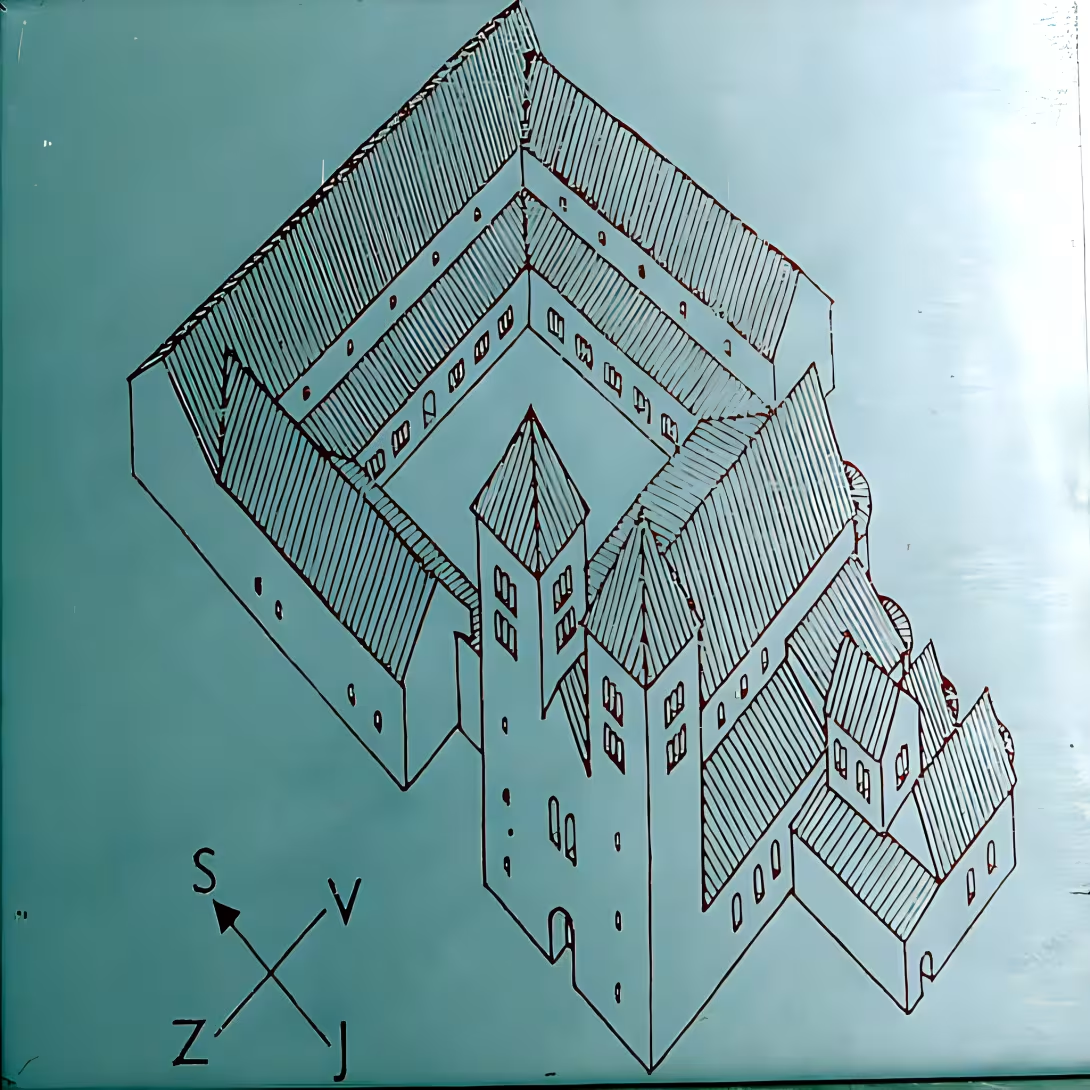
On the three-hectare island of St. Kilián in the river Vltava, one of the first Czech monasteries once stood above the place where Sazava flows into it. The monastery of St. John the Baptist (in Latin Sancti Johannis Baptistae in Insula) was founded by Prince Boleslaw II of the submissive family. Although traditional dating was introduced around 999, it came to mind mainly due to the historical fake from the beginning of the 14th century, which contains a summary of island history and the alleged privilege of Přemysl Otakar I from 1205. It is only through this we know that the founder of his premonition of death wanted a new convention to be established, and that the realization took place under the leadership of Lambert, a monk from the Bavarian monastery Niederaltaich. Lambert was served by Bishop Thiddage of Prague and brought with him a group of monks who had kept close contact with their German home monastery for centuries.
The choice of location was not random. The island with high shores surrounded by dense forests provided an ideal place to fulfill the ideals of St. Benedict's religion - hermit's livelihood, undisturbed contextuation and celebration of God, sought by monks of the Benedict Order. The monastery also had economic support in the form of six villages and the rights of fishermen in the three other villages with which it was equipped by the founder.
Originally, the wooden monastery followed a classic Benedict building scheme, in which the conventional church formed an axis of the Greek house and after one of its sides spread out a clause. Archaeological research revealed a system of stake pits and negative prints of remains of wooden structures with a layer of charred wood. Remarkable, this look of the "wooden" Island probably didn't change until the 1930s. The monastery for a long time remained a cultural link between the Czech and German Benedict traditions - in the lists of monks from the 13th century there was about half of the congregation of Czech origin and half of the German.
But profound social change and repeated pillaging meant the end of monastic life. The last monks of the monastery left in 1517 for St. John under Skala. From the former administrator of the soul and the economy, there is now only an archaeological find - the foundations of buildings lost in the fog of Czech beginnings.
Then and now
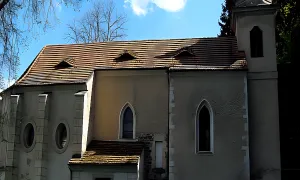
Drag the slider to compare how the landmark may have looked when it was built with the view today.
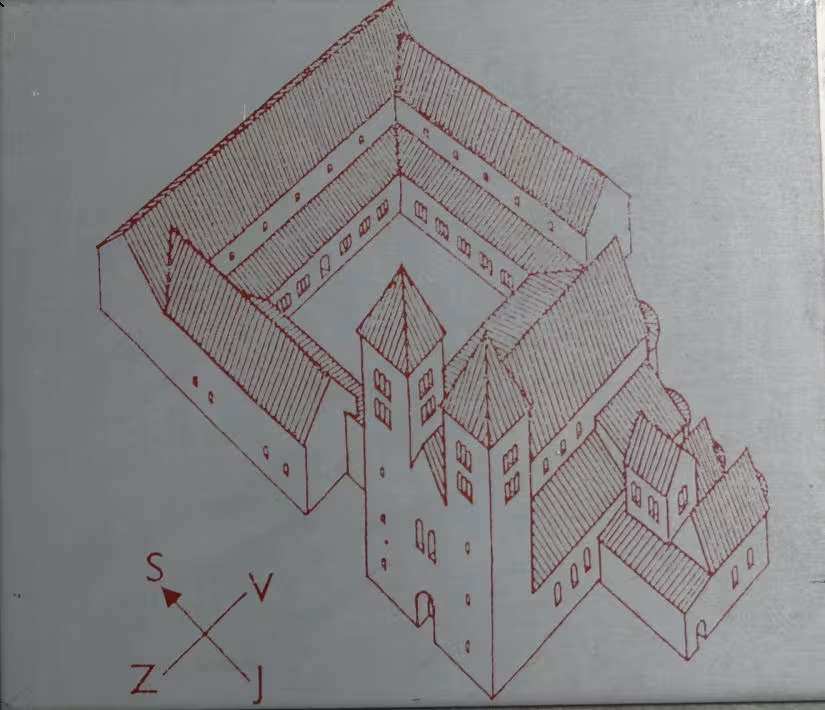
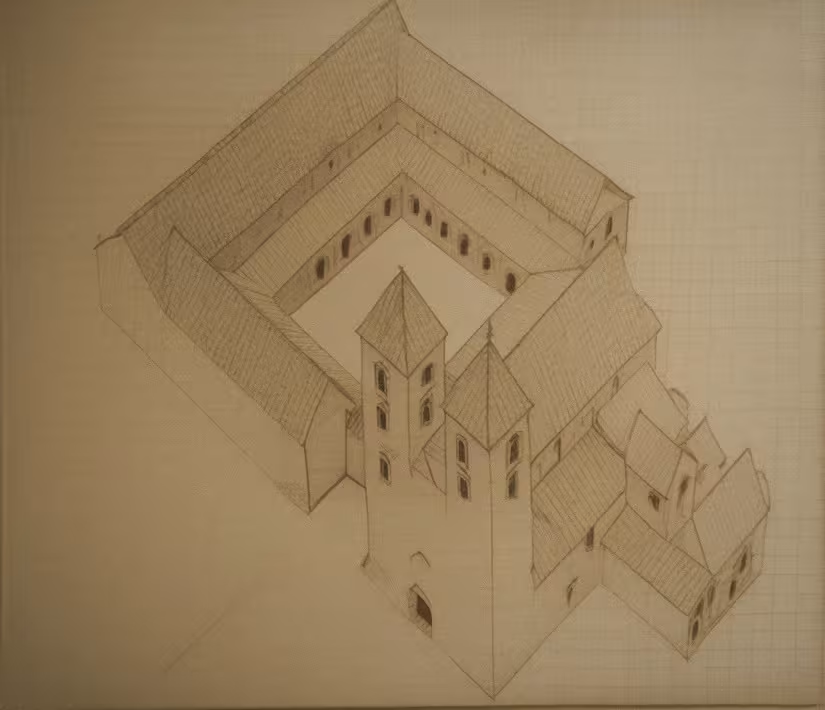
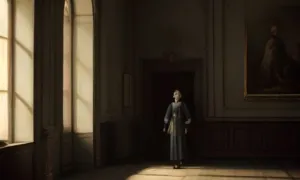
The historical appearance on the left is an AI-generated visualisation and serves as inspiration only.
Historical milestones
- 999
- The establishment of the monastery by Byslav II and the arrival of the monk Lambert of Niederaltaich as the first abbot.
- 1205
- The creation of the forgery of the Charter of Otakar I, which summarises the history of the monastery but is not the original document.
- 1517
- The last monks left the monastery and moved to St. John under Skala.
Architectural development
The original monastery was probably wooden, as confirmed by archaeological findings of stake pits and charred wood. Later it was replaced by Romanesque and Gothic stone structures, from which only the foundations were preserved. Archaeology revealed a classic Benedict arrangement with a conventional church and clausuric part.
Historical events
- 999
- The founding of the monastery by Prince Byslav II with the Benedict monks of the Bavarian monastery Niederaltaich.
- 1517
- The ultimate abandonment of the monastery of the monks and its gradual demise.
Owners
prince Boleslav II. of the Přemyslivov family
benedict order
Points of interest
- The monastery of St. John the Baptist was founded by Prince Boleslav II. of the House of Přemyslivov, on an island in the river Vltava, where Sazava flows.
- According to the forgery of the early 14th century, the founder wanted to establish a new convention before his death, which was implemented under the leadership of Lambert, a monk from the Bavarian monastery Niederaltaich.
- The monastery was originally wooden and its appearance probably didn't change until the 1930s, as confirmed by archaeological research.
- Monks of the monastery were connected to the German Benedict tradition - in the 13th century, the congregation consisted of about half of Czechs and half of Germans.
- The last monks left the monastery in 1517 to St. John under Skala.
Guide
This guide is narrated by a synthetic voice generated by artificial intelligence.
Show guide text
This text was created by artificial intelligence and has not been editorially reviewed. It may contain inaccuracies.
The Monastery of Saint John the Baptist on Ostrov near Davle is among the oldest male monasteries in Bohemia. It was founded by Prince Boleslav the Second of the Přemyslid dynasty together with monks of the Benedictine order, probably in the year 999. It stood on a Vltava island of Saint Kilian above the confluence of the Sázava and Vltava rivers. Today only its foundations remain.
The island measures approximately three hectares. It was chosen because, unlike other locations, it had high banks and was surrounded by dense forests. Benedictines traditionally sought deserted places for prayer and undisturbed concentration. The prince perhaps simultaneously wanted to support the settlement of forests, which prevented the connection between central and southern Bohemia. Around the confluence of both rivers, there is also a hypothetical border laid between Slavník's rule and the Přemyslid Bohemia.
The founding charter has not been preserved. We only know of a forgery from the beginning of the fourteenth century, an alleged privilege of Přemysl Otakar the First dated January seventeenth, twelve hundred and five. According to it, the founding took place during the lifetime of Boleslav the Second, who died on February seventh, nine hundred and ninety-nine. The convent itself probably came into being only a year later.
Lambert became the superior, a monk from the Bavarian monastery in Niederaltaich and a student of its abbot Saint Gothard, later bishop in Hildesheim. He came with an entire group of monks. Niederaltaich supported the Gorze reform, which emphasized respect for princely power. The choice also attests to the dependence of the Czech church on Otto the Third. The Prague bishop Thiddag ordained Lambert in the presence of Boleslav the Third. The monastery received six villages and fishermen from three others. From the charter it follows that nothing stood on the island at that time.
The island monks maintained very long contact with their mother monastery. In the thirteenth century, judging by names, approximately half of them were of Czech origin and half of German origin. At the turn of the fourteenth and fifteenth centuries, Czechs already predominated.
The original monastery was most probably wooden. Archaeologists found post holes, impressions of wooden structures, and a layer of charred wood in the places of the later Romanesque church. North of it stood wooden structures, partly perhaps semi-sunken dwellings. Even then, the layout apparently corresponded to the Benedictine schema with the church as the axis and the cloister beside it. The wooden appearance of Ostrov probably did not change until the nineteen-thirties of the twelfth century.
After repeated plundering, the last monks departed in the year fifteen hundred and seventeen to Svatý Jan pod Skalou.
Tips for visitors
Best time to visit the ruins of the island monastery is in spring or autumn. At these times the weather is pleasant, nature around the monastery blooms or turns into autumn shades, creating a picturesque background for photographs. Winter moons may be interesting for the romantic atmosphere, but it is necessary to count on possible weather adversaries. The place is often visited in summer, so avoid hot noon hours.
Parking is possible near the monastery, a specific place is usually marked. Transportation by car is the easiest option because the monastery is located in a remote environment. If you arrive by public transport, it is recommended to check the connection to the village Davle, from where the monastery is only one kilometre away. Local bus connections or trains will bring you to the vicinity, but the exact connection should be checked before the journey.
When visiting a monastery, wear a comfortable shoe because the terrain can be uneven and stone pavements are often covered with moss. It is also convenient to take with you enough water, because it is not always easy to access drinking water in the surroundings. If you are planning to photograph, don't forget your sunglasses and hat, because the sun can be very strong in open places.
The best places for photography are around the natural confluence of the rivers Sazava and Vltava, where the monastery originally stood. The ideal light is morning or evening, when the sun creates soft shadows and illuminates ruins from a pleasant angle. The remains of the church and the monastery court, which offer a good composition for photographs, are particularly interesting.
The Church of St. Peter and Paul in the village of Davle, located just one kilometer from the monastery, is worth visiting around the monastery. This 14th century church is another historical monument worth seeing. It is interesting for families with children to explore the natural confluence of rivers where children can play and observe nature. In the surroundings it is also possible to find small trails for short walks.
For families with children, visiting the Ostrov monastery is interesting due to its historical importance and picturesque location. Children can imagine living in a monastery and what the environment looked like centuries ago. In the surroundings you can find places for short picnics or walks that are suitable for children. It is also recommended to take action with you such as painting needs or simple games to help children better understand the history of the place.
Frequently asked questions
Is Klášter Ostrov open to the public?
Yes, Klášter Ostrov is open to the public. The tour of the ruins of the monastery is free.
How do I get to the place by car / public transport?
Klášter Ostrov lies near I / 12. You can park directly at the entrance or nearby. The public transport connection is not available, so we recommend to arrive by car.
How much is the entrance fee and is it paid on the spot?
Admission to the Ostrov Monastery is free of charge. Because it's the ruins of the monastery, there is no entrance or cash register.
Is the tour suitable for children and seniors?
Yes, a tour of Monastery Island is suitable for all age groups. The ruins of the monastery are accessible barrier-free, so families with children or seniors can also visit.
How long does the tour take?
The tour of Monastery Island takes approximately 30-60 minutes. Because it's a ruin, there are no restrictions or limits on the time spent on campus.
What are the opening times and booking is required?
Klášter Ostrov is available year-round. There are no opening times or booking requirements, so you can visit the premises at any time.
What's interesting in the immediate vicinity?
The confluence of the rivers Sázava and Vltava is located in the vicinity of the Monastery Ostrov. Since it is a natural location, we recommend to visit this area and look over the river.
For kids
Imagine going back to the past, a time when the country was full of legends and secrets. At that time there was one of the oldest Czech monasteries - Klášter Ostrov.
How did it look here? It was like a small village where monks lived trying to be close to God. The monastery was built on islands in the river, so it was named Island. The monks lived here in harmony with nature and sought their souls.
Businesses nearby
Do you run a restaurant, accommodation, shop, museum, rental, wellness or other visitor service near this monument? Show yourself directly to the people heading to it — this is how they will see you in the app and on the web:
Events nearby

Zdroj akcí: otevřená data měst a obcí ČR (Národní katalog otevřených dat) a kalendář akcí Národního památkového ústavu.
Nearby
- The natural confluence of rivers that surrounded the monastery and formed its remote environment.
- The neighboring village, where is also the church of St. Peter and Paul from the 14th century.
- Protected area with meadow and forest vegetation around the confluence.
Accommodation nearby
Trips and activities nearby
Guided tours, tickets and activities nearby from GetYourGuide
Affiliate link: if you buy from the partner, we may receive a commission. The price for you does not change.
Search tours and activities →Themed route
1.Klášter Ostrov Type: Historical monument Why is it worth a visit: The main destination of our route, which is located in an historic place associated with spiritual life and the ancient past of the region.
2. Soutok Sazava and Vltava Type: Natural interest Why is it worth a visit: Located right on site and offers a view of the confluence of rivers that once surrounded the monastery and created its remote environment.
3. Natural Reservations Sázavský luh Type: Protected area Why is worth a visit: Located around the confluence and offers to explore valuable meadow and forest vegetation.
4.Davle Type: Neighborhood Why is it worth a visit: It lies approximately one kilometre from the main destination and hides the historic church of St. Peter and Paul dating back to the 14th century.
Seasonal recommendations
Spring awakens the island's ruin into a new life, when the remnants of the historic walls slowly sink from the passing winter and the surrounding banks of the river green with fresh grass. The lighting is very mild thanks to the low sun and creates fine shadows on the ancient masonry, which will be especially appreciated by lovers of quiet atmosphere. Due to the awakening nature, the surrounding terrain is drenched and wet from spring rains. To visit this period, choose fixed waterproof shoes and laminated clothes to protect you from the cool wind from water. The crowds of tourists are minimal at this time, so you can enjoy the tour in complete silence, ideally in the morning when the morning herpes gives the place a mysterious character.
Summer brings lush vegetation, which partly grows the space of the former monastery and creates an impressive contrast between human history and the wild nature of the Central Bohemian region. Sun rays penetrate thick leaves of trees and create an interesting game of light and shadow on the stones. Due to the warm weather and the main tourist season here you can encounter a slightly increased movement of excursions, especially on weekends. The best time to visit is early morning or late evening, when the temperatures are most pleasant and the light is ideal for photography. Don't forget to bring with you an effective insect repellent, plenty of drinking water and light headgear, because the sun can be very intense in exposed parts of the complex.
Autumn transforms the vicinity of the Davel monastery into a colour palette of shades of yellow, red and brown, which perfectly complement the melancholy mood of the ruins. Foggy mornings and early dimming give the memory an extremely photogenic atmosphere full of calm and nostalgia. During this period, the soil is covered with a layer of fallen leaves, which may hide the dirt of the terrain. Therefore, the practical advice is to put on anti-slip and fixed shoes and put on a warm windbreaker, as the moisture from the river and the dripping weather increase the cold. It is best to plan the visit for noon hours, when the sun will, at least for a while, pierce the clouds and warm the frozen walls of the sights, with few other wealthy travelers.
Winter covers the monastery in deep silence and often also in a snow blanket, which completely transforms the character of the whole location near the confluence. The lighting is very sharp in the winter months, but daylight lasts only briefly, which requires careful timing of the trip. The atmosphere is completely raw, lonely and ideal for those who seek an escape from the pre-Christmas rush in civilization. The necessary equipment is winter clothing including hat, gloves and high-quality shoes with a deep sample because the icy terrain around the ruins can be tricky. The best time for the tour is around noon, when the outdoor temperature is the highest and visibility in nature best before the early winter twilight quickly closes.
Visualizations and artistic views


The visualisations are generated by artificial intelligence and serve as inspiration.
Photos from the area
Real photos taken near the monument

Zdroj a licence jsou uvedeny u každého snímku.
Tips from visitors
No tips yet. Be the first!
Log in and add your tip.
Sources and literature
Photos: AnonymousUnknown author / CC BY-SA 3.0, rozlišení zvýšeno umělou inteligencí — Wikimedia Commons. The author and licence also appear when you hover over the image.
Faktickým podkladem tohoto textu byl článek na Wikipedii, jehož autory jsou přispěvatelé Wikipedie. Článek je dostupný pod licencí CC BY-SA 4.0.
Location on the map





Příběhy a pověsti
Legendy, pověsti a příběhy spjaté s touto památkou
Fotografie návštěvníků
Zatím žádné fotografie. Buďte první, kdo přidá fotografii z návštěvy!
Log in a přidejte svou fotografii nebo hodnoťte.
Za ověřenou návštěvu v aplikaci získáte víc bodů — poznáme podle GPS, že jste na místě.
Reviews and comments