






kostel svatého Kiliána Church
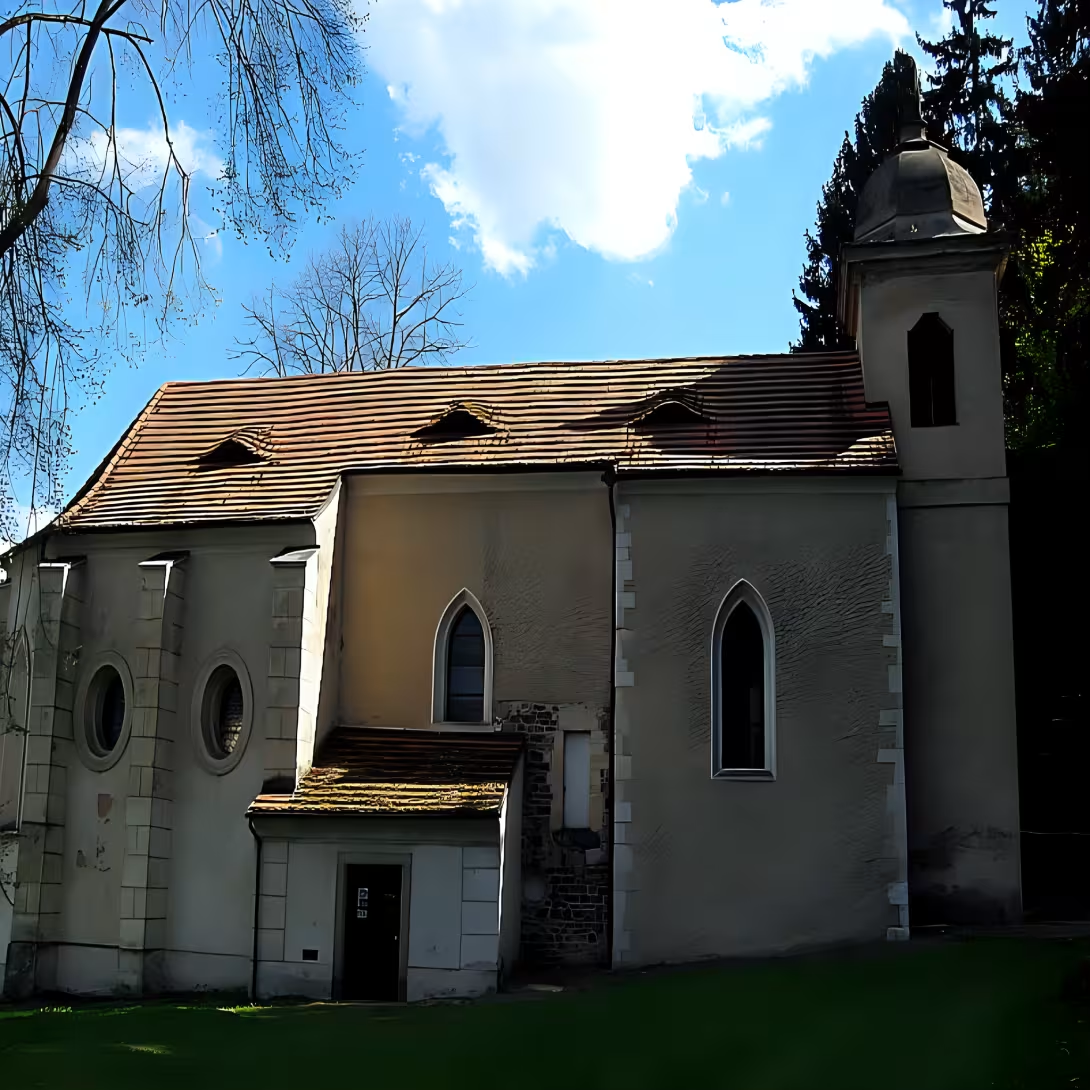
The Church of Saint Kilian in Davle is a remarkable historical monument showcasing architectural evolution from Romanesque to Baroque styles. Situated in the village of Davle within Středočeský kraj, it holds unique significance due to its dedication to Saint Kilian, an Irish missionary and martyr who became the bishop of Würzburg. Its association with the Benedictine order adds cultural depth, making it a fascinating site for both religious and historical exploration.
The church's origins date back to the mid-12th century when it was initially constructed in the Romanesque style. This period coincided with Bohemia's consolidation under the Přemyslid dynasty, during which Romanesque architecture spread across Europe. Its dedication to Saint Kilian is unique within Bohemia, reflecting its special cultural and religious significance. Over time, it underwent significant transformations, including a Gothic reconstruction at the end of the 13th century and further modifications in the second half of the 14th century.
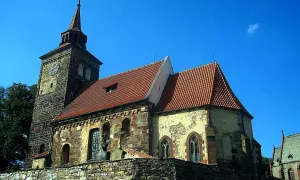
Architecturally, the Church of Saint Kilian initially presented itself as a Gothic structure until archaeological findings revealed its Romanesque foundations. The design includes a single-nave rectangular layout with a three-sided presbytery covered by a barrel vault with lunettes. A notable feature is the bell tower constructed in 1768, which stands independently and features a statue of Saint Kilian at its peak. Internally, the church showcases Baroque elements such as an altar dedicated to the Virgin Mary and Saint Kilian, dating back to around 1725, alongside altars for Saints Barbara and John Nepomuk from the mid-18th century.
Throughout its history, the Church of Saint Kilian has experienced several key events that have shaped its current form. It was first documented in a papal tithe register in 1352, indicating its long-standing religious significance. The church underwent significant Gothic reconstruction during the second half of the 14th century and faced extensive damage from a fire in 1692. It was subsequently rebuilt in 1775, incorporating Baroque elements that contribute to its present-day appearance.
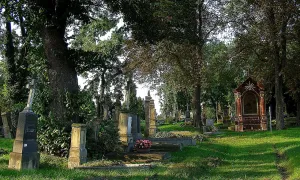
Today, the Church of Saint Kilian remains an accessible site for visitors interested in exploring its rich history and architectural beauty. The surrounding area includes additional structures such as the Chapel of the Holy Sepulchre, a bell tower, and remnants of a former cemetery enclosed by a wall. The church's associated parish house now serves as a dining facility, adding to the community-oriented atmosphere of the site.
Visiting the Church of Saint Kilian offers an opportunity to delve into a unique blend of religious history and architectural evolution. Its dedication to Saint Kilian and its connection to the Benedictine order make it a compelling destination for those interested in cultural heritage. The church's journey through time, marked by various reconstructions and restorations, underscores its resilience and enduring significance as a historical monument.
Then and now
Drag the slider to compare how the landmark may have looked when it was built with the view today.
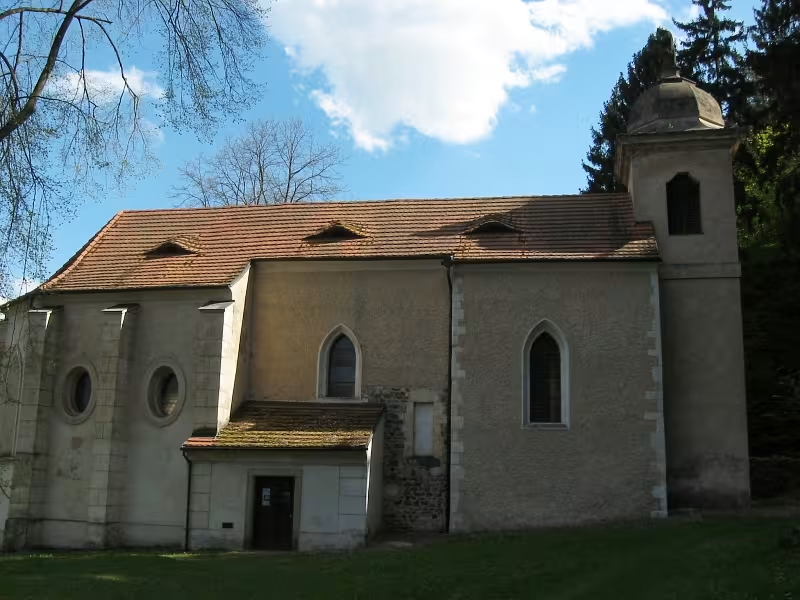

The historical appearance on the left is an AI-generated visualisation and serves as inspiration only.
Historical milestones
- kolem 1150
- Původní stavba kostela ve slohu románském.
- koncem 13. století
- Gothická rekonstrukce kostela.
- druhá polovina 14. století
- Další významné úpravy a změny.
- 1352
- První dokumentace kostela ve papálním deskařském rejstříku.
- 1692
- Značné poškození ohněm.
- 1768
- Postavení nezávislého věže s sochou svatého Kiliána.
Architectural development
Originally considered a Gothic structure, archaeological findings revealed Romanesque foundations dating back to the mid-12th century. The church underwent significant Gothic reconstruction at the end of the 13th century and further modifications in the second half of the 14th century. Baroque expansions gave it its current form, with notable additions like the bell tower in 1768.
Historical events
First documented in the papal tithe register in 1352.
Significant Gothic reconstruction occurred in the second half of the 14th century.
The church was extensively damaged by a fire in 1692 and rebuilt in 1775.
Points of interest
- The Church of Saint Kilian is unique within Bohemia for its dedication to Saint Kilian, an Irish missionary and martyr, highlighting a rare cultural connection between Ireland and the Czech lands.
- Despite appearing Gothic, archaeological findings revealed that the church's foundations are Romanesque, showcasing how architectural styles can be layered over time due to reconstruction efforts.
- The bell tower of the Church of Saint Kilian was constructed in 1768 and features a statue of Saint Kilian at its peak, symbolically watching over the village as a testament to his enduring legacy.
- In 1692, the church suffered extensive damage from a fire, leading to significant rebuilding that incorporated Baroque elements, which now contribute to the church's distinctive aesthetic blend.
- The Church of Saint Kilian was first documented in a papal tithe register in 1352, indicating its historical importance and long-standing role within the religious community.
Guide
This guide is narrated by a synthetic voice generated by artificial intelligence.
Show guide text
This text was created by artificial intelligence and has not been editorially reviewed. It may contain inaccuracies.
The Church of Saint Kilian in Davli is an originally medieval building, and its dedication is unique in Bohemia. Saint Kilian was an Irish-Scottish missionary. He became a bishop in Würzburg and died there a martyr's death. The Benedictines venerated him as the patron saint of their order. This is why they dedicated not only the nearby Ostrov monastery, the second oldest male monastery in Bohemia, founded around 999, but also this church to him. They built it on the adjacent left bank of the Vltava around 1160.
For a long time, the church was considered a Gothic building. It is first documented in writing in 1352 in a register of papal tithes, and a parish already existed there in 1323. However, in the eighteen-eighties, archaeologists found remains of Romanesque masonry. This pushed back the foundation of the church to the middle of the twelfth century.
The Romanesque church was severely damaged in 1278 during an invasion by the Brandenburgers into Bohemia. The neighbouring craftsmen's settlement called Sekanka suffered as well. At the end of the thirteenth century, the church was rebuilt in the early Gothic style. In the fourteenth century, a three-sided closure of the presbytery was added to it. In 1692, a fire severely damaged the church, and it was not restored until 1775. Its present appearance was given to it by extensive Baroque rebuilding. A gallery was installed in the nave in 1842. As recently as 1992, the church was struck by fire again.
The area around the church was investigated by archaeologists already in the nineteenth century. Interesting structural finds, however, were only revealed by the survey conducted by Karel Guth from the National Museum in the nineteen-thirties. In the nineteen-sixties, the Archaeological Institute of the Czechoslovak Academy of Sciences continued this work, and the research was completed twenty years later. On this basis, the entire complex was declared a cultural monument.
The church has a single nave with a rectangular layout. The presbytery is covered with a barrel vault with lunettes, the nave with an imitation barrel vault. From the west, a freestanding bell tower from 1768 adjoins the church, and on its peak stands a statue of Saint Kilian.
The interior is dominated by a Baroque main altar with an image of the Virgin Mary and Saint Kilian, dating from around 1725. On either side of it stands an altar of Saint Barbara from 1741 and an altar of Saint John of Nepomuk from 1770. A painting of Saint Benedict with a view of the Ostrov monastery dates from 1724. The oldest piece of furnishing is a Renaissance tin baptismal font from 1556.
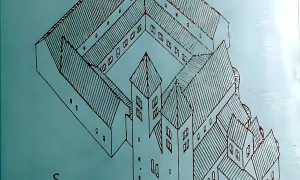
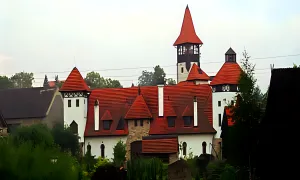
The complex also includes a Chapel of the Holy Sepulchre to the south of the church and a parsonage on the northern side. A single-classroom public school was established at the parsonage in 1778, today a restaurant is housed in the building. To the north of the parsonage stands a chapel of Saint John of Nepomuk. The entire complex, together with the land of the abolished cemetery, is surrounded by a boundary wall.
Tips for visitors
The Church of Saint Kilian in Davle is best visited during the late spring to early autumn months, ideally between April and October. During these times, the weather is typically mild, making it pleasant for walking around the church grounds and exploring its architectural details. Additionally, visiting outside peak tourist seasons can provide a more serene experience, allowing you to appreciate the church's unique blend of Romanesque and Baroque styles without large crowds.
The church's location makes it easily reachable by car or public transport, ensuring convenience for visitors.
When visiting the Church of Saint Kilian in Davle, it is recommended to bring comfortable walking shoes as you may want to explore the surrounding area on foot. Additionally, carrying a light jacket or sweater can be useful, especially if you plan to stay longer and the weather changes. A camera or smartphone for capturing photos is also suggested, particularly during golden hour when the lighting enhances the church's architectural features.
For photography enthusiasts, the best spots around the Church of Saint Kilian are those that capture its unique façade and surrounding landscape. Early morning or late afternoon light provides a warm glow that accentuates the textures and details of the building. The eastern side of the church often offers excellent lighting conditions during sunrise, while the western side is ideal for sunset shots.
One notable destination is the historic town center of Prague, which offers various family-friendly activities and educational experiences at its museums and parks. Additionally, exploring local nature trails around Davle provides an opportunity for outdoor fun and learning about the region's natural beauty.
Frequently asked questions
Can the monument be visited?
Religious buildings are usually open mainly during services; at other times a visit is normally arranged with the parish or the operator. We have not verified specific times.
Where is the monument?
Location: Davle, Středočeský kraj. The map on this page shows the exact spot.
Why is the monument protected?
It is listed in the Central List of Cultural Monuments of the Czech Republic as a cultural monument (register no. 41382/2-2222).
Businesses nearby
Do you run a restaurant, accommodation, shop, museum, rental, wellness or other visitor service near this monument? Show yourself directly to the people heading to it — this is how they will see you in the app and on the web:
Events nearby
Zdroj akcí: otevřená data měst a obcí ČR (Národní katalog otevřených dat) a kalendář akcí Národního památkového ústavu.
Accommodation nearby
Trips and activities nearby
Guided tours, tickets and activities nearby from GetYourGuide
Affiliate link: if you buy from the partner, we may receive a commission. The price for you does not change.
Search tours and activities →Themed route
Tematická výletní trasa - Kostel svatého Kiliána, Davle
1. Kostel svatého Kiliána
Typ: Historická památka
Proč stojí za návštěvu: Tento barokní kostel je nejen duchovním centrem obce, ale také architektonickým pokladem s bohatou historií. Jeho vnitřek nabízí krásné fresky a sochy, které přitahují návštěvníky z celého regionu.
2. Davle: Historické centrum
Typ: Městský procházka
Proč stojí za návštěvu: Procházka po historickém centru Davle vás dovede k ulicím plným charakteru s starobylými domy a malebnou architekturou. Je to ideální způsob, jak se seznámit s místní kulturou a historií.
3. Kostel svatého Kiliána: Vnitřek a expozice
Typ: Kulturní prohlídka
Proč stojí za návštěvu: Prozkoumejte vnitřní prostor kostela, kde můžete vidět umělecké prvky jako fresky a sochy. Expozice zde také představuje historický kontext a význam tohoto místa pro obec.
4. Nádvoří kostela svatého Kiliána
Typ: Prostor pro relaxaci
Proč stojí za návštěvu: Nádvoří poskytuje klidný prostor k odpočinku a refleksi, zatímco se užíváte pohledů na kostel a okolní přírodní krásy. Je to ideální místo pro relaxaci po prohlídce.
5. Parkové oblasti kolem Davle
Typ: Přírodní procházka
Proč stojí za návštěvu: Krásné parky a zelené plochy kolem Davle nabízejí ideální prostředí pro krátkou procházku či piknik. Jsou to místa, kde můžete uvolnit ducha a užít si přírodního okolí.
Tato trasa vás provede skrze historii a přírodu Davle, nabízející kombinaci kulturních i relaxačních aktivit.
Seasonal recommendations
Spring: The spring season at the Church of St. Kilian in Davle is marked by a gentle awakening of nature, with blooming flowers and lush greenery surrounding the historic site. This time offers soft natural lighting that beautifully enhances the church's architectural details. Visitors can enjoy the tranquil atmosphere as the area is not yet crowded with tourists, making it an ideal period for photography enthusiasts to capture the interplay between light and shadow on the church’s façade. It's advisable to wear comfortable walking shoes due to occasional rain showers, which also contribute to the vibrant greenery, enhancing the site's natural beauty.
Summer: During summer, the Church of St. Kilian is bathed in warm sunlight, casting a golden glow that accentuates its historic charm. This season attracts more visitors, especially during the peak tourist months, so arriving early can help avoid larger crowds and ensure a more peaceful experience. The surrounding landscape is lush and verdant, providing a picturesque backdrop for exploring the church grounds. Lightweight clothing is recommended to stay comfortable in the warm weather, along with sun protection such as hats or sunglasses.
Autumn: Autumn at the Church of St. Kilian offers a stunning display of fall foliage, with vibrant colors creating a breathtaking contrast against the historic architecture. The cooler temperatures and shorter days provide a cozy atmosphere, perfect for leisurely exploration without the summer crowds. This is an excellent time to appreciate the church’s details as the softer light highlights its features beautifully. Layered clothing is advisable due to fluctuating temperatures, and carrying a light jacket can ensure comfort during your visit.
Winter: The winter season transforms the Church of St. Kilian into a serene and almost mystical site, with snow often blanketing the surrounding landscape, creating a picturesque setting that enhances the church's historical allure. Wearing warm clothing is essential to enjoy your visit comfortably, and planning for shorter daylight hours will help maximize your experience in this enchanting winter atmosphere.
Visualizations and artistic views


The visualisations are generated by artificial intelligence and serve as inspiration.
Photos from the area
Real photos taken near the monument


Zdroj a licence jsou uvedeny u každého snímku.
Atmosphere of the place
This atmospheric visualisation of the place and period was generated by artificial intelligence. It is not real footage of the location.
Tips from visitors
No tips yet. Be the first!
Log in and add your tip.
Sources and literature
Photos: Sovicka169 / CC BY-SA 3.0, rozlišení zvýšeno umělou inteligencí — Wikimedia Commons. The author and licence also appear when you hover over the image.
Faktickým podkladem tohoto textu byl článek na Wikipedii, jehož autory jsou přispěvatelé Wikipedie. Článek je dostupný pod licencí CC BY-SA 4.0.
Location on the map
Příběhy a pověsti
Legendy, pověsti a příběhy spjaté s touto památkou
Fotografie návštěvníků
Zatím žádné fotografie. Buďte první, kdo přidá fotografii z návštěvy!
Log in a přidejte svou fotografii nebo hodnoťte.
Za ověřenou návštěvu v aplikaci získáte víc bodů — poznáme podle GPS, že jste na místě.
Reviews and comments