



Klášter svatého Gabriela v Praze Building complex
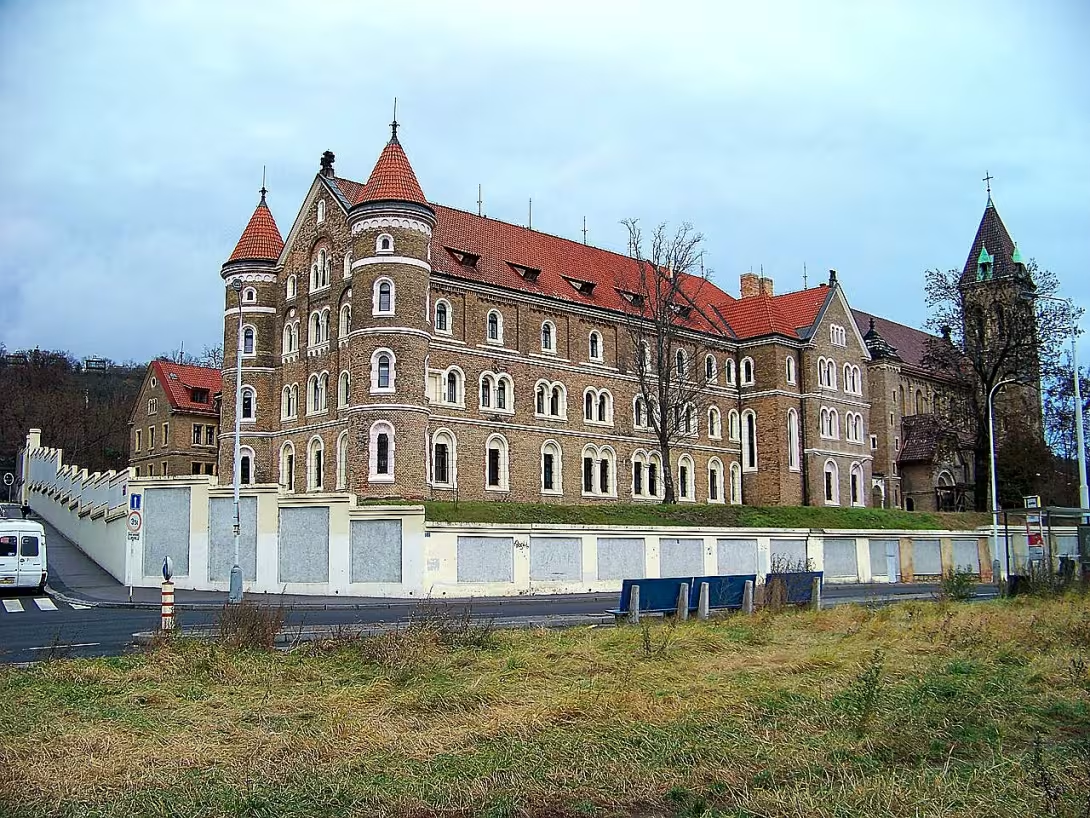
St. Gabriel's monastery is an important historical area on Prague's Smíchov. It was built between 1888 and 1891 for the benedictines of the Beuron congregation. Part of the complex is the conventional church Annunciation of the Virgin Mary. This building is considered the most valuable beuron monument in Prague and has been registered as a cultural monument since 1964.
The foundation of the monastery was initiated by Countess Gabriela Swéerts-Sporcková. It provided funding for the establishment of a institute for the upbringing of girls from noble and wealthy families. The Countess did not see the completion of the building, so in her honor the monastery was dedicated to Archangel Gabriel. The project was developed by Benedict monks Hildebrand de Hemptinne and Ghislain Béthune. In 1891 the Prague Archbishop František Schönborn consecrated the complex and the spiritual administration took over the benedictini from the Emmazi monastery.
The architectural object belongs to the Beuron style. It connects the historical elements with the influences of ancient Greek, Egyptian, ancient Christian and Byzantine art. The interior decoration by the founder of the Beuron Art School Petr Desiderius Lenz forms an integral part of the architectural concept. This style is also represented in the monastery Sacre Coeur, Emauza or St. Karl Boromejský in Řepice in Prague, but St. Gabriel's monastery stands out for its artistic value.
The monastery served its original purpose only until 1919. At that time, German benedictines abandoned it as a result of social moods. The area was subsequently purchased by the Czechoslovak State, represented by the Ministry of Posts and Telegrams, subject to the preservation of the church for worship. During the 20th century, the premises were used by postal organisations, including the Postal Museum, the Postal Savings Bank and the Computer and Control exchange offices (VAKUS), which processed payment packages here.
After 2010, the site gradually lost its use. In 2019 Czech Post sold it to the real estate company Cimex Invest. The new owner plans to reconstruct the building at a five-star hotel with 180 rooms. It declares its intention to preserve the status of a cultural monument and respect monument protection. The Church of the Annunciation of the Virgin Mary remains the family church of the Smichov parish and continues to serve liturgical purposes.
The object has appeared in a series of film and television productions in recent years. These include the Specialists, Falcon and Winter Soldier series or pictures on the Western Front of Peace and Release 2.
St. Gabriel's monastery presents a unique proof of Beuron's art and transformations of the use of church buildings in modern history. Visiting this place offers an opportunity to learn the specific aesthetics of the late 19th century and to see how historical architecture copes with the demands of contemporary commercial use.
Then and now
Drag the slider to compare how the landmark may have looked when it was built with the view today.
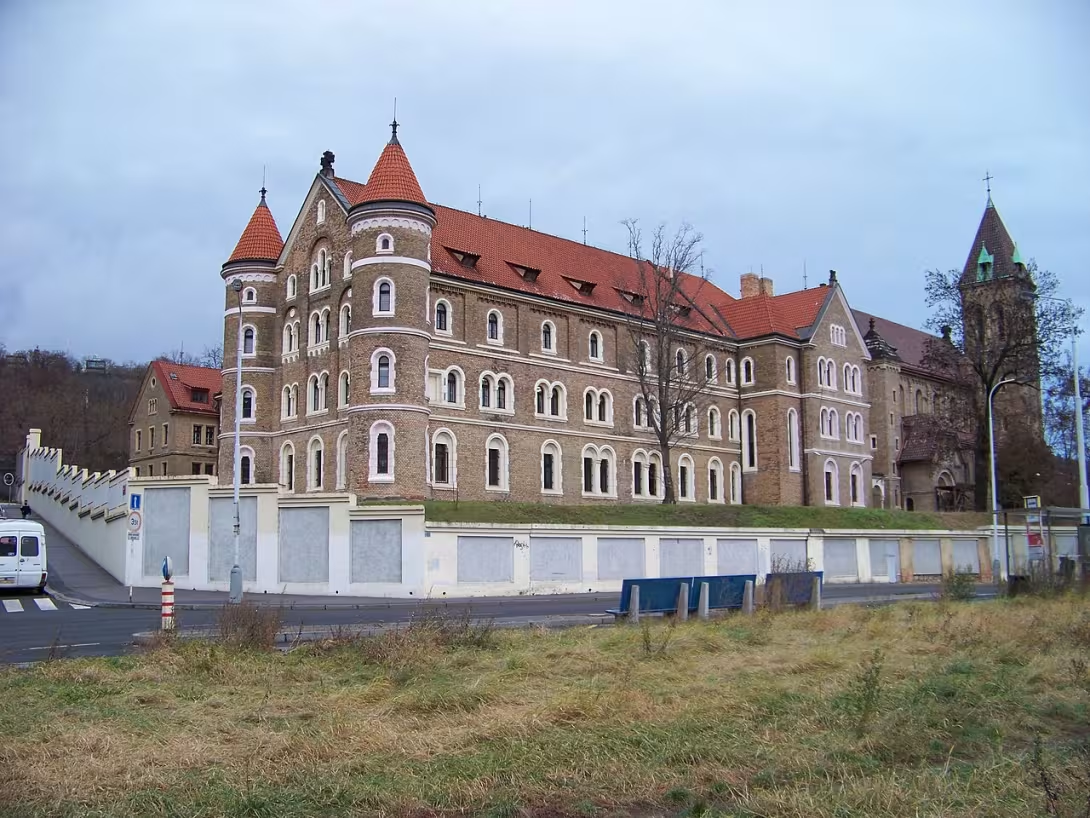

The historical appearance on the left is an AI-generated visualisation and serves as inspiration only.
Historical milestones
- 1888
- Construction of the monastery area.
- 1891
- Completion of the building and consecration of the monastery.
- 1919
- Departure of benedicts and takeover of the premises by the Czechoslovak State.
- 1964
- Writing the monastery and church to the list of cultural monuments.
Architectural development
The object was built in Beuron style, which is characterized by a specific connection of historical elements with the effects of ancient art. The complex consists of a closed complex with a conventional church, the decoration of which is an integral part of the architectural concept. During the 20th century, the interior was adapted for the needs of postal offices and depositories.
Historical events
1891: The consecration of the monastery by the Archbishop of Prague. 1919: Departure and sale of the premises of the state. 1932: Opening the exhibition of the Postal Museum in the premises of the monastery.
Owners
Countess Gabriela Swéerts-Sporcková (founder), family Löwenstein-Wertheim-Rosenberg (until 1919), Czechoslovak State (post office) (1919-2016).
Points of interest
- The monastery was built between 1888 and 1891 for the benedictines of the Beuron congregation. Since 1964 it has been registered as a cultural monument. - Countess Gabriela Swéerts-Sporcková provided funding for the establishment of a institution for the upbringing of girls from noble and wealthy families. The monastery was dedicated to Archangel Gabriel in her honor because she didn't live to complete the building. - Architectural style combines historical elements with influences of ancient Greek, Egyptian, ancient Christian and Byzantine art. The interior decoration was created by the founder of Beuron Art School Petr Desiderius Lenz. - During the twentieth century, the premises were used by postal organizations such as the Postal Museum or the Postal Savings Bank. The building also processed payment slips. - The object appeared in a series of film and television productions, which include serials or images such as on the Western Front calm or Release two.
Guide
Show guide text
This text was created by artificial intelligence and has not been editorially reviewed. It may contain inaccuracies.
Welcome to Prague's Smíchov district. Right now, standing in front of this vast and quiet space, I believe you feel the special weight of the time and peace that radiates this place. The monastery of St. Gabriel stands before your eyes. It is a place that stands out in Prague with its balance and unique form. Please feel this atmosphere surrounding you. It is not just an ordinary set of buildings, but a place that was created with great intent and deep faith.
To understand why this place looks what it looks like, we must return together to the end of the nineteenth century. Imagine the period around 1888. At that time history began to take place here, which, without one strong personality, would probably not have occurred. The main character behind all this was Countess Gabriela Swéerts-Sporcková. This woman had a great idea and did not hesitate to invest her money in something that was meant to be of long-term importance to society. Her intention was clear and noble: she wanted to create a educational institution, a place where girls from nobility and also from very rich families could get education and education.
This project began in 1888 and lasted several years. The entire complex was exhibited for the benedictines of the Beuron congregation. It was a period of intense work and building. It was these years, between 1888 and 1891, that the plan became reality. In 1891 the building was completed and the whole monastery was ceremonially consecrated. This fulfilled the wish of the Countess and created a place to serve not only as a home for monks, but also as an educational centre.
Now pay attention to what you're seeing around you. Even if you move in an urban environment, this complex acts as a separate world. This complex is architecturally absolutely exceptional. His creators were two men whose names you remember, don't be afraid to look them up later: Hildebrand de Hemptinne and Ghislain Béthune. It is their work that gives this place its unique character. If you look at the buildings now, notice their context and how they form one whole. The heart of this whole place is the conventional Church of the Annunciation of the Virgin Mary. This church and the whole monastery ensemble are considered the most valuable monument of this type throughout Prague. Even if you don't have to focus on every detail, feel the harmony that forms the individual parts of the complex. It is a work designed to carry spiritual peace and order.
Behind every wall and every stone there are human stories. In addition to Countess Gabrielle, who was the architect of the whole project, there are other names associated with this place. We can mention names like Petr Desiderius Lenz or František Schönborn. These people were part of the wider gearing that shaped this place. However, the history of the monastery was not only about its origin, but also about its changes. In times of great social change, namely in 1919, there was a major turnover. Benediktines left this place and the premises were subsequently taken over by the Czechoslovak state. This meant that the place created for religious and educational purposes began to serve other needs of the state, but its spiritual and historical value remained.
Did you know this place has a deep connection to celestial beings? The whole monastery was dedicated to the archangel Gabriel. That's why he carries that name. It's like a silent legacy hanging around in every corner of the compound. This connection between human effort and the spiritual world is precisely what makes this monastery so fascinating.
Another important event in the history of this place is 1964. In this year the monastery and its church were officially listed on the list of cultural monuments. That was recognition of his immense value. This happened because, despite all the political and social upheavals that took place in our region, this place remained a symbol of quality, beauty and history that we must protect for future generations.
You are standing in front of a place that has survived a century that has changed and that, despite its transformation, still retains its dignity. It is a place where noble faith, artistic talent of architects and the need to educate young women meet.
Now that you know the basic story of this monastery, I suggest you continue your search. Walk around, feel the silence, and try to find the details you missed before. Every corner of this complex has its own history, which you can explore with your own eyes. Thank you for spending this moment with us and for being interested in the history of this special place in Prague. We wish you a pleasant next trip to Smíchov.
Tips for visitors
For a quiet tour of the premises I recommend to choose the morning hours of the everyday day, where there is less excitement around Smíchova and light better depicts details of Beuron art decoration. Take comfortable shoes to move around the historical areas and the camera, with the best pictures taken in the areas with daylight, which highlight unique paintings. Within 30 minutes, you can visit the Kinsky garden, Sacre Coeur monastery, Emauscan monastery or go to the top of Petřín. I recommend families with children to join a visit with a walk in the adjacent Kinsky garden, where there is enough room for movement and rest in the green.
Frequently asked questions
Can the monument be visited?
Some buildings of this kind are open for guided tours, others serve another purpose or are privately owned. We have not verified whether and when this monument is open – please ask the operator.
What are the opening hours and admission?
We have not verified the opening hours or admission. Current information is published by the operator.
Where is the monument?
Location: Smíchov. The map on this page shows the exact spot.
Why is the monument protected?
It is listed in the Central List of Cultural Monuments of the Czech Republic as a cultural monument (register no. 1000152387).
Businesses nearby
Do you run a restaurant, accommodation, shop, museum, rental, wellness or other visitor service near this monument? Show yourself directly to the people heading to it — this is how they will see you in the app and on the web:
Events nearby

Zdroj akcí: otevřená data měst a obcí ČR (Národní katalog otevřených dat) a kalendář akcí Národního památkového ústavu.
Nearby
Zahrada Kinských, klášter Sacre Coeur, Emauzský klášter, Petřín.
Accommodation nearby
Trips and activities nearby
Guided tours, tickets and activities nearby from GetYourGuide
Affiliate link: if you buy from the partner, we may receive a commission. The price for you does not change.
Search tours and activities →Themed route
Kinsky Garden - a public garden, historical statues and shady alleys provide a pleasant introduction to the walks; about 5 min walk to the next point.
The monastery Sacré Processing - religious complex with Art Nouveau architecture, offers views of the Vltava and a quiet environment for a short stop; distance about 7 min from the Kinsky Garden.
Emauscan monastery - Baroque monastery with well preserved fresco and quiet inner court, suitable for reflection and rest; about 6 min walk from Sacré Processing.
St. Gabriel's Monastery - the main destination, gotico, the Renaissance building with a rich library and trade exhibition, the centre of spiritual life Smíchova; only 4 minutes walk from the Emausian monastery.
Petrin - green hill with a lookout, after visiting the monastery offers panoramic views of the city and the possibility of relaxing in nature; approximately 10 min walking on narrow paths along the Vltava.
Seasonal recommendations
In the spring, the monastery wakes up together with nature around Smíchova. The sun shines gently and the colors of the plants nearby are fresh and alive. It's the perfect time for quiet contemplation. I recommend you take several layers of clothing because the morning air can still be cold. The best is to come in the morning when the atmosphere is quietest.
In the summer months there is a strong and bright light, which beautifully highlights the details of the historical building. The atmosphere is more lively thanks to warmer days. Due to the increased number of people in Prague, it is recommended to arrive as early as possible in the morning to enjoy the quiet before the main summer season. Dress lightly and don't forget to drink, because in the heat can be a feeling of difficulty in enclosed areas.
Autumn brings melancholy to the monasteries and beautiful golden shades in surrounding vegetation. The morning mist gives the place mystery and peace. It's the best time to observe the details through the soft light of the afternoon. Prepare your coat and comfortable shoes because it can be wet and cold.
Zimą is in the monastery deep silence and a sense of isolation from the busy city. The light is weak and the days are short, which creates a noble and serious mood. He's very calm here in advent time. It is necessary to take very warm clothes and plan a visit around noon to make enough light. Watch out for shorter opening times, which are common in this period.
Visualizations and artistic views


The visualisations are generated by artificial intelligence and serve as inspiration.
Photos from the area
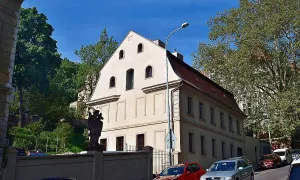
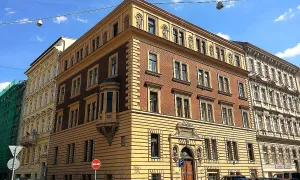
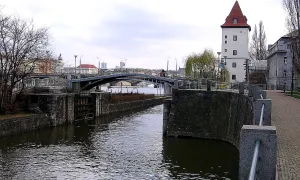
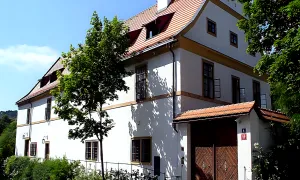
Real photos taken near the monument

Zdroj a licence jsou uvedeny u každého snímku.
Tips from visitors
No tips yet. Be the first!
Log in and add your tip.
Sources and literature
Photos: ŠJů (cs:ŠJů) / CC BY-SA 3.0 — Wikimedia Commons. The author and licence also appear when you hover over the image.
Faktickým podkladem tohoto textu byl článek na Wikipedii, jehož autory jsou přispěvatelé Wikipedie. Článek je dostupný pod licencí CC BY-SA 4.0.
Location on the map
Příběhy a pověsti
Legendy, pověsti a příběhy spjaté s touto památkou
Fotografie návštěvníků
Zatím žádné fotografie. Buďte první, kdo přidá fotografii z návštěvy!
Log in a přidejte svou fotografii nebo hodnoťte.
Za ověřenou návštěvu v aplikaci získáte víc bodů — poznáme podle GPS, že jste na místě.
Reviews and comments