



Klausová synagoga Museum building
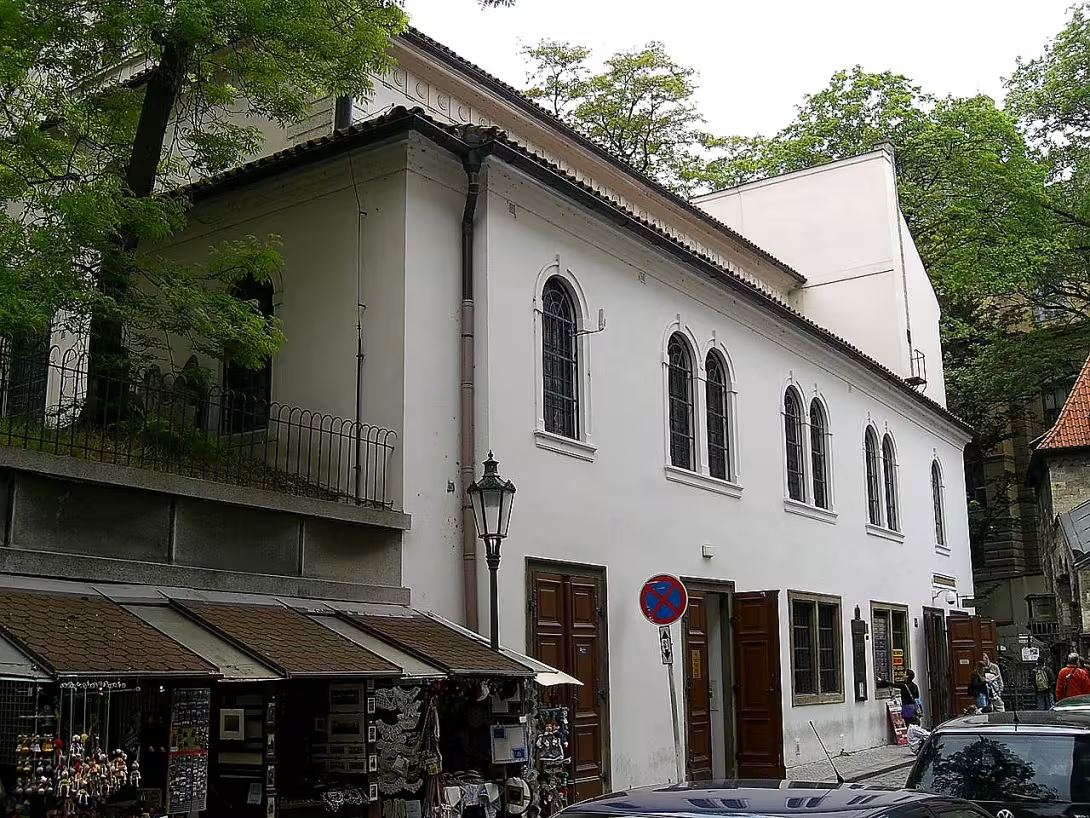
Klaus' synagogue in Prague 1 is the largest synagogue in the area of the former Prague ghetto and the only preserved example of the early Baroque style. The building is managed by the Jewish Museum in Prague.
On the site of the current construction Mordechaj Maisel in the 1970s had a complex of two synagogues and a private Talmudic school where he taught Rabbi Jehuda Leva ben Becalel. The name of the building refers to the word Klaus, which means a small building in Yiddish and German, and is based on the Latin claustrus. The original objects were destroyed by a big ghetto fire in 1689. Then between 1689 and 1694, Šelomo Chališ Kohen built a new synagogue in the early Baroque style. In 1692, at Samuel Oppenheim's expense, a monumental three-stage hiding place on the Torah was added. In the past, there were important rabbis, such as Eleazar Fleckeles.
The architecture of the synagogue is early Baroque. In 1883- 1884 it was restored and modified by architect Bedřich Münzberger, who added elements of Art Nouveau to the interior. The synagogue is unique because it was the only one in this area that survived the rendering of the Prague ghetto, unlike Gypsies, Velkodvor and New Synagogue.
During World War II it served as a warehouse and as an exposition of the Jewish Central Museum. After the war, visitors could become acquainted with Jewish holidays and customs. The building underwent several repairs, namely in 1960, 1979- 1981 and 1983. Between 1995 and 1996, another renewal took place, after which the exhibition focused on Jewish traditions and rituals returned to the premises.
The synagogue is currently part of the exhibitions of the Jewish Museum in Prague. Visitors can become acquainted with the formalities of worship, Jewish holidays and basic texts of Judaism such as the Torah and Talmud, including tools and ornaments used in the treatment of the Torah. The exhibition also represents the everyday life of the Jewish family from birth and circumcision through transition to adulthood and marriage to the end of human life. The last part is dedicated to the funeral fraternity in the next ceremonial hall.
Klaus' synagogue is a rare testament to history that has survived the fundamental changes of the Prague ghetto. Her visit offers a deep insight into the traditions and continuity of Jewish life.
Then and now
Drag the slider to compare how the landmark may have looked when it was built with the view today.
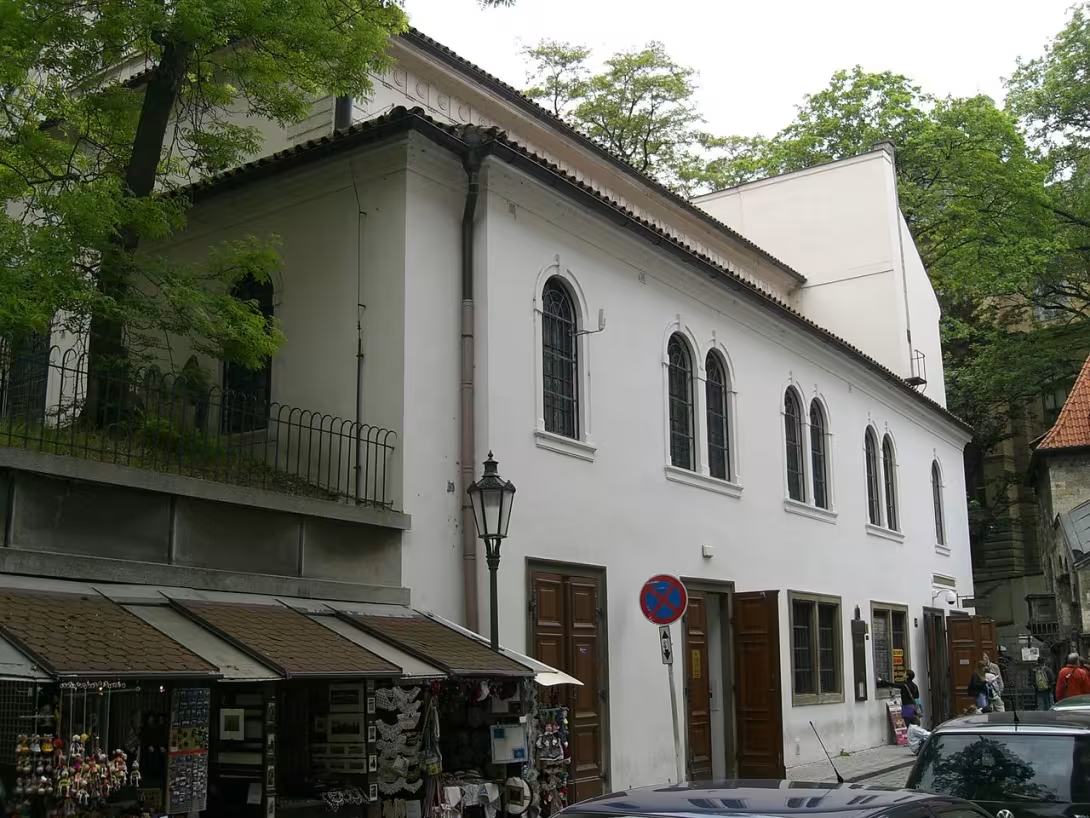
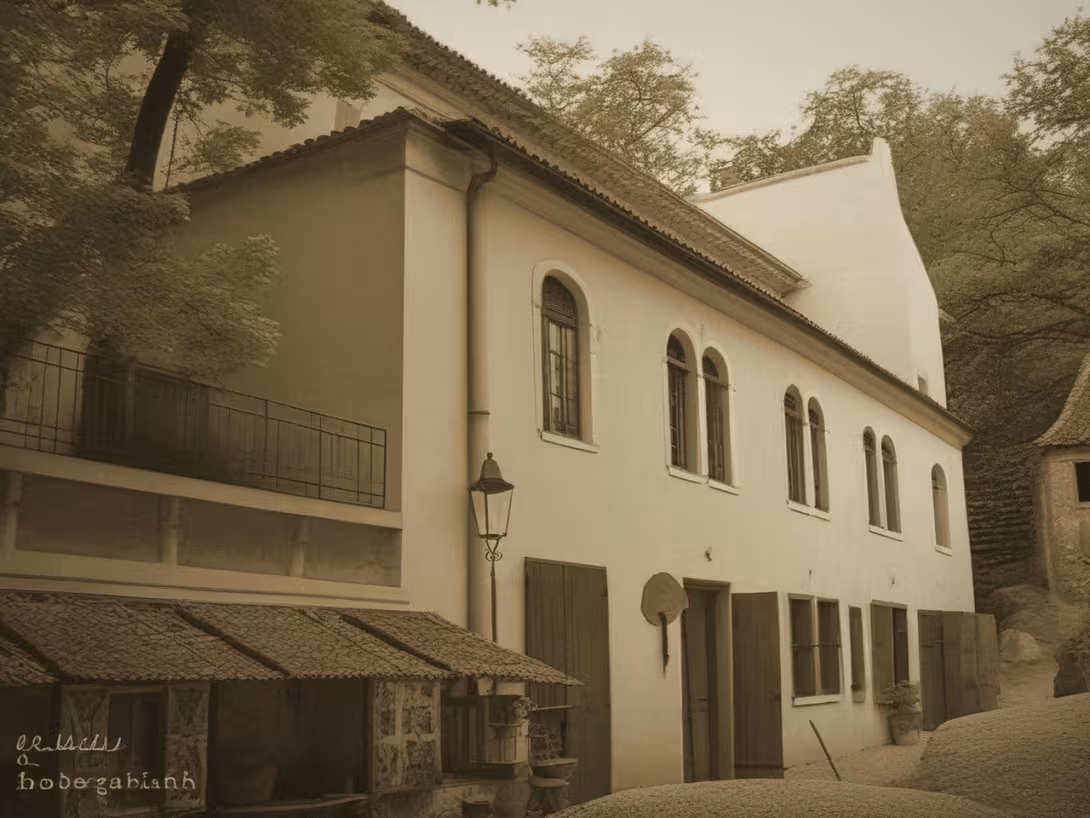
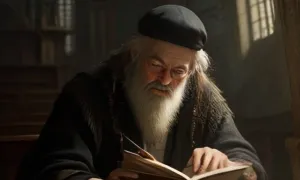
The historical appearance on the left is an AI-generated visualisation and serves as inspiration only.
Historical milestones
- 1692
- Complement the synagogue with a monumental box on the Torah.
- 1960
- First repair of the building.
- 1996
- Last renewal and reconstruction.
Architectural development
Klausová synagoga was built in Baroque style after the destruction of original buildings by fire. In 1883-1884 it was restored by architect Bedřich Münzberger, who also added elements of Art Nouveau.
Historical events
- 1689
- The fire destroyed the original synagogues.
- 1694
- Finishing a new synagogue in Baroque style.
- 1883
- Restoration and modification by architect Bedřich Münzberger.
Points of interest
- It is the largest synagogue in the area of the former Prague ghetto and the only preserved example of the early Baroque style. - The name of the building refers to the word Klaus, which in Yiddish and German means small construction. - In 1692, at the expense of Samuel Oppenheim, a monumental three-stage hiding place on the Torah was added. - Architect Bedřich Münzberger added elements of the Art Nouveau to the interior during reconstruction in 1883-1884. As the only synagogue in this area, she survived the rendering of the Prague ghetto.
Guide
Show guide text
This text was created by artificial intelligence and has not been editorially reviewed. It may contain inaccuracies.
Welcome to the heart of historical Prague, where the echoes of the past mingle with the heart of the present city. You are standing in front of one of the most important and most important buildings in the whole area of the former Prague gett. In front of your eyes is Klaus' synagogue. Before you go any further, stop for a moment, perceive the atmosphere of this place and let yourself feel that you are touching living history right now. This building is not just a wall and a roof, it is a silent witness to the incredible resilience, faith and constant effort to recover that has been going on over the centuries.
In order to really understand what you're seeing right now, we need to go back deep into the past, to a time when this place looked completely different. In order to understand the importance of this construction, we must realize that it was not built in an empty place. Before this, there were other prayer houses, but they were completely destroyed by the devastating fire. This tragedy has been a huge blow to the local community, but it has also become an impulse to something new. Between 1689 and 1694, a new, monumental building began to be built here to replace what consumed the fire. This reconstruction was not just a construction task, it was an attempt to re-recognise and restore spiritual life in the heart of the Jewish quarter. When it was created, important creators of their time were involved, such as Šelomo Chališ Kohen and Bedřich Münzberger. It was their work that allowed this synagogue to arise at such an important time and in such an important place as this Prague getto.
Now pay attention to the very form of the building that you are currently watching. If you look at its overall structure and its presence in this space, you realize its uniqueness. Klaus' synagogue is not just an ordinary building; It is the largest preserved synagogue in the entire area of the former Prague gett. Its architecture bears a unique character that you will not find anywhere else in this area. This is the only preserved example of early Baroque style in this part of town. Feel the dignity and the specific energy that this style brings. Early Baroque, as you can see here, brings to the space some weight and monumentality, which in contrast to the narrow streets around it creates an absolutely unique experience. It's a style that talks about rising and trying to express size through architecture.
The history of this place is also inseparably linked to the people who left their trail. This building was built not only of stone and wood, but also thanks to people who had influence and power to change the world around them. We can remember important personalities like Mordechaj Maisel, Eleazar Fleckeles or Samuel Oppenheimer. These people were not just names in historical books, but they were real pillars of the community who helped to keep the tradition and identity of this place alive through their actions. One of the most significant examples of their influence and commitment is 1692. It was this year that the synagogue was supplemented by something quite extraordinary and rare - a monumental, three-stage hiding place on the Torah. This precious part was taken at the expense of Samuel Oppenheimer. Imagine the respect and religious seriousness with which this hidden place was perceived and how much it meant to everyone who entered the synagogue. This is proof of how deep the bond between faith and the material expression of that faith was at that time.
You might wonder why this building is called that. The name Klaus Synagogue has its origins in the languages that have been mentioned in the past and that have shaped everyday life in this gett. The word Klaus has its root in Yiddish and German and means small construction. There's a fascinating paradox. While we now view this synagogue as a magnificent, significant and dominant building, its name reminds us of the more modest beginnings or perhaps even the original character of some structures in this dense building. It is a beautiful example of how language and nomenclature transmit meaning through generations and how meanings can change over centuries.
Despite all the storms of history, despite the difficult times that this space had to overcome, this building remained preserved. It is the result of constant efforts to restore it. The first major reconstruction of the building took place in 1960 and the last major reconstruction and reconstruction was carried out in 1996. Thanks to these efforts and the fact that the synagogue is today managed by the Jewish Museum in Prague, we can admire it in its authentic form today. It is proof that although the world around us is constantly changing, certain values and monuments remain a fixed point in our common history.
But now I will not hold you back. I suggest you continue your search and let the atmosphere of the former gett drift away. Every building in this space has its own voice, its own secrets and its own story. Klaus' synagogue is just one of the most beautiful and important stories you can hear here. Thank you for your attention and I wish you a beautiful and inspiring journey through history. I'll say goodbye.
Tips for visitors
The best time to visit Klaus' synagogue is early in the morning or in the evening when there are fewer people and the atmosphere around is quieter. This time also offers ideal conditions for photography, because light turns into beautiful colors that highlight architectural details.
The location is well connected with the centre of Prague.
When planning a visit, remember the appropriate suit, because the synagogue interior can be cold. Photographers should bring their equipment and consider using morning or evening sunlight for the best effects, especially inside the synagogue where lighting is special.
In the vicinity of Klaus' synagogue there are several other interesting places that can be visited within a 30-minute walk. Among them is, for example, the Old Town Square or Malostranská Square with its historic buildings and cafes.
For families with children visit Klaus's synagogue is an interesting experience, which can be supplemented by a walk on the Old Czech side or a visit to the Malostransky Theatre. These activities offer the opportunity to learn about the history and culture of Prague in a fun way.
Frequently asked questions
Can the monument be visited?
Some buildings of this kind are open for guided tours, others serve another purpose or are privately owned. We have not verified whether and when this monument is open – please ask the operator.
What are the opening hours and admission?
We have not verified the opening hours or admission. Current information is published by the operator. Official website: https://www.jewishmuseum.cz/
Where is the monument?
Location: Praha 1, Hlavní město Praha. The map on this page shows the exact spot.
Why is the monument protected?
It is listed in the Central List of Cultural Monuments of the Czech Republic as a cultural monument (register no. 1000150883).
Businesses nearby
Do you run a restaurant, accommodation, shop, museum, rental, wellness or other visitor service near this monument? Show yourself directly to the people heading to it — this is how they will see you in the app and on the web:
Events nearby

Zdroj akcí: otevřená data měst a obcí ČR (Národní katalog otevřených dat) a kalendář akcí Národního památkového ústavu.
Nearby
🏰 Historic sites (1685)
- Obřadní síň 0.0 km web
- Pavel Tigrid 0.1 km
- Uměleckoprůmyslové muzeum v Praze 0.1 km web
- Pinkasova synagoga 0.1 km U Staré Školy 141/1 +420 222 749 460 web
- Oldřich Nový 0.1 km
- Staronová Synagoga 0.1 km
- Alena Pfefferová 0.1 km
- Berta Krumpelesová 0.1 km
- Ervín Pfeffer 0.1 km
- Jiřina Pfefferová 0.1 km
- Marta Pfefferová 0.1 km
- Mojžíš 0.1 km
- Wilhelm Steinitz 0.1 km
- Klara Mahlerová 0.1 km
- Karel Mahler 0.1 km
- Jan Palach 0.1 km
- prof. Marian Szyjkowski 0.1 km
- Galerie Rudolfinum 0.1 km +420 227 059 205 web
- Dr. Gertrud Loew 0.1 km
- Dr. Hans Loew 0.1 km
🍽️ Restaurants and dining (5489)
- Crêperie / Palačinky 0.1 km U Starého hřbitova 42/2
- Trdelník & Coffee 0.1 km
- Café Golem 0.1 km
- Turquoise 0.1 km +420 775 375 644 web
- Les Moules 0.1 km Pařížská 19 +420 222 315 022 web
- Lavazza 0.1 km Břehová 6
- Pátá Čtvrť 0.1 km Široká 8
- Restaurace U Staré synagogy 0.1 km
- Cafe Rudolfinum 0.1 km Alšovo nábřeží 79/12 +420 703 181 182 web
- Antricote 0.1 km
- Heimishe Trdelaich - Kosher trdelník & Di Shpayz kosher shop 0.1 km Široká 4 web
- El Mundo Del Tabaco & Café 0.1 km +420 722 985 279 web
- Alforno 0.1 km Široká 6
- Shelanu Kosher Restaurant 0.1 km Břehová 8 +420728186832 web
- Kafka Hummus Café 0.1 km Široká 64/12
- U Pivrnce 0.1 km Žatecká 7
- Liberica 0.1 km
- Bistro Mezi řádky 0.1 km náměstí Jana Palacha 1 +420734319677 web
- Bageterie Boulevard 0.1 km Kaprova 20/3 +420 734 683 749 web
- La Bodeguita del Medio 0.2 km Kaprova 19/5 +420 224 813 922 web
🏨 Accommodation (815)
- MyHouse Apartments 0.1 km
- Quentin Prague Hotel 0.2 km
- Apartments Kaprova 0.2 km Kaprova 14/13
- G'old Art Apartment 0.2 km U Svatého ducha 9/3 +420 730 854 041 web
- Gorgeous Prague Rooms 0.2 km
- Fairmont Golden Prague 0.2 km Pařížská 30
- The Emblem Hotel 0.3 km web
- Asten Hotels 0.3 km Pařížská 1
- Hotel Lippert 0.3 km Mikulášská 2 web
- Four Seasons Hotel Prague 0.3 km Veleslavínova 1098/2a +420 221 427 000 web
- U Tří bubnů 0.3 km U Radnice 8-10 +420 224 214 855 web
- Myo Hotel Caruso 0.3 km web
- Hotel Rott 0.4 km Malé náměstí 4
- Clementin Old Town 0.4 km Seminářská 4
- Ritchie’s hostel & hotel 0.4 km Karlova 9 +420222221 web
- Hotel Aurus 0.4 km Karlova 3
- Golden Eagle 0.4 km Karlova 5
- Černý slon 0.4 km Týnská 1
- Hotel U Prince 0.4 km Staroměstské náměstí 29 +420 224 213 807 web
- Prague Siesta 0.5 km Týnská 626/9;9 +420 727 937 998 web
🚲 Rentals and sport (541)
- Klub Slunečnice 0.2 km Maiselova 7
- Asoss 0.2 km Široká 15
- Health Club&Spa InterContinental 0.2 km Pařížská 30
- Ultraant 0.5 km
- Prahabike 0.5 km Dlouhá 708/24 +420 732388880 web
- Squash Haštal 0.6 km Haštalská 20 web
- HUDYsport 0.7 km Na Perštýně 355/14 +420 224 218 600 web
- Citybike 0.7 km
- Finebike 0.7 km web
- Rock Point 0.8 km Martinská 360/2 +420 224 228 045 web
- OKOLO 0.8 km Revoluční 1082/8 +420 602 237 270 web
- Fitness Vagon 0.8 km Národní 25
- Contours Fitness 0.8 km Národní 25
- Fjällräven 0.9 km náměstí Republiky 1078/1
- Trek 0.9 km
- Sportisimo 0.9 km náměstí Republiky 1 +420226292504 web
- World Class Fitness Center Wenceslas 1.0 km Václavské náměstí 22
- Centrum Služeb Pre 1.0 km web
- Euro Segway Prague 1.0 km +420 731 731 013 web
- Nalehko 1.0 km Truhlářská 1118/18 +420739219774 web
🥾 Hiking and nature (480)
- Starý židovský hřbitov 0.0 km web
- Zrcadlová kaple 0.3 km
- Barokní knihovní sál 0.3 km web
- Staroměstská radnice 0.4 km
- Pražský poledník 0.4 km
- Radniční věž 0.4 km
- Staroměstský orloj 0.4 km
- Letenský profil 0.5 km
- Vyhlídka Maleni 0.5 km
- park Cihelná 0.5 km
- Křižovnické náměstí 0.5 km
- Park na Klárově 0.5 km
- Nejmenší dům v Praze 0.5 km
- Zlodějova ruka 0.6 km
- Celetná 0.6 km
- Certovka 0.6 km
- Vinárna Čertovka 0.6 km Vinárna Čertovka
- Nejužší ulička v Praze 0.6 km
- Charles Bridge and Castle Viewpoint 0.6 km
- zahrada Za Svatyněmi 0.6 km
Accommodation nearby
Trips and activities nearby
Guided tours, tickets and activities nearby from GetYourGuide
Affiliate link: if you buy from the partner, we may receive a commission. The price for you does not change.
Search tours and activities →Themed route
1. Entry space and area (Type: Outdoor) - The first meeting with the architecture of the building and its atmosphere in the urban environment. 2. Main Prayer Hall (Type: Interior) - Heart of the monument with unique radiation and deep historical significance. 3. Internal exposition (Type: Exhibition) - A tour of information about history, architecture and use of this space.
Seasonal recommendations
Spring: In the spring period, Klaus' synagogue in Prague opens in the most beautiful light of sunlight, shining through its historic windows. Flowers in the surrounding area are beginning to bloom and add new hope and recovery to the atmosphere. For a visit it is advisable to equip yourself with light clothes because the temperature can be medium with silent transitions between cold and warmer days. Best to visit the synagogue in the early afternoon, when the crowd has not yet increased and you can enjoy a quiet walk on the streets of Old Town.
Summer: The years offer visitors the best possibilities for long walks under sunlight. The atmosphere is full of life, both in the memory itself and on the surrounding streets, where people gather at outdoor events. Due to the higher frequency of visitors, it is recommended to arrive at the synagogue early in the morning or late in the afternoon to avoid the most common times. Don't forget the sun cream and light clothes.
Autumn: In autumn, Klaus's synagogue offers visitors a peaceful atmosphere when the leaves of the trees are gilded and the surrounding area has a magical forest smell. The sun sets early and lights longer, which allows you to see the memory in a great bright afternoon light. Due to mild temperatures, it is advisable to equip yourself with clothes for transitions between cold and warmer days. This season is ideal for quiet visits because the crowd is usually lower at this time.
Winter: A winter visit to Klaus' synagogue offers a unique atmosphere where the historical object opens up in front of the background covered by snow or frozen watercourses. The sunlight is soft and sweet, which gives the place something mysterious and peaceful. Due to cold temperatures, it is important to equip yourself with warm clothes, including fur coat or duvet jacket.
Visualizations and artistic views


The visualisations are generated by artificial intelligence and serve as inspiration.
Photos from the area
Real photos taken near the monument

Zdroj a licence jsou uvedeny u každého snímku.
Tips from visitors
No tips yet. Be the first!
Log in and add your tip.
Sources and literature
Photos: Chmee2 / CC BY-SA 3.0 — Wikimedia Commons. The author and licence also appear when you hover over the image.
Faktickým podkladem tohoto textu byl článek na Wikipedii, jehož autory jsou přispěvatelé Wikipedie. Článek je dostupný pod licencí CC BY-SA 4.0.
Location on the map
More monuments – Praha 1
Show all in the municipality

Příběhy a pověsti
Legendy, pověsti a příběhy spjaté s touto památkou
Fotografie návštěvníků
Zatím žádné fotografie. Buďte první, kdo přidá fotografii z návštěvy!
Log in a přidejte svou fotografii nebo hodnoťte.
Za ověřenou návštěvu v aplikaci získáte víc bodů — poznáme podle GPS, že jste na místě.
Reviews and comments