



Klenov Ruin
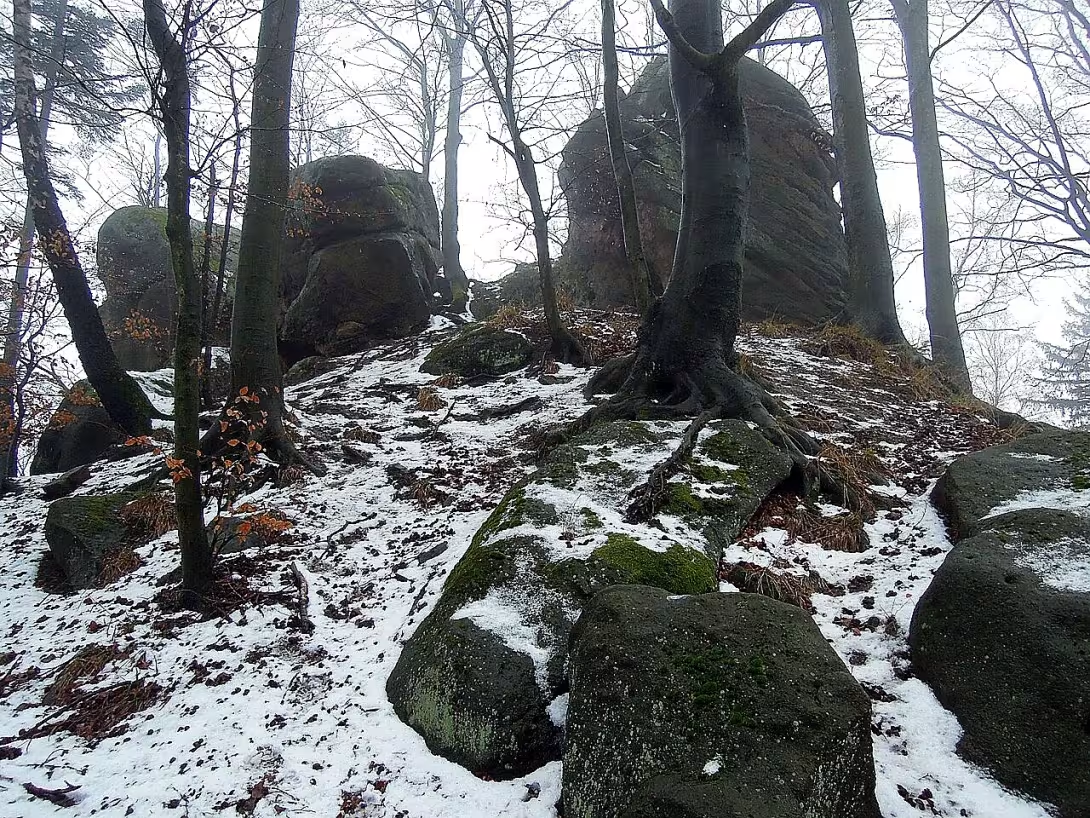
Klenov: A Ruined Moravian Castle in the Vsetín District
Perched on the highest point of the Zámčisko rock formation in the Klenov hill, the Klenov castle is a two-part structure situated in the Klenov Nature Reserve in the Vsetín District. This medieval ruin dates back to the 14th century and is attributed to King Václav III, who wanted to establish a monastery and build a small castle to secure the surrounding area. Archaeological findings suggest the castle was built in the 14th century.
The castle's architecture features a fortified core with an oval shape, measuring 31 x 21 meters, and a pisek rock outcrop. The core is surrounded by a cistern in the outer courtyard, providing a source of water for the castle's inhabitants. The castle's construction reflects the power and influence of the Kingdom of Bohemia during the 14th century, a period marked by fortifications and castles built to secure the kingdom's borders.
Little is known about the castle's ownership and administrative history, aside from its association with King Václav III. The castle's fate remains unclear, with no records of significant events or dramatic changes in its history. Its location within the Klenov Nature Reserve suggests it may have played a role in the surrounding landscape's development.
The castle's significance lies in its historical context, as part of a larger network of fortifications built by the Kingdom of Bohemia in the 14th century. Its construction reflects the kingdom's efforts to secure its borders and establish a presence in the region. Today, the castle stands as a testament to the region's rich history and cultural heritage.
Located in the Klenov Nature Reserve, a protected area characterized by hills and forests, the castle offers a glimpse into the region's natural beauty and historical significance. Visitors can explore the castle's ruins and take in the surrounding landscape. While the castle's history is shrouded in mystery, its presence is a reminder of the importance of preserving our cultural and natural heritage.
In conclusion, the Klenov castle is a fascinating historical site that offers a glimpse into the region's rich past. Its unique architecture and location make it a must-visit destination for anyone interested in history, architecture, and the natural world.
Then and now
Drag the slider to compare how the landmark may have looked when it was built with the view today.
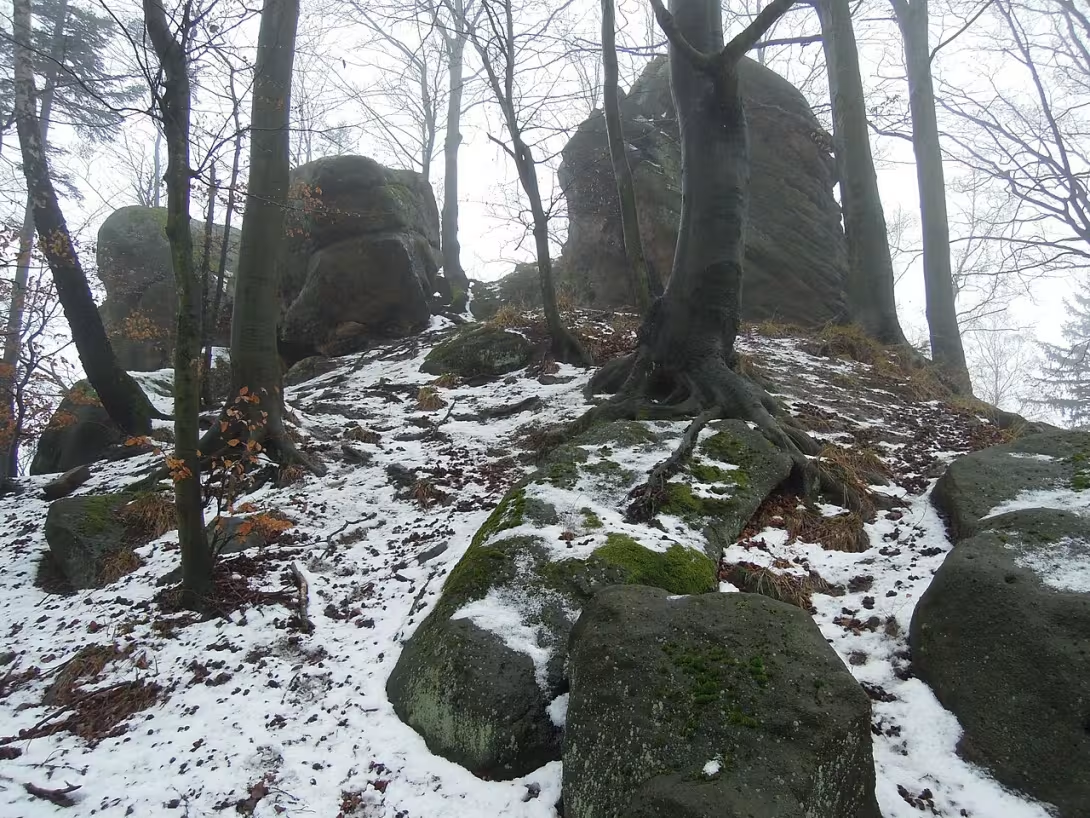

The historical appearance on the left is an AI-generated visualisation and serves as inspiration only.
Historical milestones
- 14. století
- King Václav III wanted to establish a monastery and build a small castle to secure the surrounding area
- 14. století
- The castle's construction reflects the power and influence of the Kingdom of Bohemia
- 14. století
- The castle was built
- 14. století
- The castle's construction reflects the kingdom's efforts to secure its borders and establish a presence in the region
Architectural development
The castle's construction is attributed to King Václav III, who wanted to establish a monastery on the site. The exact date of its construction is unknown, but archaeological findings suggest it was built in the 14th century. The castle's core has an oval shape with dimensions of 31 x 21 meters and is dominated by a pisek rock outcrop.
Historical events
- 1308
- The castle is believed to have been built by King Václav III, who wanted to establish a monastery on the site and build a small castle to secure the surrounding area.
Points of interest
– The Klenov castle is believed to have been built on a site that was previously inhabited by a prehistoric settlement, with archaeological findings suggesting human presence dating back to the Neolithic period.
– The castle's unique location on the Zámčisko rock formation makes it vulnerable to erosion, with parts of the structure being slowly worn away by the elements over time.
– The Klenov Nature Reserve, where the castle is situated, is home to a variety of rare and endangered plant and animal species, including the European pine and the red deer.
– The castle's architecture is notable for its use of pisek, a type of dry-stone wall construction that was common in medieval Moravia.
– King Václav III is also believed to have built a chapel or church near the castle, although no remains of this structure have been found.
Guide
This guide is narrated by a synthetic voice generated by artificial intelligence.
Show guide text
This text was created by artificial intelligence and has not been editorially reviewed. It may contain inaccuracies.
Welcome! You are standing before the ruins of Klenov Castle, located at the highest point of the Zámčisko rock formation in Klenovský kopec in the Vsetín District. The castle is situated within the Klenov Nature Reserve. The exact date of its construction is unknown, but archaeological findings suggest it was built in the 14th century.
Let's delve into history. The castle's construction reflects the power and influence of the Kingdom of Bohemia. It was built in the 14th century when King Václav III wanted to establish a monastery and build a small castle to secure the surrounding area. The castle's construction reflects the kingdom's efforts to secure its borders and establish a presence in the region.
Notice that the castle is two-winged with a cistern in the outer courtyard and an enclosed corridor. The castle's architecture is a testament to the medieval era, with its characteristic stone walls and fortifications. Take a look at the front of the castle and observe how the architecture has adapted to the natural terrain.
Now pay attention to the historical figures associated with this place. Unfortunately, the history of the castle is not well-documented, and the names of the people involved in its construction are unknown.
However, there is one interesting detail. Klenov Castle is believed to have been built on a site that was previously inhabited by a prehistoric settlement, with archaeological findings suggesting human presence dating back to the Neolithic period. This fascinating detail brings us closer to a deeper understanding of the history of this place.
Allow me to invite you to further explore Klenov Castle. Although it is in ruins, the castle still offers breathtaking views of the surrounding landscape and is an excellent spot for relaxation and rest. I hope this little historical excursion has helped you and brought new knowledge about this interesting place.
Tips for visitors
The castle is located in a remote area, so it's recommended to bring comfortable shoes and clothing for hiking, as well as a map and compass or GPS device to navigate the trails.
The best spots for photography are around the castle ruins, where you can capture stunning views of the surrounding landscape. The best light is during the golden hour, just before sunset.
If you're planning to visit nearby, consider exploring the nearby village of Bystřička, which offers a range of shops, restaurants, and cafes. You can also visit the nearby Klenov Waterfall, a beautiful natural attraction.
Families with children can enjoy the castle's scenic surroundings, which offer plenty of opportunities for hiking and exploration. However, be sure to keep a close eye on children near the castle ruins, as they can be hazardous.
Frequently asked questions
Can the monument be visited?
This is a ruin. Such sites are often freely accessible, but some can only be visited with a guide or are closed for safety reasons. We have not verified the current situation – take care and respect any restrictions.
Where is the monument?
Location: Bystřička, Zlínský kraj. The map on this page shows the exact spot.
Businesses nearby
Do you run a restaurant, accommodation, shop, museum, rental, wellness or other visitor service near this monument? Show yourself directly to the people heading to it — this is how they will see you in the app and on the web:
Nearby
The castle is located in the Klenov Nature Reserve, which is a protected area. The surrounding landscape is characterized by hills and forests.
Accommodation nearby
Themed route
Trasa:
1. Klenov (hlavní cíl) - zřícenina hradu, stojí za návštěvu kvůli své historické a kulturní hodnotě a panoramatickému výhledu na okolí. 2. Klenovský potok - potok, který protéká kolem hradu, stojí za návštěvu kvůli své přírodní krásě a klidu. 3. Klenovské louky - louky, které se nacházejí v okolí hradu, stojí za návštěvu kvůli své přírodní krásě a možnostem procházek. 4. Klenovská lípa - památný strom, který roste v blízkosti hradu, stojí za návštěvu kvůli své historické a kulturní hodnotě. 5. Klenovské lesy - lesy, které se nacházejí v okolí hradu, stojí za návštěvu kvůli své přírodní krásě a možnostem procházek.
Seasonal recommendations
Jaro
Spring is the ideal time to visit Klenov because nature is in full bloom. The forests are green and flowering, creating a pleasant atmosphere. Unique lighting during this season is soft and warm, making the ruins even more impressive. Practical tips: the best time to visit Klenov is in April or May when there are fewer visitors than in the main summer season. It's advisable to bring warm clothing as it can still be chilly on the ruins.
Summer
Summer is the peak season for visiting Klenov, but also the busiest. Visitor numbers are at their highest, so it’s best to arrive early to avoid crowds. The lighting during this time is stronger and brighter, creating dramatic effects on the ruins. Practical tips: the best time to visit Klenov is in June or July when the weather is sunny and warm. It's advisable to bring an umbrella and sturdy shoes as the ruin is located on dry, rocky terrain.
Autumn
Autumn is a beautiful season for visiting Klenov because nature is dressed in autumn colors. The forests are tinged with reds and yellows, creating a pleasant atmosphere. Unique lighting during this time is soft and warm, making the ruins even more impressive. Practical tips: the best time to visit Klenov is in September or October when there are fewer visitors than in the main summer season. It's advisable to bring warm clothing as it can still be chilly on the ruins.
Winter
Winter is a quiet season for visiting Klenov, but also the coldest. The ruin is surrounded by snow and closed to visitors to protect it from damage. Unique lighting during this time is weaker and colder, making the ruins less impressive. Practical tips: the best time to visit Klenov is in December, January, or February when the site is closed and it's better to avoid visiting. It's advisable to bring warm clothing, sturdy shoes, and gloves as the ruin is located on dry, rocky terrain and can be cold.
Visualizations and artistic views


The visualisations are generated by artificial intelligence and serve as inspiration.
Photos from the area
Real photos taken near the monument

Zdroj a licence jsou uvedeny u každého snímku.
Tips from visitors
No tips yet. Be the first!
Log in and add your tip.
Sources and literature
Photos: Radim Holiš / CC BY-SA 3.0 — Wikimedia Commons. The author and licence also appear when you hover over the image.
Faktickým podkladem tohoto textu byl článek na Wikipedii, jehož autory jsou přispěvatelé Wikipedie. Článek je dostupný pod licencí CC BY-SA 4.0.
Location on the map

Příběhy a pověsti
Legendy, pověsti a příběhy spjaté s touto památkou
Fotografie návštěvníků
Zatím žádné fotografie. Buďte první, kdo přidá fotografii z návštěvy!
Log in a přidejte svou fotografii nebo hodnoťte.
Za ověřenou návštěvu v aplikaci získáte víc bodů — poznáme podle GPS, že jste na místě.
Reviews and comments