

Klučov Motte
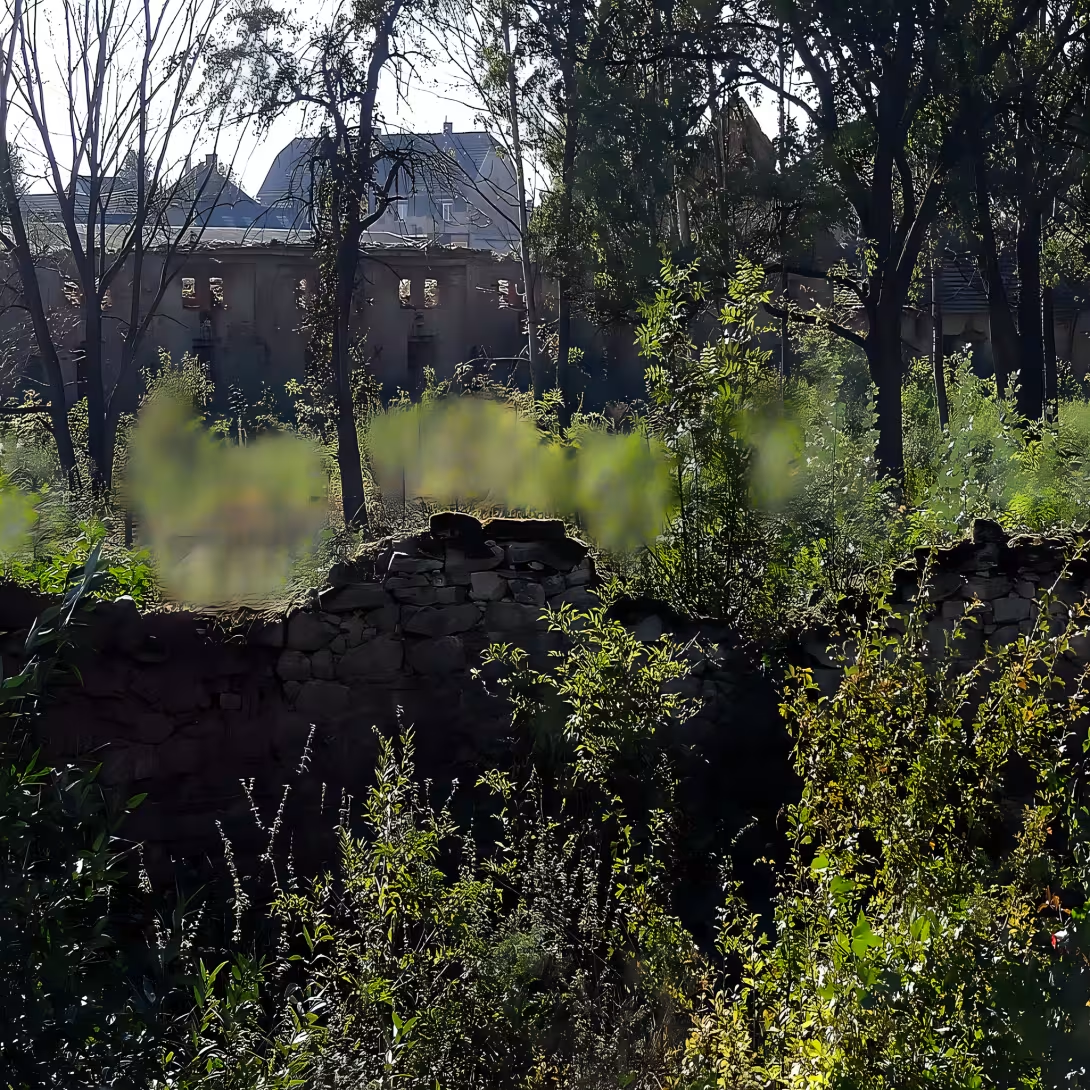
The castle Na Valech in the village Klučov in the district of Kolín in the Central Bohemian Region is a remnant of the extinct mansion. Its foundation was a medieval fortress from the 13th century. The building underwent a Renaissance reconstruction in the 16th century into a castle which was subsequently demolished in 1782. Today the site is protected as a cultural monument.
The oldest documented reports of the mansion dates back to 1250, when Oldřich z Klučova was based here. The fort served as the center of the small estate. In 1295, the flags of James, Henry and John were mentioned here. In 1318, there was the seat of Czubor and later the court of Hrabish with his wife Bohuslav and daughter Sobelslava.
In the 14th century, the estate owned a family with a bird coat of arms, probably a dove. Pešek of Klučova, who also owned the Prišimas, Porečany, Nehvizda and Jirna, died after 1372. The property was inherited by the sons of Nicholas and Stephen. Stephen, holder of Klučova, died October 27, 1380. Later, Jan of Klučova controlled the estate. He supported King Wenceslas IV, and you gradually sold parts of the property until in 1419 he lived in Škvoorc.
Other owners were Mikeš Divoček from Jemniště and subsequently Wilhelm from Kounice or Konice. In April 1421, a army of freshmen surrounded the boys' fort. It made William accept the resemblance and join the Hussite Party. In 1478 he bequeathed the property to Peter of Lstibora, the ancestor of the House of Kamýcky of Lstibora. After 1493, Klučov belonged to orphans whose administrators were Jan and Mikuláš from Dražovice. In 1540, Michal Slavat's fortress was sold to Hlum, who in 1533 left her to his wife Elisa Pňovska from Sovinka for the rest of her life.
After Elisha's death in 1544, Klučov was connected to the church estate. In 1547, the property was confiscated by Divis Slavat for participating in the state uprising. In 1558 he bought a fortress and a village with a sailing court Jaroslav Smiřický ze Smiřic. He had the original medieval building rebuilt into a Renaissance castle, which, hypothetically speaking, happened according to the design of architect Ulric Aostalli.
The chateau was described in the 17th century as a building with a large skylight, fraucimor, several smaller rooms, kitchen and own forge. It was originally a motte-type fortress. The Renaissance resemblance included a boundary wall with arcade nobodies. The mansion was maintained for a long time, even though it was not permanently inhabited by the high.
The bankruptcy began after 1622 when Charles of Liechtenstein bought the church estate. The 1661 description states that the moat was overgrown with reeds and the brick roof and shindle were damaged. Most of the rooms on the first floor were uninhabitable. In 1766 the administration decided to demolize and in 1782 the castle was finally demolished.
Today, there is a fortress surrounded by a ditch on the northern edge of the economic court. A part of the monument protected area is the torsion of the Renaissance fenced wall with arcade niche.
The remains of the boys' mansion are a valuable testament to the evolution from the medieval capital fort to the Renaissance castle. The location allows you to observe the trail of the extinct mansion in the landscape. Visiting this monument helps to understand the historical transformation of local centres of power.
Historical milestones
- 1250
- reference to Oldřich from Klučova
- 1558
- Jaroslav Smiřický ze Smiřic bought a fort and converted it into a Renaissance castle
- 1782
- the castle was broken down
Architectural development
Originally, it was a medieval motte fortress. In 1558, Jaroslav Smiřický was rebuilt into a Renaissance castle with arcades in the wall. In the 17th century the castle was described as a building with a large skylight, fraucimor, kitchen and forge.
Historical events
In April 1421, a army of freshmen surrounded the fort and forced William of Kounice to join the Hussite Party. In 1547, the property was confiscated by Divis Slavat for participating in the state uprising.
Owners
Oldřich z Klučova (approx. 1250), Jakoš, Jindřich and Jan (1295), Octebor (1318), Hrabish, Pešek from Klučova, Mikuláš and Stephen, Jan from Klučova, Mikeš Divoček from Jemniště, Wilhelm from Kounice, Petr from Lstibora, Jan (manager of orphans), Michal Slavata from Chlum, Eliška Pňovská from Sovinka, Jaroslav Smiřický ze Smiřic (1558), Karel from Liechtenstein (1622)
Points of interest
- The foundation of the mansion was a medieval fortress from the 13th century, which was later converted into a Renaissance castle. In April 1421, a army of freshmen surrounded the fort and forced the owner to join the Hussite Party. The Renaissance resemblance included a boundary wall with arcade nobodies and the building had its own forge. - The castle was demolished in 1782, today there was a fortress surrounded by a moat. It was originally a motte-type fortress.
Guide
This guide is narrated by a synthetic voice generated by artificial intelligence.
Show guide text
This text was created by artificial intelligence and has not been editorially reviewed. It may contain inaccuracies.
Welcome to the village Klučov. Right now you're standing in a place that once formed the heart of the entire estate. Look around you at a space called Na Valech. Perhaps at first glance you can think of the question of where the promised landmark is actually located, because there is no high-rise palace or tower in front of you. That's right. You're standing in front of the remnant of a defunct mansion. What you see today is the silent testimonies of the past, especially the remnants of the wall, which remind us that there once was a nobleman who ruled here and decided the fate of the local people. Feel this atmosphere of peace and reflection on how the face of this place was changing with the time stream.
Let's now go back in time deep back, until the 13th century. It was at this time that the foundation of this mansion was laid. In a thousand and two hundred and fifty, the name Oldřich of Klučova appears in the records. So imagine that at a time when the country was full of dense forests and forests, the first fortress grew here. It was not a construction for the pleasure of the eye at the time, but above all a safe port and the administrative center of the small estate. The fortress served as a symbol of power and protection. It was a fortress that was supposed to hold the territory and ensure order around here. At that time there was probably a strict atmosphere of the medieval castle, where the walls separated the masters from the other inhabitants.
Now pay attention to what is left of this time and beyond. Even though most buildings are gone, focus on the remains of the wall. These stones are the most faithful witnesses to history. Try to complete in your mind what this wall looked like at the time of its greatest glory. Later, in the 16th century, there was a big change. In a thousand and five hundred and fifty-eight he bought the fortress Jaroslav Smiřický ze Smiřic. This man had a vision and wanted to make the original medieval fortress a modern and representative residence. He called for the work of a master named Ulric Aostalli, who made a Renaissance castle out of the fort.
Now when you look at the space where this castle once stood, try to imagine the Renaissance elegance. According to historical records, the wall was not just a common mur, but it had beautiful arcade nobodies. Imagine these arched passages and spatial details that provided lightness and airspeed, typical of Renaissance style. The castle was not only a place for the Luksus, but also a functional economic centre. The interesting detail you can imagine is that the building had its own forge. This means that there was a constant sound of iron forging, a flame of heat from the furnaces and the air carried the smell of molten metal and smoke. It was a living organism where the administration of the estate joined the craft industry.
Klučov was not only a place of beautiful architecture, but also a place of dramatic events. The history of this place is closely linked to major changes in Czech countries. One of the most exciting moments was April of the year a thousand four hundred twenty-one. At that time, Hussite riots were raging in the country. Imagine the tension that must have prevailed when the army of Pražani surrounded this fortress. It was a time of uncertainty and fear. The siege was so strong that the fort owner had no choice but to submit and join the Hussite Party. It is fascinating to think that here, on this part of the country, the fate of people was broken in line with the great political and religious storm of that time. These walls were probably covered by secret agreements and difficult decisions that determined the survival of the entire estate.
In addition to military conflicts, there were important figures. In addition to the said Oldřich of Klučova and Jaroslav Smiřický, the name of King Wenceslas the fourth is connected to this place. The presence of such figures in the history of this headquarters suggests that Klučov was not just a backwater village, but a place of importance in the broader context of the state at that time.
Now let's stop at a question that can cause some nostalgia and mystery. Why are we only seeing the remains of the wall today and not the whole castle? The answer leads us to the end of the eighteenth century. Even the most beautiful Renaissance castle can't escape early. The building gradually began to decay. She probably became unsustainable and useless for the needs of that time. In a thousand and seven hundred and eighty-two, the building was finally demolished. It's a strange idea that something that's been built and rebuilt with care has been brought down at one point. Only the foundations and parts of the walls remain, which are now a protected cultural monument. It is a reminder of the permeability of all human beings, but at the same time proof that even from debris can be read a story.
Now, in silence, try to go through the space where the halls and chambers once stood. Feel the contrast between today's calm and the noise of the Renaissance court, where nobles, craftsmen and soldiers met. Imagine the sound of the forging in the forge, the rustling of the clothes in the arcades and the quiet whispering in the corners of the wall. It is in these details that the real magic of this place lies. Although only fragments remain, history is still tangible here.
Klučov shows us the way from medieval defense to Renaissance bloom to the complete demise of the building. It's a journey that lasted over 500 years. Today, this place is protected so that future generations, like you, can feel the connection to the past.
Thank you for a common walk through the history of the castle Na Valech. I hope you could imagine what this place looked like in its greatest glory. Now I invite you to explore the rest of the wall in peace and try to find traces of people who lived here centuries ago. I wish you a pleasant rest of the day and a pleasant continuation of exploring the beauty of our region. Goodbye.
Tips for visitors
The best time to visit are spring and autumn months, when the lower grass condition allows better sound relief of the terrain and the remains of the old mansion. Transport to the village by car or public transport; Check the current connection in the Internet search engine.
For your journey, wear solid shoes suitable for the field, because it is an archaeological place in nature. Since there is no roof and background, we recommend taking your own water and insect repellent.
For the best photos I recommend to come in early or late light, when shadows better highlight the terrain inequality of the Fortress Na Valech. The most interesting views are obtained when shooting from slightly elevated points around the ruins.
We recommend a visit to families with children by looking for hidden clues of the past. Since you can't see the big walls, children can try to find traces of the former mansion using a map or a description from the 13th century.
Frequently asked questions
Can the monument be visited?
This is an archaeological site. Often there is little to see on the ground and the land may be private. We have not verified access.
Where is the monument?
Location: Klučov. The map on this page shows the exact spot.
Why is the monument protected?
It is listed in the Central List of Cultural Monuments of the Czech Republic as a cultural monument (register no. 1000124836).
Businesses nearby
Do you run a restaurant, accommodation, shop, museum, rental, wellness or other visitor service near this monument? Show yourself directly to the people heading to it — this is how they will see you in the app and on the web:
Nearby
🏰 Historic sites (131)
- vysílač Liblice A 3.2 km
- vysílač Liblice A 3.3 km
- sv. Jan Nepomucký 4.0 km
- Bývalý vysílač Liblice B 4.0 km
- památník padlých 1945 4.3 km
- Pomník Prokopa Velikého 4.3 km
- Sousoší Svaté Rodiny 4.3 km
- Podlipanské muzeum 4.5 km Žitomířská 761 web
- Jan Hus 4.5 km
- hradiště Svatováclavské Šance 4.8 km
- Padlým ve světových válkách 5.0 km
- Památník padlým hrdinům 5.1 km
- Mohyla sv. Prokopa 5.1 km
- Kří 5.9 km
- Kaple povýšení sv. Kříže 6.2 km
- Svatý Jan Nepomucký 6.3 km
- náhrobní kámen 6.4 km
- sv. Josef 6.5 km
- Pomník padlým 6.7 km
- Památník T.G.M. a obětem odboje 6.9 km
🍽️ Restaurants and dining (205)
- Kebab, pizza 4.0 km Krále Jiřího 97 web
- Kounická hospůdka 4.1 km
- Na Vyhlídce 4.1 km 604 306151 web
- U Černého koně 4.2 km
- Pizzeria Malechov 4.2 km
- Herna 4.2 km
- KUP 4.2 km nám. Arnošta z Pardubic 44 +420321622451 web
- Modrá Hvězda 4.3 km
- MaKa Coffee espresso bar 4.3 km nám. Arnošta z Pardubic 50
- U Madony 4.4 km Suvorovova 58
- U pěti šišek (Na Hřišti) 4.4 km
- U Hrabětů 4.5 km
- U Bedrníčků 4.6 km
- Šenk 4.8 km
- Na Kutilce 5.2 km
- Fresh Corner Restaurant 5.2 km
- Hájenka 5.6 km Kersko 148 web
- Café Kersku 5.8 km
- U Pramene 6.5 km
- U Nováků 6.7 km
🏨 Accommodation (22)
- Romantic baroque nest 3.9 km web
- Apeyron 4.3 km
- Podviňák 5.8 km
- Hotel Ostrov Garni 7.0 km web
- Bungalovy Kersko 7.7 km
- Autokemp Ostrá 8.9 km
- Polabí 9.2 km web
- Hotel Bouček 9.7 km
- Ubytování Lysá nad Labem 9.8 km U Staré školy 98 +420 604 278 423 web
- Penzion Lony 9.8 km +420607137207 web
- Hotel Holiday 9.8 km
- Penzion u lva 11.3 km
- Ubytování v pivováru 11.3 km web
- Penzion Alfa 12.3 km +420325551567 web
- Hotel Bene 12.9 km
- Hotel Sokol 13.0 km
- Hotel NED HOCKEY 13.3 km
- Penzion Na Staré poště 13.4 km Tyršova 226/23 +420 727 835 455 web
- Residence Da Antonio 13.7 km +420 603 176 176 web
- Penzion U Vinotéky 13.9 km
🚲 Rentals and sport (37)
- Sokol Poříčany 1.3 km
- Policejní střelecký klub Union Praha 3.2 km
- Sokolovna 3.9 km
- Kolo pro radost 4.2 km Kollárova 972 +420603843048 web
- Sokolovna 4.3 km
- Sportovní hala 4.3 km
- Servis kol 4.4 km Suvorovova 136 web
- TJ Sokol Kounice 4.5 km
- Koupaliště Radim 7.5 km
- Býv. rekreační středisko sovětské armády 9.0 km
- Veslařský klub 9.5 km
- Sokolák 11.4 km
- Relax Easy 12.2 km Na Mlíčníku 1790 web
- ekolo-kolo 12.8 km Pražská 694
- TJ Sokol Lysá 12.8 km
- SSK Kostelec nad Černými lesy 13.0 km
- Sportovní hala 13.0 km
- Cyklosport Škarnitzl 13.1 km web
- Sokolovna 13.2 km Masarykova
- Sportovní areál 13.2 km
🥾 Hiking and nature (78)
- Triglyf 0.6 km
- Varhánky 1.7 km
- Holý 1.8 km
- Zálužník 2.4 km
- Městské hradby 4.1 km
- Kouřimská brána 4.2 km
- Svatého Prokopa 4.7 km
- Dům mafiána Františka Mrázka 5.2 km Františka Macháčka 1364
- PP Milčice 5.3 km
- PP Kersko 5.9 km
- Břístevská hůra 6.1 km
- PP Slatinná louka u Velenky 6.3 km
- Josefovský pramen 6.5 km
- Sadka 6.6 km
- Pramen Járy Cimrmana 7.0 km web
- Lom u Radimi 7.2 km
- Semická hůra 7.8 km
- Krupá 7.9 km
- Rabakov 8.0 km
- Lipská hora 8.1 km
Accommodation nearby
Themed route
Here is the route design aimed at exploring the site:
1. Klučov (fortress) - Main monument. Walk the walls and explore the history of the former mansion. 2. Tanks - Open area of the fort. A place to relax and see the architecture of the building. 3. Tower - Outlook section. Possibility to see the surrounding landscape from a height. 4. Exposure - Internal spaces. A tour of the objects and information about the past of this place. 5. Park - Garden in the immediate surroundings. A quiet walk between the trees in the monument area.
Seasonal recommendations
In the spring, the surrounding landscape awakens to live colours and fresh leaves begin to cover the remains of old walls. The air is fresh and light soft, which helps to perceive the atmosphere of a long-lost mansion. We recommend moisture resistant shoes because the terrain can be muddy after melting snow. The best place to visit is in the morning when dew is still visible on the grass.
Summer brings bright sun and high grass, which can completely cover the remains of the stones. Nature is in full bloom and the surroundings are very lively, which contrasts with the silence of the ruins. It is necessary to choose light clothing and to bring plenty of water. The ideal time for arrival is early in the morning or shortly before sunset so that the strongest heat does not hit you.
In autumn, the surrounding trees are painted in gold and red, creating a melancholy mood suitable for contemplation of the passing of time. The light is golden in this period and falls at a sharp angle, which can help to better recognize the contours of the ground changes. Layer clothing and fixed shoes are suitable to prevent slip on wet leaves.
In winter, the site is covered with a white collision, which straightens the terrain and often hides small details of the archaeological site. The atmosphere is freezing and quiet, which underlines the feeling of abandonment of this ruin. It is necessary to wear warm and waterproof clothes including gloves and hats. The best thing is to go on a clear freezing day when visibility is highest.
Visualizations and artistic views


The visualisations are generated by artificial intelligence and serve as inspiration.
Photos from the area
Real photos taken near the monument


Zdroj a licence jsou uvedeny u každého snímku.
Tips from visitors
No tips yet. Be the first!
Log in and add your tip.
Sources and literature
Photos: MartinVeselka / CC BY-SA 4.0, rozlišení zvýšeno umělou inteligencí — Wikimedia Commons. The author and licence also appear when you hover over the image.
Faktickým podkladem tohoto textu byl článek na Wikipedii, jehož autory jsou přispěvatelé Wikipedie. Článek je dostupný pod licencí CC BY-SA 4.0.
Location on the map






Příběhy a pověsti
Legendy, pověsti a příběhy spjaté s touto památkou
Fotografie návštěvníků
Přidat fotografiiZatím žádné fotografie. Buďte první, kdo přidá fotografii z návštěvy!
Máte k místu vzpomínku nebo zajímavý příběh?
Log in a přidejte svou fotografii nebo hodnoťte.
Za ověřenou návštěvu v aplikaci získáte víc bodů — poznáme podle GPS, že jste na místě.
Reviews and comments