



Kluky Chateau
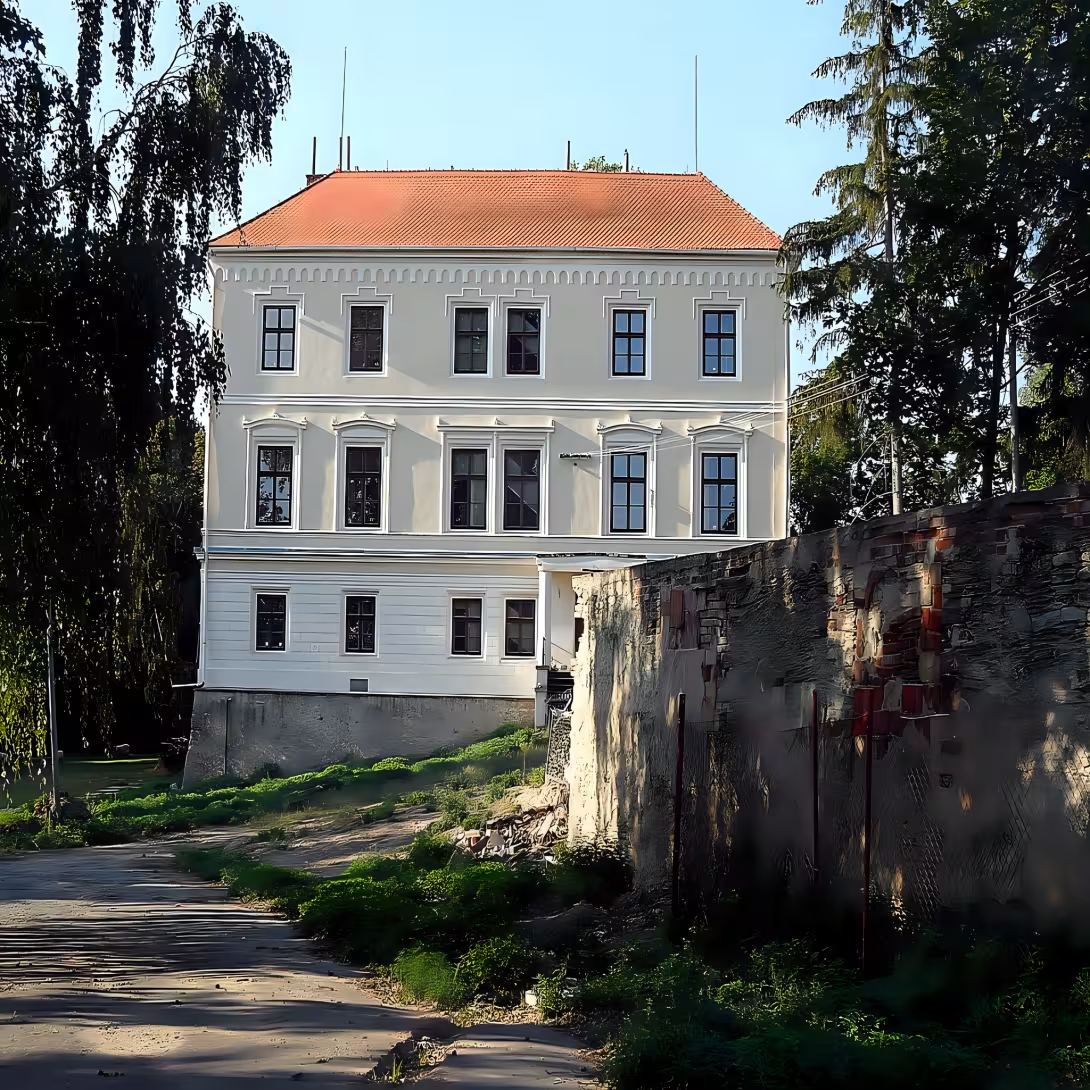
The chateau Kluky is situated in a village of the same name between Kutna Hora and Káslaví in Central Bohemia. Its beginnings date back to the 14th or 15th century, when the village was owned by Kutnohorsky townspeople and small nobles. The first written mention of the fort dates back to 1538, when Jan mladší z Libodřic sold it to John Chotouchovski of Nebovid, along with other property and rights to local churches.
Since this year, Kluky has become subject to repeated ownership exchanges. Gradually owned by Lukavecki, Trček from Lipa, Ferdinand Course from Senftenau, the House of Lehnar, Ledebour and other noble families. The fundamental transformation occurred shortly after 1700, when the chateau was acquired by the Aborigines of the Abdominal. They remodeled it from a Gothic fortress to a Baroque chateau - they abolished the fortifications, buried the moats and set up a garden in their place. The chateau was thus transformed from a military-prepared building to a comfortable aristocratic mansion. It belonged to the residents until the early nineteenth century.
After their era, ownership changed repeatedly until Kluky was connected to the manor of Žleba. Since then, they have mainly served economic purposes. They gained a new dimension in 1856 when Emilia Bboloslavská of Ritterstein bought them and had them rebuilt in a neo-Renaissance style - this is still the form he kept today. After Emilie, Berta Dačická z Heslova inherited them in 1905, whose family owned them until 1945.
The building is a double-storey lock with approximately square ground plan and low valb roof. In the facade facing the courtyard there is a portal above which is a balcony supported by a pillar. The interior has preserved arched ceilings and rich stucco decoration in a number of rooms. The masonry of the original Gothic fortress remained visible, especially in the part of the perimeter wall up to the top of the first floor. With the exception of the west side, the remains of the original ditch were preserved around the building.
In the second half of the twentieth century the chateau became the seat of the local national committee, part of the building served as a dining room of the state farm and the remaining space was divided into flats. Today the whole complex with adjacent park is protected as a cultural monument.
Then and now
Drag the slider to compare how the landmark may have looked when it was built with the view today.
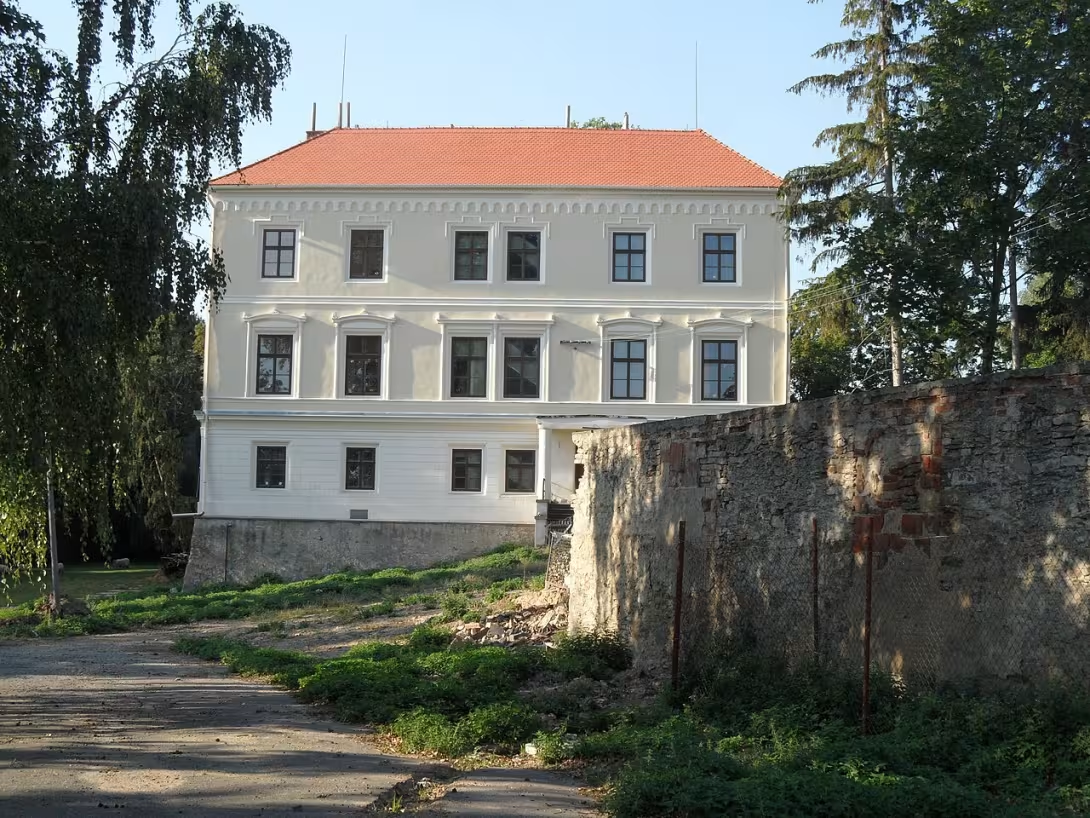

The historical appearance on the left is an AI-generated visualisation and serves as inspiration only.
Historical milestones
- 1538
- First written mention of the fort at the Boys.
- 1624
- The sale of Jan Rudolf Manor from Lip.
- 1636
- Emperor Ferdinand II. sold confiscated property to Ferdinand Kurz from Senftenau.
- 1856
- The chateau was acquired by Emílie Boleslavská z Rittersteinu and rebuilt in a neo-Renaissance style.
Architectural development
The original Gothic fortress was built in the 14th or 15th century. At the beginning of the eighteenth century, a Baroque reconstruction took place, during which the fortifications were abolished and a garden was established on the site of the moat. The current form of the chateau is based on the new Renaissance adaptations from 1856 and the end of the nineteenth century. The two-story chateau has a square floor plan, a valb roof and preserved vaulted ceilings with stucco decoration in the interior.
Historical events
The first written mention of the fort dates back to 1538. In 1624 Petr Lukavecký sold the estate to Jan Rudolf Trček from Lipa. Obstruction of the property of Trčky z Lipa led to the sale of the estate of Ferdinand Kurz of Senftenau in 1636.
Owners
kutnomountain townspeople and small nobles (14-16 century), Jan mladší z Libodřic (up to 1538), Jan Chotouchovský z Nebovid (from 1538), Jindřich Chotouchovský (up to 1584), Jan el. Lukavec from Lukavec (1584- 1599), Petr Lukavecký from Lukavec (from 1600), Jan Rudolf Trčka z Lípy (from 1624-1636), Ferdinand Kurz from Senftenau (1636-1638), Ezim Lehnar (from 1638), Eva Maria Lehednarovna (from 1660), Jan Dětřich Ledebour (from 1660), Jan von der Cron (from 1665), Karel Leopold Millesimo (from 1675), Eva Ludmilesimo (from 1675)
Points of interest
- The beginning of the chateau dates back to the 14th or 15th century and the first written mention of the fort dates back to 1538. - Shortly after 1700, the reconstruction took place from the Gothic fortress to the Baroque chateau, during which the fortifications were abolished and ditches were buried. - In 1856 she bought the chateau of Emilia Bboloslavská from Ritterstein and had it rebuilt in a neo-Renaissance style, which the building kept until today. - The masonry of the original Gothic fortress remained visible, especially in the part of the perimeter wall up to the above first floor. - In the second half of the twentieth century the chateau became the seat of the local national committee, its part served as a dining room of the state farm and the rest was divided into flats.
Guide
This guide is narrated by a synthetic voice generated by artificial intelligence.
Show guide text
This text was created by artificial intelligence and has not been editorially reviewed. It may contain inaccuracies.
Kluky Castle stands in the village of the same name between Kutná Hora and Čáslav. Its predecessor was a Gothic fortified house, the centre of a small noble estate. It was built sometime in the fourteenth or fifteenth century, when the village was owned by burghers from Kutná Hora and minor nobility.
The first written mention of the fortified house dates from fifteen thirty-eight. At that time, Jan the Younger from Libodřic sold it together with the village, a demesne farm and other property to Jan Chotouchovsky from Nebovidy. Jan's grandson Jindřich sold Kluky in fifteen eighty-four to Jan the Elder Lukavecký from Lukavec, who resided there until his death in fifteen ninety-nine. The estate then passed through the minor Žofie from Lukavec to Petr Lukavecký. In sixteen twenty-four he sold nearly the entire manor to Jan Rudolf Trčka from Lípa for ten thousand Meissen groschen.
The property was confiscated from the Trčkas for anti-imperial conspiracy, and Emperor Ferdinand the Second sold it in sixteen thirty-six to Ferdinand Kurz from Senftenau. From sixteen thirty-eight, Kluky belonged to Erasmus Lehnar. The fortified house then ceased to serve as a noble residence and fell into disrepair, although the widow Eufemie Lehnarová still lived there after her husband's death. In the following decades, the owners changed very frequently.
Kluky became a noble residence again shortly after seventeen hundred, when the Obytečtí from Obytec acquired it. They rebuilt the old fortified house as a Baroque castle, removed the fortifications and laid out a garden on the site of the filled-in moats. The castle belonged to them until the beginning of the nineteenth century. Later the estate was attached to the Žleby manor, and the castle served only for the administration of the farmstead.
In eighteen fifty-six it was acquired by Emilia Boleslavská from Ritterstein, who had it rebuilt in the Neo-Renaissance style. This is precisely the form that has been preserved to this day. From nineteen-oh-five the castle belonged to the family of Berta Dačická from Heslov, until nineteen forty-five. In the second half of the twentieth century, it housed the local national committee, part of the building served as a dining hall for the state farm, and the rest contained flats.
The two-storey building has approximately a square ground plan and a low hipped roof. In the courtyard façade there is a portal and above it a balcony supported by pillars. Inside, in several rooms, barrel-vaulted ceilings and rich stucco decoration have been preserved. The masonry of the Gothic fortified house remained in part of the perimeter wall up to the height of the first floor. Around the castle, traces of the moat are still visible except on the western side. The entire complex is a cultural monument, that is the castle, the remains of the defensive wall and the adjoining park.
Tips for visitors
The best time to visit the chateau Kluky is during the morning hours on a sunny day, when the morning light will highlight the historical architecture and surrounding countryside. With us we recommend to take comfortable fixed shoes suitable for walking on rural roads and around the chateau, drinking water and a small snack, because the refreshments on the premises can be limited. For photography, choose the exterior of the old fort, where the best lighting conditions are either early morning or late afternoon before sunset. During the trip to the 30-year distance from the site, do not forget to visit the nearby interesting sites listed in historical sources, including nearby Kutná Hora, Čáslav, Třebešice, Lošánky, Lošany, Hlumek, Paběnice or Třebonín. Families with children appreciate the quiet rural environment of the village Kluky, which is ideal for a peaceful walk associated with the discovery of the remains of medieval fortress and surrounding nature of the Central Bohemian region.
Frequently asked questions
Can the monument be visited?
Some buildings of this kind are open for guided tours, others serve another purpose or are privately owned. We have not verified whether and when this monument is open – please ask the operator.
What are the opening hours and admission?
We have not verified the opening hours or admission. Current information is published by the operator.
Where is the monument?
Location: č.p. 1, Kluky, Středočeský kraj. The map on this page shows the exact spot.
Why is the monument protected?
It is listed in the Central List of Cultural Monuments of the Czech Republic as a cultural monument (register no. 39481/2-2811).
Businesses nearby
Do you run a restaurant, accommodation, shop, museum, rental, wellness or other visitor service near this monument? Show yourself directly to the people heading to it — this is how they will see you in the app and on the web:
Nearby
The chateau lies in the village Kluky between Kutna Hora and Čáslaví. There are links to the surrounding villages of Trebešice, Lošánky, Lošany, Hlumek, Paběnice or Třebonín in historical sources.
Accommodation nearby
Trips and activities nearby
Guided tours, tickets and activities nearby from GetYourGuide
Affiliate link: if you buy from the partner, we may receive a commission. The price for you does not change.
Search tours and activities →Themed route
Thematic cruise route chateau Kluky and surroundings
1. Chateau Kluky - Type: Historical chateau - Why is it worth a visit: Chateau Kluky is the origin of the Gothic chateau, which has been converted into Renaissance and Baroque style over the years. It is an ideal place for those who like the history of architecture and want to immerse themselves in the past of Czech countries.
2. St. Anne's Chapel in Loshan - Type: Chapel - Why is it worth visiting: This chapel is an example of Baroque architecture and served as a spiritual centre for the inhabitants of the surrounding villages. Its simplicity and historical importance make it interesting for visitors who want to know more about local spiritual life.
3. The village of Trebešice - Type: Historical residence - Why is it worth a visit: Trebešice is a small village with a rich history that boasts ancient houses and traditions. It is an ideal place for those who want to try an authentic rural environment and get to know local customs.
4. Hair - Type: Villages - Why is it worth a visit: Hlumek is famous for his picturesque landscape beauty and tranquility that he offers. It is a place to relax and explore the natural environment of surrounding forests and fields.
5. - Type: village center - Why is it worth visiting: Paběnice offers a view of a typical Czech village with historic buildings and picturesque surroundings. It's the perfect place for those who want to know local life and its traditions.
This route offers a combination of history, architecture and nature, making it perfect for a day trip.
Seasonal recommendations
Spring in the chateau park in Kluky offers awakening nature full of flowering fruit trees and fresh green grass, which contrasts with the historical facade of the building. Low sun creates a fine light in the morning ideal for shooting architectural details and chateau exteriors without distracting reflections. During this period you will meet only a minimum of tourists, which guarantees a calm and quiet atmosphere for an uninterrupted tour. From the point of view of practical advice, it is worth counting on variable weather, so choose waterproof fixed shoes and layered clothing, because the morning cold quickly turns to pleasant heat during sunny noon hours.
Summer brings to Boy lush vegetation with fully foliage trees that provide a pleasant shade along the chateau walls, while sharp noon light highlights the whiteness of the walls against the blue sky. The main season brings with it a higher attendance rate, especially on weekends, which is why it is the best time for a peaceful visit in the early morning immediately after the opening time or late afternoon when the sun is weakening. Do not forget to wear headgear, sunglasses and plenty of drinking water for a relaxing tour of the outdoor area, because warm summer days can be more challenging in exposed areas.
Autumn turns the chateau's surroundings into a varied palette of golden, rusty and wine colours, which amplifies the falling leaves even more. Early foggy morning gives the whole area a melancholy and almost fairy-tale atmosphere, which soon disperses the weak but warm rays of the autumn sun. The crowds of tourists have already dropped significantly, so you will enjoy the memory in complete privacy. Get ready for this visit with a warm wind-resistant jacket, scarf and waterproof shoes, as morning dew and wet fallen leaves can slide on fixed roads.
Winter in the Boys covers the chateau in silence, which sometimes only breaks the snow under the shoes and the silhouette of buildings excels in a raw, minimalist landscape without leaves. The early dark day and the low sun create dramatic shadows, with a modest and peaceful atmosphere breathing from all over the place in advent time. Quality winter clothes, warm gloves, caps and solid shoes with anti-slip sole are essential for safe movement on the premises.
Visualizations and artistic views


The visualisations are generated by artificial intelligence and serve as inspiration.
Photos from the area
Real photos taken near the monument


Zdroj a licence jsou uvedeny u každého snímku.
View from the area
This animation was generated by artificial intelligence from a real photograph of the surroundings. The motion and details are not real footage of the location.
Atmosphere of the place
This atmospheric visualisation of the place and period was generated by artificial intelligence. It is not real footage of the location.
Tips from visitors
No tips yet. Be the first!
Log in and add your tip.
Sources and literature
Photos: Stribrohorak / CC BY-SA 3.0, rozlišení zvýšeno umělou inteligencí — Wikimedia Commons. The author and licence also appear when you hover over the image.
Faktickým podkladem tohoto textu byl článek na Wikipedii, jehož autory jsou přispěvatelé Wikipedie. Článek je dostupný pod licencí CC BY-SA 4.0.
Location on the map





Příběhy a pověsti
Legendy, pověsti a příběhy spjaté s touto památkou
Fotografie návštěvníků
Zatím žádné fotografie. Buďte první, kdo přidá fotografii z návštěvy!
Log in a přidejte svou fotografii nebo hodnoťte.
Za ověřenou návštěvu v aplikaci získáte víc bodů — poznáme podle GPS, že jste na místě.
Reviews and comments