






Kněžský seminář v Hradci Králové Building complex
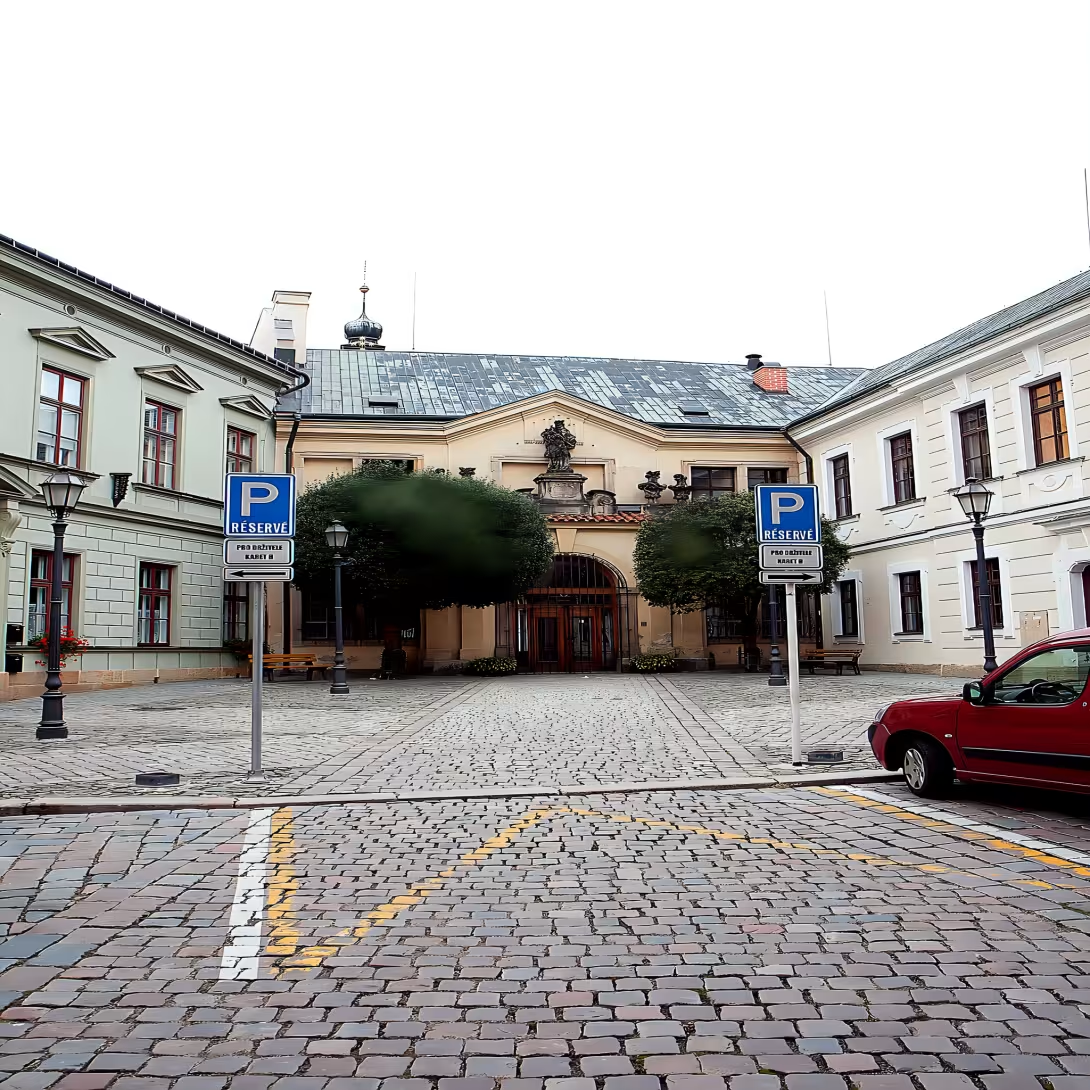
The Kněžský seminář v Hradci Králové is a historically significant complex of buildings located in the town of Hradec Králové, Czech Republic. Originally serving as a Catholic seminary for the diocese from 1706 to 1950, this site has evolved through various architectural phases and functions over the centuries. Today, it houses the library of the Medical Faculty of Charles University in Hradec Králové, making it an important cultural and educational landmark.
The origins trace back to a royal castle from the 14th century, destroyed during the Hussite Wars in 1423. The current structures were constructed between 1706 and 1714 under Tobiáš Jan Becker, who led the diocese at that time. This period marked a Catholic resurgence following the Protestant Reformation, aligning with broader religious and political changes within the Habsburg Monarchy.
Architecturally, the site reflects several development phases. Initially built as a seminary complex in the early 18th century, it underwent significant renovations after fires and other damages throughout the 18th and 19th centuries. Architects František Kremer and his son Antonín Kremer played crucial roles in these transformations, contributing to its current form. The complex includes a church dedicated to Saint John Nepomucene, featuring a statue of the saint at the entrance, adding to its historical and artistic significance.
Ownership and administration have seen notable changes over time. Initially part of a royal castle, it became diocesan property in 1706. The seminary functioned under various administrators until its closure in 1950 due to government regulations. Following this, the complex transitioned into an educational facility for Charles University.
Key events include its destruction during the Hussite Wars and subsequent reconstruction as a seminary. Between 1762-1767, adjacent buildings were acquired and renovated to expand facilities, including a significant library. The complex faced further challenges in the 19th century with fires and military actions but was restored by 1888. Its declaration as a cultural monument in 1964 underscores its historical importance.
Today, the Kněžský seminář v Hradci Králové is not only an architectural treasure but also a vibrant educational hub. The library of the Medical Faculty serves as a central resource for students and researchers, while the site's rich history attracts visitors interested in exploring its storied past. Its location in the historical heart of Hradec Králové adds to its allure, making it a must-visit destination for those keen on understanding the cultural and educational evolution of this region.
The Kněžský seminář v Hradci Králové stands as a testament to the resilience and adaptability of historical structures. Its journey from a royal castle to a modern academic facility highlights its enduring significance. Visitors are invited to explore this remarkable site, where history and education converge in a unique architectural ensemble.
Then and now
Drag the slider to compare how the landmark may have looked when it was built with the view today.
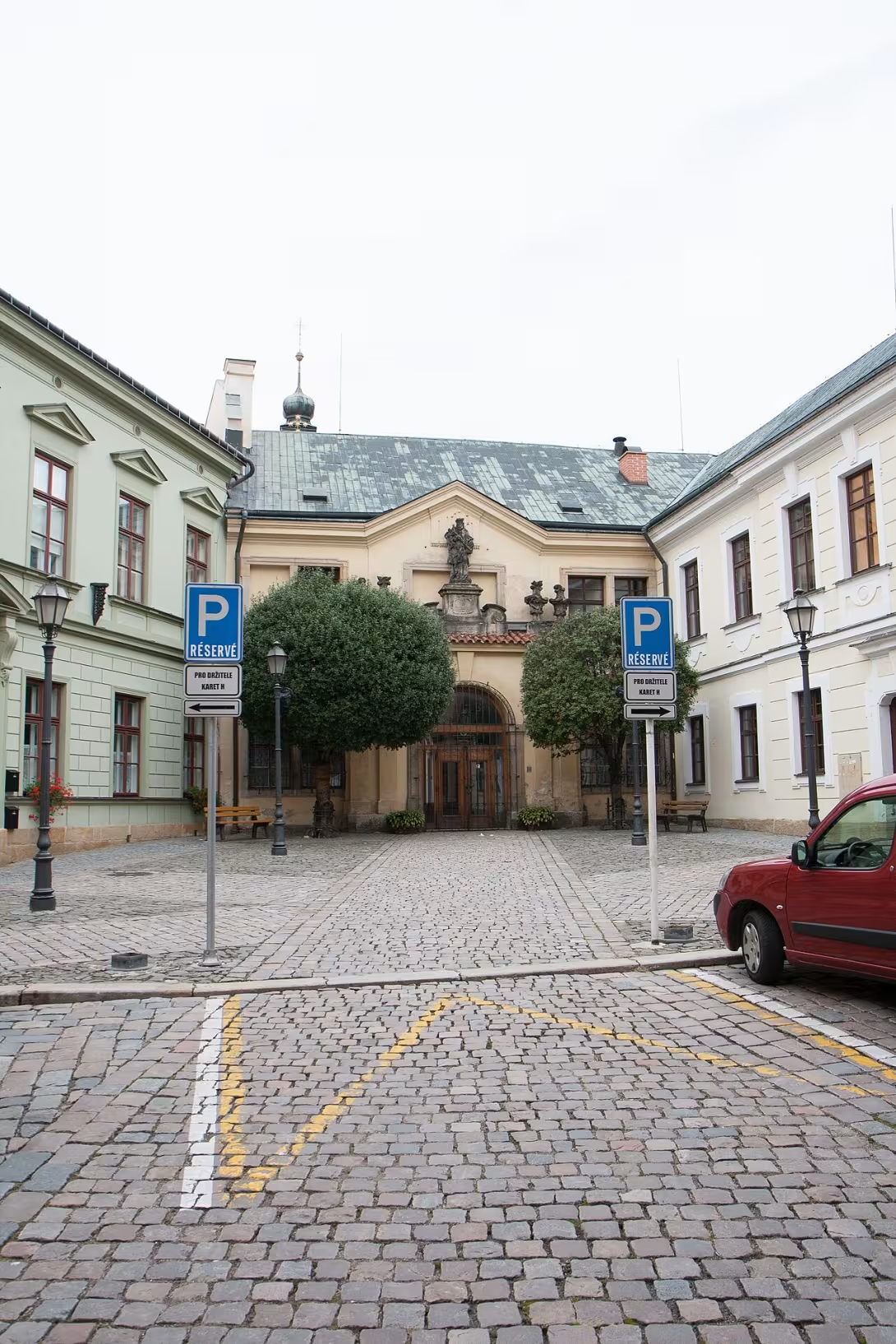

The historical appearance on the left is an AI-generated visualisation and serves as inspiration only.
Historical milestones
- 1423
- The original royal castle was destroyed during the Hussite Wars.
- 1706-1714
- Construction of the bishop's seminary and Saint John Nepomucene church.
- 1762-1767
- Acquisition and renovation of adjacent buildings for seminary use, including a significant library.
- 1950
- Closure of the seminary following government regulations.
Architectural development
The site has undergone several architectural phases. Initially, it was a royal castle in the 14th century, later becoming a seminary complex from 1706 to 1714. The buildings were significantly renovated after fires and other damages throughout the 18th and 19th centuries, with contributions by architects František Kremer and his son Antonín Kremer.
Historical events
1423: The original royal castle was destroyed during the Hussite Wars.
1706-1714: Construction of the bishop's seminary and Saint John Nepomucene church.
1762-1767: Acquisition and renovation of adjacent buildings for seminary use, including a significant library.
1950: Closure of the seminary following government regulations.
Owners
The site was originally part of a royal castle. In 1706, it became property of the diocese of Hradec Králové under Tobiáš Jan Becker. The seminary and its associated buildings were used by the Catholic Church until 1950 when it was closed due to government regulations.
Points of interest
- Despite its current role as an educational facility, the Kněžský seminář v Hradci Králové was originally part of a royal castle that dates back to the 14th century and was destroyed during the Hussite Wars in 1423. This tumultuous history adds layers of intrigue to its evolution over the centuries.
- The architectural transformation led by František Kremer and his son Antonín is particularly noteworthy; they were instrumental in restoring and reshaping the complex after it suffered damage from fires and military actions, ensuring that its Baroque style was preserved and enhanced for future generations.
- A curious fact about the site's religious significance lies with the church dedicated to Saint John Nepomucene. The statue of the saint at the entrance not only adds artistic value but also serves as a reminder of his martyrdom, which is an important narrative in Czech history, especially during the Counter-Reformation period when the seminary was established.
- In 1762–1767, adjacent buildings were acquired and renovated to expand the seminary's facilities. This expansion included the creation of a significant library, reflecting the importance placed on education and knowledge preservation within the complex throughout its history.
- The site’s designation as a cultural monument in 1964 highlights not only its architectural beauty but also its resilience through various historical challenges, including government regulations that led to the seminary's closure in 1950. This recognition underscores its significance as both a historical landmark and an educational center.
Guide
This guide is narrated by a synthetic voice generated by artificial intelligence.
Show guide text
This text was created by artificial intelligence and has not been editorially reviewed. It may contain inaccuracies.
The former priests' seminary in Hradci Králové is a complex of several buildings that served as a Catholic educational institution for the Hradec Králové diocese. Today it houses the library of the Medical Faculty of Charles University.
A royal castle once stood on this site. In the 14th century it was the residence of Czech queens Eliška Rejčka and Alžběta Pomořanská. During the Hussite Wars, in 1423, it was destroyed. In the 16th century part of the ruins was rebuilt, a burgrave's court for the Hradec Králové region was established here, and in 1586 the burgrave's house was completed. This is also the origin of the local name Na Hradě.
When the office of burgrave moved to Prague, the land was given to the Hradec Králové diocese in 1706, led by Tobiáš Jan Becker. Between 1706 and 1714 a bishop's seminary and the Church of Saint John of Nepomuk were built here. The seminary then gradually expanded with neighbouring houses. After the Jesuit order was dissolved in 1767, Bishop Josef Adam Arco sought to acquire the Jesuit library, and it eventually became part of the seminary. The reconstruction was led by Hradec Králové builders František Kremer and his son Antonín. At the beginning of the 19th century, 94 theology students studied here.
The buildings were repeatedly struck by disasters. A fire in 1814 destroyed the roofs of the seminary and church, damaged the ceilings and vaults on the ground floor, and took most of the furniture and books. Repairs lasted until 1820. In 1863 all the roofs of the seminary burned again, and three years later three artillery shells hit the complex during the Prussian bombardment of the city. The complex was not repaired until 1888. At the beginning of the 20th century the rector was František Reyl, a later senator for the Czechoslovak People's Party.
The seminary was closed in July 1950 and that same year the medical faculty library moved in. In 1964 the complex was declared a cultural monument. The church was converted into a concert hall in 1976. After complete reconstruction in 2006 and 2007, the Na Hradě Gallery also began operating here.
The complex is located in the northwestern corner of the historic centre. It consists of a towered central church, the former burgrave's house adjoining it on the east, and seminary buildings on the south with four wings surrounding an arcaded courtyard. Above the entrance gate stands a statue of Saint John of Nepomuk. The Renaissance burgrave's house has a northern facade supported at the corners by massive pillars and double windows. From the original royal castle only a vaulted hall has been preserved in it.
Tips for visitors
The best time to visit the Kněžský seminář v Hradci Králové is during late spring or early autumn when the weather is pleasant, allowing you to comfortably explore both the indoor and outdoor areas of this historical complex. These seasons also offer beautiful natural light for photography, enhancing your experience as you capture the architectural details and surrounding landscapes.
It is advisable to use public transportation or park at a nearby lot outside of peak hours. The site is well-connected by local transport, making it accessible for those who prefer not to drive.
When visiting the Kněžský seminář, consider bringing comfortable walking shoes as you will likely be exploring multiple buildings and areas within the complex. A camera or smartphone with a good camera can help capture the intricate details of the architecture. Additionally, carrying a water bottle is recommended, especially if you plan to spend several hours at the site.
For photography enthusiasts, some of the best spots include the exterior facades of the seminary buildings and any gardens or courtyards that offer unique perspectives. Early morning light can provide soft shadows and highlight architectural features beautifully. Be mindful of lighting conditions as they change throughout the day to capture different moods and details.
Nearby attractions within a 30-minute walk include the Church of Saint John Nepomucene, which is known for its stunning architecture and acoustics, making it an excellent spot for those interested in music or history. Families with children might also enjoy exploring other historical sites around Hradec Králové, offering educational experiences about the region's rich past.
Frequently asked questions
Can the monument be visited?
The building is in use (offices, a school, shops and the like). The interior is generally accessible only during operating hours and tours are not usually offered; we have not verified the details. You can see the exterior from the street.
Where is the monument?
Location: Hradec Králové, Královéhradecký kraj. The map on this page shows the exact spot.
Why is the monument protected?
It is listed in the Central List of Cultural Monuments of the Czech Republic as a cultural monument (register no. 1000143432).
Businesses nearby
Do you run a restaurant, accommodation, shop, museum, rental, wellness or other visitor service near this monument? Show yourself directly to the people heading to it — this is how they will see you in the app and on the web:
Nearby
Located in Hradec Králové, the site is surrounded by historical buildings and urban landscapes. The area includes other significant monuments such as the Church of Saint John Nepomucene, which has been repurposed for musical events.
Accommodation nearby
Themed route
Trasa: Hradec Králové - historické srdce
1. Kněžský seminář v Hradci Králové (hlavní cíl) Tento komplex budov je pozoruhodný svou architekturou a historií. Nachází se v srdci historické části města a nabízí krásné prohlídky interiéru a exteriéru.
2. Kostel svatého Jana Nepomuckého Tento kostel je významnou památkou a nachází se nedaleko Kněžského semináře. Má bohatou historii a je známý svými krásnými sochami a architektonickými detaily. Je také často využíván pro koncerty a jiné kulturní akce.
3. Náměstí Svobody Toto historické náměstí je srdcem Hradce Králové. Nachází se poblíž Kněžského semináře a kostela svatého Jana Nepomuckého. Má krásnou architekturu a nabízí mnoho příležitostí k relaxaci a procházkám.
Seasonal recommendations
Jaro
Spring is the ideal time to visit the Kněžský seminář in Hradec Králové, as nature around the complex of buildings awakens to life and offers beautiful green meadows and trees. The atmosphere is full of optimism and hope. For a visit, it's best to go out in the early morning hours when the seminary is still quiet and you can explore the buildings without crowds. Don't forget to bring comfortable shoes and a camera so you can capture the beauty of nature.
Léto
The main summer season is full of life and energy, but it also means a large number of visitors. If you want to visit Kněžský seminář in Hradec Králové, we recommend going out early in the morning or late in the evening to avoid crowds. The atmosphere is warm and relaxed, but don't forget to bring an umbrella as summer weather can be unpredictable. Don't miss capturing the beautiful flowers and vegetables blooming around the complex of buildings with your camera.
Podzim
In the autumn season, Kněžský seminář in Hradec Králové is cloaked in golden and red hues that nature offers. The atmosphere is calm and quiet, as if mild winter were returning to the seminary. For a visit, it's best to go out in the late afternoon or evening when the sun is already low on the horizon creating beautiful shadows. Don't forget to bring warm clothing as it can be cold, and a camera to capture the beauty of autumn nature.
Zima
Winter is a quiet and calm season that offers Kněžskému semináři in Hradec Králové a unique atmosphere. The atmosphere is peaceful and mild, as if the seminary were returning to peace and quiet. For a visit, it's best to go out in the early morning hours when the seminary is still quiet and you can explore the buildings without crowds. Don't forget to bring warm clothing and boots with good grip so you can walk comfortably, as opening times are shorter and you might easily get lost in the cold winter weather.
Visualizations and artistic views


The visualisations are generated by artificial intelligence and serve as inspiration.
Photos from the area
Real photos taken near the monument

Zdroj a licence jsou uvedeny u každého snímku.
Tips from visitors
No tips yet. Be the first!
Log in and add your tip.
Sources and literature
Photos: Petr Doležal / CC BY-SA 3.0, rozlišení zvýšeno umělou inteligencí — Wikimedia Commons. The author and licence also appear when you hover over the image.
Faktickým podkladem tohoto textu byl článek na Wikipedii, jehož autory jsou přispěvatelé Wikipedie. Článek je dostupný pod licencí CC BY-SA 4.0.
Location on the map
More monuments – Hradec Králové
Show all in the municipality
Příběhy a pověsti
Legendy, pověsti a příběhy spjaté s touto památkou
Fotografie návštěvníků
Zatím žádné fotografie. Buďte první, kdo přidá fotografii z návštěvy!
Log in a přidejte svou fotografii nebo hodnoťte.
Za ověřenou návštěvu v aplikaci získáte víc bodů — poznáme podle GPS, že jste na místě.
Reviews and comments