






Kodská jeskyně Cave
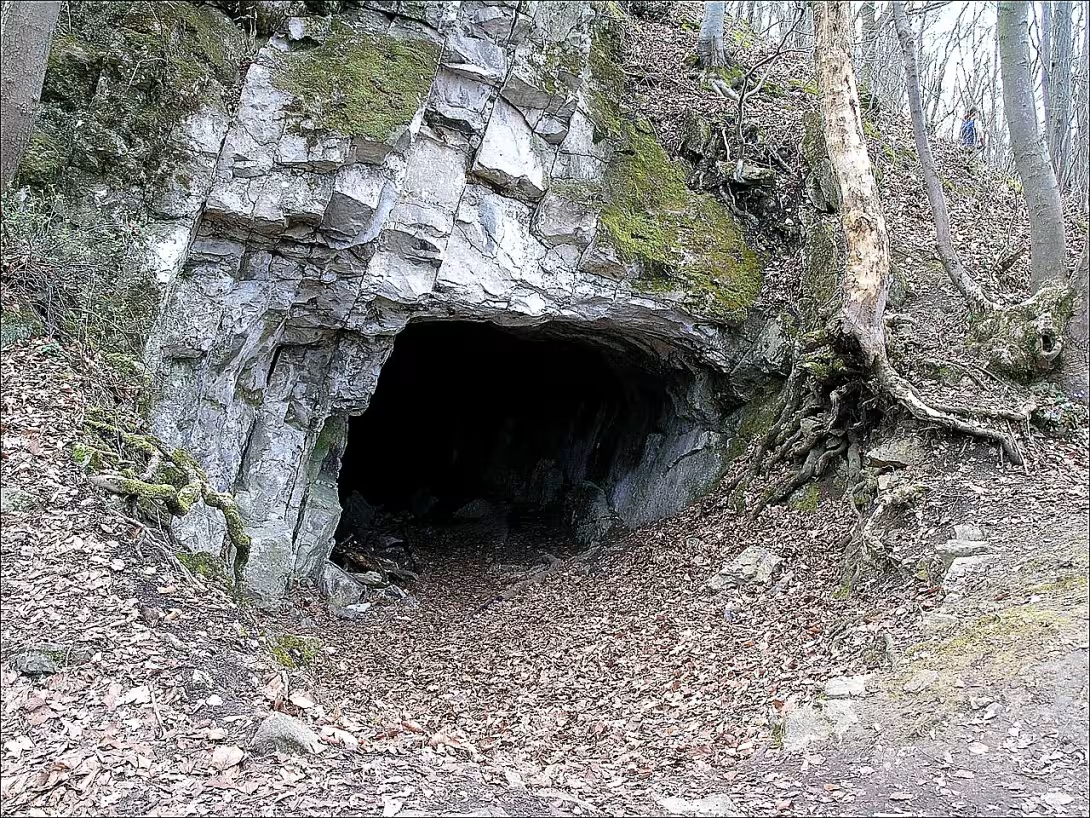
Kodská jeskyně is an archaeological site near the Koda settlement on the Tetína cadastral in the Protected Landscape Area of the Czech Karst, within the National Nature Reserve Koda. Its importance lies in the proofs of the long-term human presence which revealed research in the 1920s and 1930s. These confirmed living from middle paleolithic to Neolithic, Neolithic, Bronze Time and Latin period to Middle Ages. At present, however, all cultural layers in the cave are removed.
The cave served in prehistory and history as a haven and a mansion. The historical context relates to the settlement of the Czech Karst, where hunters and collectors lived in paleolithic and neolithic and later the first farmers were established. Various cultural groups sought protection and permanent housing, as evidenced by the findings, from prehistory to the Middle Ages.
As a natural space, the cave does not have a building style or architectural elements in the human sense. Its appearance is given by geological processes of limestone karst typical of the Czech Karst. The supporting documents do not give details of dimensions, orientation or internal structure.
Specific information about previous owners or administrators is not available. Today the location lies in the territory of the National Nature Reserve Koda and thus is subject to protection under the Nature and Landscape Conservation Act.
The key event was systematic archaeological research in the 1920s and 1930s, which brought huge amounts of findings - ceramics, bone and stone tools. These demonstrate the continuity of living through a number of archaeological cultures. The interesting thing and the loss to science is that, today, all cultural layers are completely removed, which makes it impossible to further stratigraphic research.
The cave is part of the Protected Landscape Area of the Czech Karst and NPR Koda. Accessibility for the public is not specified, but the location lies around other caves and chasms, forming an attractive whole for visitors. Although archaeological layers are not preserved, the site maintains high information value as evidence of a thousand-year relationship between man and this beautiful territory. The visit offers an opportunity to understand the context of prehistoric settlements in the natural environment of the Czech Karst.
Historical milestones
- medium paleolit
- The beginning of the cave dwelling by hunters and collectors, supported by archaeological findings.
- neolit to Mediaeand
- Continuous settlement through Neolithic, Neolithic, Bronze and Latin times.
- 1920-1930
- Systematic archaeological research revealed ceramics and stone tools.
- 20th century
- Removing all cultural layers, which made it impossible to further strategize.
Historical events
The surveys in the 20th and 30th years of the 20th century confirmed the settlement of the cave from paleolithic to medieval.
Points of interest
The user wants interested facts about the "Kodská jeskyně" based * only * on the provided text. Language: Czech only. Format: Plain text, each fact on a new line starting with a dash (-). Max 5 items, max 2 sentences each. No external knowledge. If nothing clarifies, return empty.
Analyzing the text for "interested facts": 1. Long-term human presence stated by research in 1920s / 30s: "The importance lies in the proofs of long-term human presence, which revealed research in the 1920s and 1930s." + "confirmed living from middle paleolithic to Neolithic, Neolithic, Bronze and Latín periods to the Middle Ages." 2. Cultural layers fully removed: "The interesting thing and loss for science is that today all cultural layers are completely removed, which makes it impossible to further stratigraphic research." (Explicitly called "interesting" in text). 3. Served as refusion and settlement from prehistory to Middle Ages: "Cave served in prehistory and history as a haven and seat." + "Various cultural groups sought protection and permanent housing here from prehistory to the Middle Ages." 4. Part of protected landscape area and nature reserve: "The cave is part of the Protected Landscape Area of the Czech Karst and NPR Koda." 5. Shape given by geological processes, no architecture: "As a natural space the cave does not have a building style or architectural elements in the human sense. Its appearance is given by geological processes of limestone karst typical of the Czech Karst." 6. Systematic research yielded huge amount of finds (pottery, bone / stone tools): "The key event was systematic archaeological research in the 1920s and 1930s, which brought huge amounts of findings - ceramics, bone and stone tools."
Selecting top 5 (max limit), keeping max 2 sentences.
1. Research in the 20th and 30th years of the 20th century confirmed the constant residence from middle paleolithic to neolithic, eneolite, bronze period and Latin period to the Middle Ages. 2. The interesting thing and the loss to science is that today, all the cultural layers in the cave are completely removed, which makes it impossible to further stratigraphic research. 3. The cave served as a refuge and permanent residence for various cultural groups seeking protection in the Czech Karst. 4. Systematic archaeological research has brought a huge number of findings, including ceramics, bone and stone tools, to demonstrate the continuity of living. 5. Its appearance is due to geological processes of limestone karst and has no building elements in the human sense.
All good.
Guide
Show guide text
This text was created by artificial intelligence and has not been editorially reviewed. It may contain inaccuracies.
Welcome to the Koda Cave in Tetín, one of the key archaeological sites in the Protected Landscape Area of the Czech Karst. This cave witnessed a long-term human presence from middle paleolithic to medieval, making it an invaluable place to understand our past.
Let's go into history. The caves were inhabited by hunters and collectors already in the middle paleolithic, as evidenced by archived archaeological findings. Since then, the cave has been continuously populated over the Neolithic, Neolithic, Bronze and Latín times. In the 1920s, systematic archaeological surveys were conducted, which revealed ceramics and stone tools, suggesting a rich history of settlement.
Notice the surrounding environment. Although there are currently no visible cultural layers, their existence has been thoroughly documented. This archaeological treasure reminds us of the complexity and durability of human activities in this area.
The following shall include the following:
- The cave was inhabited by the middle paleolithic, which makes it one of the most important archaeological sites in the Czech Republic.
- Archaeological surveys of the 20th and 30th years of the 20th century revealed ceramics, bone and stone tools that show long-term living.
- The cave was continuously populated through Neolithic, Neolithic, Bronze and Latin times, suggesting its strategic significance.
- Although cultural layers have been removed, the history of the cave remains captured in archived findings and studies.
Now that you've learned about her rich heritage, the invitation is to explore this fascinating location further. Whether you imagine the life of ancient inhabitants or immerse yourself in archaeological research, Kodská jeskyně has something interesting for everyone. Thank you for your visit and I hope this history has inspired you to explore again!
Tips for visitors
The best time to visit is the spring or autumn period, when the Protected Landscape Area of the Czech Karst pleasant weather for nature and temperature are mild.
You can reach the place by car and public transport; please check the current traffic connections and parking options in the search engine before the journey.
Bring quality hiking shoes, drinking water and a flashlight if you want to take a closer look at the surrounding caves and chasms. For the best photos we recommend using natural daylight, which will highlight the rock shapes and texture of the surrounding terrain.
You can visit the village Tetín, the Koda settlement or explore other caves and chasms within the Czech Karst. For families with children, the best choice is a free walk in nature, which offers the possibility of safe exploring the surrounding terrain.
Businesses nearby
Events nearby



Zdroj akcí: otevřená data měst a obcí ČR (Národní katalog otevřených dat) a kalendář akcí Národního památkového ústavu.
Nearby
Protected landscape area Český kras, village Tetín, settlement Koda, other caves and chasms of České krás.
Accommodation nearby
Trips and activities nearby
Guided tours, tickets and activities nearby from GetYourGuide
Affiliate link: if you buy from the partner, we may receive a commission. The price for you does not change.
Search tours and activities →Themed route
1. municipality Tetín Type: Default point Why to visit: Historical village that serves as an ideal place to start the trip.
2. Protected Landscape Region Czech Karst Type: Natural territory Why to visit: This area offers beautiful landscape forms along the whole length of the route.
3rd settlement of Koda Type: Human Mansions Why to visit: A small settlement that will lead you directly to the main archaeological monument.
4.Kodská jeskyně Type: Archaeological site Why to visit: The main destination of the trip where you can recognize important historical clues.
5. another cave and abyss of the Czech Karst Type: Natural services Why to visit: A great choice for continuing to discover the underground secrets of the region.
Seasonal recommendations
In the spring in Tetín, the awakening nature and lush greenery that surrounds the site. The atmosphere is full of hope and the light is fine, which helps to better understand the details in the field. We recommend moisture-resistant shoes because the roads can be muddy after melting snow. An ideal visit in the morning is when the air is the cleanest.
The summer season brings a radiant sun and thick shade of foliage, which creates contrast with open parts of the monument. There are more visitors in the main season, which is why it is best to arrive first thing in the morning to avoid the biggest crowds. Dress up light and breathable materials and do not forget enough fluids to travel.
In autumn, the landscape around the Kodské Cave will turn into golden and brown tones, which gives the place a mysterious and melancholy mood. Fogs above the river often create a dramatic scenario that underlines the historical importance of the site. It is suitable for layered clothing and visit in late afternoon hours when the sun throws long shadows.
In winter there is deep silence in Tetín and the landscape is free of leaves, which reveals the structure of the terrain which is hidden in summer. Freezing air and any snow cover create a sterile and calm atmosphere. It is essential to have warm thermobrushing and waterproof shoes. Due to the shorter day and limited traffic, we recommend planning arrival with sufficient reserve before dark.
Visualizations and artistic views

The visualisations are generated by artificial intelligence and serve as inspiration.
Photos from the area
Real photos taken near the monument


Zdroj a licence jsou uvedeny u každého snímku.
Tips from visitors
No tips yet. Be the first!
Log in and add your tip.
Sources and literature
Fotografie: Matěj Baťha / CC BY-SA 2.5 — Wikimedia Commons. The author and licence also appear when you hover over the image.
Faktickým podkladem tohoto textu byl článek na Wikipedii, jehož autory jsou přispěvatelé Wikipedie. Článek je dostupný pod licencí CC BY-SA 4.0.
Location on the map

Příběhy a pověsti
Legendy, pověsti a příběhy spjaté s touto památkou

Fotografie návštěvníků
Zatím žádné fotografie. Buďte první, kdo přidá fotografii z návštěvy!
Přihlaste se a přidejte svou fotografii nebo hodnoťte.
Za ověřenou návštěvu v aplikaci získáte víc bodů — poznáme podle GPS, že jste na místě.
Reviews and comments