

Kolomazná pec Kiln
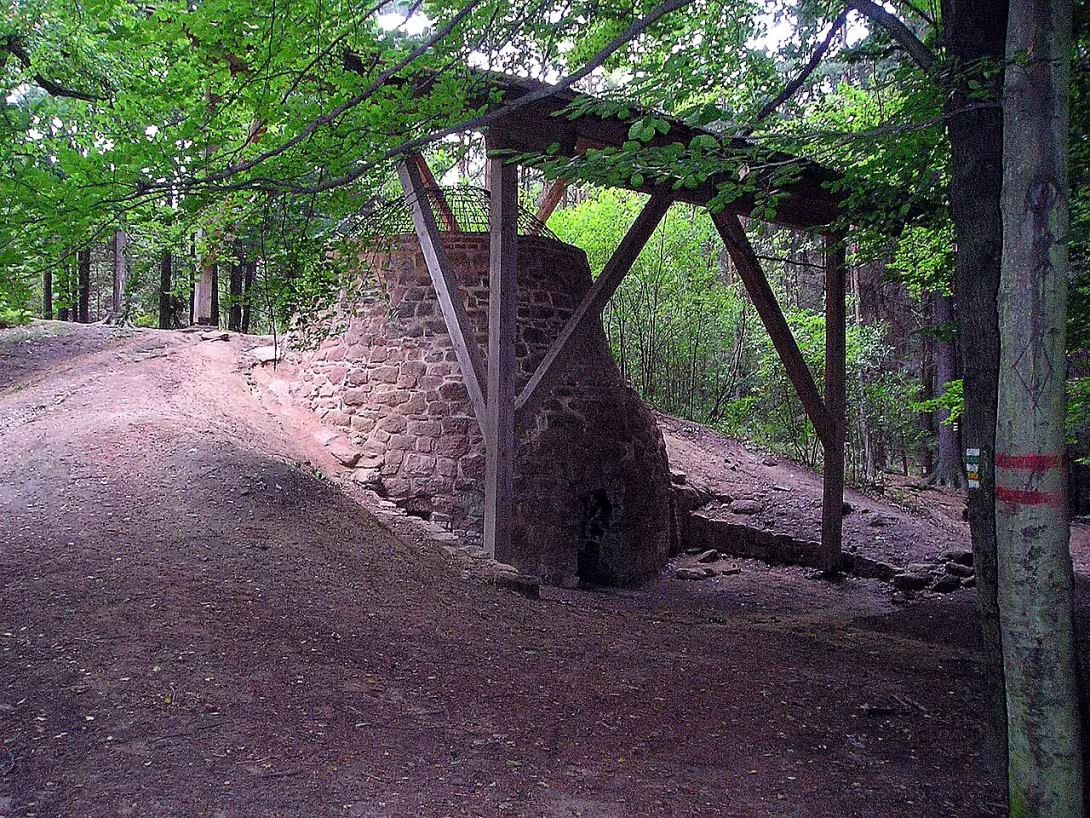
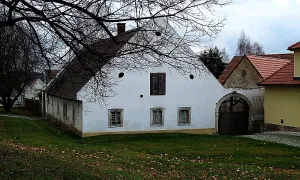
Kolomazná pec in Pilzni- Bolevci is a unique technical monument from the 19th century. It was used to make tar and colomase. Located in the scaffolding of Branty on the northern edge of the Natural Reserve Stone Pond. It represents one of the most preserved furnaces of its kind in Central Europe and probably the only one still standing in the Czech Republic.
The object is evidenced by the degraded forest crafts, namely tar and colomaturism. Production took place in close proximity to the raw material, i.e. on the edges of the woods. The resulting product, tar, served as a universal preservative and impregnation agent. From it produced colomaz was used as lubricant until the 19th century when it was replaced by industrial production of mineral oils.
No direct written sources are available about the exact date of the furnace formation. While native literature traditionally mentions half of the 18th century, the archaeological research from 1995 refuted this assumption because older artifacts were not found. The city council records suggest that the furnace may have been created only in connection with the 1812 caterpillar calamity. The one in the Pilsen woods caused a surplus of cut wood. The existence of tar plants in the Pilsen forest is documented in 1820. At that time, the salaries for the rental of eight furnaces are mentioned, which was probably also a painful one. The operation probably ceased around 1854 due to the development of cheaper industrial production. František Beránek, who lived in Bolevici in the second half of the 19th century, could be the last colonolubricant in this building.
The design of the kiln has the shape of a homole and is partly embedded into the slope. Originally, it reached a height of slightly more than four metres and ended with a half vault. The body was double-hull. The outer mantle, called the bystander, is lined with quarry stone, mainly from local arcosis, and has an external diameter of over 6 metres. The inner shell, the so-called pot, collapsed. However, its existence is evidenced by a brick floor with an oval plan and a slope towards the west. The interspace between the cloak was narrow, ranging from 18 to 42 centimeters.
On the west side of the ground, there are three holes with brick segment enchantments. The middle, largest hole led into the inner space and served to drain tar into the pit. The outer openings were released into the outer shell space. There were small holes in the upper part, so-called earplugs, and the main opening at the top of the arches. In the immediate vicinity of the kiln there were other objects, such as the warehouse of raw materials and tools. Archaeological research captured the remains of the wooden structure with the doors, which lay on the stone suspicion of locking into the western front of the furnace.
The building was rescued by members of the Czech Tourist Club. They took care of it from the beginning of the 20th century and in 1914 they brought the tourist path to it. In the 1930s, the first amateur repairs and temporary roofing took place. Since 1963, the furnace has been protected as a cultural monument. In 1984 the first archaeological research took place and in the 1980s another repair took place under the heading of the Czech Union of Protectors of Nature.
Due to the desolation state in the late 1990s, a complete reconstruction was carried out according to the Ing. J. Anderleho project in 1998. The original archaeological masonry was supported by a new brick lining and replaced the collapsed upper arch with a forged grate. To protect against water leakage, the object was covered with a massive shelter with a counter roof.
Today, the colomable furnace is accessible as a stop for Sigmond's teaching trail. It is a rare technical unique that allows you to see the history of traditional forest crafts. Visiting this place offers the opportunity to see the rare rest of the technological equipment, which we will virtually not find in the Czech Republic in a similar condition.
Then and now
Drag the slider to compare how the landmark may have looked when it was built with the view today.
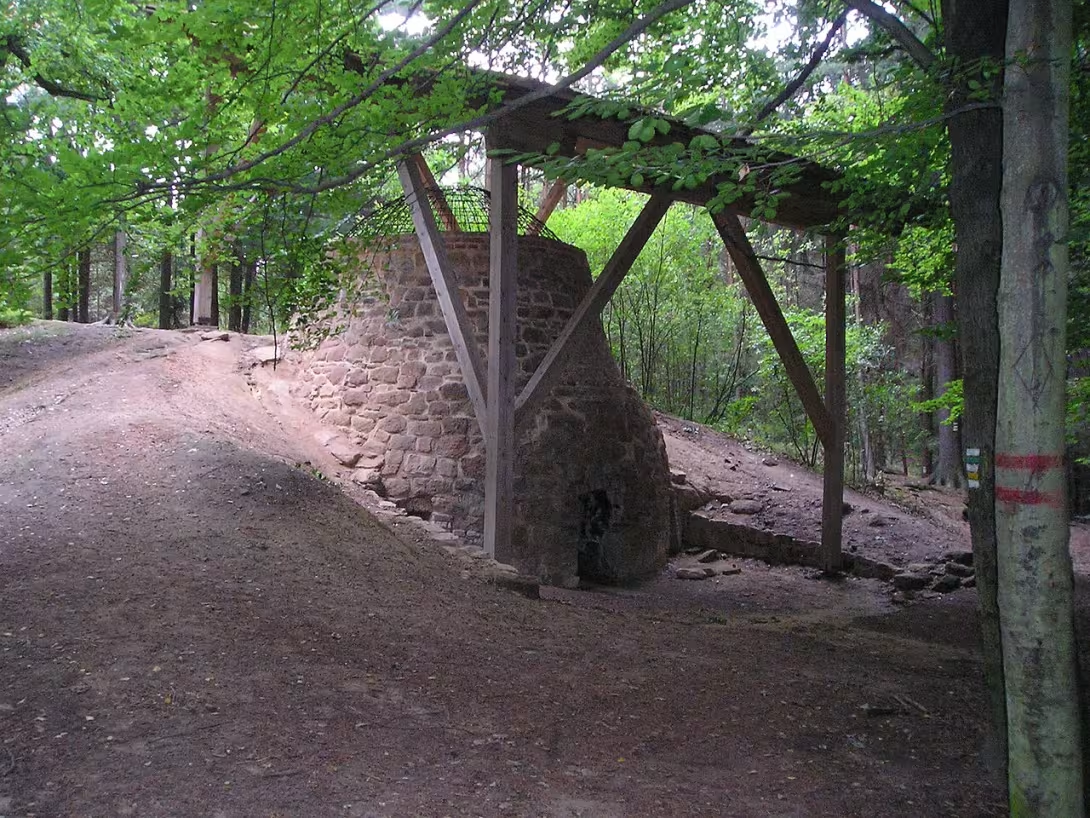
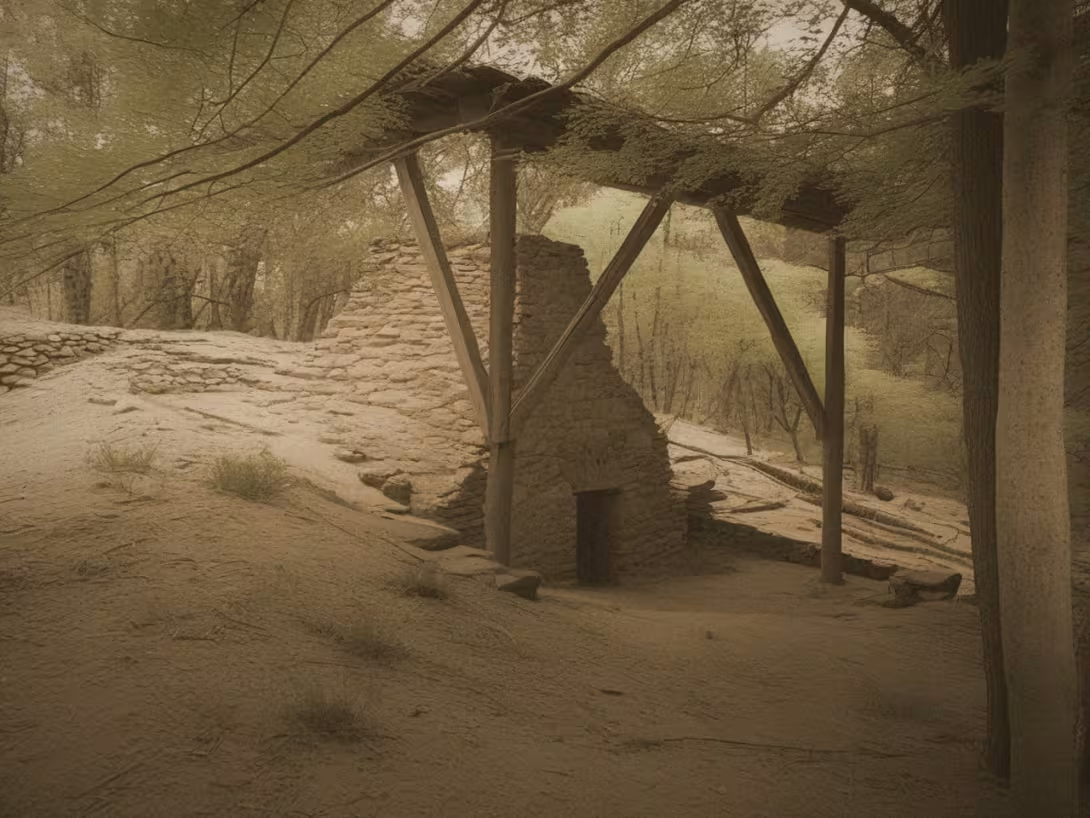
The historical appearance on the left is an AI-generated visualisation and serves as inspiration only.
Historical milestones
- 1914
- A tourist trail was brought to the furnace.
- 1963
- The building is protected as a cultural monument.
- 1984
- The first archaeological research of the object.
- 1998
- Complete reconstruction according to project Ing. J. Anderleho.
Architectural development
The original stone masonry construction was supported by a new brick lining in 1998. In the 1930s, the building was temporarily shrouded. The reconstruction of the late 1990s was based on previous archaeological research from 1984 and 1995.
Historical events
1812 - caterpillar calamity leading to possible furnace construction; 1963 - declaration of cultural monument; 1998 - complete reconstruction of the building.
Points of interest
- It is one of the most preserved furnaces of its kind in Central Europe and probably the only one standing in the Czech Republic. - The construction has the shape of a homola and is partly embedded into the slope. - The outer shell is embossed from the local arcade and has an external diameter of over 6 meters. - It was used to make tar and colomase. - Since 1963, the furnace has been protected as a cultural monument.
Guide
This guide is narrated by a synthetic voice generated by artificial intelligence.
Show guide text
This text was created by artificial intelligence and has not been editorially reviewed. It may contain inaccuracies.
Welcome to Bolevci. Right now, you're facing a real one that may look like an ordinary stone building at first glance, but in rzeczyness, it's a silent witness to the extinct world of forest craftsmen. In front of you, there's a colomable furnace. Stop for a moment and just feel her presence in the landscape. It is a place where the human need to use nature is met with ancient technical skill. Take a look at this building and realize that you are looking at one of the most preserved examples of its kind throughout Central Europe. It is very likely that it is the only such standing furnace in our entire state. Now let's go deeper in time and try to understand why this furnace was created. History takes us to the beginning of the nineteenth century. Imagine a year of a thousand eight hundred twelve. At that time, there was a devastating calamity caused by caterpillars. A huge number of forests were destroyed and an incredible surplus of wood suddenly appeared in the landscape. It is this tragedy for nature that has become an impulse for people. Instead of just leaving the wood to rot or burn, they decided to use it to produce valuable substances. This is how this furnace was created, which was used to produce tar and collomazine. These substances were absolutely necessary at the time. They served as universal lubricants, protected the wood from moisture and were key to craftsmen and ordinary people until the end of the nineteenth century. Now pay attention to the architecture itself and the structure that is right in front of your eyes. Note that the furnace does not have the shape of a classic tower, but rather resembles a homola. This is a very clever solution, because the construction is partly embedded directly into the slope, which helped in handling the material while ensuring stability. Look closer at its surface. The outer mantle is embossed with local stone, specifically from the arcosis. Notice the texture of these stones and how they fit together. If you measured it, you would find that the outer diameter exceeds six meters. It's a robust, massive building that was supposed to withstand extreme temperatures and pressures in the burn process. When we think about the people who worked with this furnace, we remember hard physical work in the woods. Persons connected to this place include František Beránek, for example. Imagine those people who spent days and nights here, watching the fire and watching the process closely to get as much tar as possible. It was a job full of smoke, heat and patience. For many years, this furnace was a forgotten corner, until, in the year one thousand nine hundred fourteen, when a tourist trail came to the building, the curious people began to flow here. Now let's think about how this monument got to the state you see it in today. It's a story of long care and recognition of its value. In a thousand and nine hundred and sixty-three, the furnace was officially declared a cultural monument, which provided it with basic protection. Several decades later, in the year one thousand nine hundred and eighty-four, there was the first archaeological research. Experts tried to clarify exactly how the furnace worked and how it was used in the past. The highlight of the reliving of this place was a complete reconstruction in the year one thousand nine hundred ninety-eight. This repair was carried out according to a meticulous project by engineer J. Anderle. Thanks to his work we can admire this building today in its full beauty and knowing it is authentic. Here's one interesting thing you may have missed. Try to imagine that this massive stone structure was essentially an ancient chemical operation. What we see today as a romantic part of the landscape was once a place of intense work and strong odor. The idea that this one furnace is likely to remain in our state gives this place a special aura. It's like finding the last piece of puzzle from an image that no one can put together anymore. It is fascinating how one biological calamity of a thousand eight hundred and twelve could lead to the construction of such a unique technical work that survived more than two centuries. Now that you know the story of this greasy furnace, I suggest you go around it. Feel how the building adapts to the terrain of the slope. Try to imagine the heat that used to make her feel and the smell of larvae and wood that must be in the neighborhood. It is a place where time has stopped and where we can feel respect for craftsmen who have managed to create something useful and lasting out of failure in the form of a destroyed forest. Thank you for spending a moment with us at this fascinating monument. We hope you're interested in her story. We now invite you to further explore the surroundings of Bolouc and continue your journey along the surrounding paths. We wish you a pleasant rest of the day and many other discoveries in our beautiful region. Goodbye.
Tips for visitors
The best time to visit is autumn months, when the colors are sown by the Branty beautifully complement the dark stone kiln. You travel to the area by car or public transport; Check the exact routes in the current timetables. Since the monument is located in the forest area, we recommend shoes suitable for the field and insect repellent. For the best photos we recommend morning or late afternoon light that highlights the texture of the old masonry; The most interesting angles are from around the educational Sigmond trail. For families with children, it is ideal to connect the path to the oven with a walk on the educational path where children can discover the secrets of the lost forest craft.
Frequently asked questions
Can the monument be visited?
We have not verified whether this monument is accessible. Please ask the owner or operator, or the local municipal office.
Where is the monument?
Location: Bolevec. The map on this page shows the exact spot.
Why is the monument protected?
It is listed in the Central List of Cultural Monuments of the Czech Republic as a cultural monument (register no. 1000132225).
Businesses nearby
Do you run a restaurant, accommodation, shop, museum, rental, wellness or other visitor service near this monument? Show yourself directly to the people heading to it — this is how they will see you in the app and on the web:
Nearby
🏰 Historic sites (171)
- Památník Karla Klotze - poslední zajíc 0.6 km
- sv. Ambrož 0.8 km
- Na památku obětem 1. a 2. sv.války 2.8 km
- Air Park Zruč 3.1 km web
- Památník Jindřichu Mikoletskému 3.2 km
- památník Alexandra Ilarionova 3.3 km
- Pomník padlým v I. světové válce 3.3 km
- Památník zaniklé osady Amerika 3.7 km
- Památník Martina Kopeckého 3.8 km
- sv. Jakub 3.8 km
- Sherman osvoboditel 4.2 km
- Pecihrádek 4.2 km
- Gerald Durrell 4.3 km
- Malochova skalka 4.3 km
- Pravěká osada v Zoologické a botanické zahradě města Plzně 4.4 km
- Josef Beran 4.5 km
- sv. Jan Nepomucký 4.6 km
- Galerie Az 4.7 km web
- sv. Jan Sarkander 4.8 km
- sv. Jan Nepomucký 4.8 km
🍽️ Restaurants and dining (567)
- Kamenný rybník 0.7 km
- Ranč Šídlovák 1.2 km
- Hospoda Tachovska 1.3 km
- Pulcinella 1.4 km +420 377 538 118 web
- Pivnice U Feřtů 1.4 km
- vinárna U Beranů 1.6 km
- Fresh Corner 1.6 km
- Balaton 1.6 km
- Bolevecká Pizzerie 1.7 km
- Hadí vrána 1.7 km +420604 473 344 web
- Asijská restaurace BISTRO - SUSHI 1.8 km Gerská 1247/34 +420 776 469 856
- Kavárna MANETKA 1.8 km Rabštejnská 2337/30 +420 773 300 833 web
- Pivnice Plzeňka 1.9 km Gerská 1247/34 +420 739 320 808
- Family Kebab & Pizza 1.9 km Gerská 2030/23 +420739123115
- Wok Express 1.9 km Gerská 2030/23 +420773598688
- Ruds pizza 1.9 km Gerská 2129/30f +420 727 855 266 web
- I ❤️ pizza, I ❤️ kebab 1.9 km Gerská 1916/30c
- Döner Kebab Plzeňka 1.9 km Gerská 1914/30a +420775290099 web
- Starobolevecká hospůdka 1.9 km
- Pivnice Žlutická 2.0 km +420 373 315 230
🏨 Accommodation (46)
- Pension K 2.0 km U Velkého rybníka 1419/44 web
- Ostende 2.2 km
- Panorama 2.9 km
- Kolej Šafránkův pavilon 3.0 km
- Hotel Sport Zruč 3.6 km web
- Kolej Bolevecká, Univerzita Karlova 3.8 km
- U Pramenů 3.9 km
- Hotel Roudná 4.7 km +420 377 259 926 web
- Riverside 4.8 km
- Hotel Stella Garni 5.1 km Mohylová 871/18
- Courtyard by Marriot 5.1 km
- pension v Solní 5.2 km
- Pension City 5.2 km sady 5. května 301/52 +420728501710 web
- Avenue Pallova 5.2 km Pallova 2814/28
- Hotel Rango 5.2 km +420377221188
- Hotel Green gondola 5.2 km
- Hotel Central 5.2 km web
- Ubytovna Palackeho 6 5.3 km +420377537864 web
- Wallis 5.3 km Palackého 74/11
- U Zvonu 5.3 km
🚲 Rentals and sport (105)
- Boulderingové stěny u Třemošenského rybníka 1.2 km
- Prokopávka 1.6 km
- Sportovně střelecký klub Plzeň-Slovany 1.8 km web
- Ostende 2.3 km
- Sportovní klub Neslyšících 2.4 km
- Cyklo Atom 2.6 km +420 777 130 258; +420 606 625 008 web
- Koloseum 2.6 km +420377970269 web
- AB VELOMA Cyklo Jánský 2.8 km Sokolovská 1119/48a +420 739 570 091 web
- Sport park 1 2.8 km +420 774 261 786; +420 606 619 570 web
- Bazén Lochotín 2.8 km web
- JK Plzeň 2.8 km web
- SPOKE s.r.o. 3.3 km web
- Sportisimo 3.4 km Studentská 1709/131 web
- Tenisový klub Škoda Plzeň 4.4 km
- Husky 4.5 km +420 378 770 003
- Tréninkové centrum FC Viktoria Plzeň 4.5 km
- Ski Bike Centrum 4.6 km +420770111712 web
- Sportovně rekreační centrum 4.7 km web
- Areál Štruncovy sady 4.9 km
- I. ČLTK Plzeň 4.9 km
🥾 Hiking and nature (215)
- Zookoutek 0.9 km
- Krmelec 1.0 km
- Studánka U Košutky II 1.2 km
- Neptun 1.3 km web
- Orlík 1.4 km
- U Školky 1.8 km
- park Manětínská 1.9 km
- Selský dvůr U Matoušů 2.1 km Bolevecká náves 1/3 +420377360928 web
- park Podzemník 2.1 km
- park Kralovická 2.1 km
- park Zemník 2.2 km
- U cesty 2.3 km
- Sytná 2.4 km
- Vyhlídka na Plzeň 2.4 km
- Na Miřnících 2.6 km
- Dva kameny 2.6 km
- sportovní areál V Luhu 2.6 km
- Krkavec 2.7 km
- park U Jezírka 3.0 km
- Vyhlidka pod Krkavcem 3.1 km
Accommodation nearby
Trips and activities nearby
Guided tours, tickets and activities nearby from GetYourGuide
Affiliate link: if you buy from the partner, we may receive a commission. The price for you does not change.
Search tours and activities →Themed route
Here is the design of the thematic route:
1. Sigmond's Path (Educational Path) - The default point of the path that will guide you through the landscape and provide interesting information about the surrounding environment. 2. Natural reservation Stone pond (protected area) - Walk through the northern edge of the area offers the beauty of untouched nature. 3. Polishes Branty (forest area) - Atmospheric section of the road, where the calm of the forest is connected to the historical context of the place. 4. Kolomazná pec (industrial monument) - The main destination of the trip, which represents a unique technical unit from the time of the ancient craft.
Seasonal recommendations
Spring: In the spring period, Kolomazná pec in Bolevce is transformed into a special place where nature begins to come to life and the surrounding forests turn into living grey. The sun's rays penetrating through the fog create a unique atmosphere that attracts visitors looking for peace and beauty of the rebuilding nature. It is advisable to visit the memory early in the morning or late in the afternoon to enjoy a mild temperature and avoid the initial day of visitors. It is recommended to wear clothes suitable for a mild winter, since morning and evening can still be cold.
Summer: In summer Kolomazná pec takes over in Bolevice life when the surrounding nature is in full bloom. In the main summer season the number of visitors may be significantly higher, therefore it is recommended to come early in the morning or later in the day to save the crowd. Long legs and protective clothing are key to sun protection, while light boots help to overcome possible terrain imbalances.
Autumn: In the autumn period, the surroundings of the Collomazné kiln in Bolevce become colored nuances, when tree leaves turn into golden and red shades. This change of atmosphere brings calm and relief from summer noise. Visit the memory in the interheating, when the temperature is still pleasant, but without excessive attendance, which characterises other parts of the year. Clothes suitable for a mild winter with gloves and scarf are ideal because it can be colder in autumn days.
Winter: Winter Kolomazná pec offers unique views of the surrounding landscape covered with snow and ice, creating a magical atmosphere. Sun rays reflecting from ice can cause beautiful effects of light that give visitors a sense of peace and relief. Visit the memory in the interheat or at the end of the afternoon when the temperature is lighter, but it will still be cold morning and evening.
Visualizations and artistic views


The visualisations are generated by artificial intelligence and serve as inspiration.
Photos from the area
Real photos taken near the monument

Zdroj a licence jsou uvedeny u každého snímku.
Tips from visitors
No tips yet. Be the first!
Log in and add your tip.
Sources and literature
Photos: Chartep / CC BY-SA 3.0 — Wikimedia Commons. The author and licence also appear when you hover over the image.
Faktickým podkladem tohoto textu byl článek na Wikipedii, jehož autory jsou přispěvatelé Wikipedie. Článek je dostupný pod licencí CC BY-SA 4.0.
Location on the map
Příběhy a pověsti
Legendy, pověsti a příběhy spjaté s touto památkou
Fotografie návštěvníků
Přidat fotografiiZatím žádné fotografie. Buďte první, kdo přidá fotografii z návštěvy!
Máte k místu vzpomínku nebo zajímavý příběh?
Log in a přidejte svou fotografii nebo hodnoťte.
Za ověřenou návštěvu v aplikaci získáte víc bodů — poznáme podle GPS, že jste na místě.
Reviews and comments