



komín bývalé továrny bratří Perutzů Other
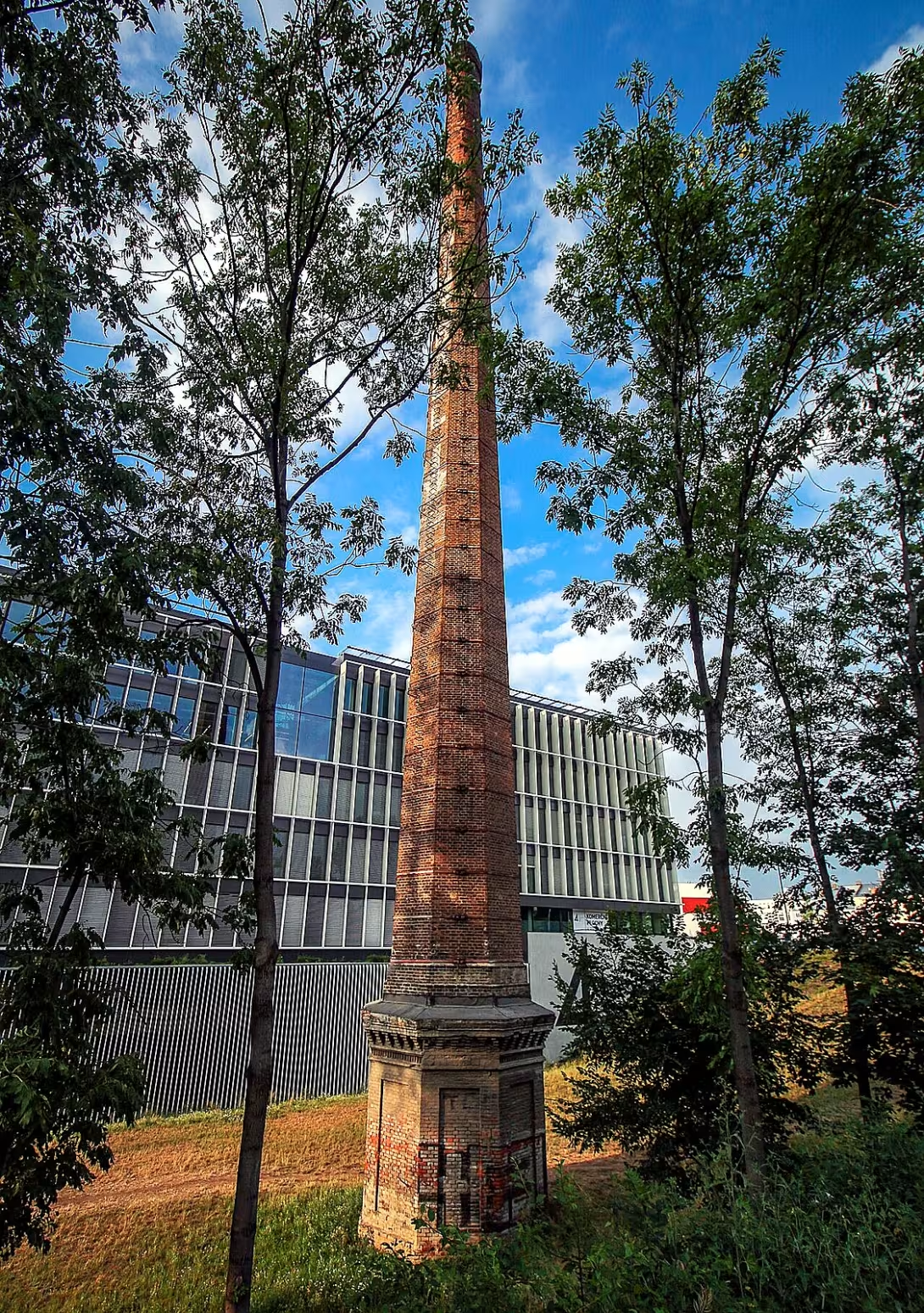
The chimney of the former Perutz Brothers factory, located in Voctářova Street north of the Libeň Bridge in the village Libeň, is the rest of the boiler room built in 1875. This chimney was declared a cultural monument of the Czech Republic in 2020 and represents an important historical monument that testifies to the industrial development of the region. Originally it was part of the weaving plant and mill of the Perutz Brothers, later used for heating of the liberal docks.
The history of the chimney dates back to the period of the Industrial Revolution in the territory of the Austrian-Hungarian Empire. In 1875 the boiler room was built as part of the Perutz Brothers factory, which was typical of the rapid development of industrial enterprises at this time. The factory specialized in textile production and its boiler room played a key role in the processing of materials. Later, the chimney was used for other purposes, such as the heating of the liberal docks.
Architecturally, the chimney is built on the ground plan of the octagonal with an increase from the circular brick structure, which gave it a significant height of 57 meters. Its brick construction is equipped with steel blocks and a pair of ladders. Sokl has a ledge decorated with brick ornament, which adds a chimney of aesthetic value. There's a brick pipe on the plinth that shows his original function.
The ownership and management of the factory have undergone several changes over the years. After the Perutzza Brothers transferred the property to the company Horák & Head, which built a workshop for cars in part of the textile area. The boiler room was demolished between 2010- 2012, but the chimney was preserved and is now protected as a cultural monument.
Key events in the history of this building include the position of the boiler room in 1875 and its declaration for cultural monument in 2020. These events highlight the importance of the chimney not only as a technical but also as a historical object.
Today, the chimney of the former Perutz Brothers factory is accessible to visitors in Libni and is worth visiting thanks to its historical importance and architectural rendition. Its preservation as a cultural monument enables other generations to appreciate the industrial past of the area and contribute to its identity.
The chimney of the former Perutz Brothers factory is not only a technical remnant but also a witness to the history and development of industry in the Czech Republic. Its preservation as a cultural monument reminds of the importance of protecting historical objects to understand our past and their value for future generations. Visiting this chimney is an opportunity to appreciate the rich heritage that shaped the contemporary landscape of Prague.
Then and now
Drag the slider to compare how the landmark may have looked when it was built with the view today.
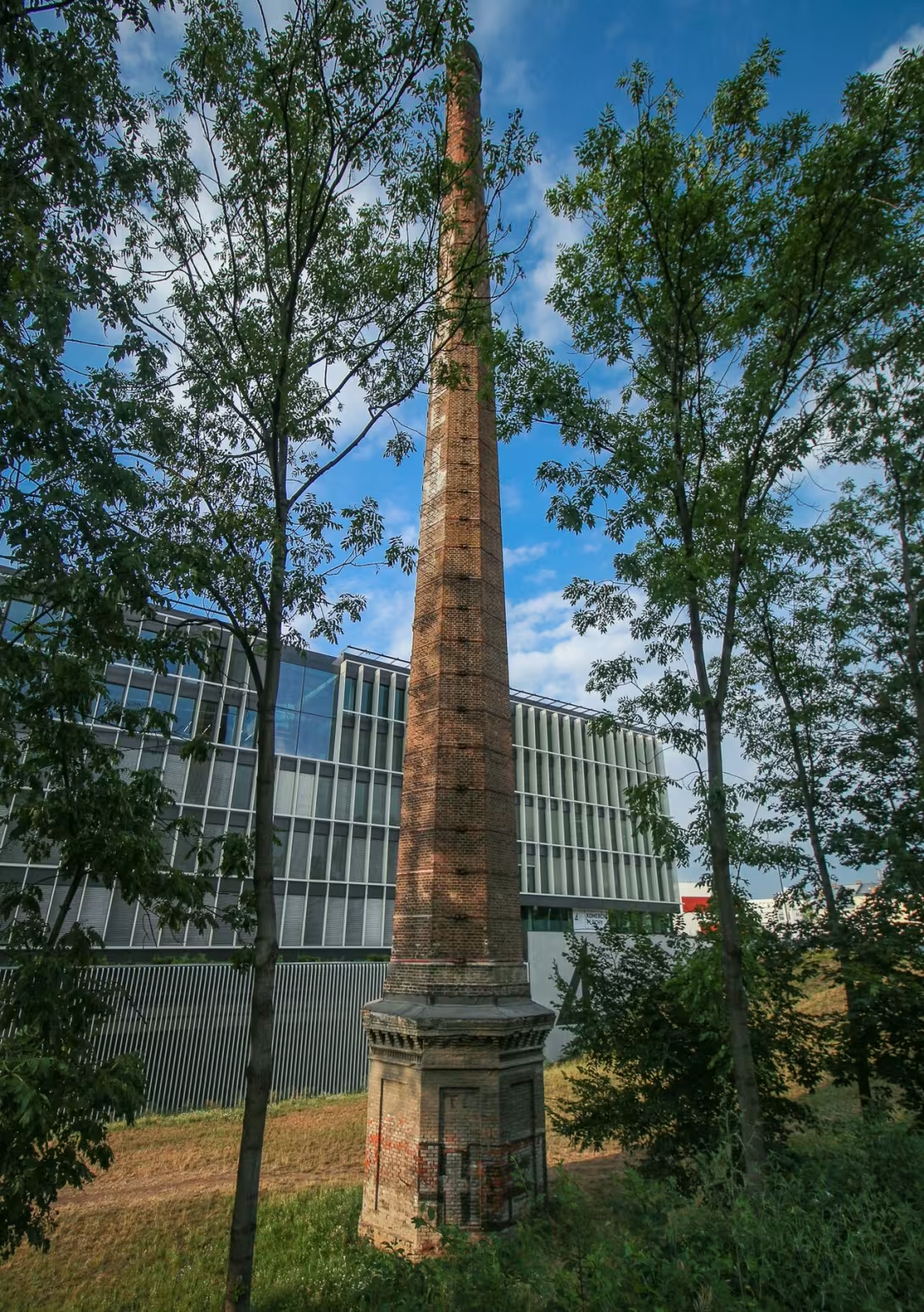
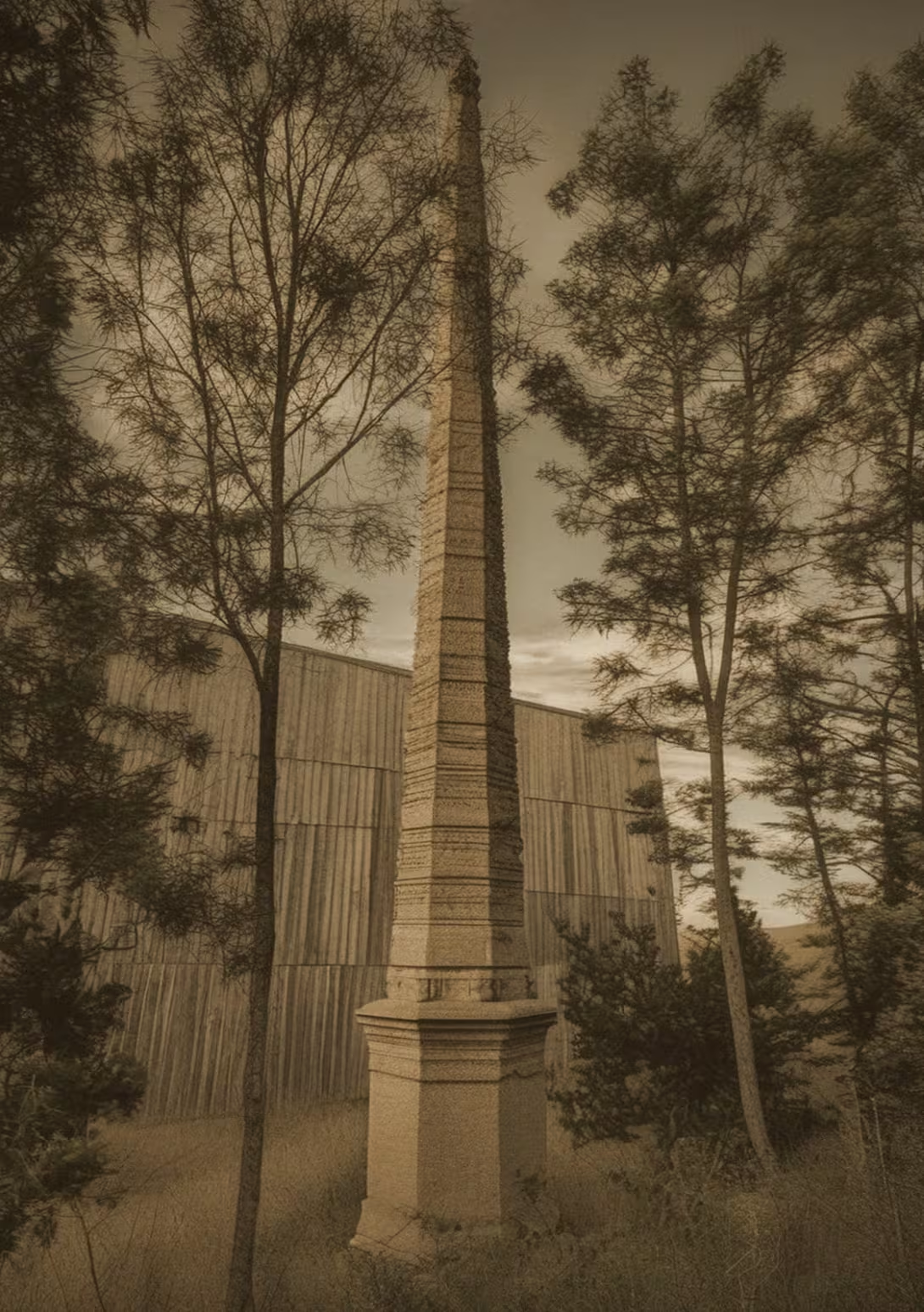
The historical appearance on the left is an AI-generated visualisation and serves as inspiration only.
Historical milestones
- 2020
- The chimney was declared a cultural monument of the Czech Republic.
Architectural development
The chimney was built as part of the boiler room in 1875. Later, the boiler room was demolished, but the chimney was preserved and protected as a cultural monument since 2020.
Historical events
- 1875
- The position of the boiler room as part of the Perutz Brothers factory.
- 2010
- The collapse of the boiler room except the chimney.
Owners
Brothers Perutz (early 19th century), Horák & Head (late 20th century)
Points of interest
The chimney is the remains of a boiler room built in 1875. - It was declared a cultural monument of the Czech Republic in 2020. - Architecturally, it has an octagonal plan with an increase from a circular brick structure and reaches a height of 57 meters. - Originally he was part of the weaving plant and mill of the Perutz Brothers, later used for heating of the liberal docks. - It is accessible to visitors and is worth visiting thanks to its historical importance and architectural representation.
Guide
Show guide text
This text was created by artificial intelligence and has not been editorially reviewed. It may contain inaccuracies.
Welcome to Libni. You're standing right where history stopped to speak through its remains. In front of your eyes is a monumental, brick colossus that dominates the whole area and requires respect with its presence. Look at him. It's a chimney that once was the living heart of a huge industrial unit. His shadow stretches on the ground and his massive body appears firmly anchored in the soil itself as if it were part of the land on which he stands. Can you feel the atmosphere? It is a sense of strength, endurance and something that once was the peak of human effort and technological progress. Let the moment consume you and let your eyes slowly begin to travel up.
Now let's go back together to when everything started here. Imagine 1875. The world around you is completely different. It's an era of steam, iron and tireless work. This year, a boiler room was built, the most important part of which was this chimney. It was created for the needs of a factory operated by the Perutz brothers. These people were at the time significant figures of industrial expansion and their name was known in these neighborhoods. Their business was not just a simple workshop, but a large and complex total. The weaving and spinning plants produced substances that were an important part of the shop at the time. This chimney was like lungs for the whole factory. He exhaled the smoke from the fires that drove the machines and kept the entire human labor machine going. Later, however, his role changed. He was no longer just a textile product, but he was used to heat the Libernese docks. It was therefore an essential element which maintained the operation of other parts of the local economy. Every breath and breath of this chimney at that time was a sign of life and economic strength.
Now pay attention to the construction itself and what you're seeing right now when you're standing so close. If you look at the chimney base, you'll notice something very interesting. It's not just a simple, round cylinder, as you might imagine ordinary chimneys. Its ground plan has the shape of an octagonal. This geometric precision gives the whole structure unusual stability and at the same time gives it a very specific, almost noble appearance. But as your view slowly shifts up, you will see a fascinating transformation. The brick structure is gradually changing. At a certain height, the occipital turns into a circular structure, creating an interesting increase and a smooth transition towards the sky. This whole building is at an incredible height of 57 meters. It's a really high point in this part of town that can be seen from far away.
Notice also the details that can be seen when you look closely. This massive brick body is surrounded by steel blocks. These metal hoops are not just decoration, but they are a key component that helps maintain the pressure and stability of the whole structure. They're like a hard drive that holds bricks together against the forces of nature. If you keep looking, you can see two ladders leading up his wall. It's traces of human presence, evidence that people had to climb up regularly to take care of this colossus. And just before the top, where the chimney meets the sky, you can see the ledge. It is not just a simple finish, but it is decorated with bricks themselves to provide the construction with a final, dignified appearance. All this work with bricks shows that even the technical structures of that time had an aesthetic dimension.
When you look at these bricks, remember the people who were behind all this. Although today we do not know the names of the particular architects who designed this project, we can feel their vision. They were people who believed in the power of technology and wanted to build things that would last. The Perutz brothers were the ones who financed and implemented this vision. Their empire was built on diligence and courage to invest in the future. This chimney is their most visible legacy. Even though the factory as a whole had long since disappeared and its other parts had been removed, this one element remained. He's like a silent witness to their success and a time that's long gone.
You might be interested in one very important thing. Although this chimney may seem like just an old piece of bricks that survived its era, today has a completely different meaning. Something crucial happened in 2020. This chimney was officially declared a cultural monument of the Czech Republic. That means it's not just the rest of the old boiler room or the technical object anymore. It's the protected treasure of our history. This recognition came as proof that industrial architecture has a soul and deserves to be preserved for future generations. It is a reminder of how the world was changing, how people learned to control the power of steam and how Libeň grew along with industry.
Now that you have seen this monument and understood its meaning, I suggest you continue your walk. Libeň has many other hidden stories and places that await your discovery. Let yourself drift through the atmosphere of this place where history touches the present. Thank you for spending this moment with us and paying attention to this silent guardian of history. We wish you a beautiful rest of the day and many other interesting experiences during your next survey.
Tips for visitors
For the best visual experience we recommend a visit in the late afternoon, when sunlight hits the brick facade at an angle that will highlight the historical texture of the building beautifully. For photography it is ideal to look at the chimney from the level of Voctářov street, from where its considerable height and original industrial character is visible.
You can get to the monument by public transport or your own vehicle.
When visiting, we recommend to bring comfortable shoes suitable for walking in the urban environment and possibly protection against rain or wind because it is an outdoor object. It's good to be ready for weather changes while staying outside.
For families with children, this part of Libna represents an interesting opportunity to observe the old architecture, which resembles the ancient times of industrial production. Other historical and cultural monuments located in this area can be visited in the surroundings.
Frequently asked questions
Can the monument be visited?
We have not verified whether this monument is accessible. Please ask the owner or operator, or the local municipal office.
Where is the monument?
Location: Libeň, Hlavní město Praha. The map on this page shows the exact spot.
Why is the monument protected?
It is listed in the Central List of Cultural Monuments of the Czech Republic as a cultural monument (register no. 1999991683).
Businesses nearby
Do you run a restaurant, accommodation, shop, museum, rental, wellness or other visitor service near this monument? Show yourself directly to the people heading to it — this is how they will see you in the app and on the web:
Events nearby

Zdroj akcí: otevřená data měst a obcí ČR (Národní katalog otevřených dat) a kalendář akcí Národního památkového ústavu.
Nearby
Komín se nachází v ulici Voctářova, severně od Libeňského mostu. V okolí je možné najít další historické a kulturní památky Prahy.
Accommodation nearby
Trips and activities nearby
Guided tours, tickets and activities nearby from GetYourGuide
Affiliate link: if you buy from the partner, we may receive a commission. The price for you does not change.
Search tours and activities →Themed route
The chimney of the former Perutz brothers' factory Type: Industrial monument Why: The dominant element of the industrial history of Libna, reminiscent of the glory of textile production and the architectural heritage of the Perutz family.
Voctářová Street Type: Historical street Why: The location of the chimney offers a view of the local development and atmosphere of the district, which has undergone many changes.
Libeň Bridge Type: Transport construction Why: North end point of the route connecting Libeň to the center of Prague and allowing easy return to the city.
Around the Libeň Bridge Type: Cultural and Historical Zone Why: The area directly at the bridge contains other historical and cultural monuments of Prague which can be explored within a short walk.
Prague Type: City Centre Why: The broader context of the visit, where you can continue to discover other historical and cultural monuments of the capital.
Seasonal recommendations
In spring nature wakes up around the old chimney and the surroundings of Libna are beginning to green. Soft sunlight beautifully highlights the structure of bricks and creates a fresh atmosphere. It's an ideal time for a quiet observation of a historic building without a great rush. I recommend you take several layers of clothing, because the morning cold can still feel while the afternoon is getting warmer. The best is to come around noon when the light is most stable.
In the summer months the surrounding area is covered with bright and strong light, which creates sharp shadows on a high structure. The atmosphere is very lively, but due to high temperatures the industrial installation can be less comfortable. In order not to attract too many people and avoid the greatest heat, plan a visit early in the morning. Dress lightly and don't forget enough fluid.
Autumn brings a nostalgic mood and foggy morning air humidity to the area. The golden colours of leaves in the surroundings complement the ancient appearance of the monument and the light is very fine in this period. For a walk around this building, prepare stronger shoes because the soil can be moist. The ideal time to visit is in the afternoon when the sun falls below and the colors are the most striking.
Zimą makes the chimney very raw and monumentally against the grey sky. Freezing air and possible snow give the place a quiet and lonely character. During this period daylight is very short, so try to arrive at around noon. The necessity is very warm clothes and quality gloves, because in the open area around the factory building can be unpleasant draught.
Visualizations and artistic views


The visualisations are generated by artificial intelligence and serve as inspiration.
Photos from the area
Real photos taken near the monument


Zdroj a licence jsou uvedeny u každého snímku.
Tips from visitors
No tips yet. Be the first!
Log in and add your tip.
Sources and literature
Photos: VitVit / CC BY-SA 4.0 — Wikimedia Commons. The author and licence also appear when you hover over the image.
Faktickým podkladem tohoto textu byl článek na Wikipedii, jehož autory jsou přispěvatelé Wikipedie. Článek je dostupný pod licencí CC BY-SA 4.0.
Location on the map
More monuments – Libeň
Show all in the municipality
Příběhy a pověsti
Legendy, pověsti a příběhy spjaté s touto památkou

Fotografie návštěvníků
Zatím žádné fotografie. Buďte první, kdo přidá fotografii z návštěvy!
Log in a přidejte svou fotografii nebo hodnoťte.
Za ověřenou návštěvu v aplikaci získáte víc bodů — poznáme podle GPS, že jste na místě.
Reviews and comments